
IN DEFAULT OR ABOVE WATER: How PPP Saved or Didn’t Save America
July 31, 2020 Kristy Kowal, a silver medalist in the 200-meter breast stroke at the 2000 Olympic games in Australia, had recently relocated to Southern California and embarked on a new career when the pandemic shutdown hit in March.
After nearly two decades as a third-grade teacher in Pennsylvania, Kowal was able to take early retirement in 2019 and pursue her dream job. At last, she was self-employed and living in Long Beach where she could now devote herself to putting on swim clinics, training top athletes, and accepting speaking engagements. “I’ve been building up to this for twenty years,” she says.
But fate had a different idea. The coronavirus not only grounded her from travel but closed down most swimming pools. At first, she tried to collect unemployment compensation. But after two months of calling the unemployment office every day, her claim was denied. “‘Have a great day,’ the lady said, and then she hung up,” Kowal reports. “She wasn’t rude; she just hung up.”
Then, in June, the former Olympian heard from friends about Kabbage and the Paycheck Protection Program. Using an app on her smart phone, Kowal says, she was able to upload documents and complete the initial application in fewer than 20 minutes. A subsequent application with a bank followed and within a week she had her money.
“I was down to ten cents in my checking account,” says Kowal, who declined to disclose the amount of PPP money for which she qualified, “and I’d begun dipping into my savings. This gives me the confidence that I need to go back to my fulltime work.”
 Kowal is one of 4.9 million small business owners and sole proprietors who, according to the U.S. Small Business Administration, has received potentially forgivable loans under the Paycheck Protection Program. The PPP, a safety-net program designed to pay the wages of employees for small businesses affected by the coronavirus pandemic, is a key component of the $1.76 trillion Coronavirus Aid, Relief, and Economic Security Act (CARES Act). Since the U.S. Congress enacted the law on March 27, the PPP has been renewed and amended twice. It’s now in its third round of funding and Congress is weighing what to do next.
Kowal’s experience, meanwhile, is also a wake-up call for the country on the prominent role that both fintechs like Kabbage as well as community and independent banks, credit unions, non-banks and other alternatives to the country’s biggest banks play in supporting small business. Before many in this cohort were deputized by the SBA as full-fledged PPA lenders, a significant chunk of U.S. microbusinesses – especially sole proprietorships — were largely disdained by the brand-name banks.
“After the first round,” notes Karen Mills, former administrator of the U.S. Small Business Administration and a senior fellow at the Harvard Business School, “more institutions were approved that focused on smaller borrowers. These included fintechs and I have to say I’ve been very impressed.”
Among the cadre of fintechs making PPP loans – including Funding Circle, Intuit Quickbooks, OnDeck, PayPal, and Sabre — Kabbage stands out. The Atlanta-based fintech ranked third among all U.S. financial institutions in the number of PPP credits issued, its 209,000 loans trailing only Bank of America’s 335,000 credits and J.P. Morgan Chase’s 260,000, according to the SBA and company data. Kabbage also reports processing more than $5.8 billion in PPP loans to small businesses ranging from restaurants, gyms, and retail stores to zoos, shrimp boats, beekeepers, and toy factories.
To reach businesses in rural communities and small towns, Kabbage collaborated with MountainSeed, an Atlanta-based data-services provider, to process claims for 135 independent banks and credit unions around the U.S. The proof of the pudding: Eighty-nine percent of Kabbage’s PPP loans, says Paul Bernardini, director of communications at Atlanta-based Kabbage, were under $50,000, and half were for less than $13,500.
The figures illustrate not only that Kabbage’s PPP customers were mainly composed of the country’s smaller, “most vulnerable” businesses, Bernardini asserts, but the numbers serve as a reminder that “fintechs play a very important, vital role in small business lending,” he says.
The helpfulness of such financial institutions contrasts sharply with what many small businesses have reported as imperious indifference by the megabanks. Gerri Detweiler, education director at Nav, Inc., a Utah-based online company that aggregates data and acts as a financial matchmaker for small businesses, steered AltFinanceDaily toward critical comments about the big banks made on Nav’s Facebook page. Bank of America, especially, comes in for withering criticism.
“Bank of America wouldn’t even take my application,” one man wrote in a comment edited for brevity. “I have three accounts there. They are always sending me stuff about what an important client I am. But when the going got tough, they wouldn’t even take my application. I’m moving all my business from Bank of America.”
Lamented another Bank of America customer: “I was denied (PPP funding) from Bank of America (where) I have an individual retirement account, personal checking and savings account, two credit cards, a line of credit for $20.000, and a home mortgage. Add in business checking and a business credit card. Yesterday I pulled out my IRA. In the next few days I’m going to change to a credit union.”
Many PPP borrowers who initially got the cold shoulder from multi-billion-dollar conglomerate banks have found refuge with local — often small-town — bankers and financial institutions. Natasha Crosby, a realtor in Richmond, Va., reports that her bank, Capital One, “didn’t have the applications available when the Paycheck Protection Program started” on April 6. And when she finally was able to apply, she notes, “the money ran out.”
Crosby, who is president of Richmond’s LGBTQ Chamber of Commerce, is media savvy and was able to publicize her predicament through television appearances on CNN and CBS, as well as in interviews with such publications as Mother Jones and Huffington Post. A “friendly acquaintance,” she says, referred her to Atlantic Union Bank, a Richmond-based regional bank, where she eventually received a PPP loan “in the high five figures” for her sole proprietorship.
“It took almost two months,” Crosby says. “I was totally frozen out of the program at first.”
Talibah Bayles heads her own firm, TMB Tax and Financial Services, in Birmingham, Ala. where she serves on that city’s Small Business Council and the state’s Black Chamber of Commerce. She told AltFinanceDaily that she’s seen clients who have similarly been decamping to smaller, less impersonal financial institutions. “I have one client who just left Bank of America and another who’s absolutely done with Wells Fargo,” she says. “They’re going to places like America First Credit Union (based in Ogden, Utah) and Hope Credit Union (headquartered in Jackson, Miss.). I myself,” she adds, “shifted my business from Iberia Bank.”
 Main Street bankers acknowledge that they are benefiting from the phenomenon. “In speaking to our industry colleagues,” says Tony DiVita, chief operating officer at Bank of Southern California, an $830 million-asset community bank based in San Diego, “we’ve seen that many of the big banks have slowed down or stopped lending small-dollar amounts that were too low for them to expend resources to process.”
At the same time, DiVita says, his bank had made 2,634 PPP loans through July 17, roughly 80% of which went to non-clients. Of that number, some 30% have either switched accounts or are in the process of doing so. And, he notes, the bank will get a second crack at conversion when the PPP loan-forgiveness process commences in earnest. “Our guiding spirit is to help these businesses for the continuation of their livelihoods,” he says.
Noah Wilcox, chief executive and chairman of two Minnesota banks, reports that both of his financial institutions have been working with non-customers neglected by bigger banks where many had been longtime customers. At Grand Rapids State Bank, he says, 26% of the 198 PPP applicants who were successfully funded were non-customers. Minnesota Lakes Bank in Delano, handled PPP credits for 274 applicants, of whom 66% were non-customers.
“People who had been customers forever at big banks told us that they had been applying for weeks and were flabbergasted that we were turning those applications around in an hour,” says Wilcox, who is also the current chairman of the Independent Community Bankers of America, a Washington, D.C.-based trade group representing community banks.
Noting that one of his Gopher State banks had successfully secured funding for an elderly PPP borrower “who said he had been at another bank for 69 years and could not get a telephone call returned,” Wilcox added: “We’ve had quite a number of those individuals moving their relationships to us.”
For Chris Hurn, executive director at Fountainhead Commercial Capital, a non-bank SBA lender in Lake Mary, Fla., the psychic rewards have helped compensate for the sometimes 16-hour days he and his staff endured processing and funding PPP applications. “It’s been relentless,” he says of the regimen required to funnel loans to more than 1,300 PPP applicants, “but we’ve gotten glowing e-mails and cards telling us that we’ve saved people’s livelihoods.”
Yet even as the Paycheck Protection Program – which only provides funding for two-and-a-half months – is proving to be immensely helpful, albeit temporarily, there is much trepidation among small businesses over what happens when the government’s spigots run dry. The hastily contrived design of the program, which has relied heavily on the country’s largest financial institutions, has contributed mightily to the program’s flaws.
“The underbanked and those who don’t have banking relationships were frozen out in the first round,” says Sarah Crozier, director of communications at Main Street Alliance, a Washington D.C.-based advocacy organization comprising some 100,000 small businesses. “The new updates were incredibly necessary and long overdue,” she adds, “but the changes didn’t solve the problem of equity in access to the program and whom money is flowing to in the community.”
Professor David Audretsch, an economist at Indiana University’s O’Neill School of Public and Environmental Affairs and an expert on small business, says of PPP: “It’s a short-term fix to keep businesses afloat, but it missed in a lot of ways. It was not well-thought-out and a lot of money went to the wrong people.”
The U.S. unemployment rate stood at 11.1% in June, according to the most recent figures released by the Bureau of Labor Statistics, about three times the rate of February, just before the pandemic hit. The BLS also reported that 47.2% of the U.S. population – nearly half –was jobless in June. Against this backdrop, SBA data on PPP lending released in early July showed that a stunning array of cosseted elite enterprises and organizations, many with close connections to rich and powerful Washington power brokers, have been feasting on the PPP program.
In a stunning number of cases, the program’s recipients have been tony Washington, D.C. law firms, influential lobbyists and think tanks, and even members of Congress. Many businesses with ties to President Trump and Trump donors have also figured prominently on the SBA list of those receiving largesse from the SBA.
 Businesses owned by private equity firms, for which the definition of “small business” strains credulity, were also showered with PPP dollars. Bloomberg News reported that upscale health-care businesses in which leveraged-buyout firms held a controlling interest, were impressively adept at accessing PPP money. Among this group were Abry Partners, Silver Oak Service Partners, Gauge Capital, and Heron Capital. (Small businesses are generally defined as enterprises with fewer than 500 employees. The SBA reports that there are 30.7 million small businesses in the U.S. and that they account for roughly 47% of U.S. employment.)
Boston-based Abry Partners, which currently manages more than $5 billion in capital across its active funds, merits special mention. Among other properties, Abry holds the largest stake in Oliver Street Dermatology Management, recipient of between $5 million and $10 million in potentially forgivable PPP loans. Based in Dallas, Oliver Street ranks among the largest dermatology management practices in the U.S. and, according to a company statement, boasts the most extensive such network in Texas, Kansas and Missouri.
Meanwhile, the design of the program and the formula for the looming forgiveness process is proving impractical. As it currently stands, loan forgiveness depends on businesses spending 60% of PPP money on employees’ wages and health insurance with the remaining 40% earmarked for rent, mortgage or utilities.
 Many businesses such as restaurants and bars, storefront retailers and boutiques – particularly those that have shut down — are preferring to let their employees collect unemployment compensation. “Business owners had a hard time wrapping their heads around the requirement of keeping employees on the payroll while they’re closed,” notes Detweiler, the education director at Nav. “They have other bills that have to be paid.”
The forgiveness formula remains vexing for businesses where real estate costs are exorbitant, particularly in high-rent cities such as New York, Boston, Washington, D.C., San Francisco, and Chicago. Tyler Balliet, the founder and owner of Rose Mansion, a midtown Manhattan wine-bar promising an extravagant, theme-park experience for wine enthusiasts, says that it took him a month and a half to receive almost $500,000 from Chase Bank. Unfortunately, though, the money isn’t doing him much good.
“I have 100 employees on staff, most of whom are actors,” he says. “We shut down on March 13. I laid off 95 employees and kept just a few people to keep the lights on.”
At the same time, his annual rent tops $1 million and the forgivable amount in the PPP loans won’t even cover a month’s rent. “I haven’t paid rent since March and I’m in default,” Balliet says. “Now I’m just waiting to see what the landlord wants to do.”
Like many business owners, Balliet financed much of his venture with credit card debt, which creates an additional liability concern, notes Crozier of the Main Street Alliance. “It’s very common for borrowers to have signed personal guarantees in their loans using their credit cards,” she says. “As we get closer to the funding cliff and as rent moratoriums end,” she adds, “creditors are coming after borrowers and putting their personal homes at risk.”
Mark Frier is the owner of three restaurants in Vermont ski towns, including The Reservoir — his flagship — in Waterbury. In toto, his eateries chalked up $6.5 million in combined sales in 2019. But 2020 is far different: the restaurants have not been open since mid-March and he’s missed out on the lucrative, end-of-season ski rush.
Consequently, Frier has been reluctant to draw down much of the $750,000 in PPP money he’d secured through local financial institutions. “We could end up with $600,000 in debt even with the new rules,” Frier says, adding: “We live off very thin margins. We need grants not loans.”
As the country recorded 3.7 million confirmed cases of coronavirus and more than 141,000 deaths as of mid-July, PPP money earmarked by businesses for health-related spending was not deemed forgivable. Yet in order to comply with regulations promulgated by the Occupational Safety and Health Administration and mandates and ordinances imposed by state and local governments, many establishments will be unable to avoid such expenditures.
“What we really needed was a grant program for companies to pivot to a business environment in a pandemic,” says Crozier. She cites the necessity businesspeople face of “retrofitting their businesses, buying masks, gloves and sanitizers and cleaning supplies, restaurants’ taking out tables and knocking down walls, installing Plexiglass shields, and improving air filtration systems.”
 Meanwhile, as Covid-19 was taking its toll in sickness and death, the economic outlook for small business has been looking dire as well. The recent U.S. Census’s “Pulse Survey” of some 885,000 businesses updated on July 2 found that roughly 83% reported that Covid-19 pandemic had a “negative effect on their business. Fully 38% of all small business respondents, moreover, reported a “large negative effect.”
Amid the unabated spikes in the number of coronavirus cases and the country’s grave economic distress, PPP recipients are faced with the unsettling approach of the PPP forgiveness process. As Congress, the SBA, and the U.S. Treasury Department continue to remake and revise the rules and regulations governing the program, businesses are operating in a climate of uncertainty as well. Currently, the law states that the amount of the PPP loan that fails to be forgiven will convert to a five-year, one-percent loan — a relaxation in terms from the original two-year loan which is not necessarily cheering recipients.
“One of the biggest problems with PPP is that the rule book has been unclear,” frets Vermont restaurateur Frier, glumly adding: “This is not even a good loan program.”
Ashley Harrington, senior counsel at the Center for Responsible Lending, a research and policy group based in Durham, N.C., argued in House committee testimony on June 17, that there ought to be automatic forgiveness for PPP loans under $100,000. Such a policy, she declared, “would likely exempt firms with, on average, 13 or fewer employees and save 71 million hours of small business staff time.”
She also said, “The smallest PPP loans are being provided to microbusinesses and sole proprietors that have the least capacity and resources to engage in a complex (forgiveness) process with their financial institution and the SBA.”
William Phelan, president of Skokie (Ill.)-based PayNet, a credit-data services company for small businesses which recently merged with Equifax, sounded a similar note. Observing that there are some 23 million “non-employer” small businesses in the U.S. with fewer than three employees for whom the forgiveness process will likely be burdensome, he says: “Estimates are that it will cost businesses a few thousand dollars just to get a $100,000 loan forgiven. It’s going to involve mounds of paper work.”
The country’s major challenge now will be to re-boot the economy, Phelan adds, which will require massive financing for small businesses. “The fact is that access to capital for small businesses is still behind the times,” Phelan says. “At the end of the day, it took a massive government program to insure that there’s enough capital available for half of the U.S. economy” during the pandemic.
For his part, Professor Audretsch fervently hopes that the country has learned some profound lessons about the need to prepare for not just a rainy day, but a rainy season. The pandemic, he says, has exposed how decades of political attacks on government spending for disaster-preparedness and safety-net programs have left the U.S. exposed to unforeseen emergencies.
“We’re seeing the consequence of not investing in our infrastructure,” he says. “That’s a vague word but we need a policy apparatus in place so that the calvary can come riding in. This pandemic reminds me a lot of when Hurricane Katrina hit New Orleans,’ he adds. “The city paid a heavy price because we didn’t have the infrastructure to deal with it.”
Ireland’s Alternative Finance Industry and the Coronavirus
May 18, 2020 As the effects of the coronavirus continue to slow down the American economy, around the world, many countries remain in lockdown, with their businesses having been halted. Be it to the north, south, east, or west, of the United States, the results are the same: money has stopped flowing. As such, we took the opportunity to follow up with some of the businesses that featured in our coverage of alternative finance in Ireland last Fall, hoping to see what differed and what was the same in their responses to the pandemic.
Despite differing in size and range of variety when compared to their North American counterparts, the Irish alternative finance and fintech industries have largely felt the same impacts from covid-19. Certain funders have stopped operations, others have become very cautious, and just like here, some businesses have turned to the government for help.
LEO, or Local Enterprise Offices, is an advisory network for small and medium-sized businesses, which provide guidance as well as offer capital. The Irish government has pointed to these as the point of contact for small businesses owners, with LEO providing microfinance loans of up €50,000. This figure being upped from the pre-coronavirus maximum of €25,000.
Rupert Hogan, the Managing Director of brokering company BusinessLoans.ie, explained that some businesses would be better going with LEO over banks and even some non-banks. Noting that non-bank lenders can’t compete with the rates offered by LEO and, just like in the US, banks can’t act with the speed that these business owners need.
 Hogan, who describes the current situation as “The Great Lockdown,” said that banks “aren’t too helpful, even in the good times,” due to the high rejection rates that SMEs experience when looking for loans. In regards to merchant cash advances, he’s expecting, when the MCA companies reopen, that they’ll be funding at reduced rates, some doing as much as 50% less than their pre-coronavirus amounts.
Jaime Heaslip, Head of Brand Marketing at the MCA company Flender, explained that before the virus, the company was experiencing a period of productivity, with lending activity and amounts deposited being up from previous years. And despite the virus disrupting commerce, the former international rugby player noted that business owners are still coming to Flender for funds.
“We provide flexibility for people, there’s a lot of people coming to us to get contingency funds together,” he said over a phone call, commenting that as well as this, many businesses are looking for financing to move their operations online. “We’re trying to help SMEs get through this and provide as much help as possible.”
Beyond merchant cash advances, business continues to run, says Spark Crowdfunding’s Chris Burge. Being an investment platform, Spark is still active with businesses looking to get off the ground.
“We’ve actually found that we’ve still got a large amount of inquiries coming through,” the CEO and Co-Founder said. “Our pipeline of companies wanting to go onto the platform is very strong, and we’ve been engaging with them all and they’re very keen. They all need money, which, of course, hasn’t changed from before there was a crisis. And they still are needing money, they need that to expand as opposed to survive.”
When asked about changes made because of covid-19, Burge explained that their investor evenings have been disrupted. Previously an opportunity for the investors and investees on the digital platform to meet up personally and pitch each other, these 100-person gatherings are no longer an option. Instead, virtual webinars and assemblies are what Spark has started using to keep up communication between parties.
And on the subject of fundraising, Trezeo’s Garrett Cassidy said that it has become a nightmare under the pandemic. Disrupted communication channels and the inability to pitch to someone in the same room as you have been hurdles, but besides that, Cassidy assured me that Trezeo is still going strong.
Offering payment structures and benefit bundles to freelancers and the self-employed, Trezeo has seen some of its customer base drop off as unemployment sky-rocketed in the UK, its prime market. Despite this, as more and more people are beginning to go back to work, Cassidy says numbers are rising.
“Now we’re starting to see earnings pick back up again, some of them were the ones who were off work who are now coming back to work. So it’s been interesting watching that but the reality is that they’re also scared. They’re out working every day delivering parcels or food, depending on which, and just working really hard. It’s the most important ones who are paid the least and that have the least protection.”
Looking ahead, Trezeo has been working with the UK’s Labour Exchange to establish a new program that would see the creation of channels to help pre-qualify workers for certain positions. These workers would be pooled, and employers would be able to choose from them, streamlining the hiring process for both sides.
“They need money in their pockets, somehow, quickly,” Cassidy said of workers, whether that be by returning to work safely, or through some government assistance program, the CEO is adamant that people need to stay solvent.
Altogether, Ireland’s alternative finance industry, like others the world over, has been hit hard by the coronavirus’s economic effects. With the country’s phased lifting of the lockdown being plotted out over the course of the summer, the island nation may not see as quick a return to commerce as certain American states, but its fintechs and non-banks hope to stick around, by hook or by crook, as the Irish say, by any means possible.
The Pandemic, The Economy, and The Presidential Race
March 20, 2020Note from the Editor: In early February, I asked one of our regular journalists, Paul Sweeney, to look into the economy and the presidential race to size up the coming election season. As he was wrapping up his interviews over the span of a month, things took a startling turn, and COVID-19 came to the forefront and changed everything. This story is an amalgamation of reporting that started one way and quickly morphed into another. In light of how fast the situation is changing, we are publishing it now rather than waiting until early April to release it in print.

Chris Hurn, who heads an Orlando-area financial firm in Florida that specializes in small business lending, says he is witnessing fear and desperation among business owners whose stores, shops and enterprises have been thrown into a tailspin by the coronavirus pandemic.
“We’ve been overwhelmed with telephone calls and e-mails,” says Hurn, chief executive at Fountainhead Commercial Capital, a non-bank Small Business Administration lender which boasts more than $250 million in originations last year. “I’ve fielded over 300 inquiries from borrowers about these loans in just the last few days,” he added. “People are telling me that they’re being harmed and don’t know how they’ll make payroll. The SBA needs to act.”
What Hurn is experiencing in Florida is not just an isolated incident. Thousands of small businesses are under siege nationwide as Americans’ have gone into isolation in response to the pandemic, helping precipitate a full-blown economic crisis. As of March 17, the coronavirus – also known as Covid-19 – had leapfrogged across the globe since appearing in China in December, 2019, infecting people in 100 countries. There are now some 272,000 confirmed Covid-19 cases worldwide and close to 11,300 deaths, according to data compiled by scientists at Johns Hopkins University in Baltimore.
In the U.S., the number of cases has cleared 19,000 as of March 20, the death toll has climbed above 230, and coronavirus cases have been recorded in all 50 states. The Center for Disease Control reports that the number of cases are growing at 25-30% per day. But experts warn that, because of a lack of testing, the actual number of cases is certainly higher.
The outbreak is drawing comparisons to the worldwide influenza pandemic of 1918. Popularly known as the “Spanish Flu,” that virus may have claimed as many as 100 million lives, according to estimates by the World Health Organization. Medical officials say that persons 70 and older and those with underlying medical conditions, such as a weakened immune system, are most at risk in the current pandemic.
“What makes this disease so lethal,” says Rachel Scott, a family physician in Austin, Texas and the author of “Muscle and Blood,” a pathbreaking study of occupational diseases, “is that people in the vulnerable population who come down with the virus are prone to contract severe acute respiratory distress syndrome. In ARDS, the virus destroys the sacs in the lungs, preventing oxygen from being delivered into the blood stream. By the time people with severe ARDS are hospitalized and treated with a ventilator, it may already be too late.”
To blunt the accelerated pace of contagion, governors and mayors are putting restrictions on citizens by curbing gatherings and monitoring interactions. Governors in 44 states have forced restaurants and bars to close shop in an unprecedented regulation of U.S. citizens. Meanwhile, millions of Americans self-quarantined and self-isolated and re-examined how they interact socially, commercially and professionally. Increasingly draconian controls to moderate the trajectory of the outbreak are not only turning cityscapes into ghost towns from coast-to-coast but throwing a giant monkey wrench into the U.S. economy.
Treasury Secretary Steven Mnuchin has reportedly warned Congressional leaders that the unemployment rate could spike to 20%.
Former Labor Secretary Robert Reich has gone Mnuchin one better amid reports that 1.2 Americans had filed for unemployment insurance. In an interview on MSNBC Thursday, Reich said he feared that the unemployment rate is likely to hit that 20% mark in the next two weeks. “Eighty percent of Americans are living paycheck to paycheck,” he declared ominously. “We’re in a national emergency.”
The pandemic and the ensuing economic crisis is also casting a giant shadow over the 2020 presidential election. “It’s a black swan event that wasn’t anticipated by any of the candidates, and the reverberations for the election are going to be huge,” said Richard Murray, a political scientist and elections expert at the University of Houston.
For the past 50 years, political analysts have generally agreed, the condition of the U.S. economy was a key predictor – if not the key predictor – to the outcome of presidential elections. President Jimmy Carter, for example, had the bad fortune to preside over a problematic economy marked by oil-price shocks and energy shortages, mile-long queues at gasoline stations, and sky-high interest rates. There was even a new word — “stagflation” – coined for the phenomenon of stagnant growth and runaway inflation, recalls David Prindle, a government professor and expert on voting behavior at the University of Texas at Austin.
There were, of course, additional negative complications to Carter’s presidency. Most notable was the “Hostage Crisis” in which Iranian students attacked the U.S. Embassy in Teheran in the fall of 1979, held 44 American diplomats and aides captive for more than a year, and made Carter look hapless and helpless. Nonetheless, Ronald Reagan, a former governor of California and longtime matinee idol, hammered Carter mercilessly on the economy, demanding: “Are you better off than you were four years ago?”
Answering that question sent Carter packing to his Georgia peanut business. “In 1980, as in every election, there were multiple causes,” says Prindle, “but the deciding factor was the economy.”
 A healthy economy can serve as a mighty bulwark against opponents in a president’s bid for a second term. In the mid-1990s, an expanding economy and relentlessly buoyant stock prices – a Dow Jones Industrial Average so robust in the mid-1990’s that Federal Reserve chairman Alan Greenspan famously admonished investors for their “irrational exuberance” – allowed Bill Clinton to sail to re-election. (The good times also buffered Clinton during the ensuing sex scandal involving White House intern Monica Lewinsky.)
As the election year of 2020 dawned, a decently performing economy seemed to be serving President Donald Trump’s cause. Before the World Health Organization declared the coronavirus outbreak a pandemic in early March, the U.S. economy was coming off 10 full years of job growth and the unemployment rate had sunk to 3.5 percent, its lowest level in 50 years. Wages were also rising by nearly 4 percent per annum, noted Aparna Mathur, a labor economist at the business-backed American Enterprise Institute in Washington, D.C. “The economy is not spectacular,” she said, “but everything is moving in the right direction.”
Since then, however, the economy has been slammed as an alarmed country reacted to the pandemic. The NBA and NHL closed down their basketball and hockey seasons. Major League Baseball called a halt to spring training. The NCAA initially declared that “March Madness” would proceed and that hoopsters would perform before empty arenas, but then it pulled the plug. Even professional golf, an outdoor sport, hung up its cleats, announcing that The Masters, played at Augusta (Ga.) National Golf Course in April and the crown jewel of professional golf, would be postponed indefinitely.
 Almost overnight, colleges and universities shut down classrooms, emptied their dorms, and opted for online coursework. Some 33 million schoolchildren in 41 states have ceased attending school. Hundreds of companies, including Amazon and Microsoft in Seattle, a city hit hard by the coronavirus, are requiring their employees to “telecommute” by working at home on their laptops.
The CDC at first advised Americans not to cluster in groups of more than 25 people, then cut that figure to 10. Americans are being prodded to engage in “social-distancing” by avoiding shaking hands and separating themselves from others by a separation of three-to-six feet from others. San Francisco has gone still further, grounding cable cars, closing down clubs and bars and restaurants and effectively putting the city on lockdown.
The city of Boston called off its iconic St. Patrick’s Day parade, Broadway theaters dimmed their lights, and Starbucks forbade customers to sit down in its coffee shops. Major events like South by Southwest, the music and cultural festival in Austin, Texas, was canceled, depriving Texas’s capital city of some $350 million in economic activity.
Jilting the festival cuts deeper than the losses to airlines, hotels, bars, restaurants, and music venues, notes Alfred Watkins, a Washington, D.C.-based economist and chairman of the Global Solutions Summit, an international consulting firm. “You have all of these people in Austin who are running events and they’re hiring caterers for sandwiches and refreshments,” he said. “You have independent contractors like videographers and photographers, sound-equipment suppliers, Uber and Lyft drivers, hairstylists, and even freelance entertainment journalists — all of whom are no longer making money. For these entrepreneurs,” he added, “losing this event is a little like retailers missing out on the Christmas season. It’s when they make their money.”
The airline, travel, leisure, and tourism industries are in free-fall. Major cruise lines suspended bookings and cut short voyages after horrific reports of coronavirus outbreaks among passengers trapped at sea, temporarily putting a $38 billion industry in dry dock.
The conventions industry, which has come to a standstill after wholesale cancellations, remains a vastly under-appreciated sector of the U.S. economy, argues George Brennan, former executive vice-president of marketing at Arlington (Va.)-based Interstate Hotels and Resorts, the world’s largest independent hotel management company.
These mass gatherings are an unheralded engine of growth, he says, packing a bigger economic wallop than they get credit for. “Conventions typically draw anywhere from 2,000 to 25,000 people,” he said. “They run 6,000 to 8,000 attendees on average, and most can only be accommodated by the top 10-20 U.S. cities, which include Chicago, San Francisco, Las Vegas, Atlanta, New Orleans and Orlando.
“Conventions are often multi-dimensional,” he added. “Attendees usually spend three to five days in town. They often shop at clothing stores and other retailers. They’ll take in sporting events or, if they’re in New York, a Broadway play. They’ll go to attractions like the San Diego Zoo, or spend an afternoon on a golf course in Florida or California.”
Conventions generate a tremendous amount of commerce and revenues for vendors and exhibitors. As an example, Brennan cites his former employer, the hospitality industry. “At hotel conventions,” he said, “you’ll see people there selling curtains and sheets, soaps and towels.”
In addition, many trade groups – Brennan cites the National Association of Civil Engineers and the American Medical Association as examples – count on the annual convention as an important component of their organization’s annual revenues. “When you pay to attend,” he says, “a significant portion goes back to the association. The convention often covers the yearly salary for a group’s staff.”
 Amid the dramatic behavioral changes, the stock market registered several days of panic-selling in March, capped by a record, single-day plunge on March 16: The Dow Jones index plummeted 2,997 points, the third-worst percentage loss in history. After flirting with the level at which the Dow was reading on Inauguration Day Jan. 20, 2017, the market continued see-sawing this week, herky-jerkying between mini-rallies and skids.
Hoping to prevent a coronavirus recession, the U.S. Senate adopted by an overwhelming, 90-8 bipartisan vote a $100 billion bill sent by the Democraticac-led House that expands free testing for the coronavirus, provides for paid sick leave and medical leave for some workers, and an emergency unemployment insurance and food assistance programs. The bill was signed late Wednesday night.
Meanwhile, Congress was taking up a monumental $1 trillion economic rescue plan proposed by the White House on St. Patrick’s Day (March 17) that included a bailout for the hotel and airline industries, help for small businesses, and $500 billion in direct cash payments to Americans households.
“We’re looking at sending checks to Americans immediately,” Treasury Secretary Steve Mnuchin said in a Rose Garden press conference at the White House on St. Patrick’s Day. By immediately, he added, “I’m talking about the next two weeks.”
The Trump Administration’s proposed help for small businesses has a strong supporter in Karen G. Mills, former SBA administrator and senior fellow at Harvard Business School. During her tenure in the Obama Administration, Mills was a troubleshooter in several crises including the Great Recession and Hurricane Sandy. “In a worst-case scenario with this virus contagion, getting loans to people through banks is not going to be fast enough,” she told AltFinanceDaily just before the White House drew up its rescue plan. “They’ll need direct loans to people and other aid. If we lose our small business economy, it will be catastrophic.”
So how will the pandemic and the state of the economy play out politically in the November, 2020 general election between President Trump and former Vice President Joseph Biden, the presumptive Democratic nominee? The result remains shrouded in the fog of the future, of course, but the election’s contours are coming into focus.
Having seen him through numerous scandals, impeachment, and a trial in the U.S. Senate, Trump’s political and electoral following has been put to the test. Yet his backers remain unshakably loyal in a way not seen in 80 years, observed the University of Houston’s Murray. “More people are dug in now than at any time since the 1930s,” he says, as roughly 43% of the electorate is firmly lodged in Trump’s camp. “Trump’s support has been remarkably stable.”
The business community is a key demographic in the pro-Trump cohort, notes Ray Keating, chief economist at the Small Business & Entrepreneurship Council, a Washington, D.C. advocacy group claiming 100,000 members. “We have not polled our membership,” Keating says, “but when you look at the data they overwhelmingly vote Republican. We find that support for Donald Trump is clear and substantial.”
Richard Yukes, a Las Vegas-based oilman and longtime entrepreneur who votes his pocketbook, will be pulling the lever for Trump in the November election. The reason? Trump not only presided over a robust economy for the past several years, Yukes says, but the president slashed Obama-era regulations imposed on his industry. “Government regulation and bureaucratic regulation often get mishandled and misdirected by federal bureaucrats and Trump is for less regulation,” Yukes says. “I think America works best with less regulation.”
The owner and operator of oil wells in Wyoming, Yukes benefited handsomely last year when Trump’s Environmental Protection Agency relaxed rules governing methane leaks. The oilman reckons that complying with the regulations had been costing him an extra $1,500 per well each year.
No matter how well the economy has performed in the past three years, however, the pandemic economy promises to be a “game-changer,” says political scientist Murray, and history shows that voters are likely to take stern measure of the incumbent president’s performance during any a crisis.
Trump’s initial response to the coronavirus reminds Murray of Woodrow Wilson’s reaction to the Spanish Flu pandemic in 1918 while World War I was still raging. “As the U.S. was approaching climactic battles in Europe, President Wilson suppressed the news of the flu and the story didn’t get out though eventually people knew about it,” Murray says.
Wilson’s deceit hurt Democratic candidates who were battered in the 1918 midterm elections, just a few days before the November 11 armistice. Two years later, after Wilson had a stroke, the Democratic presidential candidate got crushed in the 1920 election by Warren G. Harding, a Republican senator from Ohio.
After war and influenza, Americans voted enthusiastically for Harding’s promise of “normalcy.”
How Hot Is The Legal Cannabis Industry?
February 24, 2020 One gauge of the commercial excitement over legal weed, medical marijuana and cannabis’s byproducts could be witnessed at the Las Vegas Convention Center in early December where the Marijuana Business Conference & Expo was overflowing with 31,523 attendees.
 Appealing to that audience—roughly the population of Juneau, Alaska—were more than 1,300 exhibitors who hailed from 79 different countries and touted products and services as varied as advancements in crop cultivation, medicinal breakthroughs, and innovative consumer products like marijuana-laden pastry.
That’s some 30% more than the 1,000 vendors who packed into the Central Hall in 2018 and about double the 678 who were showing off their wares in the smaller North Hall two years ago, reports Chris Day, vice president for external relations at Denver-based Marijuana Business Daily, which follows the cannabis industry and sponsored the Las Vegas trade show.
“In December, 2019,” Day declares, “we did not have to turn people away because we expanded. We had enough room for exhibitors but we needed both halls.” Unable to resist a boast, he adds: “We’ve been the fastest-growing trade show in the country three years running.”
One face in the December crowd was seasoned financial broker Scott Jordan, the Denver-based managing director of the Alternative Finance Network. He was occupying a booth accompanied by two attractive female models in fetching T-shirts emblazoned with the message: “How much would you borrow at zero percent?”
The young ladies’ arresting appearance and the message worked to the extent that “it got people talking,” Jordan says. As for the zero-interest rate, it’s not exactly free money. “I’ve got a product that puts together a line of credit,” he explains, “and after they receive the line of credit, it charges them a fee.”
As a broker, Jordan does the spade work of poring through a cannabis business’s financial statements and business model before he tees up a deal—typically between $250,000 and $750,000—to “a cadre” of 35 lenders in 10 states. He’ll ascertain whether the best funding option should be structured as equipment leasing, a working-capital loan, a revolving line of credit, project financing, or a real estate loan.
One recent cannabis deal that Jordan midwifed involved a “post-revenue, pre-profitability” manufacturing and processing company headquartered in Colorado. The financing, which closed in April, 2019, involved a pair of four-year term loans: one for $400,000 to refinance existing machinery, and a second for an additional $500,000 to acquire new laboratory equipment. Both credits carried interest rates in the “mid-teens,” he says, and were secured by the equipment.
Once the debt financing was in place, the manufacturing operation was “fully functioning,” Jordan reports, paving the way for the company to raise $30 million in venture capital financing. Jordan argues that “even if they pay a 10-20 percent interest rate, it’s better to preserve equity and finance through a normal type of loan. If you need an extraction machine or packaging equipment,” he adds, “why give up equity if you can finance it through debt?”
Jordan’s reasoning appears to sit well with clients and funders alike. Since 2014, he has brokered 85 transactions worth $33 million. He reckons that two out of three deals that he takes to funders meet with success. “My best year was 2015 because there were only a few competitors and I was the only guy on the block,” he says.
As the country steadily decriminalizes and legalizes pot, however, early market entrants like Jordan no longer have the cannabis business all to themselves. Thirteen states have legalized recreational marijuana for adults. These include California, Colorado, Oregon, Washington and Nevada in the West; Illinois and Michigan in the Midwest; and Massachusetts, Vermont and Maine in the East. Hawaii and Alaska permit it and, if you’re over 21, you can legally grow, smoke or ingest weed in the District of Columbia, but it cannot be sold commercially.
An additional 24 states have approved medical marijuana. While research on cannabis’s medicinal properties remains thin—largely because of objections by federal law enforcement—it is being prescribed for a range of maladies, including cancer, glaucoma, epilepsy, Crohn’s Disease, multiple sclerosis, nausea, and pain. [“The marijuana plant contains more than 100 different chemicals called cannabinoids,” according to WebMD. “Each one has a different effect on the body. Delta-9- tetrahydrocannabinol (THC) and cannabidiol (CBD) are the main chemicals used in medicine. THC also produces the ‘high’ people feel when they smoke marijuana or eat foods containing it.”]
Industry data assembled by MJBizDaily reflects both the broad acceptance of legal cannabis use and its increasing commercial popularity. U.S. revenues from legal weed and its byproducts are expected to clear $16.4 billion this year, a 40% growth rate over the $11.75 billion in estimated revenues for 2019. The legal cannabis industry now employs about 200,000 persons in the U.S., about the same number as flight attendants (120,000) and veterinarians (80,00) combined.
 For more evidence that the cannabis market is hot look no further than the state of Illinois, where recreational marijuana went on sale Jan. 1, 2020. The Prairie State’s governor also pardoned some 11,000 citizens with criminal records for possession and the sale of low levels of marijuana.
“We’re showing that sales were close to $3.2 million on the first day of 2020,” says MJBiz’s Day. “Illinois is the big story right now,” he adds. “Anytime a new state opens up in the market, you’re seeing enormous pent-up demand and enthusiasm.”
 Even as the cannabis industry takes giant strides toward public acceptance, the plant continues to face hostility from the U.S. federal government, which has criminalized its use for 80 years. Marijuana remains classified by the Drug Enforcement Agency as a Schedule 1 drug, keeping company with heroin, LSD and Ecstasy.
That designation has also made it hard for the cannabis industry to engage in simple financial transactions, much less obtain financing. “Despite the majority of states’ having adopted cannabis regimes of some kind, federal law prevents banks from banking cannabis businesses,” Joanne Sherwood, president and chief executive at Citywide Banks, a $2.3 billion-asset bank headquartered in Denver, testified to Congress last summer. “The Controlled Substances Act,” added Sherwood, who is chair of the Colorado Bankers Association, “classifies cannabis as an illegal drug and prohibits its use for any purpose. For banks, that means that any person or business that derives revenue from a cannabis firm is violating federal law and consequently putting their own access to banking services at risk.”
And despite the herculean efforts by the cannabis industry to soften its image, obtaining financing from traditional sources like pension funds, insurance companies and university endowments remains a daunting proposition as well, says David Traylor, senior managing director at Golden Eagle Partners. His four-person, boutique investment fund, which makes equity investments in up-and-coming cannabis companies, relies on wealthy individuals and family offices for the bulk of its funds.
“Capital is hard to come by for this industry,” Traylor says. “From day one, most venture capitalists have been staying out of it. It’s still illegal in many states and their limited partners are endowments like Harvard and Yale, which see marijuana as the antithesis of education.”
Sarah Sanger, chief financial officer at Oak Investment Funds, a real estate investment firm based in Oakland, says: “There’s a great deal of economic activity in California but it’s stymied by the lack of financing and difficulty with changing regulations. It provides an opportunity for really expensive debt from private investors willing to do due diligence.”
That absence of establishment financing has opened up a plethora of opportunities for alternative funders, and not just in agriculture and plant cultivation. While agriculture represents the bedrock of the industry there is no downstream product, of course, without the cannabis leaf— growing and harvesting cannabis is just one stage of the industry’s life cycle.
MJBiz’s Day notes, for example, that that the legal cannabis industry is regulated for safety, so growers must show that “the flower has no molds or contaminants.” That means that crops are subject to rigorous testing and decontamination, which requires both materials and expertise. To process the leaf and develop “infused products” by extracting cannabis-based oils entails the purchase and deployment of costly technology. Packaging and labeling along with tracking systems that, Day says, “are stricter than in other places” are also key components of the farm-to-market supply chain.
Meanwhile, in an ongoing effort to appeal to a fresh cohort of customers, Jordan notes, the cannabis industry continues to develop innovative uses for the plant. “There are so many applications and new products that keep appearing, like ice cream with marijuana, vaporizers, inhalers, and syrup,” he says. “Now, there are mints—something I hadn’t seen before—and different ways to ingest the product and get high and not look like a druggie.”
 Jordan Fein, chief executive at Greenbox Capital in Miami, says his firm prefers to fund downstream companies selling cannabis products. “We do agricultural lending but it’s less attractive and harder to qualify the business. It’s not as tangible as a retail business which will have a website and product reviews. The same goes for edibles.”
Recent Greenbox Capital deals in 2019, Fein says, included one with merchant cash advances of $80,000 and $60,000 in growth capital to a Colorado dispensary. The operation put the money to work adding two retail outlets during the year, he says, bringing to four its total number of storefronts. In addition to cannabis flower, the dispensary sells “edibles, tinctures, lotions, and wax concentrates,” Fein reports. Both short term cash advances require regular ACH payments.
Greenbox Capital also made a $135,000 cash advance to a cannabis-testing laboratory in Southern California in August, 2019 for the purchase of sophisticated equipment. The company, he says, is doing $140,000-a-month in revenue and cashflow is strong and on the rise.
“Greenbox is always interested in higher risk deals,” Fein says, noting that banking services remain off limits to legal cannabis firms. “But we fund them for the same reason we fund lawyers and auto sales—things that most others will not do. There’s nothing wrong with risk,” he adds, “as long as you clearly assign a proper value to the deal and price to it.”
Steve Sheinbaum, a New York broker and chief executive at Circadian Funding, has unabashedly climbed aboard the cannabis bandwagon. “The market is exploding and it’s attractive to lenders because it’s a product people can put their hands on,” he says. “If I’m dealing with a grower, I can leverage real estate and usually there’s equipment. If they’re producing, there’s inventory and I can look at the income statement to see what kind of cash flow the business is generating.”
 He recently brokered a $10 million loan for a licensed grower and distributor of medicinal marijuana in New England with monthly revenues of $3-$4 million. The credit bore a 17% annual percentage rate and a six-year maturity, he says. The deal was brought to Circadian by a private equity investor who was looking to grow the enterprise tenfold. The deal, which was interest-only, was secured by a second position on real estate and a lien on the borrower’s license. “The lender was comfortable with the interest-only loan,” Sheinbaum explains. “They can refinance in six years.”
In another recent deal, Circadian arranged an unsecured merchant cash advance for $300,000 to a Pacific Northwest technology company developing specialty, point-of-sale software for the cannabis industry. The firm showed monthly revenues of $300,000.
“It’s not federally permitted for cannabis firms to take payments from Visa, Mastercard or American Express,” Sheinbaum explains. “But this technology company is using debit or credit cards to pay for cryptocurrency which is stored on a prepaid card which customers can then use to purchase cannabis.”
The tech company had been struggling to find money and Sheinbaum took satisfaction in a deal announcement that went out in an e-mail to the industry. “Funding complicated deals is what gets our blood flowing,” Sheinbaum wrote. “Anyone can get a restaurant or dentist funded. No one needs help with that.”
Manny Columbie, a Miami-based senior funding manager at H&J Capital Group, an Orlando firm, reports funding agricultural and dispensary businesses in California, Colorado and Washington State. In the Evergreen State, he says, he recently provided funding to a woman who owned a marijuana-themed café connected to a cannabis dispensary. The deal went through after examining her recent bank statements and two years of federal tax returns.
“The best thing about lending to people in this industry is their ability to repay,” Columbie says. “They’re never lacking in funds.”
He provided more detail on a deal currently in the works involving a physician in Irvine, California, with an 800-plus credit score from the rating agency Experian and personal tax returns showing $2 million in annual income. The doctor, Columbie says, has been making transdermal patches infused with THC in addition to his medical practice and needs specialized equipment to lower his manufacturing costs to 55 cents per patch. The patches sell for $40-$60 apiece, Columbie says, depending on the THC content.
If the deal goes through and is approved by H&J’s credit committee, the physician would likely be extended a $350,000 loan with a 10-year maturity secured by the Chinese-manufactured equipment. Factoring in the doctor’s excellent credit and other positives, the interest rate on the credit could be as low as 5%-7%.
While the environment for legal cannabis seems to grow more favorable by the day, market participants urge funders to remain circumspect. One remaining fly in the legal cannabis ointment has been the persistence of an illegal black market. Estimates are that as much as 60% to 80% of the marijuana market in California is illicit, says Craig Behnke, an equity analyst at MJBiz.
Law-abiding businesses must also contend with overbearing regulators and high taxation. The California Department of Fee and Tax Administration recently jacked up its excise tax on cannabis to 80%, effective on Jan. 1, 2020.
And the state’s constabulary isn’t helping matters either, notes Sanger of Oak Funds. “There are going to be a lot of operators that end up being losers because of the regulatory environment,” she says. “Law enforcement is using all of its resources to make sure legitimate businesses are following the rules instead of clamping down on black market activity. That makes it harder for legitimate retailers to make money because people are still shopping in the black market.”
The recent collapse of the shares of publicly traded Canadian cannabis companies, which some blame in part on the illicit competition from the black market, also stands as a cautionary sign. Last August, the Motley Fool listed ten “Pot Stocks”—including Canopy Growth and Aurora Cannabis, both of which are listed on the New York Stock Exchange—that together lost a stunning $20 billion in market capitalization.
The drubbing that heedless investors have taken in the Canadian stocks reminds analyst Behnke of the debacle in dotcom stocks back in 2001-2002, but with a big difference. “The dotcoms were a brand-new invention and people had no idea how big the Internet companies would be,” he told AltFinanceDaily. “But cannabis has been around for a thousand years. I feel like it was a shame on investors and the companies. This shouldn’t have happened.”
Sun Shines on AltFinanceDaily CONNECT MIAMI for Another Year
January 24, 2020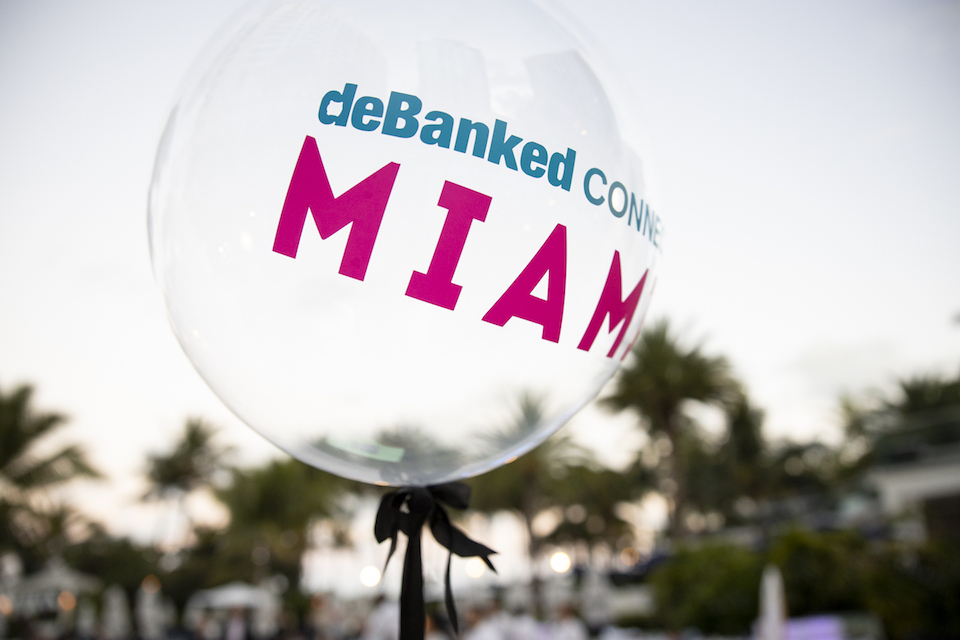 Two blocks back from where the waves were washing up on Miami Beach, attendees flocked into the halls of the Loews Miami Beach Hotel. A mix of brokers, funders, lawyers, and anyone else attracted to alternative finance made up the crowd of the 2020 outing of AltFinanceDaily Connect Miami.
They had come for the speakers and talks, the networking opportunities, and, of course, the weather; the first of these being a mix of topics and characters from across the industry. But before the talks could properly kick off, AltFinanceDaily’s President and Founder Sean Murray took to the stage to welcome attendees and announced the publication’s latest news: the utility of www.seekingfin.com and the administration of two large social media groups, Merchant Cash Advance on Facebook and Merchant Cash Advance Resource on LinkedIn.
 Following on from Murray’s introduction, Brian Holloway, former Patriots Offensive Lineman, opened the show with an impassioned speech alongside his son on how to translate your passions and determination into sales maximization, citing the mantra of “Let’s move as the champions move.” A collection of industry figures including United Capital Source’s Jared Weitz, Elevate’s Heather Francis, and alternative finance veteran David Goldin discussed the challenges and changes that businesses are likely to face when making money in 2020 – including what to be aware of when considering syndication and how to build a book. And closing the show were Gunes Kulaligil from Methodical Management alongside Hans Thomas of 10X Capital, who broke down how to accurately value yourself and your company’s worth.
Running throughout these talks, just off from the general session room, the sponsors hall was abuzz with deals and networking. With business cards exchanged, rumors swapped, and trends discussed, the hall served for the day as a focal point for the industry.
And as the sun set on South Beach, the speakers wrapped up and the sponsors wound down their tables. The audience billowed out into the courtyard, where the lasting Miami heat accompanied food, cocktails, and conversation, as AltFinanceDaily Connect Miami closed for another year.

Big Money, Small Town: How SBA Loans Are Powering America
December 26, 2019
 “The Mountains Are Calling” is the motto of Gatlinburg, an East Tennessee town of roughly 4,000 citizens known for its spectacular views of the Smoky Mountains and as a jumping-off spot for hikers, campers and winter skiers. The town also offers attractions such as Ripley’s Aquarium and arts-and-crafts festivals.
To get around, 800,000 tourists and locals alike hop aboard the 20-odd trolley buses operated by Gatlinburg Trolley, the private transit system. Few riders marveling at the picturesque scenery and enjoying the sprightly vehicles, which recall San Francisco’s cable cars, know that they’re riding a custom-made trolley-bus built by Hometown Trolley of Crandon, Wisconsin.
 And even fewer would know that the chief executive and president of that company is Kristina Pence-Dunow, making it the only female-owned manufacturer of transit vehicles in the US. Bolstering the manufacturing enterprise—which Pence-Dunow acquired in 1997 from her ex-husband, who wanted to “liquidate” it, she says—have been multiple bank loans backed by the Small Business Administration.
The most crucial SBA loan came in 2005, she says, just as she was nearly driven out of business in a price war. “We had to be innovative” to survive the cutthroat competition, Pence-Dunow told AltFinanceDaily in a telephone interview.
Using a $350,000, five-year SBA credit issued by River Valley Bank (now Incredible Bank of Wausau, Wis.), the transit company developed the prototype for a “lowfloor entry vehicle.” The design feature made her trolleys accessible to riders with walkers and wheelchairs and enabled the company to beat out its competitor for a key contract with Hampton Roads (Va.) Transit. That deal, in turn, generated sales to transit authorities in Miami Beach, Laguna Beach, and the University of Oklahoma.
Subsequent SBA loans, Pence-Dunow says, enabled the company to create its own dealer network and develop battery-powered, clean-energy vehicles. The financings also allowed her to buy out, in 2016, the rival trolley company that had tried to run her buses off the road.
Her grit and determination—for many years Pence-Dunow ran the company as a single mother raising two children—have also paid dividends for her Wisconsin community. With annual sales of $20 million and 65 employees receiving health and life insurance as well as pension benefits, Hometown Trolley has brought good-paying jobs to successive generations of families in the Northwoods.
In 2018, she earned the SBA’s “Small Business Person of the Year” award for the state of Wisconsin.
Hometown Trolley, meanwhile, is just one of 30 million small businesses that make up the backbone of the US economy. Small businesses—a small business is broadly defined as a commercial or professional enterprise with fewer than 500 employees—accounted for the employment of 58.9 million people in 2015, according to the US Census Bureau’s most recent figures. That’s just shy of 50% of the country’s total workforce. And it seems that the smaller the better: In 2018, firms employing fewer than 20 employees added 1.1 million net jobs to the US economy, the largest gains among the small business cohort.
 By contrast, large manufacturing companies only employ about 11% of the total workforce, notes Karen G. Mills, former SBA administrator and member of President Barack Obama’s cabinet. The bottom line is that the contribution to the economy made by both small business and the SBA “is under-appreciated,” says Mills, now a senior fellow at Harvard Business School and author of Fintech, Small Business & the American Dream. “It’s a much more powerful job-creator than the manufacturing component of the US economy,” she adds.
During the Great Recession, which coincided with her tenure at the SBA, Mills reports that 60% of the country’s job losses were in the small business sector. As many as 1.8 million jobs disappeared in a single quarter in 2009. Mills credits the SBA’s lending as playing a key role in buffering the US economy against even more severe ravages.
To help reverse the economic free-fall, the SBA eliminated all SBA fees and temporarily upped the 75% government credit guarantee to 90%. The agency also persuaded a thousand commercial banks that had not issued an SBA-backed credit since 2000 to turn on the spigots. “Banks are the primary source of financing for small businesses,” she notes. “They (small businesses) can’t go to the credit markets like big business does.”
S.R. Rosati, Inc., an Italian ice manufacturer based in Clifton Heights, Pa., is one of those small businesses that nearly went belly-up. Headed by Richard Trotter, a West Point graduate, former US Army captain and company president, the Italian ice business is thriving today. It has just under 30 employees and reports annual sales of $10 million. But ten years ago it was in desperate straits. “Even though we’re a 100-year-old company,” Trotter says, “we could have been like a ton of businesses that went out of business every week. The SBA helped us get through tough economic times in 2007-2008 when a lot of businesses took a hit.”
The SBA’s flagship product is the 7(a) loan, which range up to $5 million. Almost 2,000 US banks, as well as a number of nonbanks, participate in the program. The loans are currently backed by a 75% government guarantee and are targeted to those entrepreneurs who, the SBA states, “otherwise would not have access to capital to start, grow, or expand their small businesses.”
An SBA loan, former Administrator Mills explains, “is designed to fill a market gap— to make loans to creditworthy borrowers that the market feels are too risky to make without some support.”
Currently bearing an interest rate of 7.75%-9%, according to financial technology firm Fundera, 7(a) loans are affordable and the terms are fairly generous: typically, the borrower has 10 years to repay the loan. The loans can be used for multiple purposes: as working capital, to purchase equipment and inventory, make a business acquisition, meet payroll, hire new employees, and (in some cases) refinance crushing debt.
If a borrower is eligible and able to secure a 7(a) loan, “it’s the gold standard,” remarks Levi King, chief executive and co-founder of Utah-based Nav, an online, credit-data aggregator and financial matchmaker for small businesses.
William McSweeney, chief operating officer in the business banking section at Citizens Bank in Boston, says that insufficient collateral is most often the reason that a small business fails to qualify for a conventional business loan. With an SBA loan, he says, the government guarantee serves as a bulwark “to cover the weakness of a collateral position.”
 He cites the case of a dentist who’s attempting to acquire an existing dental practice for $1 million. Unless the practice owns a building, McSweeney says, there’s probably not enough collateral to support a $1 million borrowing. Yet the deal is attractive: Dentistry is a reliable industry (or “vertical” in lender jargon), the targeted practice has a solid client base, there’s strong cashflow, and the practice boasts a fully equipped armamentarium. “An SBA loan will guarantee the $1 million loan for 75 percent,” McSweeney says. “Now I can ask, ‘Is there $250,000 in collateral.’ That’s the way I look at it.”
Adds Kirk Jacobson, an SBA lender at Northwest Bank branch in Independence, Ohio: “In my experience, the preponderance of SBA loans have a collateral shortfall. Even lending to hotels or something tangible can be risky. The collateral (the hotel) can lose value quickly. The challenge for banks like ours is to use the SBA as the tool where conventional lending doesn’t work.”
By at least one yardstick SBA lending appears to be at a crossroads. The SBA reports that the number of small businesses taking advantage of the 7(a) program fell by 13% in the most recent fiscal year, which ended September 30, 2019. The 52,000 small businesses securing 7(a) credits in 2019 was more than 8,000 fewer than the previous year. The dollar amount of credits acquired also dropped; the $23.7 billion in lending was a 6.5% drop.
This is being taken as a good sign by the agency. “A strong economy is powering America’s 30 million small businesses, and the SBA’s numbers bear that out,” Chris Pilkerton SBA’s acting administrator and general counsel, said in a recent statement. “When the economy is doing well, 7(a) lenders are more willing to provide capital without the need for a federal loan guarantee.”
But even small businesses that are outwardly healthy and experiencing growth often face hardship. Consider the case of Kyle McClelland, owner of Have Lights Will Travel, a Reno-based contractor that handles illumination for office buildings, stores, parking lots, and warehouses across northern Nevada. He got in over his head this year when he subcontracted lighting work for Macy’s and Target parking lots in a string of northern California cities.
There was no money advanced by the main contractor for materials, wages or expenses, he says. As a subcontractor, McClelland doesn’t get paid until the job is done. Yet, almost overnight, he doubled his workforce to 70 employees, footed the bill for a platoon of workers to lighting equipment, all of which exhausted his $100,000 line of credit with a Reno bank. His situation looked dire and it was taking an emotional toll. “The company was on life support.” he says. ”I realized that I needed extra funds to make payroll. I honestly didn’t sleep for months. I was lucky to get three hours of sleep a night.”
McClelland was bailed out in August when he secured a $350,000 line of credit through an SBA Express loan fronted by Five Star Bank, a Sacramento financial institution. SBA Express loans, which are part of the 7(a) program but carry only a 50% government guarantee, can be made in as few as 36 hours. But McClelland says that it took him four weeks to obtain the loan.
Trotter, the owner of the Italian ice company, says that his business too is in an expansion phase and that its financial situation was cramped. He had been saddled with a pricey, short-term note for $1.4 million that was weighing down business. With the intercession of Multifunding, a Philadelphia-area broker, Trotter took out a $2.5 million, 10-year loan with Celtic Bank in Utah at prime plus 2.75%, his third SBA loan in 20 years. The refinancing, which closed in late July, is saving him $30,000 in monthly cashflow, he says, more than $100,000 to date.
“Now we can play a little bit of offense,” he says. “We have the up-front money to go into convenience stores and supermarkets with our product.”
One common experience of the business-people who spoke to AltFinanceDaily is that assembling the required documents and applying for SBA loans can be a daunting and often discouraging task. “The whole thing with these loans is making sure the I’s are dotted and the T’s are crossed,” says Domenic Rinaldi, managing partner at Sun Acquisitions, a Chicago-based firm specializing in lower middle-market, merger-and-acquisition deals using SBA loans. “The government is demanding,” he adds, “and if everything is not in order, you won’t get your money.”
To cut through the inordinate amount of red tape, many businesses turn to brokers like Multifunding and other financial midwives, who receive a commission from the bank. “The fastest I’ve done an SBA loan is two weeks and the longest is 18 months,” says Ami Kassar, founder and chief executive of Multifunding. He says that the firm’s SBA credit business constitutes 70% of his work and that he relies on a network of 10 banks. “The average time it takes for an SBA loan is probably 90 days,” he adds.
“Grueling” is how Daniel Shemtob of Los Angeles describes his experience obtaining an SBA loan. “I had gone to 30 banks,” he says, “and I did qualify for a loan but I didn’t like the deal.”
Shemtob is the chief executive and—thanks to securing an SBA backed financing for an acquisition—the sole owner of The Lime Truck, which has bragging rights to winning the Food Network’s “Great Truck Race.”
In addition to the truck, his Southern California business also includes a couple of brick-and-mortar restaurants and a catering company. The operation, which will do $5.5 million in sales this year, employs 40 full-time workers plus part-time catering help.
Shemtob finally scored an SBA loan with assistance from Kassar’s Multifunding, which he found through Entrepreneurs’ Organization, where he’s a board member of the L.A. chapter. He was able to take out a pair of 10-year loans totaling $1.8 million with IncredibleBank at prime plus 2.75%. Even with a broker, he says, it took him three months to get the loan, which closed earlier this year. “The ten-year loans give you stability and an affordable payment,” he says. “If I hit my sales targets,” he adds, “the loans will allow me to grow the business.”
But what if he hadn’t obtained SBA-backed financing? “I don’t know if the company would be around today,” Shemtob says.
SBA loans used for acquisitions play a major role in extending the life of enterprises that likely would have disappeared upon the retirement or death of an entrepreneur, the unwillingness of succeeding generations to take control of a family business, or the break-up of a partnership, notes Rinaldi, the Chicago M&A specialist.
To arrange SBA acquisition loans for purchasers of small businesses, Rinaldi deals mainly with 18 banks, including Busey Bank (Champaign, Ill.), U.S. Bancorp (Minneapolis), Byline Bank (Chicago) and Canadian Imperial Bank of Commerce (Toronto). “Banks may say, ‘Bring us all your manufacturing deals’ and two years later there’s a management change and they’ll only make loans to distribution and service companies,” Rinaldi says. “Part of my job is understanding which sectors are handled by which banks.”
 Meanwhile, an emerging debate is brewing within banking circles about the best use of SBA 7(a) loans, which were capped at $28 billion in the last fiscal year. While the overall U.S. economy has continued to prosper since the Great Recession, and the official unemployment rate has dipped below 4%, the lowest in 50 years, the bounty is being shared unevenly. While most large US cities and suburbs are generally adding jobs and experiencing good times, many rural areas and Rust Belt communities are dealing with stagnant wages, job losses and population outflows.
The question is: Should more banking resources be directed to distressed communities through SBA loans? Or should the banking industry lend as it sees fit, largely focused on profitability and shareholder value, albeit within the SBA’s guidelines, perhaps with a nod to businesses owned by women, minorities and veterans? Many banks incorporate both philosophies. But this dichotomy in operational goals can sometimes be seen in sharp relief.
The stark difference in SBA lending practices between Live Oak Bank of Wilmington, N.C. and Northwest Bank of Warren, Pa. is a case in point.
With $4.6 billion in assets, Live Oak Banking Company, which was founded in 2007, is just a dozen years old but it’s already become the No. 1 SBA lender in the US. In the most recent fiscal year, from just one branch on North Carolina’s seacoast, it made 913 SBA loans totaling $1.347 billion, an average of nearly $1.5 million per loan. To comprehend the magnitude of that accomplishment: Live Oak nearly lapped Wells Fargo Bank, the No. 2 lender with $786.4 million in loan totals, despite the latter’s making triple the number of SBA loans. It also out-lent such worthies as J.P. Morgan Chase and Bank of America, both of which lagged well behind Live Oak in the SBA lending tables.
With its adroit use of technology and its meteoric rise to become an SBA powerhouse, Live Oak has emerged as a Wall Street darling. Thomas Brown, a founder and chief executive at Second Curve Capital, a hedge fund that invests exclusively in financial services companies and manages $150 million in assets, calls Live Oak “a freak of nature.”
“For their veterinarian-lending practice,” Brown observes, “they hire a vet as their lending officer. They do this with all their verticals, whether it’s chicken farming or funeral homes. And when they’re dealing with a client, they have all this incredible expertise.”
Steve Smits, chief credit officer at Live Oak, told AltFinanceDaily that the bank now lends to 29 verticals across all 50 states. Its most recent additions were early childhood education centers and franchisees for aftermarket companies like Jiffy Lube and Meineke. Not only does Live Oak have experienced loan officers with deep knowledge of their sectors making the loans, but the bank is conscientious about keeping up with its clients. So much so that it maintains a stable of consultants, accountants and other professionals who are on call to add value.
For example, says Smits, a former associate administrator of the SBA’s office of capital access, one of Live Oak’s board members is Jerald Pullins, a former president of Service Corporation International, the Houston-based owner and operator of nearly 1,500 funeral homes and 481 cemeteries in the US and Canada.
For critics who say that an SBA lender should be modeled on George Bailey, the small-town banker immortalized in “It’s a Wonderful Life,” Smits says: “On a moral plane, we visit 100 percent of our small business owners face-to-face at a minimum of a two-year rotation. With 10-year loans, it would be easy to take a hands-off approach, but we’re very vigilant.”
Smits adds: “We’ve had our customers say to us, ‘You know what. You’ve traveled across the country to see me. And I’ve been banking with the branch down the street and they’ve never been in my office.’”
Founded in 1896 and headquartered in Warren, Pa., Northwest Bank’s service area looks like a jagged triangle traversing three states, running from Lancaster, Pa. to greater Cleveland to Buffalo, N.Y. and back. Inside the tri-state perimeter are a plethora of gritty old factory towns and Rust Belt communities.
“Our banks are located in all kinds of small cities,” Jacobson, the bank’s chief SBA lender, says. “I’m biased,” he adds, “but I believe in reinvesting in our communities. Our business model is to lend in our footprint. It’s where our branches are and where our clients are. Our strategy is not to lend around the US.”
One example of Northwest’s targeted SBA lending, Jacobson says, can be seen in Lorain, Ohio, a city of 64,000 on Lake Erie that is working to reinvent itself. Lorain was once the proud home of iconic heavy industries like the American Ship Building Company, a Ford Motor assembly plant, and U.S. Steel’s sprawling mill on the city’s south side. The economy was so dynamic that it “outshined Cleveland” says Kevin Nelson, the Lorain-based president of Northwest Bank’s Ohio region.
 But in the 1980s deindustrialization began to take its toll and the city experienced high unemployment, rising poverty, and urban decay. Now, however, Lorain is hoping to rise like the mythical Phoenix from its ashes. And Northwest Bank is doing its part by marshaling resources in concert with the city’s government, the Black River Port Authority, the Chamber of Commerce, the Lorain Historical Society and other citizens groups to transform the waterfront and downtown into an entertainment center and destination for weddings, rock concerts, and other events.
Nelson is bullish on the just-completed Broadway Streetscape, in the heart of downtown, which has given Lorain a physical makeover. There are, Nelson says, “new sidewalks, lighting, archways, and parking areas.” Condominiums are being built and the marina is under new management, which could make the city a boating center. Black River Landing has become a magnet for celebrants with more than 200,000 people attending the “Rockin’ on the River” concerts over the summer. And the city is witnessing “new restaurants, coffee shops, bars, and other gathering places for people,” the banker says. “We’re seeing outside investment and we’re just beginning to see Lorain becoming a destination for millennials.”
Many of the trendy new establishments are being financed with SBA loans. “SBA lending has helped us support some of these new ventures coming in,” Nelson says. “They don’t make up for bad credit, lack of a business plan or cashflow,” he adds. “It has to be the right type of business. But SBA loans are a component.”
Who knows? Maybe Lorain will be home to the next Ben & Jerry’s or Calloway Golf, both of which commenced life as small business start-ups. A city can hope, can’t it?
Deal Flow in the Heartland — From Mississippi and Beyond
February 23, 2019
 The political, cultural and economic abyss that separates the heartland from the coasts seems to grow deeper and wider with each passing day, and trying to reconcile the disparities can feel nearly hopeless. But differences among geographic locations aren’t nearly so well-defined or as troubling in the alternative small-business funding industry. What’s more, business opportunities can arise when localities differ.
First the lay of the land: Members of the alt finance community agree that funders and brokers are concentrated in just a few geographic locales—Greater New York City, Southern California and South Florida. Those three areas probably generate more than 75 percent of the industry’s volume, according to Jared Weitz, CEO of United Capital Source and one of three co-chairs of the broker council recently formed by the Small Business Finance Association (SBFA).
Sorting out how the industry differs in various regions can prove challenging. The Internet is erasing regional quirks and alleviating the need for physical proximity, says Steve Denis, SBFA executive director. What’s more, every ISO and funder develops a slightly different way of doing business regardless of location, he notes.
However, to a great degree it’s a matter of tweaking a single general outline for navigating the industry no matter where the office or client is based. That’s partially because many members of the industry conduct business in every state or nearly every state.

That said, old-fashioned, small-town ethics can sometimes seem closer to the surface in shops operating far from the coasts. “We’re focused on the values of our organization—like doing what we say we’re going to do, maintains Tim Mages, chief financial officer at Expansion Capital Group, a funder and broker based in Sioux Falls, S.D. “Some of that maybe comes from the Midwest culture or upbringing.”
Outside the major population centers, the industry occasionally seems a little more “laid-back.” In a light-hearted example of a relaxed heartland approach to the alt funding business, Lance Stevens, an attorney who’s a co-founder of Brandon, Miss.-based TransMark Funding, claims he can underwrite a deal while driving his golf cart and listening to Bon Jovi—all while maintaining his under 5 handicap.
Everything can seem a little more slow in the heartland, where people have time to stop and say hello to strangers, says Weitz. “Some folks are like, ‘Hey, my mailbox is three miles from my house, I check my mail once a week. I do not email. I do not fax,’ ” he observes. “It’s a nice change.”
Interactions are often more informal between the coasts. “Being in the Midwest we don’t use a lot of the lingo and terminology from this space, such as ‘stacking,’” says Austin Moss, a managing partner at Strategic Capital in Overland Park, Kan. That lack of jargon may be good or bad, he admits, but instead the staff speaks in a more general, even “holistic,” financial language.
Then there’s the occasional need for the human touch in the heartland. Deals there are sometimes sealed in person, with an office-park conference room substituting for the community bank building on the town square where merchant used to take out loans. “It’s not a widespread trend, but a handful of the ISOs we do business with actually do face-to-face solicitation,” says Mike Ballases, CEO of Houston-based Accord Business Funding.
In line with that mini-trend, an ISO based in Southern California operates a Texas office that specializes in face-to-face encounters, according to Aldo Castro, Accord’s former vice president of sales and marketing. “It’s rather meaningful here,” he says of using the practice in Texas. “You get on the road and shake a hand. They put a face to a name.”

The process can work in reverse, too. A few of the larger local companies seeking funding from Strategic Capital make the journey to the broker-funder’s Overland Park, Kan., offices, Moss says. Bankers who serve as referral partners also like the opportunity to meet in person, he observes.
The personal encounters often strike Moss as “refreshing,” he admits. That’s because the vast majority of the company’s deals occur online and by phone and fax—all without ever seeing the client in person.
Although the desire for personal contact arises from time to time, most heartland deals don’t hinge upon it. “It’s not a big number, but we see it,” Ballases says of face-to-face meetings. “Could it be the wave of the future? Absolutely not.”
Moreover, for some in the industry, the need for face-to-face discussions barely registers. It’s just not about meeting in person, according to Mages. Instead, he cites the importance of other factors. “Speed, convenience and service are the key differentiators, and that’s all driven by data and analytics,” he declares. Partnerships also drive the company’s business, he notes.
Luck outweighs geography, too, in Mages’ view. “It’s more an issue of right place, right time,” he contends. Deals occur primarily when funders manage to attract business owners’ attention at exactly the time when capital’s needed, he contends.
 Besides, lots of people tend to think in wide-ranging ways these days instead of in narrow, provincial modes, Mages continues. At Expansion Capital Group, he notes, executives have differing points of view because they come from commercial banking, investment banking, the Small Business Administration lending program and the credit card industry.
At the same time, people tend to take an increasingly cosmopolitan approach to their jobs, according to Mages. He notes that executives at his company maintain contacts across the continent, often forged in earlier chapters of their careers.
Meanwhile, well-trained employees can use a phone call to gather the details they need and establish a consultative relationship without a thought for geography or the need for face-to-face meetings, Mages says.
However, geography can indeed play a role at least once in a while. In a few cases merchants prefer a funder with an address across town or at least in the home state. Sometimes business owners and referral partners choose local brokers or funders simply because their names sound familiar.
Strategic Capital, for example, does more business at home than anywhere else, Moss says. The company’s headquarters is in the portion of greater Kansas City that spills over from Missouri into the state of Kansas, making the location convenient to a major population center.
But despite the massive size of greater Kansas City, Strategic Capital remains the only alternative small-business funding option in the area—there just aren’t any other local providers, Moss says. It’s not like New York, where banks and merchants can choose from among many brokers and funders, he says.
That trend toward being the only game in town or one of just a few can hold true for most companies in the heartland, Moss maintains. A broker or funder based in Denver, for example, would probably have higher volume there than anywhere else, he notes.
Several reasons explain that geographic bias, Moss continues. “The employees live there and have contacts, and we’re part of the local associations and chambers,” he notes. “We work with just about all the banks in the area, and everyone knows who we are.” The company also handles local government bonds and local construction projects, he says.
Mages offers a different perspective. Only a few small-business owners in South Dakota choose Expansion Capital Group because they prefer dealing with a Midwestern company or because they’ve seen local press coverage or heard Expansion’s recruiting ads on the radio, he maintains.

Hometown, home state or regional preferences aside, executives at Accord emphasize the importance of the small-town approach of knowing their customers as well possible. For Ballases—the Accord chairman who started the company with Adam Beebe, who now serves as CEO—that means combining personal and impersonal approaches to underwriting.
Ballases views funders and brokers as falling into three categories. Some choose a personal, hands-on approach and don’t rely upon algorithms. A second category emphasizes automation. A third blends the personal and the automated. His organization falls into the latter, he says
For Accord, the personal comes into play because of what Ballases has learned in his decades in the banking business. He knows margins and growth rates in his applicants’ industries, and those factors aren’t often incorporated into algorithms, he says.
In fact, commercial banks have failed to learn to evaluate small businesses on their true merits, Ballases continues. Banks tend to underwrite small businesses, which he defines as those in need of $100,000 or less, by using a “skinnyed-down” version of how they underwrite big companies, which they base on general financial information. Instead, he counts on discipline, data and his 50 years of experience in commercial banking to evaluate a merchant on an individual basis.
At another company, TransMark Funding, Stevens and his partner draw upon legal and small-business experience to evaluate potential customers’ creditworthiness. “That causes us to focus on an applicant’s business model and their sustainability, which may boil down to personalities,” Stevens says. Transmark combines those factors with “a little bit of credit metrics” to come to decisions on applications.
The company’s mix of objective and subjective reasoning differs starkly from the thought process at most coastal funders, Stevens says. While his company gives most of the weight to the subjective and just a bit to the objective, big-city competitors tend to do the exact opposite, he says.
Of the last five MCA deals that Transmark funded, the merchants averaged 12 checks returned for insufficient funds per month, Stevens says, noting that he can make that statement “with a straight face.” Sometimes it’s been as high as 35 NSF checks per month for successful applicants. “Those people would not even get into the parking lot of a bank and would not get through the door of any MCA funder who’s using any sort of reasonable metrics,” he adds.
An anecdote helps explain the thinking. Suppose a restaurant has been operating for several years in a town of 50,000 and has amassed 2,200 “likes” on its Facebook page, Stevens suggests. “I’m in,” he exclaims, noting that it would take compellingly negative numbers to convince him that the business won’t survive if he helps it obtains capital to improve its positioning in its market.
The vignette illustrates that a business can do well in the community despite the merchant’s financial difficulties, Stevens says. However, the story doesn’t mean Facebook becomes the only determining factor, he continues. Positive factors for success include good location and marketing, he notes.
The principals at many companies funded by TransMark have credit scores in the low 500’s, Stevens continues. “That’s tough,” he says, “because they’re going to have a lot of history of not living up to their financial obligations.” But if someone with that credit score has personally guaranteed a lease on a storefront for the next two years, they may be unlikely to abandon the business. A big bank might look upon that merchant as insufficiently nimble because of the lease, but TransMark takes the opposite view, he says.
Even if a store, restaurant or contractor is “circling the drain” and about to shut down, TransMark may simply believe the owner has the character to make the business work. “Given our minute default rate, we’re right most of the time,” Stevens maintains, adding that banks see applicants as customers, and TransMark sees them as partners.
The business model requires peering into the future to see how the merchants will look after using perhaps $25,000 in capital to make improvements and while dealing with 18 percent holdback for the next six months, Stevens observes. “If they look strong, I need to fund them,” he says of the company’s prognostications.
To find ISOs who appreciate the TransMark model, the company seeks out purveyors of credit card merchant services, Stevens says. They encounter those merchant-services providers at trade shows and through “some general poking around,” he notes.
The merchant-services people often have long-standing relationships with merchants and thus can feed information into the TransMark way of viewing deals. “Tell me what it looks like when you walk into their store at 11 a.m.,” Stevens says to illustrate the kind of conversation he has with ISOs. “How is their signage?”
Besides understanding clients, it also pays to understand markets, and proximity can help with the latter, according to Ballases and Castro in Houston. “We have an affinity for Texas,” Castro says.
Many of the businesses based in Texas are vendors to people—like mechanics who fix cars or restaurants that feed people—not vendors to businesses, Ballases notes. Vendors who cater to people are better candidates for merchant cash advances than business-to-business companies are, he maintains.

“It’s just a huge state,” Castro declares. “We’ve got a thousand new residents moving to Texas every day.” Nearly 10 percent of the nation’s small businesses operate in The Lone Star State, he notes.
“There’s a convergence of the population growth, a low tax rate, low regulations, low cost of running a small business relative to national levels, and a great small-business environment,” Castro says of the Texas scene. “In addition, the healthcare industry is exploding here, and there are the ancillary businesses to healthcare.”
Meanwhile, the state’s Hispanic entrepreneurs remain under-served by alt funding ISOs, which presents a great untapped opportunity, Castro maintains. Funders who cater to those Hispanic merchants will find them loyal, he predicts. In Texas alone, Hispanic consumers spend half a billion dollars annually, he says.
To capitalize on that burgeoning market, Accord has assembled a team that can help Anglo ISOs bridge the cultural and linguistic gap, Castro says. “We do that every day,” he maintains. “We’re jumping on the phone with merchants and helping them get the funding they need to support the growth of their operations.” Those conversations with merchants do not put Accord in competition with ISOs, Castro notes. Accord does not maintain an inside sales staff and does all of its business through ISOs, he says.
Only a few of those ISOs are based in Texas, according to Ballases. Most of Accord’s ISOs operate from offices in the Northeast, with many in the other common geographic spots of South Florida and Southern California, he says. So that makes Accord a national company despite its emphasis on Texas, Ballases says.
Accord’s experience at home, combined with nationwide contacts in the industry, have convinced the company’s leadership that too many brokers remain unaware of the opportunities in Texas.
That’s why Accord is producing ads, videos, infographics, blogs and social media posts to alert those coastal ISOs to opportunities in Texas. The company even offers a tab called “FundTEX” on its website. “We’re getting the word out,” Castro says of the company’s effort to publicize his state.
Besides operating in areas sometimes overlooked on the coasts, heartland brokers and funders sometimes have to reinvent the industry almost from scratch. Brokers can find themselves teaching the business to potential investors outside the Big Three geographic locations, Moss says. In New York, investors already know the industry and use that familiarity to evaluate brokers, he says.
Brokers and funders also have to deal with the heartland’s lack of workers with industry experience. As the lone company in the market, Strategic Capital, for example, can’t find many prospective employees with previous jobs in the business, Moss notes. “There is no OnDeck or Yellowstone or RapidAdvance down the street to provide a talent pool for hiring,” he says.
That’s good and bad, Moss maintains. New hires don’t require re-training to lose habits that don’t fit the Strategic Capital way of working. But it’s difficult to find underwriters, accountants and other prospective employees with the right background. It doesn’t work to put new salespeople on straight commission because the “ramp-up” period takes longer with employees unfamiliar with the industry, he says.
The lack of local experience sometimes prompts brokers in the heartland to tap the Big Three areas for talent. Expansion Capital Group, for example, has a business development director in New York who came from another ISO, Mages says. Besides cultivating relationships in NYC, the business development expert makes frequent trips to Southern California and South Florida.
Meanwhile, members of the industry who tire of the rapid pace on the coasts might want to consider moving inland to fill the vacant jobs, sources suggest. After all, the heartland has its advantages, according to Moss. “Most people here have houses, and the cost of living is lower than in places like New York,” he says. A spacious five-bedroom house in Kansas City might cost less than a cramped apartment in New York, he notes.
To commute to the company’s suburban office, his typical employee jumps into a car in a climate controlled attached garage, cruises for half an hour or so on roads relatively free of traffic and parks in the lot a few steps outside his office building. It’s less stressful than crowding into a subway car, he notes.
The hinterland’s not as culturally barren as some might believe, Moss continues. The public hears “Kansas City” and they think of tornadoes, cows and the Wizard of Oz, he says. But the reality includes a downtown replete with skyscrapers and pro sports, not to mention lots of tech, healthcare and aerospace companies. “It’s like a mini-Chicago,” he notes.
But a retreat from the coasts may not be in the offing. Ballases expects that the majority of ISOs will continue to concentrate on the East Coast and West Coast because that’s where population growth remains strongest and thus provides the most opportunities. “It’s a numbers game,” he observes.
THE ABCs OF SBDCs
December 16, 2018 An often-overlooked national network of nearly a thousand Small Business Development Centers has the potential to help alternative funders cement relationships with existing clients and locate new ones. The centers, known as SBDCs, offer free or low-cost training and consultation to established and aspiring merchants and manufacturers.
The earliest SBDCs have been around for four decades. The centers operate in conjunction with the Small Business Administration as public-private partnerships and serve about 1.5 million clients annually.
Centers help small-business owners evaluate ideas, organize companies, find legal assistance and obtain operating capital.
But not everyone knows all that. “The network is underutilized,” says Donna Ettenson, vice president of operations for Washington-based America’s SBDCs, which functions much like a trade association for the centers scattered across the nation. “We’re one of the best-kept secrets in the United States federal government.”
That means alternative funders can assist customers by simply informing them that the centers exist and can offer potentially beneficial services. Providing basic information on the SBDCs could become part of a consultative approach to selling that brings repeat business, especially with merchants who lack business skills or experience, observers suggest.
What’s more, alt funders who want to increase their chances of benefitting from SBDCs can go beyond merely providing clients with a rundown on the centers. The funders can become actively involved with the work of carried out at the centers.
One way of taking part is to contact nearby centers and offer to make presentations at seminars or workshops, Ettenson says. Funders could provide information to fledgling business owners on the instruments available through the alternative-funding industry, such as cash advances, loans and factoring, she suggests.
 To get started, alternative funders can visit the America’s SBDC website, where they’ll find a search tool that provides contact information for their nearest centers, Ettenson says. From there, they could discuss possible connections with officials at the local centers, she advises.
That involvement would not only provide exposure to merchants in need of capital but also to center officials who point merchants toward capital sources. If enough members of the alt funding industry took part, their work could eventually give rise to something akin to the lists of attorneys that some centers maintain, Ettenson says.
Centers often tap attorneys—perhaps quarterly—to lecture on a rotating basis on what type of business to form. That could mean organizing as a corporation, limited-liability partnership or some other form. In much the same way, funders could share their knowledge of instruments for obtaining capital.
Funders could emulate the lawyers who use the centers as a forum for soft marketing, Ettenson says. The speaker becomes a familiar face and can leave business cards that students could use to contact them as questions arise. However, speakers must provide general information and are prohibited from using speaking opportunities as blatantly self-promotional unpaid advertisements, she cautions.
What’s more, the centers have to exercise caution to avoid recommending specific attorneys, accountants or sources of capital because they could incur liability if events go sour and a service provider absconds to Bogata, Columbia, Ettenson points out. That keeps the centers “ecumenical,” in that they provide a list of professionals for clients to interview and rather than pointing to a single source.
Alternative funders can explore other ways to become involved with SBDCs, too. The national organization presents an annual trade show and professional development conference for service-center directors and service-center staff members who teach or consult with clients. Alternative funders who have taken booth space on the exhibition floor or made presentations in the accompanying conference include RapidAdvance, Breakout Capital, Kabbage and Newtek Business Services.
When America’s SBDCs issues a call for presentations at the annual conference, it receives approximately 300 applications for about 140 speaking slots. Some of the speakers come from the rosters of presenters at past shows, while companies newer to the trade show can purchase an entry-level sponsorship that includes booth space and the right to conduct a workshop.
The attendees at those annual conferences can tell their clients about the funders they encounter there. Attendees can also find out more about the alternative- funding industry and then pass that information along to merchants.
Some regional centers in states with large populations—such as California—can also hold conventions for their officials, says Patrick Nye, executive director for small business and entrepreneurship at the Los Angeles Regional SBDC Network, which is based at Long Beach City College. His state was planning its second statewide gathering this year and intends to do it again every other year. Alternative funders could participate, he says.
With so much going on at the centers, someone has to front the cash to keep the lights on. Local organizations are funded partly through federal appropriations administered by the SBA. “In order for the federal money to be pulled down, a matching non-federal dollar must be provided as well,” Ettenson says. The federal funds are apportioned based on the amount of matching funds the centers provide.
The matching funds usually flow from colleges, universities and state legislatures. “It’s a mix,” Ettenson says of the sources. Institutions of higher learning often meet part of their matching-fund goals by providing “in kind” resources—such as classrooms, services and instructors—instead of cash.
In the six states that administer the centers through their economic development departments, the state legislatures generally appropriate matching funds. In Texas, the representatives of the state’s four regional programs combine forces to lobby the legislature for matching funds, and that teamwork reduces the cost of their efforts in Austin.
The federal funds and matching funds support local and regional centers that belong to a network based on 62 host institutions. Of the 62, six operate through the economic development departments of state governments. They’re in Indiana, Illinois, Ohio, West Virginia, Minnesota and Colorado. The rest of the host institutions are mostly universities or community colleges. Some are based in economic development agencies.
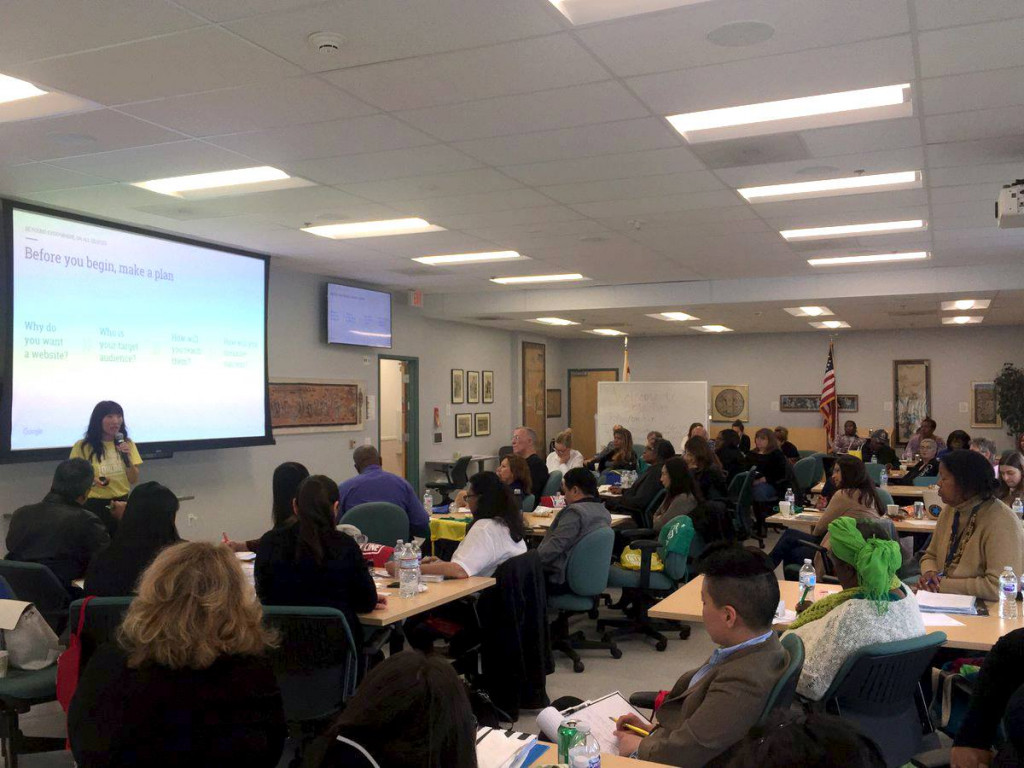
One can think of the regional centers as something akin to corporate headquarters and the local centers as retailers, says Nye, who administers the Southern California regional center. The local centers under his regional’s jurisdiction are located in only three counties but pull in the sixth-largest share of funding because of Southern California’s huge population, he notes.
The local service centers provide training and consulting for entrepreneurs starting or expanding their enterprises. About 60 percent of the clients are already in business. Of the 40 percent who don’t own a business, about half launch one after receiving assistance from an SBDC, Ettenson says.
The centers don’t charge for consulting services, and the fees for training are just large enough to cover expenses. The training fees usually remain in the centers that provide the instruction where they’re used to cover expenses like buying computers.
In Southern California centers, the business advisors are usually under contract and have knowledge to share from their experience in business, marketing, banking, social media, consulting or other realms, says Nye. Not many college instructors work in the centers, he notes, adding that the centers are monitored to avoid conflicts of interest among advisors.
To track how well advisors are performing, the national organization produces economic impact statements by interviewing thousands of clients. Interviews generally take place two years after consulting sessions. That should provide enough time to get results, Ettenson says
Thus, America’s SBDCs this year surveyed clients who received services in 2016. Those long-term clients received $4.6 billion in financing, while last year the clients surveyed who got underway in 2015 had received $5.6 billion in financing. She could not break down that financing by categories like banks and non-banks.
Discussing those surveys, Ettenson offers some details. “If you talk to us for two minutes, we don’t consider you a client,” she emphasizes. The SBDC definition of what constitutes a client calls for at least one hour of one-to-one consulting or at least one two- hour training session, she says. The organization defines “touches” as people with less exposure, such as those who call on the phone with a question.
When an SBDC client needs funding, officials at the centers have no qualms about including alternative funders in their recommendations to clients who are seeking funds, says Ettenson. “We don’t exclude anybody in any way, shape or form unless there’s some reason to think they’re fraudulent,” she notes.
But malfeasance isn’t the worry it once was, Ettenson asserts, noting that alternative funders have gained credibility in the last five or so years as they began policing their own industry. “They’ve learned to keep track of who’s in their space and how they’re operating,” she says.
Alternative financing has established a niche that benefits small-business people who know how to use it, Ettenson maintains. “They understand that they’re borrowing money for a short period of time and it’s going to cost you a fair amount,” she says. “It’s a short-term bridge to get to whatever your goal is.” Merchants seeking funders should learn the differences among alternative funders—whom she says all operate a little differently from each other—to choose their best option.
And opportunity for alternative funders may abound at the centers in the near future. Nye cites the two biggest goals for his centers as new business starts and capital infusion. Center advisors help develop business plans that aid clients in obtaining financing, he says. Last year, his region received a little over $4 million from the SBA and used it to help start 365 new businesses and raise $148 million in capital infusions. Those efforts created 1,700 jobs, he says.