What’s Happening to Trucking?
April 10, 2024 When AltFinanceDaily examined the trucking industry in late 2022, the cost of trucks had shot up while margins were being squeezed. Since then major trucking firm Yellow Corp filed for bankruptcy, a bank in Iowa went belly up over bad trucking loans, Fox said that trucking had entered a Great Recession, and Freight Waves labeled trucking a “bloodbath.”
In the Freight Waves story, it summed up the issue as “too many trucks and not enough freight to move.” Other trade publications have said the real issue is a shortage of truck drivers.
AltFinanceDaily pulled some of the granular stats from acclaimed data source Bizminer to see what was happening under the hood.
For General Freight Trucking (over long distances), average revenues were down approximately 20% between 2018 and midway through 2023. For refrigerated trucking services, average revenues were down 24% over the same time period. This drop coincides with a rapid rise in inflation, which means that the dollars generated more recently have even less purchasing power than they did in 2018. For example, $1 million earned in 2018 would equate to $1.24 million earned in 2024. So if one’s revenue didn’t keep pace with that, or worse yet, dropped significantly from where it had been, then they would be worse off. That’s what’s happened to trucking.
Or as the lenders in the commercial finance industry have noticed, trucking has been a complicated business as of late. Between the compressed margins and potential risks, some have opted to suspend working with this segment to err on the side of caution. It’s a big business to step away from given its depth and impact. At last count, for example, 8.4 million people worked in the trucking industry, of which 3.5 million were truck drivers. So even if one doesn’t finance trucks or lend to trucking companies, just about every business there is still depends on trucks to ship and deliver supplies. So what’s happening to trucking affects everyone.
From A to D: How LCF is Aiming High
October 9, 2023
Robert Kleiber was a banker. He started his career at Citi in 2000 and rose up the ranks to become Head of Small Business Banking for North America by 2014. By then times were changing and disruptive fintech technology was becoming the talk of the town. Kleiber saw it firsthand and wanted in. So, he made the daring move to leave Citi in 2016 to go make his mark in the rapidly evolving world of small business finance.
He first served as the CFO of an NYC-based fintech company until another unique opportunity presented itself. It was at a growing company on Long Island that he hadn’t really known that much about previously. The way Kleiber tells it to AltFinanceDaily, the company had a way of communicating the scale of its aspirations that got him really excited. He went for it. The company was called The LCF Group, a revenue-based financing provider that was headquartered in New Hyde Park. Today, Kleiber is the CFO & COO of the LCF Group. Founded in 2011, the company has solidified itself as a stalwart in what folks often call the “C & D paper” space.
“The goal,” Kleiber reveals, “is to be largest subprime funder by the end of next year.”
That’s a lofty ambition. In an industry oft-filled with big talk and rosy projections, LCF’s trajectory actually appears to support this possible outcome. Between in-office and remote, the company already has approximately 200 employees and it’s been on a hot streak of recruiting talent. Most compelling of all, however, is that LCF recently acquired select strategic assets and licensing rights to a well-regarded name in the industry, Reliant Funding. At the time of the announcement, the company said that “This strategic move not only enhances LCF’s portfolio but also empowers us to offer merchant funding through both ISO partners and directly under the LCF and Reliant brands.”
 “On the direct side, our plan is to build up Reliant on originations […] and get them back to where they were before,” Kleiber says.
In that regard, LCF fully intends to leverage the Reliant name back into a powerhouse funding arm in the prime paper arena, first by going direct to merchant and then by taking on ISO/referral business for it. Between its two brands then, the company is on its way to covering the gamut from A – D. Unsurprisingly, all of this activity requires strong technology to make everything work. Kleiber says that they have 20-25 developers constantly building out their systems, which they rely on to not only increase the speed in which they can approve deals but also to achieve maximum compliance.
“We take compliance super serious,” Kleiber says. “Our differentiator is transparency, operating above board.”
LCF’s new Director of Sales, Jason Redding, who previously spent ten years at OnDeck, echoes same. “Even though it’s C & D paper, we’re doing this the correct way,” Redding says. Redding, who experienced the incredible ride at his former employer from startup to IPO and beyond, explains that LCF is giving him a similar feeling of what that journey was like. “Being part of something like that again is something I’m looking forward to,” he says.
And yet when it comes down to product, the company is perfectly content for the time being to focus on what they’re good at, which is revenue-based financing through and through. They’ve determined it’s better to lean in and try to be the best at something rather than try to offer too many different things.
At the LCF office in New Hyde Park, one can find various departments working to carry out the company’s mission. Among the introductions and small talk made during a walkthrough, one line uttered by a veteran member of their team stands out. “In this industry you don’t have to be earth shatteringly different, just operate with honesty, integrity, and transparency, and success will follow.”
The Growth of IDIQ
September 7, 2023 IDIQ is no stranger to recognition. A leader in identity theft protection, the company has earned a spot on the Inc. 5000 list for four consecutive years. Founded in 2009, IDIQ began its journey with a handful of employees in a Southern California home before expanding to an office building in Temecula, CA. The Temecula location grew to seven buildings, opening additional offices in Illinois, Florida, and Arizona, along with hubs in Texas and New York.
“Yes, we’ve grown rapidly,” said Bryan Sullivan, Chief Operating and Financial Officer at IDIQ. “We’ve hired more than 150 employees in the last three years to facilitate our business growth. We currently have about 250 employees.”
According to Sullivan, the COVID-19 pandemic catalyzed two significant trends that contributed to IDIQ’s growth. First, there was a spike in online scams and identity theft. Second, there was an increase in consumer finance transactions, including credit card use, home purchases, and refinances.
Sullivan recalled one case in particular: “We had a member who received an alert that two companies, not accounts but companies, had been opened in a different state by an identity thief using their name and personal information and had applied for business loans,” said Sullivan. “We alerted the member to the fraud and helped them get the bogus companies eliminated.”
“Without these alerts it might have taken years for the victim to find out about the identity theft and bogus companies and loans in their name,” Sullivan explained. “And, once found out, it would take months if not years to recover their identity and credit and cost thousands of dollars in lost wages and other costs.”
An IDIQ customer can be pretty much anybody since they now have several brands. IdentityIQ, which focuses on identity theft and credit monitoring is their flagship. The others include MyScoreIQ, Resident-Link, Countrywide Pre-Paid Legal Services, and Credit & Debt.
In the small business finance industry, IDIQ is used several ways. In one example, brokers can offer merchants access to their credit reports and in turn use that data to help them figure out the best path to pursue for funding.
“Our strategy has been to continually expand our product offerings,” he said. “Adding features and benefits that protect and educate consumers as well as improve their financial wellness and help them meet their financial goals.”
How Raising The Debt Limit Affects MCA
May 22, 2023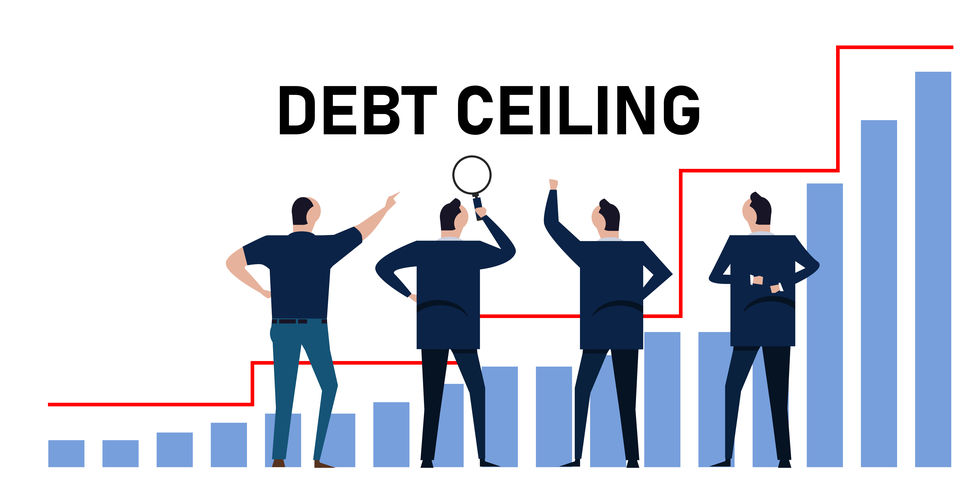 Every few years, particularly during the administration of a divided government, the threat of a default on raising the debt limit of the United States rears up in the political and economic spheres. While both sides tend to play chicken before ultimately settling on a negotiated outcome that they can sell to their bases, the current debt limit crisis feels more serious as the X date of June 1 looms with no settlement in site.
This crisis has a significant effect on various industries, and amongst them is the merchant cash advance business. MCA companies are heavily relied upon by small businesses for immediate financial needs, and understanding what this crisis means for the industry is crucial for getting through it unscathed.
Let’s compare the current landscape to running a business:
When a company opts to increase its debt limit, it essentially seeks to borrow more money, trading liability for an asset. For example, if the company’s equity is worth 100 billion dollars, borrowing doesn’t change this figure as long as the borrowed amount is an idle asset in their account.
The U.S. government should theoretically operate similarly to a regular company, borrowing only what it can pay back, but with the only growing expenses, when the government borrows money and raises the debt ceiling, it doesn’t always have enough funds for repayment.
In addressing its fiscal shortfall, the government operates distinctly from a conventional business. Unlike a company compelled to confront its financial mismanagement head-on, the government possesses the ability to print additional U.S. dollars. However, this course of action inherently devalues the currency.
For the sake of illustration, consider the worth of the dollar as a fixed entity. Suppose every thousand dollars equates to one bar of gold. If we slice this bar of gold into a thousand pieces, each piece represents $1. When the government initiates the printing of more money, it is essentially the government carving that same bar of gold into tinier segments. Meaning, if sliced in 2,000 pieces, the same bar of that once held the value of $1,000 is now $2,000. The total quantity of gold remains constant, regardless of whether it’s divided into 1,000 or 2,000 slices. However, with increased currency in circulation, each dollar—like every slice—holds less value, thereby shrinking everyone’s piece of the proverbial gold bar.
Now that we’ve explained the dangers of wantonly raising the debt limit, how does this affect MCA companies?
The debt limit crisis’s impact on MCAs is pronounced due to the time-value factor of money.
Suppose a mortgage of $100,000, repaid with interest over 30 years, amounts to $300,000. If the value of the dollar reduces significantly over this period – say by 50% – the bank, despite appearing to make a profit, loses money. That’s because the money they receive later has less purchasing power than the same amount ten years prior.
This reality can be acutely felt in periods of high inflation, such as in 2021 and 2022, where inflation neared 9%, and many felt it was closer to 20%. We all feel it during our grocery shops, the prices of experiences, and in other areas of our lives. Here, $100 can only buy what $80 could a couple of years ago, eroding the value of the interest charged.
At Better Accounting Solutions, a number of the MCA businesses we’re working with are concerned with this rapid devaluation of the money they’re funding.
The key factor to consider is the duration for which the capital will be deployed and how it will be recouped. For instance, if you advance $1 million at a 24% factor rate over 24 months and the debt ceiling is raised causing the dollar value to drop, your returns in the second year might be significantly less valuable despite the factor rate. This depreciation means that even though you’re receiving the agreed-upon returns, the funds’ purchasing power is considerably less, translating into a net loss of what would have been 13.5% over the past two years.
However, if you’re giving out (after careful consideration) riskier short-term advances with higher factor rates, daily repayments, and shorter durations, the situation would be different. Here, you’re receiving your return within, say, six months. Even if the dollar’s value decreases by 20% over a year, you’re less affected because your returns are realized in a shorter time and at higher rates, leaving you with a net gain.
Therefore, the debt limit affects MCA providers significantly, whether it’s being covered in the news or not. The devaluation of the dollar, high inflation rates, and other economic consequences of a debt limit crisis can dramatically impact the returns on cash advance businesses, especially those with longer repayment periods. As a player in the finance industry, it’s crucial to consider these elements when making advances or lending money. By factoring in these variables, providers can better protect their interests, minimize risks, and ensure the stability of their operations even during times of economic uncertainty.
eCapital Expands With Two Senior Hires
May 11, 2023MIAMI – May 11, 2023 – eCapital Corp. (“eCapital” or “the Company”), a leading finance provider across North America and the U.K., has reinforced its commitment to delivering specialized finance solutions to small to medium-sized businesses by recently appointing two accomplished Business Development Officers (BDOs) to its team. These new hires bring a wealth of experience to eCapital, as they serve clients across a variety of industries. With a focus on delivering customized financing options, eCapital has been able to distinguish itself in the current market conditions, leading to significant momentum for the company.
The two new hires, Matthew DeBernardo, SVP, Business Development Officer, and Bret Aaron Meuschke, SVP, Business Development Officer, will be involved in managing Factoring and Asset-based Lending transactions as part of the company’s Commercial Finance division. Bringing more than 25 years of industry knowledge, the two seasoned BDOs will prioritize meeting clients’ business and financial requirements while providing exceptional customer service.
“eCapital’s sustained expansion is drawing exceptional talent, such as Matthew and Bret, to our company because of our distinct business model and advanced technology capabilities,” stated James Poston, Chief Sales Officer at eCapital Corp. “Their specialized expertise, combined with eCapital’s extensive resources, will enable us to further elevate our capacity to deliver the quick, adaptable financing options that we are renowned for. Matthew and Bret have already demonstrated impressive results in their new positions, and we are excited to see them continue to thrive as integral members of our team.”
eCapital has been a champion of SMBs for almost two decades, harnessing its profound understanding of finance solutions and its remarkable capacity to cultivate and maintain strong business relationships. By adopting a personalized approach and promoting valuable connections with clients, eCapital offers rapid and hassle-free access to working capital, empowering SMBs to thrive and succeed.
“eCapital’s reputation in the industry along with today’s economic climate made it ideal timing to join the company and support clients in getting the financing they need,” said Meuschke. “eCapital’s business model plus the strength of the team was very attractive and something special I knew I wanted to be a part of as they continue to help solve a major pain point in the market.
“eCapital takes an innovative approach to problem-solving and supporting its customers, which is even more critical now as businesses look for options outside of traditional lending,” said DeBernardo. “I’m excited to put my background in alternative lending and expertise in government contracts to work for eCapital as we continue to support and service customers across North America, quickly getting them the funding they need, when they need it.”
About eCapital Corp.
eCapital is committed to accelerating access to capital for companies in the United States, Canada, and the U.K. By leveraging a team of over 700 experts and proprietary, industry-leading technology, eCapital is creating the future of business funding. With a full suite of products such as freight factoring, invoice factoring, lines of credit, asset-based lending, payroll funding, and equipment refinancing, eCapital ensures businesses have the funds they need to do more. Through its Transportation, Staffing, Wellness, Healthcare, Factoring and ABL divisions, eCapital delivers customized funding solutions for over 80 industries. To learn more about eCapital, visit eCapital.com.
Don’t Run To The Big Banks Because of SVB!
April 6, 2023 The weekend of March 10 saw the largest and most significant banking failure in the United States since 2008 until the Federal Government announced its (don’t-call-it-a-bailout) deposit guarantee on March 13.
Silicon Valley Bank and Signature Bank were thought to be niche and regional banks whose actions wouldn’t affect the broader banking industry, but when they had to sell some of the long-term US treasury bonds that they over-invested in at a loss as their worth plummeted when interest rates ballooned, panic quickly spread and launched the first social media run on the banks. To stop this, the Government guaranteed that all accounts in both banks would be guaranteed their full sums, even if they were over the FDIC-insured amounts of $250,000.
So with the benefit of two weeks of hindsight, how did this collapse affect the cash advance industry?
While Silicon Valley Bank catered primarily to the venture capital and tech industries, Signature Bank in New York was known for its welcome embrace of crypto and alt-finance businesses, and many MCA companies had accounts there.
When Signature Bank failed, some of the MCA companies we work with at Better Accounting Solutions started considering transferring their accounts to the “Big Four” banks: JPMorgan Chase, Bank of America, Citigroup, and Wells Fargo.
Their reasoning made sense: Amid criticism of their decisions in the aftermath of this collapse, representatives of the Government and financial regulatory agencies suggested they wouldn’t follow the approach they employed this time round if another bank failed, and instead would weigh up the specific bank’s size and significance in each specific instance to decide whether or not to guarantee depositor’s accounts.
Understanding that their funds would not be protected if there was another crisis in the banks they worked with, several cash advance companies wanted to move their funds to banks that would be considered “too big to fail”, and their money would be guaranteed by the Government in the case of a calamitous collapse. They also wanted to start spreading out their funds across multiple banks to not surpass $250,000 in any of them, to ensure their money was always insured.
There are two issues with this response to these legitimate concerns:
- When a merchant cash advance company starts working and relying on the services of a big bank, they do that without understanding the rules and regulations these banks impose on their clients and how they may be affected, particularly a cash advance company.
Even if you try to hide what your business does, once the bank finds out that you’re in the MCA space-and count on them finding out sooner rather than later-, you’re business will likely be subjected to a thorough, extensive and painful review process to determine whether you’ve broken any of their rules. During this time, they may freeze your accounts (on average for 3 months) and cripple your business’s ability to operate during this time.
- Additionally, when trying to stick the FDIC-insured sum of $250,000 in each bank, you’re limiting yourself to an extremely inefficient and unsustainable way of doing business. It affects your ability to cover your operating costs, fund deals and have money available on hand when you need it.
To responsibly manage these risks while balancing your ability to do business, this is what we’ve been advising our clients:
Before beginning to work with any bank, speak to people involved in the MCA space (brokers, funders and even accountants) to get a list of which banks are friendly to the industry. Ensure that they understand the business and don’t have onerous regulations and practices that will not allow you to run your business without their constant intervention.
Once you know which banks to work with, we advise our clients to open accounts with two of these banks and split their funds equally between them. This ensures they have somewhere to send their money in case one collapses, and if they can’t get it out in time, they still have access to half of their capital while waiting to see how the Government responds. This 50/50 approach allows MCA companies to run and grow their merchant cash advance businesses efficiently during ‘times of peace’ while anticipating and preparing for the consequences of another collapse.
As the Government proved during this crisis, in the age of rapid communication a massive run of the banks can be mobilized within minutes, which forced the Government to (“not”) bail out a small bank to stop a larger collapse. I-and other experts- remain convinced that in the event of another collapse, they’ll be forced to follow this same policy and guarantee all deposits of all sizes at all banks, which is why I confidently advocate for this 50/50 approach.
An important disclaimer: This is an opinion article analyzing the specific collapse of Silicon Valley Bank and Signature Bank, and the response MCA companies should have to it broadly speaking. Every case and merchant cash advance company is different, and for specific advice and guidance, they should contact the author directly.
All Registered Sales-based Financing Providers in Virginia (As of 3-29-23)
April 2, 2023Is the revenue-based financing provider you do business with registered to operate in Virginia? On July 1, 2022, Virginia’s commercial financing disclosure law went into effect and with that the necessity to register one’s business. As of March 29, 2023, 101 companies had registered. This is the official list of registered sales-based financing providers as of that date (yellow means it has been added since our last update):
- Advance Servicing Inc.
- Accredited Business Solutions LLC dba The Accredited Group
- Advance Funds Network LLC dba Advance Funds Network
- AdvancePoint Capital LLC dba advancepoint
- Ally Merchant Services LLC
- Alpine Funding Partners, LLC
- Business Capital LLC
- Byzfunder NY LLC dba Tandem dba Nano-FI
- Bridge Capital Services, LLC
- CFG Merchant Solutions, LLC
- Clarify Capital II LLC dba Clarify Capital
- Cloudfund VA LLC dba Cloudfund LLC
- Capflow Funding Group Managers LLC
- Clear Finance Technology (U.S.) Corp. dba Clearco
- Coast Premier LLC dba Coast Funding
- Commercial Servicing Company, LLC
- Corporate Lodging Consultants, Inc.
- Crown Funding Source LLC dba Crown Funding Source
- Diesel Funding LLC
- Direct Capital Source Inc.
- Dealstruck Capital LLC
- EBF Holdings, LLC
- Essential Funding Group Inc
- Errant Ventures LLC
- FC Capital Holdings, LLC FundCanna
- Fidelity Funding Group LLC
- Front Capital LLC
- Finova Capital, LLC
- Fintegra, LLC
- First Data Merchant Services LLC
- First Path Capital Ventures LLC dba First Path Capital
- FleetCor Technologies Operating Company, LLC
- Flexibility Capital Inc.
- Fora Financial East LLC
- Forward Financing LLC
- Fox Capital Group Inc.
- Fundamental Capital LLC
- Funding Metrics, LLC dba Quick Fix Capital
- Good Funding, LLC
- Granite Merchant Funding, LLC
- Invision Funding LLC
- Itria Ventures LLC
- Jaydee Ventures, LLC dba 1 West Capital dba 1 West Commercial
- Kapitus LLC
- Knight Capital Funding III, LLC
- Lexington Capital Holdings Ltd
- LG Funding LLC
- Legend Advance Funding II, LLC dba Legend Funding
- Liberis US Inc.
- Libertas Funding, LLC
- Liquidibee 1 LLC dba Liquidibee LLC dba Altfunding.com
- Loanability, Inc.
- Millstone Funding Inc.
- National Funding, Inc.
- Nav Technologies, Inc.
- Orange Advance LLC
- Pearl Alpha Funding, LLC
- Pearl Beta Funding, LLC
- Pearl Delta Funding, LLC
- Proto Financial Corp.
- PWCC Marketplace, LLC
- Parafin, Inc.
- PayPal, Inc.
- Payability Commercial Factors, LLC
- Pinnacle Business Funding LLC dba Custom Capital USA dba EnN OD Capital
- Platform Funding LLC
- Prosperum Capital Partners LLC dba Arsenal Funding
- QFS Capital LLC
- RFG USA Inc.
- Rival Funding, LLC
- Riverpoint Financial Group Inc.
- Rocket Capital NY LLC
- ROKFI LLC
- Ruby Capital Group LLC
- Rapid Financial Services, LLC
- Reliant Services Group, LLC
- Retail Capital LLC dba Credibly
- Revenued LLC
- Rewards Network Establishment Services Inc.
- Secure Capital Solutions Inc.
- Sky Bridge Business Funding, LLC
- SMB Compass LLC dba SMB Compass
- Sunrise Funding LLC
- Santa Barbara Tax Products Group, LLC
- SellersFunding Corp.
- Sharpe Capital, LLC
- Shine Capital Group LLC
- Shopify Capital Inc.
- Shore Funding Solutions Inc.
- Streamline Funding, LLC
- Stripe Brokering, Inc.
- The LCF Group, Inc.
- Unique Funding Solutions LLC
- United Capital Source Inc.
- Upfront Rent Holdings LLC
- Upper Line Capital LLC
- Vader Servicing, LLC
- Velocity Capital Group LLC
- Vivian Capital Group LLC
- Vox Funding, LLC
- ZING Funding I, LLC
All Registered Sales-based Financing Providers in Virginia (List)
March 11, 2023Is the revenue-based financing provider you do business with registered to operate in Virginia? On July 1, 2022, Virginia’s commercial financing disclosure law went into effect and with that the necessity to register one’s business. As of March 8, 2023, this is the official list of registered sales-based financing providers:
- Advance Servicing Inc.
- Accredited Business Solutions LLC dba The Accredited Group
- Advance Funds Network LLC dba Advance Funds Network
- AdvancePoint Capital LLC dba advancepoint
- Ally Merchant Services LLC
- Alpine Funding Partners, LLC
- Business Capital LLC
- Byzfunder NY LLC dba Tandem dba Nano-FI
- Bridge Capital Services, LLC
- CFG Merchant Solutions, LLC
- Clarify Capital II LLC dba Clarify Capital
- Cloudfund VA LLC dba Cloudfund LLC
- Capflow Funding Group Managers LLC
- Clear Finance Technology (U.S.) Corp. dba Clearco
- Coast Premier LLC dba Coast Funding
- Commercial Servicing Company, LLC
- Corporate Lodging Consultants, Inc.
- Crown Funding Source LLC dba Crown Funding Source
- Diesel Funding LLC
- Direct Capital Source Inc.
- Dealstruck Capital LLC
- EBF Holdings, LLC
- Essential Funding Group Inc
- Errant Ventures LLC
- FC Capital Holdings, LLC FundCanna
- Fidelity Funding Group LLC
- Front Capital LLC
- Finova Capital, LLC
- Fintegra, LLC
- First Data Merchant Services LLC
- FleetCor Technologies Operating Company, LLC
- Flexibility Capital Inc.
- Fora Financial East LLC
- Forward Financing LLC
- Fox Capital Group Inc.
- Fundamental Capital LLC
- Funding Metrics, LLC dba Quick Fix Capital
- Good Funding, LLC
- Granite Merchant Funding, LLC
- Invision Funding LLC
- Itria Ventures LLC
- Jaydee Ventures, LLC dba 1 West Capital dba 1 West Commercial
- Kapitus LLC
- Knight Capital Funding III, LLC
- Lexington Capital Holdings Ltd
- LG Funding LLC
- Legend Advance Funding II, LLC dba Legend Funding
- Liberis US Inc.
- Libertas Funding, LLC
- Liquidibee 1 LLC dba Liquidibee LLC dba Altfunding.com
- Loanability, Inc.
- Millstone Funding Inc.
- National Funding, Inc.
- Nav Technologies, Inc.
- Pearl Alpha Funding, LLC
- Pearl Beta Funding, LLC
- Pearl Delta Funding, LLC
- Proto Financial Corp.
- PWCC Marketplace, LLC
- Parafin, Inc.
- PayPal, Inc.
- Payability Commercial Factors, LLC
- Pinnacle Business Funding LLC dba Custom Capital USA dba EnN OD Capital
- Platform Funding LLC
- Prosperum Capital Partners LLC dba Arsenal Funding
- QFS Capital LLC
- RFG USA Inc.
- Rival Funding, LLC
- Riverpoint Financial Group Inc.
- Rocket Capital NY LLC
- ROKFI LLC
- Ruby Capital Group LLC
- Rapid Financial Services, LLC
- Reliant Services Group, LLC
- Retail Capital LLC dba Credibly
- Revenued LLC
- Rewards Network Establishment Services Inc.
- Secure Capital Solutions Inc.
- Sky Bridge Business Funding, LLC
- SMB Compass LLC dba SMB Compass
- Santa Barbara Tax Products Group, LLC
- SellersFunding Corp.
- Sharpe Capital, LLC
- Shine Capital Group LLC
- Shopify Capital Inc.
- Shore Funding Solutions Inc.
- Streamline Funding, LLC
- Stripe Brokering, Inc.
- The LCF Group, Inc.
- United Capital Source Inc.
- Upfront Rent Holdings LLC
- Upper Line Capital LLC
- Vader Servicing, LLC
- Velocity Capital Group LLC
- Vivian Capital Group LLC
- Vox Funding, LLC
- ZING Funding I, LLC