
Ford, MCA Funders Take Pages from Tech-Based Underwriting
August 29, 2017 Alternative lending fever has spilled over into the auto sector, evidenced by the financing arm of automaker Ford’s decision to move beyond FICO and deeper into machine learning for credit decisions. Ford is moving toward alternative lending strategies in an attempt to capture a wider swath of borrowers, including those with “limited credit histories,” and bolster auto sales.
Ford’s decision comes on the heels of a study with fintech play ZestFinance, the results of which favor a machine-learning based approach to credit decisions.
Ford’s decision comes on the heels of a study between Ford Credit and fintech play ZestFinance, the results of which favor a machine-learning based approach to credit decisions.
“There is absolutely no change in Ford Credit’s risk appetite. Ford Credit is maintaining the consistent and prudent standards it has applied for years. This enhanced ability to look at data will help us more appropriately place applicants along the full spectrum of the risk scale. The result will be some that some people may appear on that scale who did not before, and some applications that are approved today might not be approved in the future. The risk appetite remains the same,” Ford Credit spokesperson Margaret Mellott told AltFinanceDaily.
Until now, there has been no aspect of machine learning in Ford Credit’s underwriting process.
“The study showed improved predictive power, which holds promise for more approvals … and even stronger business performance, including lower credit losses,” according to Joy Falotico, Ford Credit chairman and CEO, in a press release.
Ford is targeting consumers with a lack of credit history, especially the millennial generation.
Tech-Driven Underwriting
While Ford embraces tech-driven underwriting, this style is already knit into the fabric of the MCA and online lending communities.
To name a few, Upstart takes a machine learning approach. FundKite developed algorithmic-based underwriting. UpLyft’s underwriting process has an automated component to it.
 Alex Shvarts, CTO and director of business development at FundKite, a balance-sheet based funder, said the company has been writing algorithms since the early days. Now the tech- and algorithm-driven funder wants to expand into small business lending in Q1 2018.
“We’re building our technology to the point that by Q1 next year, we will get into automated loan products. Our technology will be able to underwrite loan products within seconds. We have a lot of data we put together, which allows us to price deals and make offers relatively quickly,” he said.
By a lot of data, Shvarts is referring to hundreds of data points that are used to measure merchant performance. FundKite, which has a default rate of far less than 10 percent, takes the data, reworks and combines it, leading to a fast result.
“Besides the data points we look at the merchant from a collections point of view. If this person or business runs into trouble, could they go out of business or would they be okay?” he said.
That’s where the human element to the underwriting process comes in.
Human Element
While FundKite relies on algorithm-driven underwriting, the funder is not running an online app yet. There is still a need for human participation surrounding data input, information that is then verified by machines.
“The human element is entering the information correctly, and the machine spits out predetermined pricing based on the business data points and industry,” said Shvarts, adding that FundKite views that information in the context of micro-trends in the industry as well as the overall market environment.
“We know that during certain seasons some merchants perform worse than others. The numbers say the merchant should get this, but we dig a little deeper and say no, this merchant can’t handle this much of an advance and repayment along those lines. The final touches are done by humans. Our technology is advanced so that we are able to get to that point a lot faster and more accurately,” Shvarts said.
Second Opinion
Michael Massa, CEO and founder of Uplyft Capital, points to a hybrid approach in the company’s credit underwriting, referring to the automated scoring portion of Uplyft’s underwriting model as a second opinion. “We believe there must be a hybrid of human and automated technology,” said Massa.
Uplyft relies on a proprietary scoring model. The model includes an automated function that attaches a unique rating to the small business based on certain features in the prospective borrower’s profile, such as a home-based versus business location and the number of years the company has been in business, to name a couple.
“It’s only as second opinion for our underwriters, really,” he said, adding that cash flow and affordability are major drivers of the credit decision. “In most cases we price at max affordability for the client while protecting them from overleveraging their accounts, allowing us to provide real help and establish merchant loyalty.”
 Second opinion or not the automated function is part of what makes Uplyft a fintech play, setting the funder apart from the banks. “They’re like the payphone and we’re the iPhone. They’re yellow cab and we’re Uber,” said Massa, adding better yet, “we’re Lyft.”
Uplyft is in the process of developing a trio of portals designed for merchants, sales partners and investors to be released shortly. “We are API-ing that now into our CRM,” said Massa.
Merchants can access the portal to apply for funding while sales partners use it to submit files and view a status. Investors can track their participation via the portal. The new portals will be available on the website and through a mobile app that Uplyft is in the final stages of developing.
Uplyft also recently inked an exclusive partnership with an undisclosed software company allowing merchants to link their bank account to the application, capturing six months of actual PDF bank statements in the process.
“It can help us with the initial credit decision and when we’re conducting final verifications. We get the actual bank statement. It’s a legitimate bank statement, not a rendition,” said Massa.
Fintech & Auto Finance
As for the auto industry, don’t be surprised to hear about further collaboration between the automakers and the fintech market. “Financial technology is key … as fintech can contribute to an even more seamless and better personalized vehicle financing experience for the consumer,” according to the Ford press release.
The AltFinanceDaily Golf Outing 2017 Was a Success
August 28, 2017 Thanks to everyone that attended AltFinanceDaily’s first ever industry golf outing at Marine Park Golf Course in Brooklyn, NY. And thank you to all the sponsors who helped make it a success!
A PHOTO ALBUM IS NOW LIVE
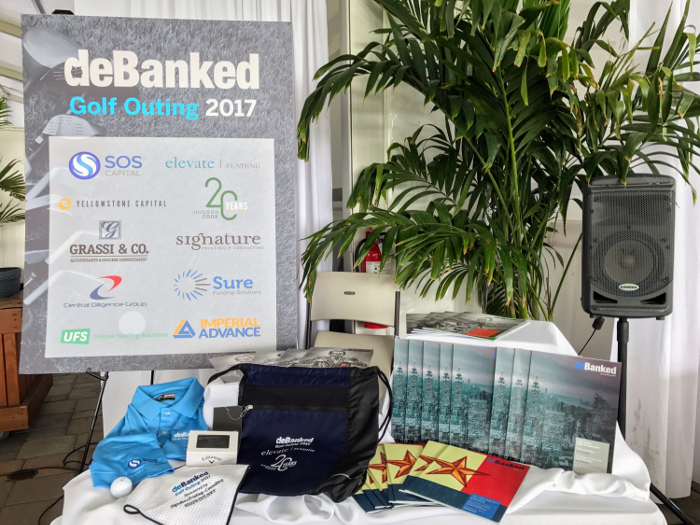
- SOS Capital
- Elevate Funding
- Hudson Cook, LLP
- Yellowstone Capital
- Signature Printing & Consulting
- Grassi & Co
- Central Diligence Group
- Sure Funding Solutions
- Unique Funding Solutions
- Imperial Advance
Official photos from the event should be available soon. In the meantime, follow us on Instagram to see them when they come out.
P.S. The inaugural conference for MCA and business loan brokers is COMING SOON. Visit http://brokerfair.org to receive updates on Broker Fair 2018.
Tech Banks: Will Fintech Dethrone Traditional Banking?
August 20, 2017On Halloween, 2014, a largely unknown, Boston-based financial institution, First Trade Union Bank, embraced high-technology, went paperless, and officially adopted a new name: Radius Bank.
 In reinventing itself, Radius did more than dump its dowdy moniker. It shuttered five of its six branches, re-staffed its operations with a tech-savvy team, instituted “anytime/anywhere” banking services, and offered customers free access to cash via a nationwide ATM network. And it teamed up with a fistful of financial technology companies to offer an impressive array of online lending and investment products.
Today, the bank’s management boasts that, using their personal mobile phones, some 2,700 people per week are opening up checking accounts, funneling $3 million in consumer deposits into the bank’s virtual vault. That’s a stark contrast from a decade ago when the financial institution was being rocked by the financial crisis and “we couldn’t get anybody to walk into our branches,” says Radius’s chief executive, Mike Butler.
“We tried to leave that old bank behind,” he says. “We’re a virtual retail bank now, an efficiently run organization that offers high levels of customer service and Amazon-like solutions.”
Radius Bank is not alone. At a moment when there is much discussion — and hand-wringing — over the future of seemingly outmoded, highly regulated community banks, a coterie of small but nimble banks is exploiting technology and punching above its weight. Almost overnight, this cohort is combining the skill and hard-won experience of veteran bankers with the lightning-fast, extraordinary power afforded by the Internet and technological advances. As a result, these small and modest-sized institutions are redefining how banking is done.
In addition to Radius Bank, independent banks winning recognition for their bold, innovative – and profitable — exploitation of technology, include: Live Oak Bank in Wilmington, N.C., which adroitly parlays technology to become the No. 2 lender to business and agricultural borrowers backed by the U.S. Small Business Administration; Darien Rowayton Bank in Darien, Conn., which is making a name for itself with coast-to-coast, online refinancing of student loans; and Cross River Bank in Fort Lee, N.J., which does back-end work for a passel of fintech marketplace lenders.
Interestingly, there’s not much overlap. Each of the banks goes its own way. But what all the banks have in common is that each has struck out on its own, each hitting upon a technological formula for success, each experiencing superior growth.
“These are companies that understand the value of a bank charter,” says Charles Wendel, president of Financial Institutions Consulting in Miami. “They have to work under the watchful eyes of state and federal regulators. But their cost of funds is low and they can offer more attractive rates. Because they’re less likely (than nonbank fintechs) to disappear, run out of money, or get sold,” the bank expert adds, “they also have the image of stability with customers.”
These modest-sized banks are emerging as not only pacesetters for the banking industry. Along with making common cause with the fintechs — which had promised to disrupt the banking industry – they’re even beating the fintechs at their own game.

“Classically, community banks have looked to technology partners to provide technological innovation,” says Cary Whaley, first vice-president for payment and technology policy at the Independent Community Bankers of America, a Washington, D.C.-based trade group representing a broad swath of the country’s 5,800 Main Street banks. “They still do. You’re seeing more partnerships. But now you also see community banks building innovative products and services outside of that relationship. You see forward-thinking banks developing their own technology to support big ideas like marketplace lending, distributed ledger technology, and emerging payments technology.”
With its extraordinary skill at exploiting technology, Live Oak Bank – which trades on the Nasdaq and is the only public company encountered in the cohort — has become a Wall Street darling. “While several banks have adopted an online-only model, and nearly all banks are shifting more and more delivery through online channels, Live Oak was built from the ground up as a technology-based bank,” Aaron Deer, a San Francisco-based research analyst at Sandler O’Neill Partners, wrote in a recent investment note.
Driving the success of Live Oak, which operates out of a single branch in the North Carolina seacoast town and has only been in business for a decade, is the explosive growth in its SBA lending, the bank’s “core strategy,” Deer notes. Last year, Live Oak lent out $709.5 million in SBA loans in increments of up to $5 million, the federal agency reports, making it the country’s No. 2 SBA lender. It trailed only megabank Wells Fargo Bank, the third largest bank in the U.S. with $1.5 trillion in assets, which made $838.93 million in SBA-backed loans last year.
As its SBA lending has taken off, Live Oak, which qualifies as a “preferred lender” with the federal agency, boasts assets that have nearly tripled to $1.4 billion in 2016, up from $567 million two years earlier. Those are flabbergastingly fantastic growth numbers. But just as incongruously — by nipping at the heels of Wells Fargo — Live Oak has been challenging a bank more than a thousand times its asset size for dominance in SBA lending.
And, interestingly, the bank is able to book those outsized amounts of SBA loans while lending to only 15 industries out of 1,100 approved by the government agency, slightly more than 1% of the universe. That’s up from 13 industries in 2015, and Live Oak is adding two to four additional industries yearly for its SBA loan portfolio, Deer reports. Included among the industries to which the bank made an average SBA loan of $1.29 million last year: Agriculture and poultry, family entertainment, funeral services, medical and dental, self-storage, veterinary, and wine and craft-beverage.
The bank has a team of financing specialists dedicated to each of the designated industries. Among Live Oak’s current SBA borrowers are Martin Self Storage in Summerville, S.C.; Utah Turkey Farms in Circleville, Utah; Pinballz Arcade, Austin, Tex.; and Council Brewery Company in San Diego. Steve Smits, chief credit officer at the bank, told NerdWallet: “When you specialize in something, you become efficient. Because we do it every day and we have professionals and specialists, we tend to be more responsive and quicker.”
The heady combination of technological sophistication and banking expertise has allowed the lender to slash its loan-origination time to 45 days, about half the three-month industry average for SBA loans. To speed up loan sourcing and generation, the bank developed its own in-house technology, which led to the formation of the Wilmington-based technology company nCino, which was spun off to shareholders in 2014.
Live Oak did not return calls to discuss its lending strategies, but in SEC filings bank management declared: “The technology-based platform that is pivotal to our success is dependent on the use of the nCino bank operating system” which relies on Force.com’s cloud-computing infrastructure platform, a product of Salesforce.com.
Natalia Moose, a public relations manager at nCino told AltFinanceDaily in an e-mail interview: “We work with Live Oak Bank, in addition to more than 150 other financial institutions in multiple countries with assets ranging from $200 million to $2 trillion, including nine of the top 30 U.S. banks. nCino was started by bankers at Live Oak Bank who found the logistics of shuffling paperwork among loan stakeholders to be unwieldy, inefficient and time-consuming.
“nCino’s bank operating system,” Moose adds, “leverages the power and security of the Salesforce platform to deliver an end-to-end banking solution. The bank operating system empowers bank employees and leaders with true insight into the bank, combining CRM (customer relationship management), deposit account opening, loan origination, workflow, enterprise content management, digital engagement portal, and instant, real-time reporting on a single secure, cloud-based platform.”
Live Oak, meanwhile, is not resting on its technological laurels. According to Deer’s report, the bank’s parent company, Live Oak Bancshares, has formed a subsidiary to inject venture capital into fintech companies. It’s already taken a small equity stake in Payrails and Finxact, “the latter of which is developing a completely new core processor to compete against the old legacy systems used by most banks,” the Sandler O’Neill analyst writes. “Quite simply,” he asserts elsewhere in his report, “the company is far beyond any other bank we cover in its technical capabilities and the growth outlook remains outstanding.”
 Five hundred and thirty-three miles due north along the Atlantic coast in southeastern Connecticut, Darien Rowayton Bank is also experiencing tremendous success as a lender using a home-grown technology platform. State-chartered by the Connecticut Department of Banking and regulated as well by the Federal Deposit Insurance Corp., the $600 million-asset bank is winning attention in banking circles for its online student-loan refinancing.
A few years ago, DRB, as it is known, was looking to go beyond mortgage and commercial lending — “the bread and butter for most community banks,” bank president Robert Kettenmann explained to AltFinanceDaily in a telephone interview – and was somewhat at a loss. The bank considered but then rejected the credit card business. Finally, DRB struck paydirt refinancing student loans. “Our chairman really seized on the opportunity,” Kettenmann says, adding: “It’s a $35 billion market.”
Thanks to the National Bank Act, it’s able to operate in all 50 states. As a regulated commercial bank with a strong deposit base, DRB can also offer low rates well below any state’s usury prohibitions.
What is most striking about DRB’s program is its nationwide targeting of upwardly mobile, affluent young professionals. According to a PowerPoint presentation obtained by AltFinanceDaily, all of the bank’s super-prime borrowers, who are mainly in the 28-34 age bracket, have a college degree and a whopping 93% have graduate degrees. Average income is $194,000.
 Forty-eight percent of those refinancing student loans with DRB are doctors or dentists and another 22 percent are pharmacists, nurses or medical employees; only about 20% are paying off their law degrees or MBAs. The heavy concentration of refinancing in the medical field reduces economic risk in an economic downturn. Forty-three percent of the borrowers are home-owners, the rest are renters – and prime candidates for an online, DRB-financed mortgage.
(Once known as “yuppies” today this cohort is “known by the acronym ‘HENRY,’” remarks Cornelius Hurley, a Boston University banking professor and executive director of the Online Lending Institute, explaining the initials stand for “High Earners Not Rich Yet.”)
The Connecticut bank partnered with a third-party on-line vendor, Campus Door, when it commenced making student loans in 2013. In the fall of 2016, however, DRB built out its own, proprietary loan-origination system, Kettenmann reports, emphasizing that CampusDoor had been an excellent partner but that the bank wanted to exercise end-to-end control over the process. DRB employs a seven-pronged, “omni-channel” marketing approach that includes interactive marketing, affinity partnerships, digital/online advertising, direct mail, mass-media advertising, and public relations/brand awareness campaigns.
DRB’s online enrollment provides “pre-approved rates” in less than two minutes with final approval on rates in 24-48 hours. Refinancers can complete the online application at their own speed. Through May, 2017, DRB had made $2.48 billion in refinancing to 20,000 student-loan borrowers, with only ten defaults, five of which were attributed to deaths or “terminal illness.”
On Yelp! the bank has received a batch of reviews ranging from very favorable, five-star (“I had a truly wonderful experience”) to one-star (“awful” and “truly a nightmare”). Many fault the application process as laborious, describing it as “time-consuming.” But for those who have succeeded, like the reviewer who counseled “patience,” the result can be “the lowest rate with DRB…my loan payments went down $100 a month.”
 Just about an hour’s drive south and taking its name from its proximity to New York city just over the George Washington Bridge is New Jersey-based, state-chartered Cross River Bank, which has a reputation as a partner-in-arms to fintech companies. “We’re both users and producers of technology,” declares Gilles Gade, the bank’s chief executive.
The bank provides “back-end” and infrastructure support to 17 marketplace lenders that offer a suite of lending products including personal loans, mortgages and home-equity loans. Following loan origination by a fintech company – Marlette Funding, Affirm, Upstart, loanDepot, SoFi, and Quicken Loan, among other partners — Cross River does the actual underwriting. Last year, Gade reports, the bank underwrote 1.9 million loans valued at $4-4.5 billion, about 10% of which Cross River kept on its books. The bulk of the loans are sold “back to the marketplace lenders” or to a third party. “We’ve created a high-velocity automated system,” he says.
Gade is manifestly unapologetic about the bank’s role in assisting fintechs in their competition with the banking establishment. “We’re a banking infrastructure services provider for those who want to disrupt the banking system,” he says. “Consumers expect a lot better than they’ve been getting from traditional banking services.”
 Back in Boston, Radius Bank’s chief executive reports that forging partnerships with fintechs to provide the full panoply of online banking services was no easy proposition. In its mating ritual, Radius not only had to determine that a fintech company’s offerings were sound and that it had the right characteristics – most especially “a long-term, sustainable business model” – but that its corporate culture meshed comfortably with Radius’s.
After meeting with as many as 500 fintechs and after a fair amount of trial and error, Radius formed partnerships with LevelUp, which enables customers to make mobile payments; with online lender Prosper, for refinancing consumer debt and “credit rehabilitation”; with SmarterBucks, for refinancing student loans; and with online investment firm Aspiration Partners – which allows investors to name their own fees and markets itself to a predominately middle-class audience as the firm “with a conscience.”
Radius employs advertising on social media websites and employs “psychographics” to appeal to “anyone who is zealous about using technology, not necessarily millennials,” Butler says. The data show that 65% of adults in the U.S. would prefer to use a traditional bank and have face-to-face interactions with a teller, he notes, leaving the remaining 35% as Radius’s target audience.
Christopher Tremont, executive vice-president for virtual banking, told AltFinanceDaily that a typical Radius customer is 42 years old, lives in Boston, New York, Chicago “or one of the bigger cities in the West,” is a “technophile,” earns $75,000 a year, and has $100,000 in personal assets.
Radius’s performance since it went paperless has been stellar. The bank has seen a rapid rise in deposits, spurting to $782 million through the first quarter of 2017, up from $565 million at year-end 2014. With little fee income but ample deposits and low-cost funds, Radius realizes the bulk of its revenues – and profits — on the interest-rate spread generated from its loan portfolio.
The bank booked $43.5 million in SBA loans last year, ranking it in the top 50 banks on the SBA’s league tables, while carrying another $105 million in its commercial leasing business at the end of the first quarter this year. Loan generation is driving asset growth, which are currently at $973 billion, up more a third from $726 million in 2014, and Butler expects the bank’s assets to top $1 billion sometime this year.
“Community banks love that part of the business—lending money,” Butler says.
The Scoop on iPayment’s MCA Renaissance
August 18, 2017
iPayment, a small business payment processing company, is placing a bet that it could be better the second time around in the MCA industry. iPayment Capital, which is scheduled to launch in the fall, is iPayment’s second foray into the merchant cash advance market. In conjunction with this expansion iPayment tapped Tomo Matsuo as senior vice president to spearhead iPayment Capital.
iPayment’s announcement comes on the heels of industry peers Square Capital’s Q2 loan origination of $318 million and PayPal’s acquisition of Swift Financial. Rather than remain on the sidelines, especially with access to data on some 137,000 small businesses, iPayment is making its move.
“Before Daily ACH loans and MCAs, we all started with the split payment MCA, and it’s exciting to see the recent renaissance of that mechanism with companies like Square and PayPal making it a key product feature. Transaction-based underwriting and variable payback schedules have become much more mainstream thanks to companies like Square and Amazon,” said Matsuo.
iPayment’s timing for getting back into MCAs is apparent but also coincides with the industry being held under a microscope for some questionable practices, not the least of which involves stacking, which can get small businesses in over their heads. Matsuo said the industry has a shared responsibility to fix this.
“I think there’s an opportunity for the industry to clean up some of the stacking and other practices. We all need to do more to better align ourselves with the needs and long-term health of the customers,” said Matsuo.
Meanwhile David O’Connell, senior analyst at Aite Group, offered his thoughts on the future role of MCA in small business funding: “Although we will always have merchant card advances in large volumes and these will be important to SMBs seeking funding, some of this volume will be replaced as the practices of alternative lenders become more entrenched: the provision of capital to an SMB based on a variety of data sets that achieve a fuller view of an SMB’s ability to repay only some of which is related to credit card volume.”
Balance Sheet Funder
Similar to its predecessor product iFunds, iPayment Capital will be a balance sheet MCA origination business. The company has the benefit of hindsight with iFunds, which was before Matsuo’s time there, as well as any missteps by the industry from which to pull.
“My job is to launch and build our own balance sheet MCA product, and we have a management team committed to the initiative,” said Matsuo. “iPayment is in a unique position because of our long history with the product — as a funder, split payment technology provider, and referral partner — and have a lot of experiences to build upon. There’s a great team at iPayment with a ton of institutional knowledge.”
iPayment’s access to customer data and insights certainly gives the company an edge. “It’s a crowded market going after a finite universe of customers. From a customer acquisition standpoint, iPayment has the benefit of having 137,000 customers,” said Matsuo.
iPayment also has solid industry partners including the likes of RapidAdvance with whom the company serves merchant customers. iPayment will continue to work with RapidAdvance and others on MCA. “We recently had the opportunity to strengthen our balance sheet, and we believe investing in iPayment Capital makes great business sense,” said Matsuo.
Matsuo pointed to opportunities within the smaller merchant segment for MCAs. iPayment Capital’s average funding size will be somewhere between Square Capital’s range of $6,000 – $7,000 and that of ACH alternative lenders at about $40,000. “We’ll be right in the middle,” he said.
Matsuo, a Bizfi alum, officially started in his new role on July 1, and he has no interest in looking in the rearview mirror. “At the end of the day, it comes down to pricing risk appropriately and maintaining proper controls,” said Matsuo, adding: “We all want to grow, but there are responsible ways of doing so.”
Go West, MCA Broker
August 16, 2017
If you check out the AltFinanceDaily forum, one of the latest discussions originated from a self-described newbie business owner who wants to know, ‘What separates a successful ISO from the rest?’ The user, who calls himself jellyfish capital, asks the AltFinanceDaily universe:
“I’m trying to figure out what the variables are that would dictate a successful brokerage/ISO vs. a shop that has a ton of turnaround and doesn’t make any money and ultimately ends up shutting its doors.”
The answer just might lie in the types of financial products the broker can sell.
MCA Broker Shift
Noah Grayson is managing director and founder of South End Capital, a commercial and investment residential real estate lender launched in 2009 that also started doing SBA loans and MCA consolidation loans in recent years to help out merchants with stacked MCA positions. Grayson pointed to a shift in the types of brokers signing up with the Encino, Calif-based lender.
“We’ve noticed a large number of brokers signing up with us are coming over from the MCA space. They’ve relayed to our staff that competition is too stiff to make enough money only originating MCAs, and they are looking for other avenues to bring in revenue,” Grayson said.
Indeed, South End Capital has seen an influx of brokers from the MCA industry gravitating their way. In fact, there has been more than a 10 percent spike year-to-date versus the same period last year in the number of brokers that discovered South End Capital through some form of Internet origin, such as AltFinanceDaily, versus a targeted ad in a real estate related publication or through more traditional real estate origination means.
“What we’re hearing from our MCA industry referral partners is that their[customers] now want any option other than an MCA. These brokers are coming to us now because they are trying to evolve their businesses to stay afloat. Offering real estate or SBA loans has proved to be the next logical step for these brokers and it has provided a big bump to our business,” said Grayson.
As in any industry, making a career change can introduce unexpected challenges. A hurdle for the brokers, particularly as it relates to making the jump to commercial real estate lending, has been unrealistic expectations.
“Many MCA brokers have an expectation that real estate or SBA loans will work similarly to an [MCA], but it’s a more involved process. There’s more documentation and more moving parts to understand. There has been a big learning curve for a lot of these brokers — some have been willing to learn and are excited about the opportunity. However, many MCA brokers have proven extremely resistant to change and unable to adapt” noted Grayson.
There are hurdles facing the MCA industry, too.
 Merchant Motivation
So what’s driving the shift? Small businesses, some of which are saddled with short-term obligations, have begun to realize that thanks to the rise of alternative lenders they have more options. Meanwhile unscrupulous collection agencies are throwing a monkey wrench into the situation, making it trickier for merchants to gain access to cash advances.
David Soleimani, CEO of LendFi Corp, said a major setback for the MCA industry has been the interference of collection companies convincing good paying merchants to default and cut their payments in half. By negotiating payments with a third party, merchants essentially become blacklisted from receiving any further MCAs.
LendFi senior account rep Jonathan Meyer specializes in cash advances, term loans, equipment leasing and lines of credit. He’s noticing a trend of more MCA brokers expanding their line of business in the last year.
“Companies are overextended [with cash advances.] It’s a problem,” said Meyer. “If everything is perfect, we can do a term loan or a line of credit if it falls under certain criteria.”
One small business came to LendFi’s Meyer recently and as a result saved himself a lot of cash. “I consolidated someone’s loan recently. I got him a term loan and saved him $14,000 a month. He had two loans at $110,000. I got him a term loan for $165,000 and he saved $14,000 a month. He was paying $22,000 per month,” said Meyer, adding that he also consolidated the payments from a daily to a monthly schedule. “That’s a huge savings,” he said.
For all of the twists and turns that may be up ahead for brokers and merchants alike, one thing seems clear. The MCA industry isn’t going anywhere.
“There will always be a [customer] whose only option is an MCA, and it has its benefits for many. For example, the only way to get business funding in one or two days is with an MCA. However, I think the reasons why someone would need an MCA are becoming fewer and fewer as other more viable financing options emerge,” said Grayson.
Catching Up With Marketplace Lending – A Timeline
August 13, 20175/17 – Funding Circle surpassed Zopa in cumulative lending to become the UK’s biggest marketplace lender
5/18 – Breakout Capital announced appointment of Douglas J. Lanzo as EVP and General Counsel
5/22 – The New York State legislature held a joint hearing on online lending
5/25
- OnDeck had the maturity date of its $100M credit facility extended
- China Rapid Finance reported Q1 net revenue of $10.5M
- Prosper Marketplace closed $495 securitization transaction
- SoFi co-founder Dan Macklin announced his departure from the company
5/31 – IOU Financial reported Q1 results, had $1M loss on $4.3M in revenue and lent (CAD) $22.1M
6/2 – Zopa began allowing investors to sell loans that have previously been in arrears
New York State legislators proposed the formation of an online lending task force
6/6 – AltFinanceDaily and Bryant Park Capital published their Q1 confidence index in which industry CEOs scored their confidence in the continued success of the MCA and small business lending industry at 73.8%, the lowest level since the survey started in Q4 2015. It peaked at 91.7% in Q1 2016.
6/8 – Amazon surpassed $3 billion in loans made to small businesses since their lending program launched
6/9 – RealtyMogul announced that they had exited the residential fix-and-flip market
6/12 – The US Treasury published a report that called for the repeal of Section 1071 of Dodd Frank
6/13
- SoFi applied for a bank charter, specifically an Industrial Loan Company charter
- Lendio announced a pilot agreement with Comcast business
6/14 – Patch of Land expanded its debt facility from $10M to $30M
6/19 – Goldman Sachs’ online lender Marcus surpassed $1 billion in loans made since inception
6/20 – Former Lending Club CFO Carrie Dolan joined Metromile, an insurance company, as CFO LendingTree acquired MagnifyMoney
6/21 – Pearl Capital secured $15M in financing from Chatham Capital Management
6/27
- Square Capital announced that it will pilot a consumer loan program
- Former RapidAdvance CFO Rajesh Rao became the CFO at Beyond Finance, Inc.
6/29
- Funding Circle hired Joanna Karger as US Head of Capital Markets and Richard Stephenson as US Chief Compliance Officer
- Pave suspended lending operations
- Ron Suber, president of Prosper Marketplace, announced that he was stepping down from the company
- The SEC announced that all companies will now be able to submit draft IPO registrations confidentially, a perk previously only reserved for businesses designated as “emerging growth companies” under the JOBS Act.
6/30
- PayPal Holdings Inc announced that it had invested in LendUp
- Yellowstone Capital announced that they had funded $47 million to small businesses in the month of June
7/3 – Funding Circle announced that Sean Glithero had joined the company as its new global CFO
7/5 – Lending Club appointed Ken Denman to its Board of Directors
7/6
- CAN Capital announced that they had been recapitalized and were resuming funding operations
- Orchard Platform and Experian announced a strategic collaboration on data
7/7
- CFPB announced that it was extending the deadline of its small business lending RFI from July 14th to September 14th
7/10
- China Rapid Finance announced that they had made 20 million cumulative loans since inception
- CFPB announced new arbitration rule that effectively bans class action waivers from consumer finance contracts
- Former OnDeck VP of External Affairs and Associate General Counsel Daniel Gorfine, was appointed by the Consumer Future Trading Commission to be Director of LabCFTC and Chief and Innovation Officer
7/11
- dv01 and Upgrade (Former Lending Club CEO Renaud Laplanche’s new company) announced a strategic reporting partnership
- PayPal hired former Amazon executive Mark Britto to lead its lending business
- Fora Financial expanded its credit facility led by AloStar
See previous timelines:
4/6/17 – 5/16/17
2/17/17 – 4/5/17
12/16/16 – 2/16/17
9/27/16 – 12/16/16
Is The End Near For This Debt Settlement Firm?
August 11, 2017 Corporate Bailout, a New Jersey based firm that purports to help businesses lower the monthly payments on their debts, is back in the news. This time it’s for allegedly running a sex-fueled office with stripper parties, sex dolls, and sexual harassment, according to the New York Post who published video footage of the debauchery. Warning: the New York Post link is not safe for work.
AltFinanceDaily has written about Corporate Bailout previously, in one case recently where the company is alleged to be robo-dialing out of control. Corporate Bailout never responded to the lawsuit and the court entered a default against the company this past Monday, according to the docket.
Back in April, AltFinanceDaily also received the recording of a call purportedly between a representative of Corporate Bailout and a small business owner. We had the lengthy dialogue transcribed and it appears below with the names between the parties changed.
Of note, the alleged Corporate Bailout representative in the call makes several references to a partner law firm named Protection Legal Group. There are several lawsuits pending against Protection Legal Group, one of which alleges the firm didn’t have a lawyer licensed to practice in the state they claimed to offer defense in. In that situation, a merchant had to hire another lawyer to sue his lawyer at Protection Legal Group.
| Person Answering Phone: | Hello. |
| Robo Agent: | Hello. How are you today? |
| Person Answering Phone: | I’m good. |
| Robo Agent: | Great! Can I speak to the business owner please? |
| Person Answering Phone: | Who is this please? |
| Robo Agent: | This is Alex from Corporate Bailout. Are they available? |
| Person Answering Phone: | Yeah. One second please. One second. |
| Robo Agent: | Thanks. |
| John: | Hello. |
| Robo Agent: | Can I speak to the business owner please? |
| John: | Speaking. |
| Robo Agent: | This is Alex from Corporate Bailout. I know your time is valuable. So, let me get straight to the point. We help small business owners eliminate their unsecured debts. If your business has taken a merchant cash loan or advance, a high interest credit card debt, accounts payable debt, or any other unsecured business debt, you are now able to settle your outstanding balances for just a fraction of what you owe. I just need to ask two qualifying questions. Okay? |
| John: | Sure. |
| Robo Agent: | What type of entity is your business registered as? LLC, Corp, etc.? Hello? |
| John: | LLC. |
| Robo Agent: | Do you have at least $25,000 in unsecured debt? |
| John: | Yes. |
| Robo Agent: | Great! It looks like you may qualify. Hold on one second while I get a specialist on the phone who can explain further. |
| [Phone Ringing] | |
| Derrick: | Hello. Hi. |
| Robo Agent: | Hi, I have someone here that is interested in moving forward. I will let you take it from here. |
| Derrick: | Thank you for that. My name is Derrick by the way. Who am I speaking with? |
| John: | John. |
| Derrick: | John, it’s a pleasure, John. So, John, go ahead and tell me a little bit. What kind of unsecured debt are you experiencing? Is this with cash advances? |
| John: | Yes. |
| Derrick: | All righty. And that’s our cup of tea. So, I wanna give you an example— |
| John: | What exactly— |
| Derrick: | …of exactly how this would work for you. |
| John: | Okay. Perfect. Yeah. |
| Derrick: | All right. Tell me how many advances do you have. Do you have one or a couple out there? |
| John: | I have 3. |
| Derrick: | 3. Okay. And what do you owe approximately in combined balances? |
| John: | About $85,000. |
| Derrick: | Okay. And lastly, what are they charging you daily? |
| John: | Total of about $2,000. |
| Derrick: | At this day? |
| John: | Yeah. |
| Derrick: | Okay. Obviously, they’re overextending you for sure. Now, you open these advances yourself? Is this your business, John? |
| John: | Yes. |
| Derrick: | Okay. What is it that you do? I just wanna get a better grasp of what’s going on. |
| John: | We’re a trucking company. |
| Derrick: | Oh okay. Yeah. Yeah. I work with a lot of trucking clients. All right. So, here’s the deal. I mean, at 85,000, knowing that these are cash advances, we’re able to reduce that down to about 63,000. Saving you well over 21,000 just on principal. |
| John: | How do I do that? |
| Derrick: | That’s very simple. I mean, what we do is we appoint you a power of attorney that represents the association. And what they’ll do is that by power of attorney they’ll contact your creditors in a form of hardship for you. Okay? And that’s the key word there because by law— And it doesn’t matter if it’s a cash advance or a Capital One Visa. Whoever that creditor is, whatever obligations you have to that creditor comes to an immediate halt. That means no more interest accruement. That means that whatever number I’m telling you by the time you hire us let’s say by today, that’s the number. Yeah. |
| John: | One second. Why does it come to a sudden halt if I have a contract with them? Like can’t they sue me for this? I mean, I signed a contract with them and everything. How is it legal to go and say that I can’t pay them? I’m not understanding you. |
| Derrick: | Well, #1, these are cash advances, which is highly unregulated. Everyone knows if you look into it. Okay? Everyone knows— |
| John: | I did. |
| [Crosstalk] | |
| Derrick: | Okay. Yeah. There you go. Well, they’re tiptoeing the line of legalities here by pressing [0:04:55][Inaudible] laws. That’s why we’re able to snatch them and nip them in the butt. Okay? When you are charging on a daily basis an overextended amount way past 25% APR, this is abuse. This comes to abuse now and we have to come at them in a form of hardship. By law, that’s what happens and everything comes to a halt right then and there. Now, they have to settle. Now, here’s the thing. I know you’re saying can they sue you. You know, they can. They can. Probability is very low. |
| John: | Why would I take the risk of getting sued? I mean, I’m just trying to understand. Is what you guys doing also legal? I mean, no offense, it sounds a little— |
| Derrick: | Oh yeah. |
| John: | This sounds a little less legal. What you’re doing sounds a little more illegal than what they’re doing because I really have a contract with them that I signed and I notarized. I mean, that is like legal documents. |
| Derrick: | Yeah. We give you a legal contract. It needs to be notarized and all that too. Okay? But here’s the thing. It is legal here. You’re working with the law firm. Okay? The law firm will then take that responsibility and make sure that they do reduce your debt size. Okay? It’s a cash advance. It’s a slam dunk every time. Who do you work with by the way? |
| John: | [0:06:15][Inaudible] I’ll give it to you in a couple minutes. Where did you get my information from? ‘Cause I usually get calls from them. Like this is the first call I’m getting from this type of company. Where did you guys get my information from? |
| Derrick: | So, we essentially look through UCC filings and UCC filings are only liens that are basic entry companies that normally take out cash advances. Normally. |
| John: | Right. |
| Derrick: | 9 times out of 10 when I see a UCC file that looks like yours and, you know, I’m usually right it’s a cash advance, so yeah. |
| John: | Which business were you referring to though? |
| Derrick: | I don’t know. I don’t know. Your phone call got transferred to me. So, we have several ways of finding new clients and one of them is that we have a database. People make outbound calls. I’m the one on the receiving end. I work with my clients one-on-one to get them enrolled, have them feel good about the program, and then I pass them along to the law firm. That’s my role here. So essentially, it happens like this, John. Right? Let’s say hypothetically today you’re like “You know what? This makes sense. I am in a hardship. I need to get out of this crap. All right, what do I need to do today?” I get you on board today just hypothetically. By Thursday because today is Tuesday— We need at least 48 hours. By Thursday, the law firm contacts you and they say, “You know, John, we reviewed everything. You know, you’re good to go. Let’s now help you stop making those payments so that way your bank no longer honors the ACHs you’re making daily. So essentially, by Thursday, we’ll put a stop, a complete halt to your payments. And then we can culminate maybe a week to 2 weeks before there’s any expense. And by the way, it will be a fraction of that cost. We’re talking at least 50% less in those payments. That’s how overextended they have you on. We don’t have to have that start for at least 2 weeks from today or whenever— |
| John: | So, in essence, I will still have to pay them. Just in a longer period of time you’re saying? |
| Derrick: | Right. Yeah. Well, we can work that out, but the whole point of this program is not to stress anybody. And that’s where the idea of a scam needs to be thrown out of the window. Okay? |
| John: | So, they’re scamming me you’re saying? |
| Derrick: | Yeah. I would say so. You don’t feel like you’re being highway robbed right now paying 2,000 a day? And I can give you even better numbers if I look at— you know, if I take a peek at the contract just to see the real numbers ‘cause on average they’re charging anywhere from 30 to 60 percent on a borrowed amount. That’s an average. I know you’re in that category. |
| [Crosstalk] | |
| John: | I understand, but I didn’t know about it that’s why I’m saying if I knew about all this, I can’t deny in court if they sue me. They do have a legal document against me. I mean, it is an issue. |
| Derrick: | Right. Well, here’s the good thing. I mean, people are in such a worse shape than you, John, that they’ll hire any company who’s gonna promise them that they’ll be able to negotiate, but the greater thing why this is such a more wise decision for you is that you’re not hiring a middle man. As a matter of fact, I can show you, okay, any agreements that we have. We provide litigation defense services on top of the settlement. So, if ever anything should happen, which being at 85,000 likely not, but if ever anything should happen, you have attorneys there that will show up in court for you, that will battle, that will counter lawsuit if we have to, whatever, drag out the process, whatever it takes. Whatever it takes. But at the end of the day if they wanted to sue you, you know how long a sue takes place or takes to convert? |
| [0:09:59] | |
| John: | I know, but— |
| Derrick: | It takes a long time. |
| John: | At the end of the day, I would still be found guilty that I did sign the contract. What defense could I possibly have for that? I’m just trying to understand what the legality is. |
| Derrick: | The defense is #1 it’s a hardship. If you look into that, hardships create a big deal in the law system. So, that’s #1. Number 2 is that this is technically not even a debt that you have. Check in on technicalities. They only purchase future receivables at expect it let’s say 2,000 a day. |
| John: | Yeah. And they also have a judgment against me though. |
| Derrick: | That is all scare tactics. That’s all. Confession of judgments you’re talking about, right? |
| John: | Yeah. Yeah. |
| Derrick: | Confession of judgment that you signed. Yeah. Yeah. Almost everybody signs a confession of judgment now. They just started implementing that the last 3 years. |
| John: | They can’t do anything with that? |
| Derrick: | Not when you have a power of attorney reaching out to them for settlement against the hardship cost. They can’t do that. |
| John: | Oh. |
| Derrick: | And if they use that– |
| John: | And also like with this document, they can like freeze accounts and they can freeze assets and stuff like that. But if you guys trick them and they can’t do that– |
| Derrick: | Yes. They won’t be able to. But if we need to take any preventative actions, your law firm, your adviser there will tell you to possibly change. |
| John: | So, you guys have a lawyer? You are the lawyer then? |
| Derrick: | I’m not the lawyer. I’m not the lawyer. I don’t do the negotiation. I told you my role here is just to get you on board so I can pass you to the law firm. That’s it. That’s my role. Give you the information– |
| John: | what’s your charge? |
| Derrick: | Okay. Good question, John. So, let me look at this number here again. I wanna give you something real. So let’s say it’s 85, right? 85,000 you owe. That gets reduced down to $63,340. That 63,000 is going to cover absolutely everything. That covers paying back your cash advances. That will cover for our services and fees all inclusive. Okay? The only reason why we’re able to do that, John, is because we are a nationwide law firm that does negotiations for cash advances specifically. That’s what Protection Legal Group does. And so, are you familiar with a class action lawsuit? Are you familiar with that? |
| John: | Yeah. |
| Derrick: | Okay. So, we approach settlements in that same format. Class action settlement is what we call it. So, essentially you’re one drop in the ocean. Right? And that’s why I wanted to ask you who you work with so I can give you references. But guaranteed we have, you know, up in the hundreds of clients in those cash advances that we have already control such a large portion of their funds. So, because we’re going to– Who do you have? do you have Swift? [inaudible] |
| John: | I’m not gonna reveal that information yet until I look into your company a little more only because it’s my first time hearing about this. I will look into this. I wanna speak with my lawyer about it and everything. But you were telling me it would be lowered to 63,000. That’s fine. |
| Derrick: | Yeah. That’s at most. |
| John: | What’s your fee? |
| Derrick: | Our fees are inclusive, John. I can’t tell you what it is until we submit everything, until we submit all the hard copies into the law firm |
| John: | What’s the percentage range? I mean, there’s gotta be some sort of number that I can go by. |
| Derrick: | Yeah. Yeah. I can give you a percentage. So, let’s say we reduce it down to 70 cents on the dollar, right? 42 cents of the dollar will go to your creditors. Okay? |
| John: | And the 28? |
| Derrick: | And 28 cents gets [0:13:58][Inaudible] up between the law firm and your attorney. It’s like 4 cents in a dollar to the attorney, 24 cents to the law firm. So, that’s how it works. Normally, that’s what they look to negotiate. |
| John: | So, you’ll get the 24, they get the 4? |
| Derrick: | That’s if they agree to that term. Yeah. The whole point is for your attorney to figure that out with the lender. At the end of the day– |
| John: | Isn’t that 24% on the dollar also? |
| Derrick: | No. No. On the 70 cents on the dollar that we reduce it. So, you have 85,000. Reduce it to 70 cents on the dollar let’s say. In that 70 cents, 42 goes to them. The remainder of the 28 is split. Right? 4 cents to your attorney, 24 to the law firm. So that’s the numerology of how it gets distributed. |
| John: | That’s 40% |
| Derrick: | Right. That’s how it gets– What is? |
| John: | The 28 cents on the 70 cents is 40%. |
| Derrick: | 40%? |
| John: | Yeah. |
| Derrick: | No. No. It’s smaller than that. |
| John: | Do the math. |
| Derrick: | If it were 40%– |
| John: | Do the math. You said 28. Do 28 divided by 70. |
| Derrick: | 28 divided by 70, 0.4. Yeah. 40%. So, what are we getting off here? |
| John: | So basically, you’re charging me 40% and they’re charging me the same 40%. So what’s the difference? I’m just trying to understand why– |
| Derrick: | No. Yeah. We’re making 40– Hold on. We’re making 40% of that 70%. They’re making 60% out of that 70 cents. I mean, if you wanna get in detail, that’s what it works down to. At the end of the day, the whole program cost for you is only 63,000. So, you make the decision whether you pay 63,000 or 85,000. |
| John: | And run the risk of getting sued. |
| Derrick: | No one touches–. No. You have a law firm that will fight and give you the litigation defense. |
| John: | Right. That’s not a–I understand that. I understand they’ll give it to me. But I also run the risk of losing. And if I lose, I would have to pay all their legal fees and that extra money that I know, you know, what trying to get out of. So, here’s what I’m gonna do. I’m gonna have to look into this a little more ’cause I’m not just gonna give all my information in a second. Can you send me some– |
| Derrick: | Yeah, that’s fine. |
| John: | …information so I can look it over? |
| Derrick: | What’s your best email, John? |
| John: | It’s [address redacted] |
| Derrick: | @gmail.com. Do you happen to be in front of a computer now? |
| John: | I do. Yeah. |
| Derrick: | All right. I just wanna make sure that you at least get it. I’m putting in the subject heading, ATTENTION John. This should be easy to find. So, you know, you can loo at– |
| John: | I just wanna make sure what it’s about. what is this for? What’s it called? |
| Derrick: | Debt relief I can put in there. Is that okay? |
| John: | Yeah. That’s fine. |
| Derrick: | I’ll put debt relief as well. Yeah. |
| John: | And this is from Mason & Hanger? |
| Derrick: | Mason & Hanger? |
| John: | Yeah. That’s where you’re calling from? |
| Derrick: | What’s that? No. No. Protection Legal Group is the name of the law firm. Protection Legal Group. |
| John: | Oh, it’s not Mason & Hanger? |
| Derrick: | No. I don’t know where you got that name. |
| John: | From the caller ID |
| Derrick: | Really? Mason & Hanger? I don’t know. That’s strange. You know, when I make calls out of the office, sometimes it comes out like– |
| John: | Are you gonna have your contact number over there or no? |
| Derrick: | Yeah, it’s in the email. Tell me if you have it now ’cause it says that it’s sent |
| John: | [Name redacted]? |
| Derrick: | [Name redacted]. Yup. that’s me. All right. So, there’s a summary of what we went over and then those things in bold would be what we need in order— if you wanna proceed forward, but the very first thing you’ll see in bold is the current cash advance agreement signed or unsigned. Very important. That’s what’s gonna help us approve you or not and see if we can fit you in the program. We have to look over the verbiage in there. You see one document attached. Right? |
| John: | Right. Right. |
| Derrick: | Do you see what’s in bold? Yeah, I have a few things in bold there that we require from you. Okay? The hardship letter is one of them that’s attached in there. But before all of that, we wanna take a look at a copy of the agreements you have with the 3 cash advances. It could be signed or unsigned. Your personal information is not gonna do us any good. We wanna see if we can approve you first. Okay? That’s all. It’s just by procedure. And then what we find in there, which only takes about 20 to 30 minutes to approve you, I can tell you, “Hey, John, you know, here are the real numbers, what we found based on your contract. Here’s what we can offer and here are your options.” And then we can come into an agreement together. The whole point of this is to get you off from paying— You’re paying 10 grand a week, man, you know. To get you off of 10 grand. Maybe down to 5,000. Whatever that number is that’s more comfortable for you and obviously is realistic for the law firm. Okay? |
| John: | You are basically just the broker for the law firm? |
| Derrick: | I’m their spokesman, you know. I’m their marketing arm. Not a broker or anything. If I were a broker, I’d have countless sources of different law firms that does this. |
| John: | I assume you have one law firm that you work with? |
| Derrick: | I only represent them. |
| John: | Who do you work with? |
| Derrick: | What was that? |
| John: | Who is the law firm that you work with? |
| Derrick: | Protection Legal Group. Protection Legal Group. You can put that down. |
| John: | Can you email me that information? I wanna make sure. It is in the email? |
| Derrick: | Yeah. It’s in the email. Yeah. Yeah. It’s all in there. |
| John: | Okay. Protection Legal Group |
| Call trails out into goodbyes… |
In the follow up email that came up from a corporatebailout.com address, Derrick said, “We have teamed up with nationwide law firm, Protection Legal Group, who will negotiate with lenders on your behalf. By enrolling in our program, we would reduce the total advance balances down to 70 cents on the dollar! But more importantly, we turn your daily payment into a ONCE a week payment, and reduce that amount by up to 50%!”
PayPal Scoops Up Swift Financial
August 10, 2017
Online lending M&A is under way. PayPal is bolstering its merchant lending capabilities with the addition of Swift Financial. While the deal was kept under wraps, some industry participants heard some buzz about a possible combination.
PayPal has been investing in its lending arm of late, evidenced by the addition of former Amazon executive Mark Britto as senior vice president and general manager of global credit in July.
Noah Grayson, South End Capital managing director and founder, weighed in on the deal.
“A merger of two industry leaders like this is not surprising. As the economy continues to improve and small business owners have access to more financing options, alternative business lenders are going to continue to consolidate to stave off competition, retain deal flow and secure profitability,” said Grayson.
Dave Girouard, founder and CEO at Upstart, a consumer lending platform that uses machine learning, reacted to the deal:
“I expect to see more consolidation in online lending across both consumer and small business in the next year. Platforms with either giant balance sheets or proprietary technology will likely stick around, but others will struggle to compete,” Girouard told AltFinanceDaily.
Alternative lender LendUp was a recent recipient of a PayPal investment. Sasha Orloff, LendUp’s CEO, had this to say about the deal:
“I’m not surprised to see an acquisition in the fintech credit space and expect this will kick off a wave of acquisitions. PayPal is a force to be reckoned with and we have seen them lead the industry again and again. Whether it is the partner model like with Synchrony, the acquisition model like Swift, Braintree/Venmo, Xoom, or the investment model like LendUp, they are proving again and again why they are leading innovation in financial services decade after decade,” said Orloff.
Meanwhile don’t expect to see a PayPal/LendUp pairing anytime soon.
“For our part, we’re going after a very different market and we’re focused on driving consumer financial inclusion — and we’re very focused on remaining an independent company and helping companies like PayPal and banks offer better products for millennials and the emerging middle class,” Orloff added.
PayPal was already working with Swift on a white-label basis for one of its products, PayPal Business Loan, which is a term loan with structured repayments.
“Swift Financial offers complementary business financing solutions and advanced underwriting capabilities that accelerate our ability to acquire new merchant partners with business financing solutions and to deepen our relationships with existing merchants and channel distribution partners,” said Darrell Esch, VP and Commercial officer, Global Credit, PayPal, pointing to Swift’s advanced underwriting and product capabilities and seasoned management team.
Swift was launched just over a decade ago and has extended loans to 20,000-plus merchants.