
How One CEO Unified Two Companies with Different Cultures on Different Coasts
March 21, 2018 Company mergers, like marriages, have their pros and cons. Some are more successful than others and many say it’s unwise to rush into one. This is certainly the approach Adam Stettner adopted when he, as CEO of San Diego, CA-based Reliant Funding, oversaw the merger of his company with Merchants Capital Access, based in Melville, NY on Long Island.
At the time of the merger in April 2015, Merchants Capital Access was an MCA funder. According to Stettner, they were what he considered a “back end” as they didn’t do marketing or sales. They did underwriting and funding, but they did not originate any new business.
Reliant Funding, which Stettner led, did almost the inverse. While it did some cursory underwriting, it mostly marketed and sold funding to small businesses. It would also package small business merchants and place them for appropriate funding. But they did not fund directly. So, it seems, these two companies made for a perfect marriage. They completed each other. But not so fast.
Even though Stettner had considerable experience working as a direct lender in the student loan business prior to taking the helm at Reliant Funding in 2008, he didn’t feel ready to dive into funding a different type of client. (Stettner said he originated and held on his balance sheet $15 billion in student loans at National Lending Associates, a San Diego company he co-founded.)
“I felt like it was easy for somebody to come into the [merchant advance] space and start writing checks and funding businesses,” Stettner said. “It’s hard to figure out how to get that money back. So instead of jumping in with both feet, I thought it would be wise to really understand our target demographic, our end user, the small business owner.”
So while the technical merger of Reliant Funding and Merchants Capital Access happened in April 2015, the newly enlarged entity operated as two distinct brands until September 2017.
During this period, Stettner said, “we were studying everybody’s credit models and the best way to approach American small business owners, the best way to fund them, the best way to service them, and ultimately, the best way to renew them.”
This roughly two year period between the time of the actual merger and the official fusion of the two companies, now simply called Reliant Funding, was not just for Stettner to learn about funding small businesses. A lot more needed to happen to sync together a southern California company and a New York City-area company, each with different corporate cultures, attitudes and ways of getting work done.
“Getting 150 people with different views on work, culture, approach and strategy wasn’t easy,” Stettner said. “But it was definitely worthwhile and it was a lot of fun. There were times, of course, when it was frustrating as well.”
The stereotype of southern California being more laid back doesn’t hold up, according to Stettner, who grew up in New York and has worked in southern California for 14 years.
“While the environment may be laid back in appearance, the effort that’s put forth and the intensity that exists in the southern California office is no less than what you see out from our New York office,” Stettner said. “Both work incredibly hard and have great attitudes.”
However, he did say that the original culture in the New York office (formerly the Merchants Capital Access office) was much more centered around management decisions and Stettner made a point of bringing a culture of empowerment to that office.
What does that look like exactly?
“We talk [with employees] not only about the top line numbers, but also the bottom line numbers with the idea of empowering everyone,” Stettner said. “It’s important to me that everybody knows the why behind what we do. If people understand why we do something, it’s easier for them to get behind it, and they’re better equipped to offer an opinion that can help get us there faster.”
Now as Reliant Funding, Stettner said that the company is fully integrated under the one brand with unified systems and technology. The company is a funder with a sales team focused on direct origination. It also continues to grow what Stettner calls the wholesale channel or broker channel.
2017 Small Business Financing Leaderboard
March 14, 2018Thanks to several companies filing their annual earnings statements and Funding Circle disclosing their USA origination figures for 2017, we’ve been able to put together a leaderboard in the small business financing space. This list is not comprehensive and omits key players like PayPal Working Capital and Amazon Lending.
| Company Name | 2017 Originations | 2016 | 2015 | 2014 |
| OnDeck | $2,114,663,000 | $2,400,000,000 | $1,900,000,000 | $1,200,000,000 |
| Kabbage | $1,500,000,000 | $1,220,000,000 | $900,000,000 | $350,000,000 |
| Square Capital | $1,177,000,000 | $798,000,000 | $400,000,000 | $100,000,000 |
| Yellowstone Capital | $553,000,000 | $460,000,000 | $422,000,000 | $290,000,000 |
| Funding Circle (USA only) | $500,000,000 | |||
| BlueVine | $500,000,000* | $200,000,000* | ||
| National Funding | $427,000,000 | $350,000,000 | $293,000,000 | |
| Strategic Funding | $393,000,000 | $375,000,000 | $375,000,000 | $280,000,000 |
| BFS Capital | $300,000,000 | $300,000,000 | ||
| RapidAdvance | $260,000,000 | $280,000,000 | $195,000,000 | |
| Credibly | $180,000,000 | $150,000,000 | $95,000,000 | $55,000,000 |
| Shopify | $140,000,000 | |||
| Forward Financing | $125,000,000 | |||
| IOU Financial | $91,300,000 | $107,600,000 | $146,400,000 | $100,000,000 |
*Asterisks signify that the figure is the editor’s estimate
9 Real Industry Stories To Get You Fired Up
March 7, 2018 Whether you’re working from home as an independent agent or you’re the owner of a young alternative funding startup, here are nine AltFinanceDaily stories that are guaranteed to inspire. For those of you that haven’t been in the industry very long, you’ll definitely want to read some of the older ones!
Nest Planner: The Story Of A Startup MCA Broker | 3/4/18
Hard Work, Big Success – The True Story of an MCA Broker | 12/15/17
A True Rapid Advance For Mark Cerminaro | 12/16/16
Can an ISO “Excel” in 2016? | 8/26/16
Stairway to Heaven: Can Alternative Finance Keep Making Dreams Come True? | 4/28/16
The Dual Aura of Fora – How Two College Friends Built Fora Financial and Became the “Marketplace” of Marketplace Lending | 2/16/16
The Closer – Meet the Yellowstone Capital Rep That Originated $47 Million in Deals Last Year | 2/10/16
Meet the Source: How Jared Weitz and United Capital Source became one of the industry’s fastest growing shops | 10/23/15
From Lowes to Loans: Meet William Ramos | 4/12/15
Ready to network with your industry peers in person? Register For Broker Fair! coming on May 14 in Brooklyn, NY.
I Got Funded, Again
March 1, 2018 One year after I received a 12-month loan from Square on fixed monthly ACH, I logged onto my dashboard to renew. I was pre-approved to do it all over again, the screen indicated, but the monthly ACH payment option had disappeared. In its place, Square offered to withhold a fixed percentage of my credit card sales going forward until the balance was paid in full.
Known as a “split,” diverting a percentage of the card payment proceeds to a financial company is straight out of the merchant cash advance playbook. Square, however, structures their transactions as loans. That means that regardless of how my sales ebb and flow, I must pay off my balance in full in 18 months.
I was okay with that. I had to be. It was that time of year when working capital is very important, the holidays. Not to mention, AltFinanceDaily was in the process of moving, again. If you recall in December of 2016, we moved to a slightly larger office in the same building on Wall Street. In December of 2017, however, we moved from Manhattan to Brooklyn, a process that was a little more involved.

But this loan had no monthly payment, just a 15.75% split. Others may refer to this as the holdback, withhold, or specified percentage. Square’s application process this time around was slightly more rigorous than a year ago, a few more buttons, a couple more disclosures, and even a notice that a review could take between 1-3 days. I was still approved the same day, however, and had funds the next. There were no hidden fees or closing costs.
Six days after being funded, I ran a charge, Square took their split, and I netted the different minus the interchange fees. I noticed, but in a way I didn’t. I didn’t have to worry about how much the monthly payment would be and when. The loan was being repaid all by itself. That was how I processed it psychologically anyway, as I imagine many other small business owners have as well.
And the feeling of relief from impending monthly payments is not entirely mental. Seven weeks later, I was already 17% paid off. That’s real progress, especially with a 65-week window remaining to pay off in full.
Had the same transaction been structured as a merchant cash advance, the timeframe would’ve been unlimited. But hey, I guess sometimes you can’t have it all. It was a 1.10 factor rate, decent by industry standards, certainly not the most expensive, but not the least expensive either. It was fast, it was helpful, and best of all, it was free from the burden of fixed monthly payments.
I got funded again and loved it. What are you still waiting for?
Editors Note: AltFinanceDaily did not collaborate with Square in the writing of this editorial. Square did not even contact us after I published my first experience with their product one year ago. It is unclear if they are even aware that I wrote anything at all. Square is not an advertiser nor have they sponsored any of our events. I did not attempt to interview them for this write-up or tip them off that I would be writing anything. To my knowledge, we did not receive any special benefit or pricing. AltFinanceDaily chose Square for funding in part to avoid the conflict of writing a review about a paying advertiser or sponsor.

Minority-Owned Businesses Present Opportunities for Online Lenders
February 27, 2018
Research consistently shows that minority-owned businesses have a harder time accessing capital than other businesses. Online financing has the potential to change this.
Most of the online funding process is based on objective factors such as your business type and revenue. When you apply for funds online, it’s harder to discern things like the color of your skin or your ethnicity—factors which research shows can sometimes play into the face-to-face lending process, even though it’s illegal and immoral. What’s more, applying for funds online eliminates the stigma that keeps many minority-owned businesses from walking into a bank to apply for a loan, according to industry participants.
“Many minorities are hesitant to go into a bank,” says Louis Green, interim president of The National Minority Supplier Development Council, which provides business development opportunities for certified minority-owned businesses. He says the growth of online lending platforms will potentially open more doors for minority-owned businesses to get much-needed capital to operate and expand.
“The beauty of things on the Internet is that it has the ability to take away discriminatory issues,” says Green, who is also the chief executive of Supplier Success LLC, a Detroit-based business that offers online business financing solutions.
Certainly, minority-owned small businesses are a large and growing market. There were 8 million minority-owned firms in the U.S. as of 2012, according to U.S. Census Bureau data. Minority-owned firms represented 28.8% of all U.S. firms in 2012.
Historically, however, minority-owned businesses have had trouble getting access to credit for a host of reasons, and recent research suggests the problems persist.
 A report published in November by the Federal Reserve Banks of Cleveland and Atlanta examines the results of an annual survey of small business owners. The report found that while many minority small businesses were profitable, a significant majority faced financial challenges, experienced funding gaps and relied on personal finances.
Some of the trouble obtaining financing may have discriminatory underpinnings. For instance, a recent working paper by researchers at Utah State University, Brigham Young University and Rutgers University, among others, suggests that minorities were more highly scrutinized for loans than other applicants. For instance, African American “mystery shoppers” underwent a higher level of scrutiny and received a lower level of assistance than their less-creditworthy Caucasian counterparts, according to the study.
Also, African American testers were asked significantly more often about their marital status and their spouse’s employment. This “marks another and even illegal differential experience for these minority entrepreneurial consumers compared with the Caucasian shoppers,” the study finds.
To be sure, other factors are also likely to blame. For instance, the average credit score of a minority small-business owner is 707, which is 15 points lower than the overall average for small-business owners in the U.S., according to a 2016 study by credit bureau Experian.
Even so, the bias issue remains a stark possibility in at least some cases. A 2010 report by the Minority Business Development Agency (MBDA) offers data to show that minority-owned firms are less likely to receive bank loans than non-minority-owned firms. Among all minority firms, 7.2 percent received a business loan from a bank compared with 12.0 percent of non-minority firms, according to the report. High sales minority-owned firms were more likely to receive bank loans with 23.3 percent receiving this source of startup capital. By contrast, 29.2 percent of high sales non-minority firms received bank loans, the data shows.
To be sure, it’s very difficult to prove discrimination when a bank loan is denied. A few years ago, a mortgage banker who asked not to be named, says he suspected discrimination when an Asian couple he worked with was denied a small bank loan. While he didn’t have rock solid proof, he felt the bank’s stated reasoning for turning down the loan was unjustified and he tried going to bat for the couple. His efforts were rebuffed, however, and the loan was denied.
Based on the size of the loan and the couple’s finances, the banker says the loan would have easily been approved by an online provider that was looking only at objective factors. “They see the numbers they’ve been given and calculate risk and make decisions based purely on numbers,” he says.
Indeed, this is where online lending has already shown significant potential. Alicia Robb, a research fellow at the Atlanta Federal Reserve who co-authored the November report by the Cleveland and Atlanta Federal Reserves, says when controlling for credit score and other business-related factors, the data shows that minority businesses have a better shot at getting loans approved online than they do at a large or small bank.
Industry participants say the online funding process can be a boon for minority business owners because it strips subjective reasoning out of the decision-making process. Instead of presenting themselves, applicants are presenting what their business looks like financially, and funders are making highly automated decisions based on the information provided.
“Humans make terrible decisions. The more you can eliminate human bias in the process the better,” says Kathryn Petralia, co-founder and president of Kabbage. She says 95 percent of the online lender’s customers have an entirely automated experience, which includes validating their identity using digital processes. “We never see a picture of them or know anything about their ethnicity or demography,” she says.
 Even funders who do ask for photo identification say that doesn’t happen until after applicants have been approved. And even then, it’s just to “make sure that the person you are funding is actually the person you are funding and no one is trying to defraud you,” says Isaac D. Stern, chief executive of Yellowstone Capital LLC, a MCA funder in Jersey City, N.J. “Online financing is colorblind. It doesn’t matter if [you’re] white or Hispanic or black,” he says.
Dean Sioukas, chief executive of Magilla Loans, an online search engine that matches prospective borrowers and lenders, has hope that the anonymity of the online funding process could eventually make the off-line process more equitable for all applicants. After accepting a number of solid proposals from viable lending opportunities—without knowing any personal information about the applicant—his hope is that whatever biases a loan officer may previously have had will dissipate, he says. Funding decisions should only be made on objective criteria, he says. “The rest has no place in the process.”
While in theory online lending should improve access to funds for minority-owned businesses, several industry observers say barriers remain.
One major challenge is getting the news out to minority business owners, many of whom don’t know about the online funding opportunities that exist, says Lyneir Richardson, executive director of The Center for Urban Entrepreneurship and Economic Development, a research and practitioner-oriented center at Rutgers Business School in Newark, N.J.
He suggests online lenders and funders need to do a better job of connecting with minority-owned businesses and explaining what they have to offer. He works with about 300 entrepreneurs, 70 percent of whom are minority-owned businesses. He’s held this position for 10 years, but says he’s never been approached by an online lending company to market its services, speak at one of his events, provide funding advice to business owners or in any other capacity.
 “There is an opportunity for online small business lenders to market and make known, particularly to minority business owners, that they have viable, market rate lending products that can help them grow,” he says.
One caveat is that rates online are often higher than traditional bank loans, so there is a trade-off for minority-owned businesses, says Brett Barkley, a senior research analyst in the community development department at the Federal Reserve Bank of Cleveland, who co-authored the November report.
Other research from the Federal Reserve shows that satisfaction levels were lowest at nonbank online lenders for both minority- and nonminority-owned firms compared with borrower satisfaction levels at small banks and large banks, he says. The satisfaction levels seem to be related to higher interest rates and “lack of transparency,” he adds. While the study doesn’t define the latter term, the findings could “point to confusion regarding the actual terms of the loan,” Barkley says.
Some online firms have taken steps to make pricing more transparent by using the SMART Box disclosure agreement, a comparison tool developed by the online lending industry to help small businesses more fully understand their financing options. There are currently three different versions of the SMART Box disclosure –for term loans, lines of credit, and merchant cash advances.
This “is a really important metric,” says Petralia of Kabbage, which offers the tool to customers.
Green, the interim president of NMSDC, says that helping its 12,000 minority-owned business members gain access to capital is a major goal for the organization. While online financing is still a largely “untapped resource” for minority businesses, it makes borrowing money easier and more appealing. “It holds great promise for minority-owned businesses, but I think the reality hasn’t met that promise yet,” he says.
Ron Suber: ‘This Industry Will Look Very Different One Year From Now’
February 25, 2018 Ron Suber wears many hats. His official LinkedIn profile lists him as President Emeritus and Senior Advisor at Prosper Marketplace. Now you can add a new title to his repertoire – the Magic Johnson on fintech. That’s because when it comes to Suber’s legacy, he’s all about the passing game.
“I really enjoy the assist in basketball more than the score or the dunk and so I’m trying to be that leader of assists in our industry, Magic Johnson, if you’ll let me use that analogy … I want to be him for our industry and help everybody win and help the whole thing be bigger, but you have to give the ball to the people in the position where they can score and that’s what I’m trying to do,” said Suber in a podcast discussion with Lend Academy’s Peter Renton, who is also a co-founder of LendIt.
Since Suber stepped down as president of Prosper, his presence in marketplace lending and fintech only seems to have blossomed, which in hindsight may have been the plan all along. The godfather of fintech, as he’s also known, is in the midst of what he’s dubbed a professional rewiring, one that didn’t prevent him from participating in a podcast with Renton.
During the discussion, Suber didn’t shy away from any topic, fielding questions on everything from his investment portfolio, to Prosper, to travel and his views on marketplace lending and fintech. His travels have taken Suber to Patagonia and the straits of Magellan to his favorite Aussie city of Melbourne. Next up Suber plans to explore Africa, including Rwanda and Tanzania.
 Suber on Aussie IPO Credible
San Francisco-based Credible, a consumer finance marketplace for millennials, just raised $50 million in an Australian IPO. Suber, who serves as chairman of the fintech, got to know Credible CEO Stephen Dash a few years ago. When Dash needed to raise money, Suber was the first to work with other fintech influencers including a group in Asia to invest $10 million in the company at a $40 million valuation.
Credible followed up with another equity round before deciding to IPO in Australia, where the market is different versus the United States or Hong Kong.
“We were able to meet with the asset managers, the family offices, and the superannuation funds and some of the pension funds in Asia, Hong Kong in particular, and throughout Australia who were very supportive of Stephen Dash, who is from Australia,” said Suber, adding that Credible was the biggest tech/fintech IPO in Australia last year.
Incidentally, Suber has also met with Australia Treasurer Scott Morrison, who sparked a meeting with Suber, Dash, US cryptocurrency exchange Coinbase and other members of the payments market to discuss how Australia can engage with young US entrepreneurs.
We asked Suber what to expect with crypto and lending, in response to which he told AltFinanceDaily: “Like the very early days of the internet, there were lots of dot-com companies with high valuations in the hype cycle, little revenue and unclear long-game solutions…think Amazon. Big winners emerged, and the majority lost money on the early bets. The same is true for cryptocurrencies. Enormous winners will emerge. In my opinion, the winners include CoinBase, Ripple and Ethereum.”
Suber on Prosper
 While Suber has moved on from an executive role at Prosper, he remains engaged with the company and is close with the leadership team, including CEO David Kimball and CFO Usama Ashraf. Suber’s involved across the board, from customer acquisition, to business development and on the capital markets side of things as well.
“It’s again doing close to $300 million a month in originations, it has $100 million in cash it generates cash each quarter, it has its own securitization channel at this time in addition to the consortium … There’s a lot going on there including some product expansion, so there’s no shortage of things to do with Prosper, which I care a lot about,” said Suber.
Suber on Hindsight Being 20/20
Marketplace lending has had peaks and valleys along the way as it has matured from a nascent segment to essentially a transformational influence on the lending space, with its technology touching everything from the business model, to the borrower to the banks.
But if hindsight were 20/20, there are some things he’d do differently the second time around.
He pointed to Prosper’s acquisition of American HealthCare Lending, which he characterized as a “great decision,” giving the marketplace lender an opportunity to tap the healthcare borrower market. But as in any relationship, you can’t change each other.
“We changed American Healthcare Lending too much and tried to make it into something that it just couldn’t be with the point of sale financing. I think the lesson there is it’s great to do an acquisition, but you have to make sure you execute and keep it fresh and focused and successful once you get it,” said Suber, pointing to the acquisition of Tel Aviv’s BillGuard as yet another example of this.
Prosper also took on too much office space around the country.
“Perhaps we could have outsourced a little more instead of all the hiring. Clearly diversifying committed capital and maybe back then even using some of the capital we raised to do these own CLUB deal securitizations, which Prosper does now very successfully with its balance sheet,” he noted.
 Suber also urged the marketplace lending market to showcase its technology and unique abilities as “tech-enabled finance companies” more. As the innovator that he is, Suber suggested there should be greater collaboration among marketplace lenders, comparing it to the airline industry. He explained:
“So, the airline industry is competitive, they’re competing for dollars and seats and people and talented pilots and the best planes, but the reality is they have to work together, they have to make sure that planes don’t crash and that the industry is on time and does lots of good things together… And that’s really what I think we can do better, a better job of as an industry is really working together, competing, but communicating and making sure everybody lands safely.”
Suber on Marketplace Lending
As the godfather of fintech, Suber is often looked to as a guiding voice on the status of the market. That’s why when he says the industry has advanced in innings, it’s revelatory.
“I think we’re in the home stretch, I think we’ve done the seventh inning stretch,” he said. Suber pointed to Asia, where the market has gone from 3,000 platforms to 50 and in the United States where it’s consolidated from 300 to fewer than 100.
“The mature are maturing,” he said,” pointing to a race in which some platforms are pulling away from others in terms of valuation, volume and the ability to engage the industry.
“The separation will continue,” he said. “The industry will look very different one year from now.”
Suber on His Investment Portfolio
If you’ve ever wondered which investment areas Suber believes represent the next opportunity, look no further. He’s “struck” by financial inclusion, in particularly a telecom play Juvo for which he’s an advisor and in which invested a few rounds. Juvo is looking to serve the unbanked in the developing world where they lack financial identities, internet access and smartphones. The company has partnered with the likes of Samsung.
“We talk a lot in the online lending industry about top down, super-prime and prime and near prime; this is my way of coming from the bottom up with technology and data and finance to be involved in financial inclusion. I’m really quite excited about that one,” said Suber.
He also likes startup Unison and the emerging fractionalization of the home equity market, which he characterizes as “the next big thing.” In addition to Suber, this market has attracted the likes of Marc Andreessen.
Suber has nearly 20 investments in private companies, including payment companies, financial inclusion and lending. He’s also become a debt investor to some online lenders, invoice finance plays among others. “I’ve really enjoyed the debt side of investing as much as the equity side,” he proclaimed.
Suber on Broader Fintech
In addition to marketplace lending, Suber is also a believer in the point-of-sale (PoS) solution and invoice finance companies, which he says are “fixing the way invoicing is financed and making it better, cheaper and quicker.” And in taking an overarching view of the market, he also likes the cleantech, pointing to solar fintech play Mosaic and a company called CleanCapital.
 Suber on Rewiring
Suber is a big believer in rewirement, both in his personal life and in business. He defines it as “redesigning one’s life personally and professionally.” Before he applied it to his career, Suber and his wife Caryn pursued a rewirement in their personal lives, one that included selling their home and material possessions, buying a new home and traveling.
In 2017, he decided to do the same thing professionally to strike a better balance in his life. Since then, he’s developed a color-coded regiment by which to live, separating the hours of the week across categories including exercise = blue, personal = green, work = purple and teaching and managing his family office = red.
“There’s a lot of green on my calendar,” he said.
For those interested in rewirement, Suber has launched a blog on the topic, with the maiden couple of entries documenting the first 360 days and counting.
Many of Suber’s quotes here originated from his interview with Peter Renton. Renton is the co-founder of the LendIt Conference.
Banks, Alt Funders Continue to Compete for Small Business
February 13, 2018
The alternative small-business finance industry owes its very existence to banks’ reluctance to lend money to mom-and-pop shopkeepers, tradespeople and restauranteurs, but bankers’ tight fists may be loosening. Small-business owners are reporting better results when they apply for bank loans.
In fact, small entrepreneurs succeeded in landing bank loans 37 percent of the time in the fourth quarter of 2017, up from 29 percent a year earlier, according to the 1,341 merchants surveyed for the most recent quarterly Private Capital Access Index report provided by Dun & Bradstreet and Pepperdine University’s Graziadio School of Business and Management.
“That’s a big change. It’s outside the margin of error and outside normal statistical variation,” Craig R. Everett, assistant professor of finance at Pepperdine and director of the Graziadio and Dun & Bradstreet Private Capital Markets Project, tells AltFinanceDaily. He’s comparing the shift to patterns established in the nearly six years the quarterly index has pegged small-business trends.
 But the effects of bankers’ increased willingness to lend to small businesses may prove a bit muted in the alternative funding industry. That’s partly because Pepperdine and Dun & Bradstreet define small businesses as having up to $5 million in annual revenue. Alt funders often deal with much smaller enterprises that could still fail to capture the attention of bank loan officers, says Noah Grayson, managing director of South End Capital in Encino, Calif. “If you’re making $5 million in gross revenue, that’s a pretty robust business,” he says of his clients.
Then there are the borrowers whose companies seem small in that they employ just a few people but might rake in $5 million on a single contract – like contractors who specialize in heavy construction equipment or have a presence in the aviation business – but aren’t profitable enough to qualify for bank loans, says Gene Ayzenberg, CEO of PledgeCap, a company with offices on Long Island and in Manhattan that specializes in business and personal loans secured by collateral.
Besides, lots of alternative lenders don’t regard gross revenue as the measure of a business. “I would look at what kind of resources and infrastructure the business has to define what is small and medium-sized,” says David Obstfeld, CEO of New York-based SOS Capital. Many alt lenders cite the importance of net over gross.
The size of prospective borrowers aside, banks are probably lending to small merchants more often these days because small businesses are becoming more profitable in today’s relatively healthy business climate and thus stand a better chance of qualifying for credit, Everett says. The recent reduction in corporate taxes will also improve profits and make small businesses more credit-worthy, he says.
The change in bank lending volume seems tied to those financial gains and doesn’t appear to be linked to any shift in policy among bankers, Everett notes. But new policies at the Small Business Administration could prompt the banking community to view small-business loans more favorably, according to Grayson. The SBA is increasing the percentage it guarantees for some loans and reducing the amount required for a down payment on some loans, he notes. That could make life more difficult for some alternative lenders because most of the small-business loans made by major banks, like Wells Fargo and Chase, are SBA loans, he says. The SBA did not provide details regarding the changes by press time.
 Regardless of what’s making banks loosen their grip on the purse strings, merchants are feeling more optimistic – or at least less gloomy – about obtaining bank loans in the near term, the study by Pepperdine and Dunn & Bradstreet indicates. In the fourth quarter of last year, 55 percent of small-business owners predicted difficulty in raising financing in the next six months, down from 61 percent a year earlier, the survey shows.
“That’s an improvement, but I still think it’s an alarmingly high number,” Ayzenberg says of those findings. “Before they even start worrying about how their operations are going and how good their product is, one in two businesses is already worrying that their bank is not going to be able to fulfill their needs. They shouldn’t have to have those fears.”
So, banks are becoming a bit more likely to loan to small businesses but still aren’t throwing open the flood gates to create a flood of funding. That’s true of banks that qualify as large and those classified as small.
American banks tend to be either small community institutions or huge national concerns that are swallowing up the remaining mid-sized regional banks, observers agree. Between 80 and 90 banks control assets of $10 billion or more and thus qualify as large, while thousands of small banks have more limited resources, says David O’Connell, an Aite Group senior analyst.
Large and small banks exhibit about the same degree of ambivalence toward small-business loans. Banks can mitigate the downside of the loans because they have funds to hire staffs and buy technology to analyze risk, O’Connell says. Executives at small banks can avoid potential problems with small-business loans because they’re often dealing with prospective borrowers who were their high school or college classmates, he notes.
Whether banks are large or small, they have their reasons to deny loans to small businesses. Perhaps foremost among the rationales for denying loans to small businesses is the cost of underwriting, says O’Connell. Banks simply can’t make enough money on the loans to pay the cost of processing them, he says, adding that, “It’s a long-standing problem.” For example, a bank can make a profit by loaning $2 million at prime plus 2 percent, but can’t cover the underwriting costs of an $80,000 loan that also earns prime plus 2 percent. The underwriting costs would be the same in both cases, he notes.
Banks became even more ambivalent about loaning to small businesses after the Great Recession struck in 2008, O-Connell continues. They didn’t want to repeat the mistakes of the freewheeling period that preceded the economic catastrophe. About the same time, private equity and hedge funds began madding more capital available to alternative lenders, he says. Meanwhile, technology and alternative data sets helped the alternative industry understand risk and reduce underwriting costs, he maintains.
Banks also find it more expensive to loan to small businesses these days because the Dodd-Frank Act has increased compliance costs, Everett points out. “Red tape and reserve requirements for the banks have all increased under Dodd-Frank, so making loans to small businesses is less cost-effective than it was before.” Banks now need upwards of $1 billion in assets under management to remain viable, and they feel compelled to expand their staffs to follow all the new rules for lending, he says.
What’s more, bankers still exercise extreme caution when it comes to extending credit to small businesses because stores or restaurants often fail and then the business or the owner defaults on the loan, Everett says. That’s why banks often require business-loan applicants to demonstrate two years of profitability to qualify for credit, he notes. Higher interest that can mitigate that risk, but state usury laws often capping rates at 36 percent or less, Everett notes. New York, for example, limits banks to 16 percent, he says.
State usury laws don’t apply to factoring or merchant cash advances, and that enables alternative funders to charge more for the use of funds, Everett says. “If it’s not called a loan and what the customer is paying is not called interest, then it’s not subject to state usury laws,” he says.
Obstfeld puts it this way: “In would be great to be in a business where nobody defaults. The rates we charge at SOS Capital are necessary to cover our losses and be profitable at the same time.”
The high cost of obtaining funds in the alternative market could eventually prompt the federal government to intervene with regulation but that probably won’t happen anytime soon, Everett predicts. O’Connell agrees, noting that in the current political climate the government has little appetite for new restrictions on a major source of capital for thousands of small businesses.
Because alternative funders have greater flexibility than banks in how much they can charge for access to credit, banks have sometimes formed referral relationships with alt funders to hand off small-business borrowers. “That looks good on paper and makes great headlines, but it’s harder to do in real life,” O’Connell maintains, because the bank loses control of the customer experience. If the alt funder doesn’t manage customers’ expectations effectively, the bank might have to take the blame – at least in some consumers’ minds, he contends. He’s surveyed bankers and found them feeling “really mixed” about such partnerships.
 The impact of such partnerships hasn’t been as great as some anticipated. “We were quite nervous when we heard that JPMorgan would be using OnDeck’s platform,” recalls Obstfeld. “However, it’s been quite some time that they’ve been doing that and it hasn’t seemed to make a dent – at all – in alternative lending.”
But alternative funders can provide borrowers with advantages that banks can’t match. Some alternative lenders can approve a client’s application in a few hours and wire funds to the recipient the same day, Grayson says. Steve Hauptman, chief operating officer at SOS Capital, notes that banks can require weeks or even months to respond to an application.
 That’s why SOS Capital customers sometimes obtains funding from the company as a bridge to keep operating while they’re waiting for an SBA bank loan or to take advantage of an opportunity that requires a quick response, Obstfeld says.
The advantages of the alternative funding industry don’t end there. SBA bank loans require more paperwork than is needed for a merchant cash advance, which can slow the process even further as the client assembles the documentation, Obstfeld notes.
In addition, banks can simply seem slow to respond to the needs of the market. “Banks are banks – they’re never going to be able to do the things we can do,” says Obstfeld. “If one product becomes an issue, we can pivot and create new product tomorrow. It takes banks years to get approval for something new.”
Then there are cards. Besides an increase in banks’ willingness to lend to small businesses, merchants are finding it easier to obtain business credit cards, the index provided by Pepperdine and Dun & Bradstreet finds. In the fourth quarter of last year, 65 percent of survey respondents applied successfully for cards, compared with 51 percent in the corresponding period a year earlier.
 Easier access to credit cards might not make merchants less likely to apply for loans, Everett says. “Usually, credit cards are a backup plan,” he notes. “They’re the poor man’s line of credit. It’s a very high interest rate.” Most businesses would prefer to open a line of credit from a bank with a lower interest rate. Many cardholders use cards only for travel expenses or to ease short-term cash-flow issues, he says.
Finding the right credit card poses a challenge, even for those who are adept at online searches, says Grayson of South End Capital. In addition, many business credit cards carry a low spending limit. A business might qualify for a $5,000 credit limit on the card but could receive a $50,000 loan, he adds. “A card generally doesn’t fill their needs,” he declares.
Others have a slightly different view of business cards. “Once you get approved, it’s easy money,” Obstfeld says of business credit cards. However, cards can’t finance some of the actions that cash from merchant cash advances can cover, such as buying out a partner or opening a second location, he notes.
Moreover, the fact that competitors exist – whether they’re banks, card issuers or other alternative lenders – doesn’t necessarily threaten existing alt funders, according to Hauptman. Remember that banks and alternative lenders aren’t offering the same products, he says. Those products, such as bank loans, factoring and merchant cash advances, each have advantages and disadvantages, which prompt merchants to pursue the vehicles that are right for them, he says.
Having banks and nonbanks in the mix can even prove complementary, too. Pumping more funds into the small-business economy from any source can result in a healthier environment that offers more opportunities for all, Ayzenberg says.
The real danger resides not so much from direct competition but rather from failing to keep pace with the alternative lending industry’s introduction of new products, falling behind in the quest to speed up the decision-making process granting funding or neglecting to obtain technology that eases the application process, Grayson says.
In one recent development, some alternative lenders aren’t reviewing credit histories, he notes. Instead they look just at deposits and can extend credit based just on that, Grayson notes. That’s somewhat like a merchant cash advance, but it’s offered at single-digit rates and on favorable terms, he says. “A lot of lenders are making it very simple for borrowers to get money now,” he continues, concluding that alt funding firms that can’t afford to make such improvements probably can’t remain in business.
Though some players will inevitably disappear, the alternative small-business funding industry in general seems likely to survive so long as banks remain reticent about lending to small businesses – the situation that gave rise to the alternative industry in the first place.
Yalber Obtains $20 Million Credit Facility
February 13, 2018
Small business financing company Yalber has announced the closing of a $20 million credit facility from an institutional credit fund focused on specialty finance and related investments.
Yalber CEO Amir Landsman told AltFinanceDaily that the money was raised primarily in response to increased demand for capital. The company will use the new credit facility to satisfy customer demand for funding and to continue building out its technology platform.
“This is part of the bigger picture of really looking ahead to the future – to advance technology, marketing and customer service,” Landsman said. “For us, this is just the beginning.”
Yalber was founded in 2007, and until now, it has been self-funded.
The New York-based company derives 90 percent of its leads internally with an in-house sales and marketing team.
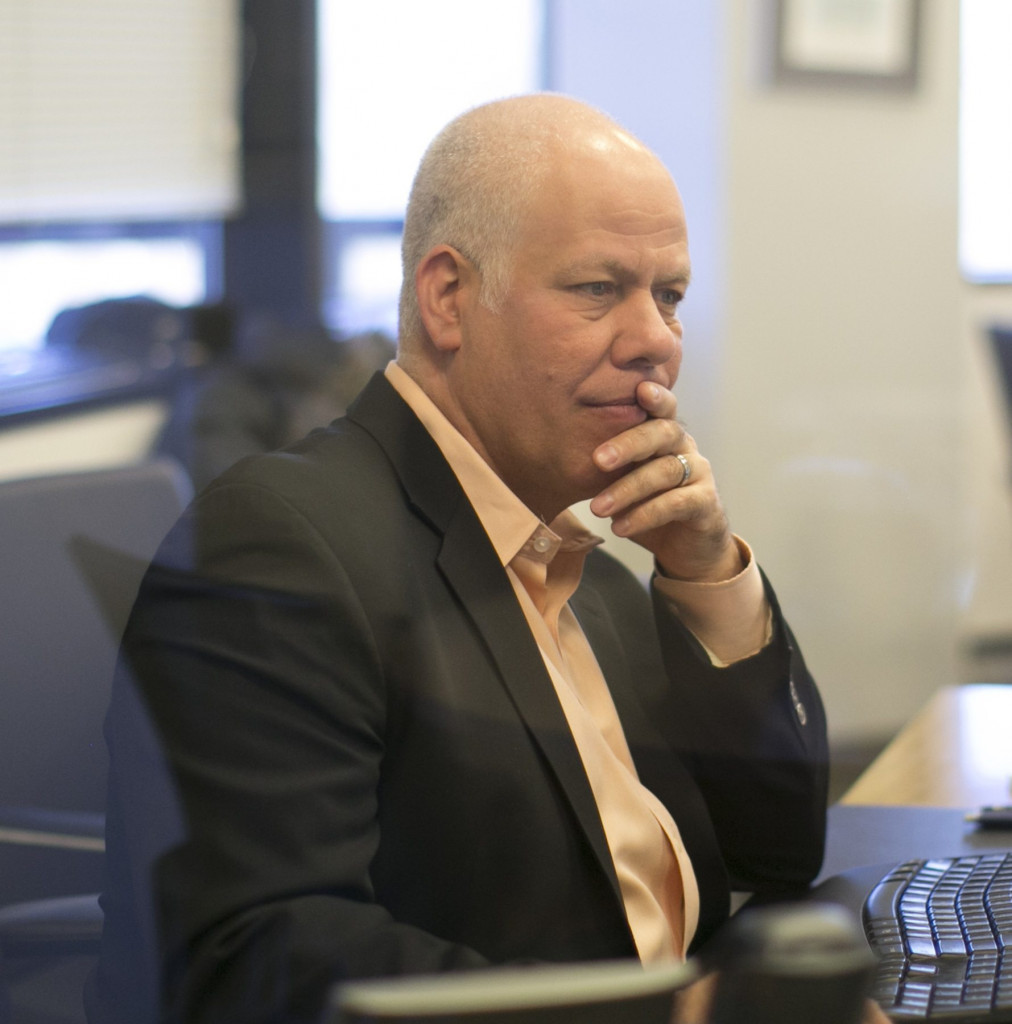
“We still work with some ISOs,” Landsman said. “We consider the ISO channel as an important one, but we are quite picky.”
Yalber offers small businesses up to $500,000 and so far it has provided more than 5,000 businesses with over $300 million in working capital.
From its original office in New Jersey, which since moved to New York, Yarber now has offices in Dallas, Los Angeles, San Francisco and London. Most of the company’s 30 employees are based in New York.
With an emphasis on making the application process simpler and faster, and all online, what is the value in having multiple offices?
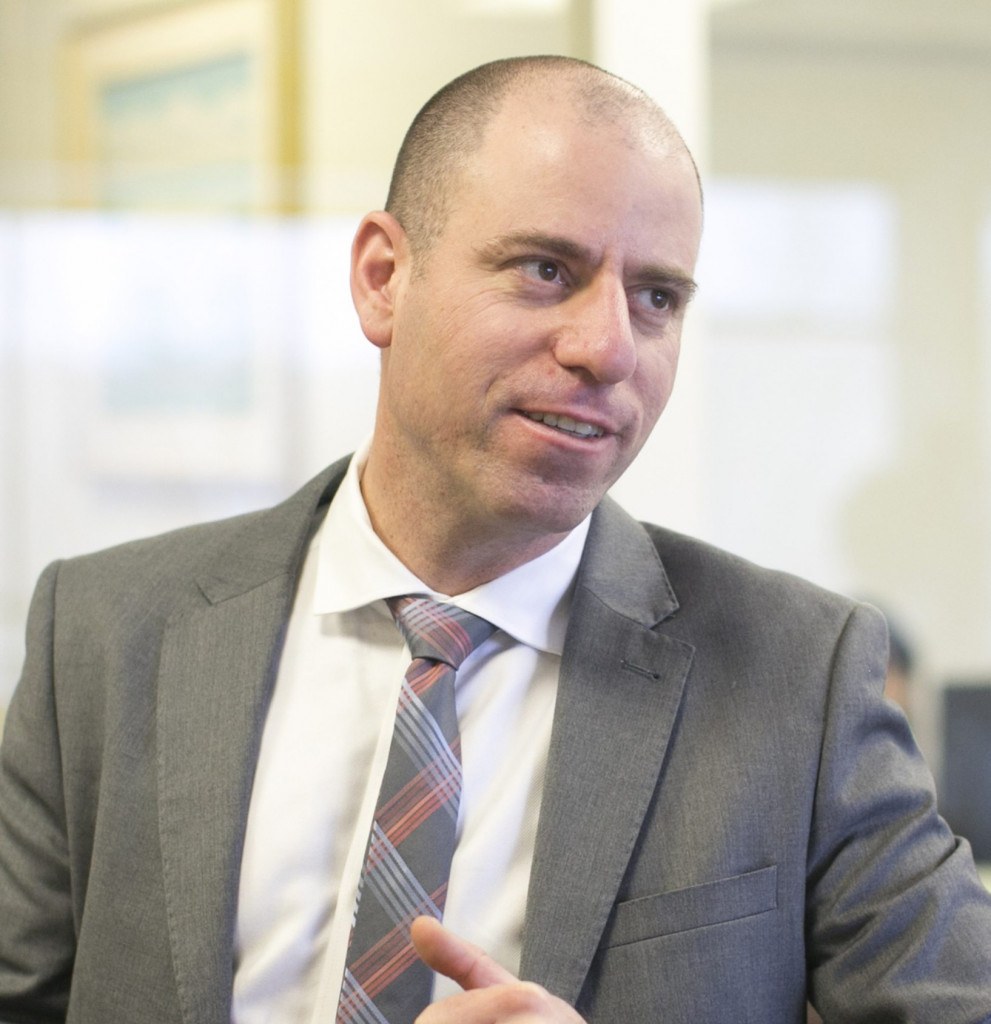
Landsman told AltFinanceDaily that by better understanding local business environments, they can make better credit decisions. And having a local office also gives merchants more comfort, knowing that they can speak to someone familiar with their area.
In the decade since Yalber started in the MCA business, CTO Nir Goshen noted how much the industry has grown.
“When I started with Google AdWords [in 2007], when I searched ‘Merchant Cash Advance,’ Google said ‘too little traffic.’ Today, it’s one of the most expensive ad words. The only one I can think of that’s more expensive is ‘insurance.’”
Yalber’s $20 million financing was raised by Brean Capital.