
Popular Business-Lending Marketplace Dealstruck Restructures
December 3, 2018VALLEY STREAM, N.Y., Dec. 3, 2018 — Innovative online business-lending marketplace Dealstruck.com (which has been featured in CNBC, The New York Times, Forbes and many other publications) has reorganized. A private investment group of fintech experts acquired the company. “This acquisition represents a significant strategic opportunity for our client base,” said Dealstruck CEO Anthony Porrata.
Dealstruck is a leader in the alternative lending space. The company provides small and medium-sized business owners with seamless access to capital. Advances in technology make the process quick and efficient with minimal paperwork.
During the restructuring process, the company paused providing loans. “Recently, many people have asked, ‘What happened to Dealstruck?’ There were rumors that Dealstruck shut down but that was not true,” noted Porrata. “We’re happy to announce the Dealstruck news that a group of private investors has created a new ownership coalition that is leading a bold evolution for the company.” The new investment group combines a portfolio of existing small business capital providers with the highest technological advances in the field of online business loans.
Company leaders expect the change will help small businesses immensely. “Clients will see quicker approval turnarounds and a more streamlined process,” said Porrata. “This will also help clients who would not otherwise have equal access to growth opportunities.”
Vice President Chris Jones expects small business owners will be excited about the Dealstruck news. “This restructuring will allow us to approve more clients than ever before,” he smiled. “I’m looking forward to joining many new business ribbon-cutting ceremonies. Nothing gives us more pride than a grand opening.”
The reorganization allows Dealstruck to expand its mission while maintaining the personalized service that makes it so well known. The new management team has access to more capital and creative financing terms for Dealstruck clients.
About Dealstruck: As a leading online capital facilitator, Dealstruck connects small and medium-sized businesses with access to a variety of working capital options. These options help business owners find custom-tailored loans, so they can better manage their time and achieve their goals. For more information, visit dealstruck.com.
Contact:
Anthony Porrata – CEO
855-610-5626
info@dealstruck.com
What We Learned About Credibly From Credibly’s Securitization
November 29, 2018Today, Credibly CEO Ryan Rosett told AltFinanceDaily that the company’s October securitization will be used, in part, to roll out its new Market Expansion Product (MXP), which will allow Credibly to service merchants with FICO scores as low as 500 and those that have been in business for less time.
“We believe the MXP will open up the funnel by allowing us to serve business owners that we previously couldn’t,” Rosett said.
Kroll Bond Rating Agency assigned preliminary ratings to three classes of notes as part of Credibly’s first securitization. Rosett said this securitization follows a large warehouse line of credit from SunTrust Bank which is also the primary underwriter, of the securitization.
In addition to the new MXP product, Rosett said that Credibly intends to launch a line of credit product in 2019. Currently, Credibly provides merchant cash advances up to $150,000, business expansion loans up to $250,000, with terms up to 24 months, and working capital loans up to $250,000 with terms up to 17 months. Rosett said that the company’s working capital loan is its most popular product.
In an interview yesterday with Benzinga, Rosett said that he has seen a strong increase in demand for Credibly’s products and that they are currently evaluating over 10,000 applications per month.
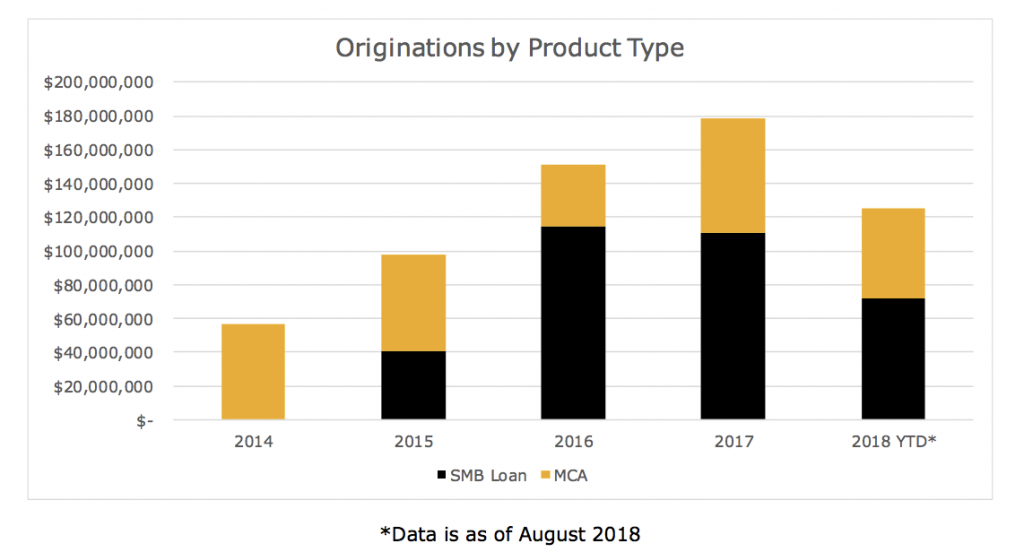
2017 net revenue before provisions: $33 million
2017 earnings: $1.4 million
Total shareholder equity: $18.7 million
Lifetime funding volume: $700+ million
Raw # of fundings: 17,000+
Majority owned by: Flexpoint Ford
# of employees: 140
Notable deal: Acquired the rights to service BizFi’s $250 million MCA portfolio in August 2017
Provides: Small business loans (in 37 states and D.C.) and merchant cash advances
Founded: 2010 by co-CEOs Edan King and Ryan Rosett
Generates deals via: Brokers and inside sales
Dan DeMeo is Back in Action… at Lendr
November 15, 2018 Daniel DeMeo has been hired as Chief Revenue Officer by the Chicago-based funder, Lendr.
DeMeo has been working as an independent consultant for the last two years, according to LinkedIn. Prior to that he was the CEO of CAN Capital, a company he had dedicated himself to for nearly seven years until an internal account performance issue led to several senior executives taking an immediate leave of absence.
Under DeMeo, CAN enjoyed success as one of the nation’s largest non-bank small business financiers, partially attributed to the company’s major head start in pioneering merchant cash advance products when the company was founded in 1998. DeMeo even landed on the cover of AltFinanceDaily’s November/December 2015 issue, around the time when the company was widely believed to be planning an IPO.
It never happened.
The systems issue that toppled CAN’s top execs including DeMeo, brought the company to its knees, putting all new funding on hold for six months until it was saved by a capital infusion from Varadero Capital in July 2017. CAN Capital survived while DeMeo has notably since then kept a low public profile.
Now he’s back in action at Lendr, an ambitious funding company that offers MCAs, small business loans, equipment financing, and just recently, factoring.
“Dan is a highly strategic and thoughtful leader with broad perspective of the industry that enables him to understand specific challenges we face as a growing company,” said Tim Roach, CEO of Lendr. “Dan’s experience is a perfect addition to the team as we accelerate our growth plans, raise Lendr’s brand recognition, and further increase our market share.”
“I’m thrilled to be joining such a dynamic and progressive company,” said DeMeo. “Lendr has emerged as one of the leaders in the financial solutions space and we are poised to build strategic partnerships and alliances with those who share the same zeal in helping small- and medium-sized businesses grow.”
Lendr is setting its sights high. “We’ll be north of $100 million in our first year of factoring,” Lendr co-founder and CEO Tim Roach told AltFinanceDaily in September.
The company has also been showing off its technological and fundraising prowess as of late. This past March, they closed on a $25 million credit facility that’s expandable up to $50 million. That news was followed by the announcement of a new funding option made possible through virtual and physical debit cards.
Lendr has offices in Chicago and New York and employs over 45 people.
Clearbanc Swaps VC Investing for MCA
November 13, 2018 The business model for many startups is that the business won’t even be close to profitable for years until it gets enough clients or users. But this isn’t the case for all startups. Some of them actually generate considerable revenue after just months. For companies like these, that also need capital for marketing or expansion, Clearbanc is interested to work with them.
Founded as a venture capital firm by serial entrepreneurs Andrew D’Souza and Michele Romanow, among others, the company now primarily offers merchant cash advances. Instead of analyzing the company’s founders, they are looking at tangibles like revenue and percentage growth.
“We pay a lot of attention to our underwriting and decision-making process because if we make a mistake, we can lose a lot of money,” D’Souza, who is CEO, told Techcrunch yesterday. “Unlike a VC, we don’t expect the majority of our companies to fail and have the winners make up for the losses.”
Clearbanc offers cash advances to new businesses in the U.S. and Canada, from $5,000 to $10 million. At this point, Clearbanc only funds eCommerce and Consumer SaaS (software as a service) companies. Also, eligible companies must be incorporated, have a monthly average revenue of at least $10,000 and have at least six months of consistent revenue history.
So far, Clearbanc has funded $100 million to 500 companies in 2018. Founded in 2015, the company is based in Toronto, Canada.
The Broker: How Industry Veteran Joe Cohen Closes Deals and Dodges Backdooring
November 11, 2018Role: I’m the manager of Business Finance Advance in Brooklyn. I manage a team of about 20.
Years in the business: Since the beginning. 2005/2006.
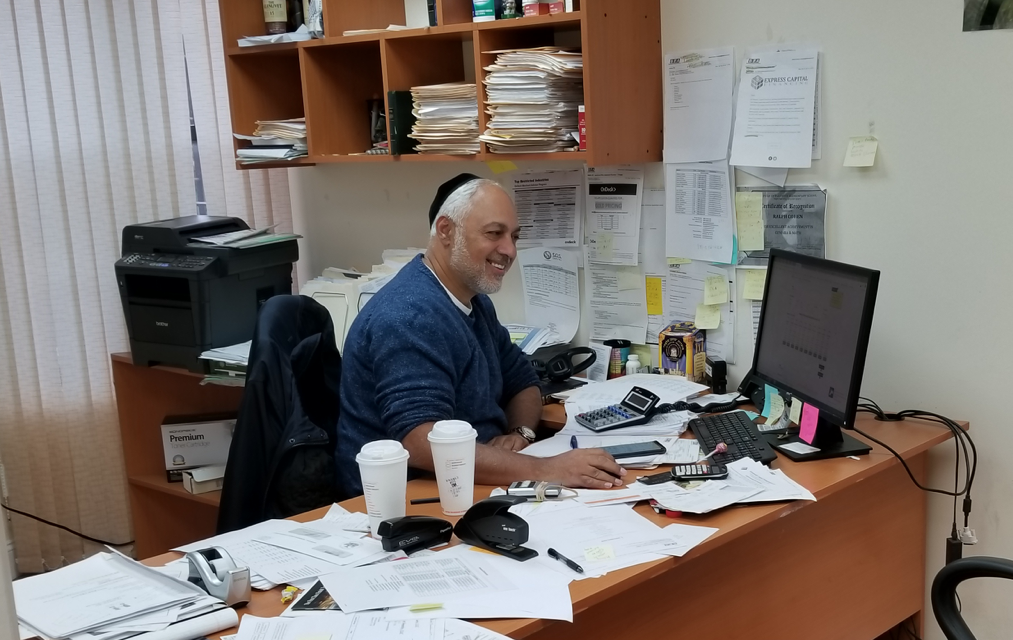 How he closes a deal:
You have to really know the customer. You have to have a feel for what his needs are. Is his hot button the amount of money? Is it the term? Is it the rate? Is it all of the above? You have to know what the customer is looking for and try to hit a bullseye…I make sure that I know exactly what the customer wants before I make an offer.
What were your first deals like?
In those days, when we first started doing it, the hard part was just convincing the client that we were for real – actually willing to give him money – and not some fraudster trying to get a hold of his bank statements. And it was only based on credit card revenues at the time. We used to call them up, “Hi, Mr. Smith, do you accept credit cards?” “No.” We’d hang up the phone [because] we couldn’t do anything. There was no ACH program in those days.
Once we got the statements back, we’d just have to figure out how much we could give him based on his credit card sales…We never knew what a decline was in the early days. Everybody that sent in paperwork was approved, it was just a matter of how much money he was going to get approved for.
Biggest challenge as a broker:
The most challenging part of my job is the silent thief. When we send out deals to funders, not only do we have to worry about closing the deal…but when we send a file to some of the funders, either there’s someone at the funder that’s backdooring the deal or there’s a whole syndicate taking the deal and calling the merchant behind our back. That is the biggest challenge to [brokering] today…You’re going to make some deals and you’re going to lose some, but the biggest issue we have is the drama that’s been set up by the backdoor channels that are rampant throughout the industry.
Advice for newcomers:
You have to [understand] that it will take you a year, at least, before you start making any money because a) there’s a lot of people doing it, and b) you have a lot of [backdooring] and if you don’t understand the business, you’re going to get caught up with the wrong funders.
What are some funders you work with, who you trust?
Quarterspot. And CAN Capital and OnDeck. These are the ones that will not backdoor us.
What do you look for in a good broker?
A guy that basically is hardworking and tenacious. You can’t give up. It’s not an easy business. You’ve got to work very, very hard and you have to deal with the successes and compartmentalize the losses.
AltFinanceDaily Email Campaign Tips
October 30, 2018Sending out an email campaign? Here are some helpful guidelines we’ve put together from experience:
1. Choose a well-crafted subject line. If your subject line doesn’t speak directly to your audience and entice them, they won’t open your email and nothing else will matter. Assume your recipient gets hundreds or thousands of emails per day so even if they recognize the sender and subscribed to them, they might not feel compelled to open the email unless they’re convinced they should. Assume that they also receive a lot of spam so something like the subject line “Best deal of the year” could be glossed over by the ever-distracted eye that can’t tell if the email is about Black Friday shopping discounts or their funder’s newest commission structure.
Try to be as specific as possible in as few enticing words as possible. “ISOs, best deal of the year” tells the recipient this is a deal for ISOs, not a deal for footwear at Macy’s.
Consider also: You have to do it in a way that won’t trip spam filters. Even if the recipient’s mail server regularly gets email from the sender, a subject line in all capital letters or lots of dollar signs could send that email to the spam folder anyway. Lines like “Make lots of money” or “Get rich” have a lower chance of making it to the destination. Mail servers remember email they don’t like so one poorly worded subject line today could convince mail servers that your future emails, no matter how mundane, should go there too. So be careful.
2. Draft your campaign in HTML. A standalone image might look really cool but that presents two problems.
- If the recipient has images in emails blocked by default they will just receive a blank email. NOT GOOD.
- Spam filters may suspect you are trying to hide your message in a photo rather than in text where the content can be analyzed. As a result, your email and future ones may go right to the spam folder.
Consider also: That HTML comes in many versions that is interpreted in various ways by different mail clients. Stick to HTML 4 (do not use HTML5) and use TABLE tags instead of DIV tags (DIVs are ignored by some email clients).
3. Cap the maximum width to 700 pixels. Remember that your recipient may be reading your email on a mobile device or not have their email client window fully extended on their screen. To prevent loss of readability, think narrow, not wide.
4. Use still images, not animations. Use of images in emails are great, but bear in mind that unfriendly email clients like Microsoft Outlook will not animate an animated .gif file. Instead, it will only display the first frame of the animation as a still image. So if you use animations, make sure the first frame is something you can live with if your recipient is viewing it using Microsoft Outlook.
5. Don’t use huge image files. The perfectly crisp high resolution image might look fantastic but if it’s multiple megabytes, mobile phone users not connected to WIFI may close your email before it even loads. So keep your images to 72 dpi and as little memory as possible.
6. Cross-compatibility. Email looks great on Gmail? That’s a start, but you’re not done. Email clients interpret design cues and HTML differently. Every email campaign needs to be checked in Gmail, Apple Mail, Microsoft Outlook, and mobile devices.
7. Email design programs. Some design programs do a decent job of producing HTML-based email-ready campaigns. Others might seemingly look okay but place thousands of unnecessary lines of junk code in your campaign’s HTML that either cause cross-compatibility problems, or worse, exhaust the email client. Gmail, for example, will just stop reading the code if it’s too long and hide the lower part of your campaign design from your recipient’s view. You definitely don’t want that to happen.
8. Be careful what you say. Spam filters are analyzing more than just subject lines. They want to know what you’re emailing about. Terms like Loan, Cash Advance, Money, Get Paid, might make complete sense in your everyday business marketing but spam filters hate these words even if they trust the sender. So limit your usage of them or come up with other terms.
9. Be work-appropriate. They say sex sells, but not here, do not incorporate sexually suggestive phrases or imagery into your campaign.
10. Be legal. Consider that a government regulator could one day get ahold of your email campaigns. Is your campaign truthful? Is what you’re saying and offering legal? If your email isn’t regulator-ready, it’s time to revisit.
11. Allow time for testing, suggestions, and corrections. Always have your campaign fully completed at least two business days in advance of its scheduled delivery. That will allow enough time for testing and to apply changes as needed.
12. Place BIG and obvious calls to action. Your email was perfect and the recipient is ready to communicate with you, but their ever-distracted eye did not see the tiny little text hidden at the bottom that said “email us.” As a result, they closed the email and forgot all about you. Oops!
Every campaign must have a clear actionable.
- EMAIL US HERE
- CALL NOW
- CLICK TO LEARN MORE
Some people are too shy to pick up the phone and others don’t have the hand energy to type out an email saying they’re interested without any promise of when they’ll hear back, so include as many actionables as possible and make them as VISIBLE as possible.
Consider that: Some users automatically assume the top image of an email will be actionable. Meaning if they click it, they expect something to happen like the loading of a landing page. Scrolling down requires work and effort so place as many actionables as high up as you can.
13. Landing page. If your actionable is going to direct the recipient to a website, try not to make it your home page. The best way to lose the user is to send them to a generic home page with a navigation they are not familiar with. If possible, create a simple page that uses language similar to your email campaign with a SHORT web form or highly visible listing of your phone # or email address.
14. Smarter. Not more. If you’re not satisfied with the results of your campaign, having more subscribers the next time around may not be the answer to your woes. Review the above the steps and make changes where appropriate and try again. 🙂
GOING NATIONAL: How David Gilbert Built One of the Largest Small Business Lenders in the Country
October 17, 2018 When Ty Austin, who owns a florist shop in West Palm Beach, secured a $5,000 loan from National Funding last year, he was happy to have working capital and could build inventory for mini-gardens and landscaping,
The experience, moreover, was surprisingly pleasant. “The guy I worked with was really cool,” Austin says, referring to the sales representative at the San Diego-based financial technology firm. “It turned out that he was getting married and I ended up giving him and his fiancé advice on floral arrangements.”
The borrowing worked out so well that the Floridian, who is 46 and the sole proprietor of Austintatious Designs, re-upped for a second loan of $12,000 to help purchase a commercial van. The van will be used to transport flowers, plants and tools while doubling as a billboard-on-wheels. “It gives me more ‘street cred,’” he jokes.
To register his approval with National Funding, Austin went online to TrustPilot and posted a rave review of the sales rep: “James Johnson Rocks!”
Pam, a Texas wellness coach who provides clients with an array of holistic health therapies, needed extra money to buy an infrared sauna to add to her portfolio of services. But her credit rating was “poor,” she told AltFinanceDaily in an e-mail interview, “from when I changed careers and lost my health and struggled to make my credit card and student loan payments on time.”
Like Austin, Pam — who asks to be identified by her first name —found National Funding through an online search. And she too secured $5,000, although her transaction was structured as a merchant cash advance, rather than a loan. The terms of the MCA require a daily debit from her bank account. She reckons that the total cost of the MCA to be roughly $1,500.
 Pam pronounces herself satisfied with the deal and mightily impressed with the way National Funding treated her. The process took about three days — and would have gone even quicker if she’d located her professional licenses sooner. Best of all, she says, the agent at the company tailored the financing to suit her circumstances. “They were great as far as getting my questions answered, even listening to my past situation, which others may not have cared about,” she says.
“They really wanted to get me an option that they knew I’d be able to repay,” Pam adds. “They said they were in the business of helping small businesses grow rather than putting them in a hard financial situation.”
The positive experiences that Austin and Pam had with National Funding are not isolated instances. Rather, they are representative of clients’ dealings with the company. Witness its online reviews from business borrowers at TrustPilot which go back three years, run for 36 pages, and merit National Funding a 9.4 rating on a scale of 10. That’s a straight-A grade on any report card. Although there’s the occasional naysayer — four percent assert that their experience was “poor” or “bad” (and some negative comments can be blistering) — the weight of the reviews is almost embarrassingly positive.
Typical postings find that National Funding and its agents win kudos for, among other things, being “prompt and professional,” providing service that is “hassle free and about as friendly as you can be,” and even being “accommodating and gracious.” A man named Al McCullough spoke for many when he declared: “My experience was great. Professional and on time. Couldn’t ask for more.”
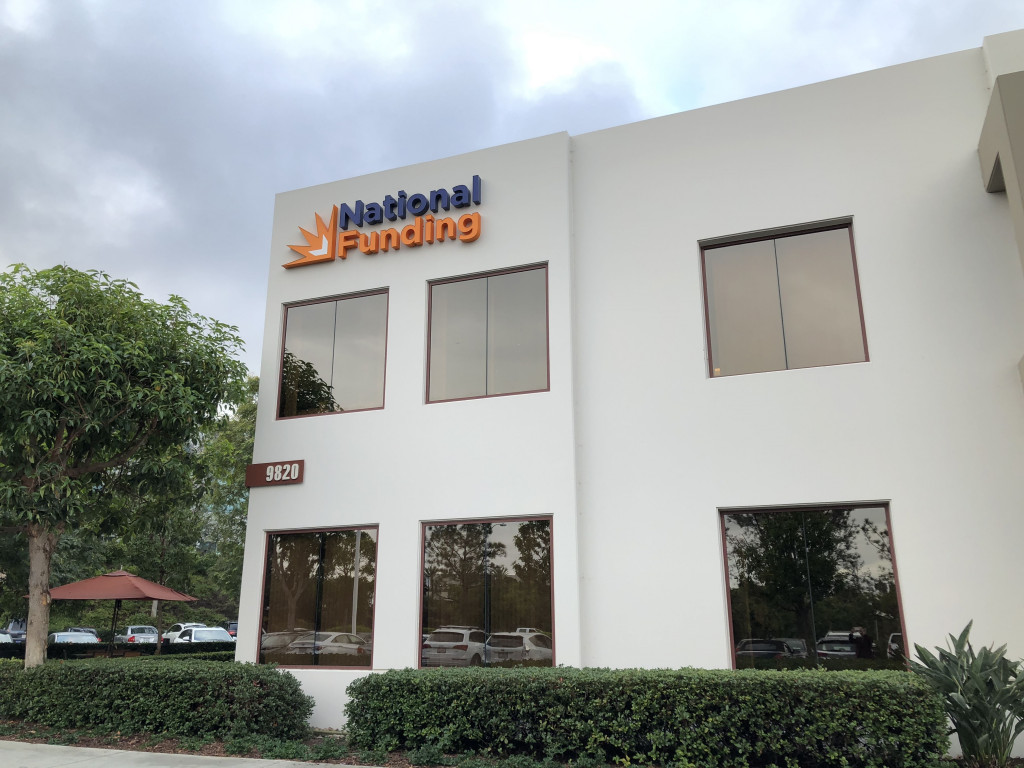
 All of which helps account for why National Funding — its 230 employees working out of a sleek suburban office building guarded by a tall stand of palm trees in San Diego — is a rising star in the world of alternative business lending and financial technology. In 2017, the company raked in $94.5 million in revenues, a 24.8 percent bounce over the $75.7 million recorded a year earlier and nearly fourfold the $26.7 million posted in 2013.
In recognition of the company’s three-year growth rate of 142%, Inc. magazine included National Funding in its current list of the country’s 5,000 fastest-growing companies, the lender’s sixth straight appearance on the coveted roster. Since its inception in 1999, National Funding reports that it has originated more than $2 billion in loans to some 35,000 borrowers.
The company’s impressive performance has similarly merited accolades for David Gilbert, the 43-year-old chief executive who started the company on little more than a shoestring and whom employees regularly describe as “visionary.” Among Gilbert’s trophies: Accounting firm Ernst & Young recently presented him with its “Entrepreneur of the Year 2017 Award” for San Diego finance.
At first glance, the San Diego financier doesn’t look too much different from its cohorts. The company proffers unsecured loans of $5,000 to $500,000 to a mélange of small businesses in all 50 states and across multiple industries, including retail stores, auto repair shops, truckers, construction companies, heating-and plumbing contractors, spas and beauty salons, cafes and restaurants, waste management, medical and dental clinics, and insurance agencies.

To qualify for financing, a prospective borrower should have been in business for a year, have at least $100,000 in revenues, and boast a personal credit score of at least 500. While there’s no collateral required for loans, National Funding insists on a personal guarantee. The website reviewer NerdWallet cautions borrowers that this “puts your personal assets and credit at risk if you fail to repay the loan.”
Along with unsecured loans, National Funding offers equipment leasing – usually for heavy trucks and construction equipment – as well as merchant cash advances. The equipment lease is secured by the machinery. As in the case of Pam, the wellness coach cited above, MCAs are debited daily, the money automatically withdrawn from bank accounts.
There are a number of businesses that National Funding disdains, no matter how stellar their credit. “We won’t finance casinos, strip bars, tobacco, or firearms,” Gilbert says. “We’re not going to support industries like that.”
For CEO Gilbert, doing business ethically is a signature feature of the company. Among other things, National Funding presses its salespeople to steer clear of putting people into dodgy loans that are likely to default. “We’re lending capital,” Gilbert says, “and one of our core values is the way we support our customers. Are we placing people with the right product to meet their needs or are we being selfish? The best way to be customer oriented is to get a better understanding of what capital will do for them.”
That corporate ethos, coupled with the company’s remarkable performance, has raised its profile while earning it a measure of esteem among industry peers. “What I do know about National Funding,” says Douglas Rovello, senior managing partner at Fund Simple, a lender and broker in the Tampa area, “is that they have five or six different programs and set their rates high but competitively. They’re known for fitting their products to a client’s needs,” he adds. “And in a business that has its share of bad actors, they have a reputation as a company with a conscience.”
A company with a conscience. Customers come first. And yet National Funding turns heads with its sales production of roughly 1,000 financings a month and triple-digit growth rate. So how do they it? A good place to start is with Gilbert, whose leadership skills, business acumen, and second-to-none work ethic “set the tone,” says Kevin Bryla, the company’s 52-year-old chief marketing officer.
For his part, Gilbert credits his family background and an upbringing in which education and academic achievement were strongly encouraged. The fifth of six children, he’s the only one who opted for a business career. “There are three doctors, two lawyers – and me,” Gilbert says.
 The son of a prominent physician, his mother a homemaker and volunteer docent at the nearby Nixon Library for the past 25 years, Gilbert grew up in Yorba Linda. He attributes his keen interest in business to observing how his father, a pathologist, operated his own laboratory, which employed 60 people. “It was the business side of medicine that fascinated me,” he asserts.
Even so, his two closest friends at the University of Southern California — fraternity brothers Marc Newburger and Sean Swerdlow– tell a somewhat different story. They remember Gilbert as someone who found his true calling, his métier, during his college years. Enrolled initially in pre-med courses, he was a diligent student but, his friends assert, manifestly unsuited for a career in medicine.
“Formative,” says Swerdlow, the older of the two fraternity brothers and now a management consultant based in Southern California, “would be a very good word” to characterize that period during which Gilbert abandoned medicine in favor of the world of commerce. In 1997, he earned a bachelor’s degree in business administration “with an emphasis in entrepreneurship.”
But it was fraternity life just as much as the classroom, his friends agree, that shaped him and foreshadowed his future. “It wasn’t ‘Animal House,’” Swerdlow says of Alpha Epsilon Pi. “We boasted the highest GPA (grade point average) on fraternity row.”
Nonetheless, Gilbert took to the social life and camaraderie that the fraternity offered with gusto, and his friendship with the colorful Newburger was especially fateful. A freewheeling entrepreneur today, Newburger takes a measure of credit — Gilbert’s disapproving parents might have preferred the word “blame” — for contributing to his fraternity brother’s metamorphosis. “Dave hated all of his pre-med classes,” Newburger insists. “He had zero stomach for it. He was so much like I was: a natural people person and a born entrepreneur.”
Newburger is the quintessential soldier of fortune. After college, he tried his hand as an actor, supporting himself by playing poker and getting paid to be a contestant on TV game shows including “The Dating Game,” “Card Sharks,” and “3’s A Crowd.” He’s now the co-president and co-inventor of Drop Stop, a patented device that “minds the gap” between a car’s front seat and the console and prevents coins, keys, glasses, and mobile phones from disappearing down that rabbit hole. (Drop Stop really took off after Newburger and his business partner appeared on the television show “Shark Tank” and scored a $300,000 capital injection from celebrity-investor Lori Greiner who took a 30% stake in the company and slapped her name on the brand.)

Back at the frat house, Newburger and Gilbert collaborated on business ventures. The pair once sold T-shirts sporting an off-color message about USC’s archrival, the University of California at Los Angeles. “The (anti-UCLA) message was pure hatred,” Newburger recalls. “But it was just for the day of the football game and it was all in fun.”
At first, sales at the stadium were lackluster. USC students kept trying to bid down the price or importune them to throw in an extra tee. As for the game itself, USC’s chances for victory looked equally unpromising. As time ran out, however, the Trojan quarterback completed a Hail Mary pass and USC won. The two fraternity brothers grabbed the bundle of shirts and sprang into action. “We got to the exit just in time and sold out in a matter of seconds,” Newburger recalls.
Newburger takes credit too for introducing his friend to Las Vegas’ gaming tables. Gilbert, his friend says, immediately demonstrated a knack for counting cards, handling money, and taking risks. “It was typically blackjack,” recalls Swerdlow, who sometimes accompanied them. “We didn’t have much money then. But there were moments when Dave would bet a big pile of chips. He’s willing to make a bet and live with the consequences.”
Sports are another of Gilbert’s enthusiasms. His friends say that, whether he’s returning serve at ping pong or standing over a putt — he plays to an 11 handicap at golf – he wants to win. Remarks Newburger: “He’s competitive to the point that — when he beats you — he wants the Goodyear blimp flying overhead to announce his victory.”
Gilbert, who is married with two children, is legendarily loyal to friends and family. While most members of a college fraternity might keep up with old companions after graduation by exchanging greeting cards and attending college reunions, Gilbert goes the extra mile.
 He once footed the bill for Swerdlow to travel with the USC football team to an away game, arranging it so that his fraternity brother could view the action from field-level. After Newburger had a recent health scare (no worries, he’s O.K.), Gilbert rounded up a couple of dozen fraternity brothers and their wives (or companions), and put together a four-day bash in his buddy’s honor. The event was held at Cabo, the Mexican beach resort in Baja California, and Gilbert underwrote a fair amount of the cost. “He shares his success with his friends,” Newburger says, adding: “I don’t know anybody who works harder on friendships.”
Many of the personality traits described by friends and colleagues — tenacity and competitiveness, self confidence and leadership — played a key role in the development and success of National Funding, which Gilbert founded just two years out of college with $10,000 borrowed from his uncle, Howard Kaiman, of Omaha.
He’d worked a couple of quick jobs right after college, including a stint at small-business lender Balboa Capital, but he was always destined to be his own boss. Gilbert’s start-up was called Five Point Capital and, at first, it was located in the affluent Chatsworth section of Los Angeles and concentrated on equipment leasing.
“The first two years we were a cold-calling company and then we got into direct mail and saw some success and then we moved to San Diego and started to scale up the company,” Gilbert says. The decampment, he explains, was “for the quality of life, but we also felt we could hire from a better talent pool than L.A. We wanted to set ourselves apart.”
By 2007, Five Point was cranking up operations, revenues shot to $28 million and its headcount totaled 210 employees. “Then the Great Recession hit” in 2008-2009, Gilbert says. The company was forced to furlough 140 employees, two-thirds of its workforce. Yet even as it retrenched, the company managed to branch out. It began making merchant cash advances, Gilbert says, and, also in 2007, it linked up with CAN Capital to do broker financings. “We were pretty well known and they were looking for partners for factoring and leasing,” Gilbert explains.
It took time to recover after the financial crisis. But by 2013 – the year that Gilbert re-branded his company “National Funding” – the company was able to hire back as many as 15% of its laid-off employees (most had found other jobs, in many cases relocating to Silicon Valley, Gilbert reports). By then, the company had secured a $25 million credit facility from Wells Fargo Bank, which allowed it to move up the food chain to “become a balance-sheet lender,” Gilbert says, and offer a wider selection of financing options.
Key to driving the company’s phenomenal growth has been its flood-the-zone marketing and sales strategies. The company spends $16 million annually on marketing using a full panoply of channels and media, both online and offline. These include direct mail and targeted marketing, paid advertising, search-engine optimization or SEO, and sports sponsorships. “We try to build a whole range of marketing mechanisms,” explains marketing chief Bryla, “and when you get the mix right, they all help each other.”
 Gilbert is a big believer in the benefits of sports marketing, the company’s website featuring the logos of the San Diego Padres (baseball), and Anaheim Ducks and Los Angeles Kings (hockey). Ever the faithful alumnus, Gilbert and his company back USC football as well. During the 2015 2016 college football season, the company paid for naming rights for what became, for one night, the “National Funding Holiday Bowl” at Qualcomm Stadium.
Janet Fink, department chair at the McCormack School of Sports Management located at the University of Massachusetts-Amherst, told AltFinanceDaily that sponsorship programs can easily cost a million dollars or more. “It’s not cheap,” she says. “When a company sponsors a team, they get a number of benefits. One is that they get to put the team’s logo on their website. The idea is that fans are passionate or have an affinity for the team and that it will rub off on a sponsor.
“Sports enthusiasts,” Fink adds, “often make good customers. When you have enough disposable income to go to these sporting events, you’re probably a good prospect for a loan.”
The sponsorships — which include civic involvement such as offering Holiday Bowl tickets to members of San Diego’s large military contingent as well as to company employees — also build good will in the community and team spirit among the workforce. (National Funding also makes an effort to hire veterans, says Bryla.)
Gilbert believes in the old adage that you have to spend money to make money. The company spends $14 million rewarding its network of outside brokers. Inside the company, high-performing salespeople are compensated with commissions, bonuses and an assortment of rewards, including resort trips.
But sales representatives’ must conform to company guidelines. Justin Thompson, National Funding’s sales chief, explains that the “customer comes first” philosophy is not just a slogan but a core value. “We’re not a factory spitting out widgets,” Thompson says. “We’re here to build relationships and sell a repeatable product. We want that customer to come back to us. Every loan is customized. Six of ten customers who pay off their loans come back for a second financing. Whether your business is dog grooming or you’re an asphalt company,” he adds, “people will do business with people they like and trust.”
Using the software program “customer relationship management” (CRM), National Funding expends a lot of effort gathering data on its business customers and extrapolating the information for use in credit evaluations. But the use of technology only goes so far.
 Gilbert reckons that the art of the deal involves about “70 percent algorithm and 30 percent people.” He adds, “You still need the people component to look at credit profiles. The algorithm spits out a recommendation but we still need the human element.”
If there’s a fly in the National Funding ointment, it’s that the company’s fees can be more expensive than a bank loan.
But borrowers who have been denied loans at a bank or other lender are likely to overlook those costs. Austin, the florist in West Palm Beach, for example, came to National Funding when his bank, North Carolina-based BB&T Bank, gave him the cold shoulder despite the $15,000 in deposits that he averages each month. “I’ve been with them for six years,” he fretted, “and they treated me shabbily.”
Even more grateful was Jimmy Frisco, of Annapolis, who is co-owner with his wife of Lisa’s Luncheonette, a business that includes a food trailer and several cafeterias located in the city’s office buildings. They employ about a dozen people.
Frisco had taken a nasty spill and was laid up for seven months. Health insurance covered the $18,000 in medical costs but he and Lisa fell behind in their bills and needed working capital to pay for food purchases and other business expenses. By the time a flyer from National Funding popped up in his mailbox, he and his wife “had been turned down by several other lenders, including banks,” he says, adding: “Things happen in life and we don’t have the best of credit.”
Getting that loan for $25,000 from National Funding took just three days. Frisco’s health is much improved and business is back to normal. He won’t discuss the terms of the financing, other than to say “it was reasonable.”
He adds: “There were no problems with National Funding, no hassle with the paperwork. They’re great people to work with.”
Sean Murray to Moderate Best Practices Panel at New York Institute of Credit Event
October 15, 2018AltFinanceDaily President and Chief Editor Sean Murray will be moderating a best practices panel at the New York Institute of Credit Event on October 16th. The event is also supported by the IFA Northeast, the Alternative Finance Bar Association, and AltFinanceDaily.
The subject of the panel is to discuss best practices when dealing with different financial firms, namely ABL, factoring, and merchant cash advance. The panelists are:
- Bill Gallagher, President, CFG Merchant Solutions
- Bill Elliott, President, First Business Growth Funding
- Raffi Azadian, CEO, Change Capital
- Dean Landis, President, Entrepreneur Growth Capital