
A Peek Inside Yellowstone Capital
April 1, 2015When the banks say ‘no,’ alternative financing companies are saying ‘yes,’ sometimes. While costs may run high, there is still a limit on risk that a lender like OnDeck Capital and their competitors can accept.
In January of 2011, Kabbage stated their approval rate on volume-eligible applicants was only 55%. In February of this year, they said it’s about 80%. And a year ago, CAN Capital CEO Dan DeMeo told Forbes their approval rate was almost 70%. Similarly, a Biz2Credit report estimated the approval rate for alternative lenders in 2014 to be around 64% on average.
This indicates that approximately 20% – 35% of small businesses are being declined yet again. These are America’s exiles and they don’t fit into the neat little underwriting boxes that alternative lenders have crafted. Being declined by an alternative lender does not necessarily mean the business isn’t healthy or viable, but rather it could be because they exhibit some characteristic that today’s risk algorithms disqualify. Volatile sales activity, short time in business, poor credit, and atypical SIC codes are just a few of the reasons that a business could be rejected by a lender like OnDeck.
Consequently, an entire Plan C market has sprung up to service the small businesses that have been cast aside by the algorithms. And it’s huge. At the center of it all is Yellowstone Capital, a New York City-based merchant cash advance provider that has carved out its own niche. Founded in 2009, Yellowstone was one of a handful of pioneers that introduced ACH payments to an industry that relied entirely on split-processing.
 Yellowstone does not publish their annual funding volume, but according to insiders not authorized to speak on the record, the numbers dwarf many industry behemoths including Square Capital, a company that funded more than $100 million in the last twelve months. And there’s some interesting changes happening there behind the scenes.
Last year, Yellowstone gave up an equity stake to a New York-based hedge fund in exchange for capital. Just recently however, Yellowstone CEO Isaac Stern led a management buyout to reportedly better position themselves for growth.
As part of the arrangement led by Stern and backed by a private family office, the hedge fund has been bought out and Stern is the only remaining company co-founder to retain an equity stake.
Additionally, private equity turnaround expert Jeff Reece has come on as President. Reece is a former Director of Cogent Partners, a boutique, private equity-focused investment bank and advisory firm.
Josh Karp is remaining the company’s Chief Operating Officer.
Jake Weiser is staying on as General Counsel.
 Above all, the changes are more than just a few new faces in management. Yellowstone has already rented an additional floor at 160 Pearl Street, bringing the total floors they occupy there now to three.
Notably, the company has endured some negative press in the past of which they are well aware, but they have no shortage of supporters. I contacted two ISOs that claim to have worked with them and asked for their opinion on the Yellowstone experience.
Len Gelman of Allied Capital Corp couldn’t say enough good things about his account manager there, “He fights for every deal I submit, no matter how small or how difficult it may be to get done,” said Gelman. “He always takes my calls and responds to my emails and texts no matter how late it may be.”
And Arty Bujan of Cardinal Equity said, “Working with Yellowstone opened a door of business for me that really wouldn’t have existed without their unique approach to funding what some may call less desirable merchants.”
With a new management team and strong capital backing, Stern and Reece appear to be laying the groundwork to scale.
According to company insiders, Yellowstone is also working to expand their box beyond just high risk businesses and plan to service the middle market risk class. That would in effect also make them a Plan B option.
Their new underwriting depth could spare business owners from that second ‘no.’
More Red for OnDeck (ONDK)
February 24, 2015 Back in the red?
It looked like the tide had finally turned. After 8 years and just in time for their IPO, OnDeck had pulled off their first quarterly profit, a meager amount of $354,000. But it was a start right? After their debut on the NYSE, the price swung heavily from a high of $28.98 to a low of $14.52. It closed at $19.37 right before the report was released.
OnDeck reported a $4.3 million loss for the 4th quarter and an $18.7 million loss for the year. Despite this, their margins are definitely improving.
The company issued $369 million in loans last quarter, bringing the 2014 total to $1.2 billion. Sales and marketing expenses doubled in 2014 over the prior year with CEO Noah Breslow and CFO Howard Katzenberg acknowledging on the call they’ve made a big go at TV and radio advertising.
Competition? What competition?
Noticeably, the average APR of loans originated in the fourth quarter was 51.2%, down from over 60% in Q4 of 2013.
One analyst asked if competitive pressures were leading to the reduction in interest rates but Breslow said that wasn’t the case. If anything their closing rate or “booking rate” has been improving and rates coming down is an initiative they’ve taken up on their own. Merchants are actually shopping less according to them.
“Overall this market is still characterized by extreme fragmentation,” Breslow said. “The behavior that we see with our customers is that they might research other competitive options online but then when they actually apply to OnDeck and receive that offer, they kind of have this bird in hand dynamic, and there’s so much search cost associated with going out and looking at other places and so much uncertainty around that, they typically just take that offer that OnDeck has provided to them.”
 With their cost of capital down, closing rate up, and defaults steady, a net loss should arguably be a tough pill to swallow. In response to a question about potential regulatory threats, Breslow said there wasn’t really anything on the horizon.
So was it just a weird quarter? Under Guidance for First Quarter 2015 and Full Year 2015 in their quarterly report, they suggest another long year of losses ahead.
To infinity and beyond!
The economic and regulatory environments couldn’t be any more favorable to a company that now has almost a decade worth of data under its belt. But unfettered growth still seems to be the number one priority on the agenda. Breslow and Katzenberg spoke optimistically about their recent entry in the Canadian market and the potential to set up shop in other countries. As for the OnDeck Marketplace… surprisingly they claimed its only real purpose is to diversify their funding sources. They are not aiming to become a marketplace but rather they view the OnDeck Marketplace as just one of many vehicles to sell off loans.
So when does the profit part come in? None of the analysts on the line asked about profit. They mostly all offered their congratulations on a “great quarter”. Coincidentally they were almost all from companies that originally underwrote their stock offering.
Six months ago I wrote that OnDeck’s lack of profits has been intentional. In An Insider’s Perspective, I wrote, “What scares their competitors though, is that this strategy has been intentional. Very few if any players in the industry have had the luxury, guts, or the purse to lose money for seven years as part of a coup to conquer the market.” Nothing has changed.
As long as they have cash in the bank, they’re going to keep pursuing growth. They had $220 million in cash and cash equivalents as of December 31st. So for now that means continuing to turn up the marketing heat to increase volume domestically while planting seeds in other markets like Canada.
 But the question remains, at what point does profitability become important? Sure it’s tempting to be lending $2 billion or $3 billion a year instead of the $1.2 billion size they’re at now because it would mean they’ll be that much bigger right? Heck, maybe they can be a $10 billion a year lender. But if they are running in the red at a moment where their cost of capital is low, the credit markets are liquid, the economy is favorable, regulatory threats are nil, defaults are static, there is supposedly no competition, and their margins are at their peak, then what happens when one or two of those things change? What if all those things change at once?
Those rates are too high low
OnDeck’s price jumped in afterhours trading. The market is chalking up the results as a positive. It’s just another losing quarter in a long line of losing quarters for OnDeck and they’ve promised more of the same in the year ahead. Nothing to see here folks, business as usual.
OnDeck may have made it easier for small businesses to get a loan, but they have yet to prove since 2006 if their methodology can actually make money. That should be a wake up call to critics that complain their interest rates are too high.
It is quite possible that their interest rates are actually too low. At an average of 51.2% APR, that’s a heck of a theory to consider.
But it looks like it’s true.
Mayor Rahm Emanuel Declares War on Merchant Cash Advance
January 16, 2015 FOX 32 in Chicago is reporting that Mayor Rahm Emanuel is going on the offensive against merchant cash advance companies. Specifically it says,
Mayor Rahm Emanuel will call on state and federal agencies to regulate business to business lenders. Emanuel said cash advance companies have accelerated their marketing efforts in recent months, resulting in small businesses taking loans they cannot afford.
The article states that business owners have turned to the City of Chicago for help in paying back loans with high rates of interest.
While the mention of APRs reaching into the ranges of triple digits is supposed to shock you, one business lender that charges such rates recently went public and had been backed by Google Ventures, Fortress Investment Group, Goldman Sachs, and Peter Thiel.
Less than 30 days ago we were celebrating these companies as the solution to a problem that has plagued small businesses for all time, access to capital.
While Emanuel is obviously famous for being the 23rd White House Chief of Staff and Obama’s right hand man for a period in his first term, he is not the first mayor to consider the role merchant cash advance companies and high interest business lenders have in cities across America.
All the way back in 2008, the U.S. Conference of Mayors (USCM) adopted a resolution titled, Protecting Main Street Small Business Owners from Predatory Lenders, from which some of the excerpts below are from:
WHEREAS, merchant cash advance companies have already lent approximately $2 billion at egregious rates and have been quoted in leading main stream media publications such as Forbes, Business Week, Dallas Morning News, and American Banker claiming that their new originations have increased 75% in the first half of 2008
WHEREAS, as with payday lenders and predatory lenders in the home mortgage community, Mayors need to take a leadership role to scrutinize predatory merchant cash advance companies, educate small business owners of the dangers posed by these firms, and increase awareness and promotion of alternative, more affordable funding sources to support this vital segment of our economy
BE IT FURTHER RESOLVED, that to protect the general health and viability of their small business communities, cities should investigate whether they can effectively regulate or ban merchant cash advances.
3 months after this resolution was passed, Lehman Brother’s collapsed and the economic crisis was in full swing.
 According to a few industry leaders familiar with the 2008 mayoral resolution, UCSM privately retreated from their stance when all other types of commercial lending had dried up. Their seeming reversal, though not publicly stated invited merchant cash advance companies into their communities at the moment when Main Street was arguably at its weakest.
Who do they think rolled up their sleeves and kept local economies alive when things were at their worst?
While non-bank funding can obviously be expensive, countless business owners have praised merchant cash advances in particular as a solution that came through when none other were available.
Emanuel will learn that companies such as Square and PayPal are part of the crowd that provides merchant cash advances. This is not a shadow industry. Non-bank business-to-business financing is already becoming less expensive nationwide.
According to Fox, the Commissioner of the Chicago Department of Business Affairs and Consumer Protection said the goal is to offer small business owners loans at affordable rates with full disclosure.
Merchant cash advance companies would undoubtedly feel the same way. The dilemma is that advocates of affordable rates tend to really mean single digit rates. When single digit rates are not possible given the risk, they seem to argue that no financing should be given at all, leaving the business to fail or miss out on an opportunity. That’s the exact type of flawed thinking alternative financing companies address…
Ironically, a report from the Federal Reserve Bank of Cleveland last week concludes that small business job creation is lagging with a possible culprit being a lack of access to credit.
Coming out of the most recent recession, however, job creation by small businesses has lagged, and the new business formation rate continues to fall. While it is not clear that these trends are driven by weaker borrowing or limited access to loans, it is evident that businesses need adequate credit to succeed and grow. As such, policy makers should not lose sight of the trends related to small business credit, even with the recent positive reports showing improvements.
And of course in a supposed exposé on merchant cash advances that aired on Chicago Public Radio in November, clips of an interview I did with them were aired to fit the narrative of merchant cash advance as predatory. When asked by the interviewer what a small business owner should do if they didn’t understand a contract, I advised that they hire an attorney or an accountant, and if they couldn’t afford those then to find somebody they felt qualified to offer an opinion. “They should always get a 2nd set of eyes to review a contract if they don’t understand,” I said.
My advice did not air, nor did my explanation that there were two separate types of products that they were confusing as one, one being loans and the other being purchases of future receivables. I suppose it didn’t fit the characterization they were going for.
As quoted in Fox, Financial Advisor Kent Travis advised business owners to “read the documents, don’t sign anything on the spot, make sure you read it thoroughly and if you have trouble understanding it seek the advice of an advisor, CPA, an attorney or a financial planner.”
I couldn’t have said it better myself because I already did.
And in an interview I had with former Congressman Barney Frank, a chief architect of the Dodd-Frank Wall Street Reform and Consumer Protection Act, Frank voiced his opposition to regulations on business-to-business lending in early 2014.
There’s one thing the Fox story does mention that’s hard to argue with and that’s the need for greater transparency. I am all in favor of that.
—————–
For those that haven’t already signed up, this is a reminder that the Law Office of Pepper Hamilton LP is hosting a lunch at their office in New York on January 27th to specifically discuss the merchant cash advance industry’s future.
Interested in discussing legal issues, best practices, and the path forward for alternative business financing? Are you an ISO or funder interested in sharing your thoughts? Send me an email to let me you know if you’d like to attend. sean@debanked.com.
—-
Watch the Fox news report about merchant cash advances:
Merchant Cash Advance Risks and Myths
October 24, 2014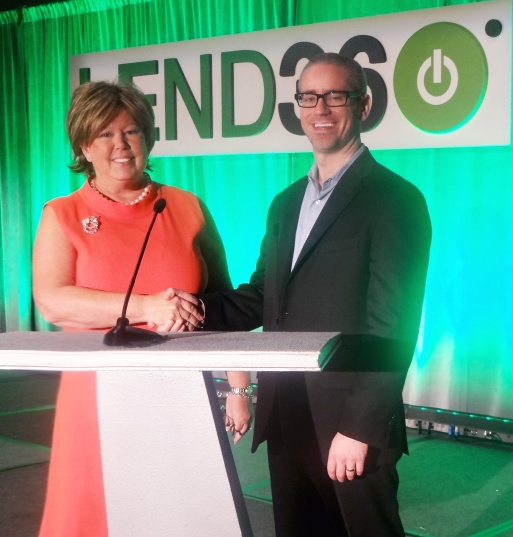 The Lend360 Conference in New Orleans last week had a different vibe from the five other conferences I’ve attended this year. For one, I was a partner in it through DailyFunder. And further, there was a huge focus on best practices, ethics, and regulations. Expert speakers and panelists aired it out to dispel myths and disclose risks.
Most telling about the future was a response from Victory Park Capital’s Brendan Carroll about whether or not he feared looming regulations could hurt the merchant cash advance and alternative business lending industry. As someone who has invested heavily in Kabbage and more recently in Square Capital, he expressed concern about regulations in general but clearly was not convinced they were on the immediate horizon for the industry.
Lisa McGreevy, president of the Online Lenders Alliance moderated the two-man panel which also consisted of John Hecht of Jefferies and she did a great job of digging out the true thoughts from one of the room’s most powerful investors. It’s unlikely a company like Victory Park Capital would invest hundreds of millions of dollars in an industry they believed faced imminent regulatory upheaval.
Merchant Cash Advance regulation is not on any regulator’s immediate agenda but they are doing their homework. At Lend360, it was revealed that several members of the North American Merchant Advance Association met with the Federal Reserve in Washington D.C. months ago for a Q&A. There’s communication occurring now on some levels. Even I’ve been contacted by the Federal Reserve to comment as a part of a broad research assessment.
Eventually I believe the CFPB will try to play a role in the industry through Section 1071 of the Dodd-Frank Act. We’re a long way from there though and it doesn’t mean they’ll be successful. Even internal operatives have expressed doubt on business-to-business jurisdiction.
In the meantime, it’s not all blue seas and sunny skies. Robert Cook, an attorney at Hudson Cook, LLP explained at the conference that the industry is already in many ways supervised by the FTC. And with the FTC, it’s not a question of how high the costs are, it’s about how transparent those costs are. If they’re high, fine, but do the customers understand them and are they marketed accordingly?
Terms like guaranteed, 99% approval rate, and lowest rates can be deemed deceptive if not true.
 Transparency, ethics, customer experience, that’s what people in the business need to be focused on right now. Stacking, while a polarizing topic, seems to be a matter of contract law. Everybody’s caught up in the stacking debate believing it’s the lightning rod that will attract regulation. If left unchecked, it might draw interest, but it’s the fundamentals that get overlooked that could draw the ire of an agency like the FTC.
If your marketing says “rates from 1.10 and up”, while actually contracting 99% of your customers with 1.49s, that’s something you’ll probably want to address now. Think about the net cost your customer is likely to be charged. If a 1.10 is a buy rate and there’s a 10 point upsell, a 10% closing fee, and 10% origination fee that makes the end cost closer to a 1.40, you probably don’t want to market the cost as 1.10.
Right now it all basically comes down to doing good business in a transparent manner. Costs may be high but explain those costs, make sure the customers understand them. Don’t be deceptive. There will always be critics of high costs, but rational people are being exposed to the sober reality that you can lose money even at a 50% interest rate.
As a word of advice for new ISOs and brokers, stay away from funding companies that don’t even have a paid email account. If a funder is too financially strapped to afford a web domain, they probably are going to cut corners in other places too. The story about working off a gmail or hotmail account in the interim while they try to get their website set up is indicative that they’re getting ahead of themselves. There are way too many solid funding companies to choose from for you to entertain doing business with hotFunding4ISOsNow@hotmail.com. Even middlemen are accountable in the grand scheme of best practices and the customer experience.
Fund intelligently…
– AltFinanceDaily
Also read:
4/11/14 Regulatory Paranoia and the Industry Civil War
8/13/14 Should Licensing and Accreditation come to Merchant Cash Advance?
On Deck Capital IPO, An Insider’s Perspective
August 16, 2014It was August 23, 2011, the day the Virginia Earthquake could be felt all the way up in New York City. The four of us were enjoying outdoor seating at a restaurant on the Upper East Side. The ground shook, my drink spilled and Ace looked at each one of us and said, “Okay so I’m putting you down for five deals this month.” OnDeck Capital’s relationship managers were aggressive. If you were a small Independent Sales Organization (ISO), they didn’t expect to get all of your dealflow so they roped you in little by little. It was hard to say no. If five deals was too much, Ace would say three and if three was too much, then he’d put you down for three anyway. Zero was not in the cards. OnDeck owned a specific niche and if you didn’t send your premium credit clients to them, then any ISOs you were competing against would. That was a death knell in those days. Just a few years earlier I would’ve shrugged them off, but public sentiment was changing. Merchants were embracing the fixed daily payment methodology and the merchant cash advance industry would never be the same.
OnDeck Capital is now going public. Will you buy stock?
 I’m in a unique position to discuss OnDeck. I started my career in this industry before they even existed. I’ve competed against them as an underwriter at a rival firm, worked with them as a referral partner when I was in sales, and covered them in my capacity as Chief Editor of an industry trade publication.
I left my post as Merchant Cash & Capital’s Director of Underwriting in late 2008. I was 25, about a year or two older than the average employee in the industry. Several of MCC’s rivals got demolished in the financial crisis but OnDeck wasn’t one of them. They also weren’t much of a competitor either. Struggling to define themselves as the anti-merchant cash advance, their product ran counter to the spirit of the industry’s rise. The single biggest allure of a merchant cash advance wasn’t that it was easy to obtain but that there was no fixed repayment term. The funds came with a pre-determined net cost but no specific date on when the delivery of future sales would be due.
Outsiders like the news media aren’t exactly sure what separates merchant cash advance from OnDeck except for maybe the cost of funds. Cash advance just sounds expensive, doesn’t it?
Outsiders identify the company by three characteristics.
1. They’re a non-bank business lender
2. They’re more expensive than a bank
3. They’re a tech company
These bullet points gloss over the fact that OnDeck’s loans require payments to be made every day. Can you imagine a credit card company forcing you to send a payment every day of the month? Or your landlord asking for rent on the 1st of the month, the 2nd, the 3rd, 4th, 5th, and so on every day until your lease is up?
This is not to say that this system is necessarily bad for borrowers, but that it is quite possibly the most unique and important part of what makes OnDeck different. It’s their secret sauce. It is why OnDeck gets lumped in with merchant cash advance companies in many conversations. OnDeck and the legion of copycats they have spawned are part of a broader industry that includes merchant cash advance companies. I call them daily funders. Daily funders provide financing on the condition that payments are made daily. I don’t call them daily lenders because traditional merchant cash advance products are not made by lenders, but by a unique group of investors that purchase future revenue streams.
Transition
Under company founder Mitch Jacobs, OnDeck had established themselves as the de facto loan option.
The merchant’s not biting on merchant cash advance? Send it to OnDeck. The merchant doesn’t accept credit cards? Send it to OnDeck.
They were every merchant cash advance ISO’s frenemy. They’d solicit you for your deals and then throw you under the bus to journalists as evil purveyors of expensive financing. They needed us to source dealflow and we needed them to maximize closing ratios but neither was quite satisfied with the arrangement.
When the company’s first employee took over as CEO in June 2012, the rhetoric changed. While still happy to be portrayed as the anti-merchant cash advance, OnDeck transformed their image from a niche Wall Street lender to a Silicon Valley-esque tech company. Noah Breslow was a curious choice. He has a BS from MIT and an MBA from Harvard Business School. He’s tall, charismatic, and he introduced vocabulary words such as algorithm to an industry that relied entirely on manual human underwriting.
At a recent lending conference, the younger crowd characterized Breslow as the Steve Jobs of business loans. He commands a cult-like following inside and outside the company, and in 2013 was embraced by New York City’s Mayor Bloomberg.
Breslow fast tracked OnDeck. With only $43 million raised in the first 5 years, the company went on to raise more than $300 million in the first 24 months under Breslow’s leadership.
This was their plan all along
In November 2012, OnDeck entertained a buyout offer from UK-based payday lender Wonga in which they reportedly received a $250 million valuation. The deal fell apart in the late stages but at the time I believed the negotiations were all a ploy for OnDeck to get a true market valuation. With a solid offer on the table, they knew both where they stood and where they needed to go. Last week the WSJ reported that preliminary IPO discussions valued them at $1.5 billion, six times higher than where they were two years ago.
With stock options being offered to new employees at least as far back as 2012, the plan to go public should come as no surprise. Later this year, those employees may actually get to do something very few startup workers ever get to do, convert those options into real shares.
So will OnDeck ride off into the sunset of billion dollar bliss? Not so fast say several industry insiders, some of whom are itching to short the stock on the first day they can.
 Smoke and mirrors?
As OnDeck took advantage of the swing in public consensus (that fixed terms were better and lower costs increased the attactiveness ), insiders began to ask an important question. Why weren’t merchant cash advance companies collectively countering with lower prices to remain competitive? Greed was fingered by journalists especially in the wake of the financial crisis. But greed is a weak prerogative if you consider that merchant cash advance companies were filing for bankruptcy left and right in 2009.
And oddly or perhaps even ominously, an entire segment of merchant cash advance companies began to raise their prices just as OnDeck was lowering theirs. When I wrote The Fork in the Merchant Cash Advance Road in April 2011, I said:
While the margins earned on high credit accounts shrank, funding providers were dealing with another challenge simultaneously, defaults. Whether the business owner intentionally interfered with their credit card processing or the store went out of business altogether, bad debt in the MCA world was mounting…FAST!
Risk was and still is the number one reason that merchant cash advances cost so much. While it’s true that OnDeck serviced higher credit businesses, insiders speculated that the spreads were too thin. For years, OnDeck’s merchant cash advance competitors have doubted the soundness of their model.
 It’s a debate that continues even to this day and yet OnDeck has secured hundreds of millions in investments from companies like Google Ventures, Goldman Sachs, Peter Thiel, and Fortress Investment Group. Their notes got an investment grade rating from DBRS. And as far as volume is concerned, they have likely eclipsed the industry’s all time reigning giant CAN Capital. If they had reached none of these milestones, OnDeck would have little credibility to convince critics of their sanity.
With a mountain of circumstantial evidence through big name backing in OnDeck’s favor, it seems to be indicative that the skeptics are wrong. But maybe they’re not. Could their model be both seriously flawed and superior at the same time?
It’s all about eyeballs
Going back to the 1990s, Internet companies have been judged, valued, and made famous by the price of eyeballs and the number of site visits. It’s a measure that’s never disappeared and according to USA Today is making a comeback. And while OnDeck Capital has always been based in New York City, true to their Silicon Valley form, their model has been to conquer market share first  and take on profitability second. In their case, it’s not eyeballs or site visits, it’s loan origination volume.
Five months ago Breslow was quoted in the WSJ as saying OnDeck is “imminently profitable“. With seven years in business, it’s proof that their critics have been right all along, that their model doesn’t make money.
What scares their competitors though, is that this strategy has been intentional. Very few if any players in the industry have had the luxury, guts, or the purse to lose money for seven years as part of a coup to conquer the market. Disbelievers in this long term wildly risky strategy are salivating at the opportunity to inspect the company’s financial statements in the IPO.
In When Will the Bubble Burst?, RapidAdvance CEO Jeremy Brown, whose company became part of the Quicken Loans family last winter, fired shots at OnDeck, “To accomplish high growth rates, which may be driven by a desire or need for an IPO or to raise investment or to sell to private equity, assets are being overpaid for through higher than economically justified commissions (I’ve heard 12-15 points upfront from the more aggressive companies) and stretch the repayment term of the MCA or loan even further (On Deck24, I am talking about you).”
Insiders testify that OnDeck’s strategy has not so much been about lower costs but about growth at all costs. Among the evidence is the sudden removal of an industry-wide practice of verifying the business owner is current on their rent. Repayment terms are getting stretched out, commissions have shot up, and for a while they ran a program that allowed applicants to get funding with the submission of just a single bank statement.
Merchant cash advance companies look at their own default figures and scoff at the notion that OnDeck’s aggressive practices could produce low single digit defaults as they’ve publicly claimed.
Imminent
 Through it all, there remains the fact that OnDeck has never claimed their methodologies to be profitable, at least not yet. Red ink at IPO time might reward their detractors with a certain delicious satisfaction, but what will they say if and when they become profitable?
I’m reminded of The 20 Smartest Things Amazon Founder Jeff Bezos ever said. Below is a few of them.
- “There are two kinds of companies: Those that work to try to charge more and those that work to charge less. We will be the second.”
- “Your margin is my opportunity.”
- “We’ve done price elasticity studies, and the answer is always that we should raise prices. We don’t do that, because we believe — and we have to take this as an article of faith — that by keeping our prices very, very low, we earn trust with customers over time, and that that actually does maximize free cash flow over the long term.”
- “If you never want to be criticized, for goodness’ sake don’t do anything new.”
- “Invention requires a long-term willingness to be misunderstood. You do something that you genuinely believe in, that you have conviction about, but for a long period of time, well-meaning people may criticize that effort. When you receive criticism from well-meaning people, it pays to ask, ‘Are they right?’ And if they are, you need to adapt what they’re doing. If they’re not right, if you really have conviction that they’re not right, you need to have that long-term willingness to be misunderstood. It’s a key part of invention.”
I wonder if the executive team at OnDeck would share these philosophies.
They’ve always claimed themselves to be a tech company, much to the bewilderment of their competitors. Will technology come through for them?
The data available on businesses has changed. Bank statements and a credit report might’ve been all there was to go on when the company first started, but in Automated Intelligence Breslow said, “the fact is most businesses operating today, in 2014, are already technology focused to one degree or another. They have computers, they have online banking, they use credit card processors, their customers are reviewing them online, there are public records, etc. All this electronic data helps paint a deeper and more accurate picture of the health of a business.”
With such easy access to important data, it might be possible that through the use of 2,000 data points, OnDeck doesn’t need to do all the manual investigations that their competitors still place high values on. The available data might be able to predict loan repayment success just as well as a human analyst.
And if that’s true, then they can reduce the cost of overhead as they scale. As their predictive algorithms get fed more data, they might be able to eliminate humans altogether. At the May 2014 LendIt conference, Breslow admitted that 30% of their loans were still manually underwritten but said that “if customers want full automation, we are prepared to deliver it.”
By that charge, a sustainable model should not be that far out of reach. Through advanced data analysis and decreasing fixed costs, profitability may indeed be imminent.
Winner
If the story of the merchant cash advance industry has been a race to the top, then OnDeck might be declared the winner in a successful IPO. It would be an ironic achievement for the company that positioned itself as the anti-merchant cash advance. In their wake today are hundreds of daily funders offering fixed payment products.
 OnDeck’s critics are in a paradoxical position because a successful IPO is good for them too. They want to believe OnDeck’s model never worked, can’t work, and have it be proven a failure. But if it goes the other way, the legitimacy of the daily funder universe will be solidified in the mainstream. What’s good for the goose is good for the gander.
As AmeriMerchant CEO David Goldin said to Inc, “the OnDeck IPO shows that Wall Street is now taking this industry seriously.”
So does that mean he’d buy stock? Somewhere out there at a restaurant in New York City, an OnDeck relationship manager is probably putting Goldin down for five shares.
Cue the earthquake, the industry will never be the same.
Curious how it will change it exactly? Read my magazine published prediction, The Retail Investor.
Are We in a $300 Billion Market?
August 7, 2014 Earlier today on a large group conference call with Tom Green and Mozelle Romero of LendingClub, I learned a few more details about their business loan program. In the Q&A segment, one attendee came right out and asked if they believed their competition was merchant cash advance companies and online business lenders.
According to Green, it’s not so much other companies that they feel they are up against but more of the broad challenge of market awareness. Their struggle is about getting people to know that there are non-bank options available and to make people aware of their existence.
It’s the same challenge merchant cash advance (MCA) companies have been dealing with for more than a decade. Notably though, there are many in the MCA industry that feel the market is saturated and thus a lot of the industry’s growth has been fostered through a turf war for the same merchants. Stacking (the practice of funding merchants multiple advances or loans simultaneously) is partially spurred by a belief that there are no more untapped businesses left to fund. The acquisition costs of a brand new untouched business that is both interested and qualified is so high, that it is not a pursuit some funders and brokers can afford to take on.
 Market Size
At present, daily funders, which are a combination of both MCA companies and lenders that require daily payments, are funding somewhere between $3-$5 billion a year. On the call Green said he believed the potential market was far larger than that, though he discredited the $200 billion figure that some independent research had predicted. That was only because LendingClub believes the potential market is substantially higher, more like $300 billion.
$300 billion?! That’s about 100x larger than the current daily funder market combined and starkly contradicts any belief that there’s no merchants out there who haven’t already gotten funded.
LendingClub’s minimum gross sales requirement is $6,250 a month and they have an upper monthly gross threshold on applicants at $830,000 a month, though they’ve had businesses apply who do even more than that. Their sweet spot as Green put it, is the segment doing $16,000 to $416,000 gross per month.
I can’t help but notice that’s the same sweet spot that daily funders have. And we mustn’t forget, LendingClub’s target business owner has at least 660 FICO. If it’s a $300 billion market for good credit applicants, then it’s got to be even bigger for the ultra FICO-lenient companies in MCA.
What’s a business?
LendingClub only needs someone with at least 20% ownership to both apply for and guarantee the loan, an unheard of stipulation in the rest of alternative business lending. One cardinal rule in MCA has been that there needs to be at least 51% or 80% ownership signing the contract. That’s had a lot to do with the fact that most MCA agreements are not personally guaranteed and the signatory is required to have absolute authority to sell the business’s future proceeds.
Summer of Fraud
 In 2013 the MCA industry experienced what many insiders dubbed the summer of fraud. Spurred by advances in technology, small businesses were applying for financing en masse while armed with pristinely produced fraudulent bank statements. Fake documents overwhelmed the industry so hard that today it is commonplace for underwriters to verify their legitimacy with the banks. This is done manually or with the help of tools such as Decision Logic or Yodlee.
Knowing this firsthand, I asked LendingClub if they also take the care to verify bank statements. In the majority of cases they do not. They rely greatly on an algorithm that detects fraudulent answers on the application but the statements themselves are not scrutinized except in very high risk situations. Considering they’re wildly less expensive than MCAs, I find it odd that they are exposed to this type of risk. Fraudulent documents are the norm and in these underwriting conditions, I would expect them to charge as much or more than MCA companies, not less.
At the same time it’s important to mention that at present, business loans on their platform are only funded by institutional investors. Retail investors can only invest in consumer loans. LendingClub has been very transparent about excluding retail investors here for the very purpose of shielding them from unevaluated and unforeseen risk. My guess is that as time goes on, they will do more to validate the bank statements which is the bread and butter of assessing the risk and health of a business.
$300 billion
In a FICO flexible environment, it’s possible the potential for daily funders is at least $300 billion. If true, that would mean that for the 16 years that MCA players have been around, they barely reached even 1% of their target audience. I’ve been saying it since I’ve started this blog 4 years ago, every business owner I’ve spoken to has never heard of a merchant cash advance… which means saturation is a myth.
Tom Green was right, the real competition is public awareness. 99% of the potential market is untapped. If you’re fighting with 5 other companies over the same merchant, you gotta:
You gotta keep on looking now
Keep on looking now
You’re looking for love
In all the wrong places
Do Opportunities Abound?
June 8, 2014 Just recently I found myself in an office surrounded by some folks who had each worked in the merchant cash advance business for more than 10 years. The first generation of MCA pioneers are still out there of course but it’s rare to be in the presence of so many at one time. It was weird. Weirder still was the realization that no matter how much things have changed, some things continue to be exactly the same.
Me: You guys looking to recruit ISOs?
Them: Damn right
As far as the industry is concerned, these guys might as well have fought in ‘Nam. They’re from another generation where life was hard and men were still men. When businesses couldn’t get bank loans, these guys were splitting payments with their bare hands and reprogramming credit card machines with nothing more than a paper clip and a ball of twine. Funding a deal wasn’t a product of technology, it was one of sweat, tears, and blood. Have you ever bled for your deals?
This August I celebrate my 8th year in the industry. Next month marks the 4 year anniversary of this blog. I enjoy reading some of my posts from back then, particularly since most of them discuss the ordeals of credit card processing. A lot of what I’ve written no longer applies and some of what I’m writing these days will be outdated years from now. As I approach 600 articles and blog posts on this subject matter, I’ve had to stop and ask myself if everything has already been written. What more can possibly be said about this business? Perhaps the tale of the industry has already been told and I am on my way to retelling exaggerated stories to anyone who will listen. I don’t want to be that wrinkled up old man swaying back and forth in a rocking chair talking about how ISOs got it so easy these days.
 Sadly, even the name of the website is reflective of a previous era. This is the Merchant Processing Resource, not exactly what you’d expect a top destination to be called on the subject of alternative business lending.
But the story’s not finished. Every passing month is filled with events that inspire a dozen new chapters, which is more than one man can keep up with. Last month at the LendIt conference, I got a glimpse of just how many opportunities still lie ahead.
Some alternative business financing companies such as Funding Circle and DealStruck are diverging away from merchant cash advance and going back to the traditional roots of term lending. Funding Circle is doing it with a 21st century twist, by making their system peer-to-peer based.
Still other firms have sprung up around LendingClub’s and Prosper’s APIs and offer their users ways to make better loan investment decisions.
And even among the players we’re all familiar with, there is innovation, growth, and new ideas. Just recently CAN Capital launched CAN Connect, a software application that can be integrated with any other company’s software. According to CAN’s release,
Through CAN Connect™, merchants will be able to receive a CAN Instant Quote™ based solely on data provided by the partner. Once the merchant elects to proceed, they are taken through a simple online application process and can obtain access to working capital without ever leaving the partner’s platform.
Indeed technology has even allowed me to become a lender myself,
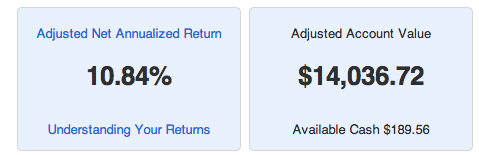
My LendingClub portfolio, which is still very young and made up by hundreds of $25 consumer loan contributions has a current Net Annualized Return of more than 10%. Contrast that against the average U.S. savings account that pays out less than 1%.
While it’s certainly not the 54% yield that OnDeck Capital enjoys, there are levels of risk and markets set up for just about anyone interested in alternative lending.
And what might come next may not all be broker/funder related. As the industry flies in a thousand different directions, entire new industries and services are going to grow up around them. That brings me back full circle. Has everything already been written? 4 years of blogging here and this might as well be my first day.
Some things haven’t changed a bit, but the rest of it, well… we must soldier on in this strange new world.
Do you see opportunities ahead? Discuss with industry insiders on DailyFunder.
A Look at Data Security
May 17, 2014 In the latest issue of DailyFunder, Cheryl Conner explored data security in the alternative business lending industry. Its basis was rooted in the ETA’s 2008 Merchant Cash Advance White Paper that stated Merchant Cash Advance companies must be PCI compliant.
That white paper was drafted in a different era, particularly when 99% of all transactions required a payment processing split rather than ACH debits. It’s true also that it specified companies “that handle sensitive payment related information”, namely cardholder data as part of its regular business operation.
Credit card processors that engage directly in issuing merchant cash advances are naturally already subject to PCI compliance, but for the funding companies that aren’t in the processing business, they’re basically off the hook. Indeed a spokesperson for the PCI Security Standards Organization informed Conner that “PCI standards apply to payment card data branded by one of the five founding brands, which means any entity that accepts, processes, transmits or stores account data from a PCI branded payment card should be applying PCI DSS for the protection of that data.” She went on to say that PCI DSS doesn’t apply to bank account data.
 So while PCI compliance does not have a place in alternative business lending, it raised the question as to whether or not there were other privacy regulations that do, particularly the Gramm-Leach-Bliley Act (“GLBA”) of 1999. According to the FTC, the GLBA “requires financial institutions – companies that offer consumers financial products or services like loans, financial or investment advice, or insurance – to explain their information-sharing practices to their customers and to safeguard sensitive data.” The law is broad enough to cover any financial institution that is engaging in activities that are financial in nature.
The GLBA imposes a host of requirements on these financial institutions, including the need to establish an information security program to protect customer information.
But as is the recurring theme in alternative business lending, such rules do not govern institutions that engage in business-to-business transactions. On the FTC’s website, it states:
Under the Rule, a “consumer” is someone who obtains or has obtained a financial product or service from a financial institution that is to be used primarily for personal, family, or household purposes, or that person’s legal representative. The term “consumer” does not apply to commercial clients, like sole proprietorships. Therefore, where your client is not an individual, or is an individual seeking your product or service for a business purpose, the Privacy Rule does not apply to you.
Similarly, I’ve been told that the Consumer Financial Protection Bureau does not have jurisdiction over business-to-business transactions, even if one party is a sole proprietor. In a business-to-consumer transaction, there’s an assumption that the consumer may not be as sophisticated as the business and thus deserving of protections. In the course of two businesses engaging in business, it would be extremely difficult to draft rules that only protected one side as both are free market equals.
While there may not necessarily be any laws that regulate security or privacy in commercial transactions, there are plenty of benefits to following GBLA-like guidelines. For one, it could be used to build goodwill with clients. Additionally, security and privacy are sure to be examined during the course of a due diligence audit by potential investors. In this day and age, a breach of privacy or security could permanently disrupt a business’s ability to maintain the good faith of the public.
Do you feel that alternative business lenders are doing a good job?
—-
Note: I am not a lawyer and this post should not be considered legal advice.