
New York State Legislature Passes Law That Requires APR Disclosure On Small Business Finance Contracts (Even If They’re Not Loans)
July 24, 2020 Factoring companies and merchant cash advance providers may be in for a rude awakening in New York. The legislature there, in a matter of days, has rammed through a new law that requires APRs and other uniform disclosures be presented on commercial finance contracts… even if the agreements are not loans and even if one cannot be mathematically ascertained.
The law also makes New York’s Department of Financial Services (DFS) the overseer and regulatory authority of all such finance agreements. DFS can impose penalties for violations of the law, the language says.
The bill was passed through so quickly that unusual jargon remained in the final version, increasing the likelihood that there will be confusion during the roll-out. One such issue raised is the requirement that a capital provider disclose whether or not there is any “double dipping” going on in the transaction. The term led to a rather interesting debate on the Senate Floor where Senator George Borrello expounded that double dipping might be well understood at a party where potato chips are available but that it did not formally exist in finance and made little sense to have it written into law.
Senator Kevin Thomas, the senate sponsor of the bill, admitted that there was opposition to the “technicalities” of it by some industry groups like the Small Business Finance Association and that PayPal was one such particular company that had opposed it on that basis. Senator Borrello raised the concern that a similar law had already been passed in California and that even with all of their best minds, the state regulatory authorities had been unable to come up with a mutually agreed upon way to calculate APR for products in which there is no absolute time-frame. Thomas, acknowledging that, hoped that DFS would be able to come up with their own math.
APR as defined under Federal “Regulation Z”, which the New York law points to for its definition, does not permit any room for imprecision. The issue calls to mind a consent order that an online consumer lender (LendUp) entered into with the Consumer Financial Protection Bureau in 2016 after the agency accused the lender of understating its APR by only 1/10th of 1%. The penalty to LendUp was $1.8 million.
Providers of small business loans, MCAs, factoring and other types of commercial financing in New York would probably be well advised to consult an attorney for a legal analysis and plan of action for compliance with this law. The governor still needs to sign the bill and New York’s DFS still has to prepare for its new oversight role.
Passage of the law was celebrated by Funding Circle on social media and retweeted by Assemblyman Ken Zebrowski who sponsored the bill. The Responsible Business Lending Coalition simultaneously published a statement.
“People are Starting to Come Out of Their Caves”: How 2M7 got through the lockdown
July 13, 2020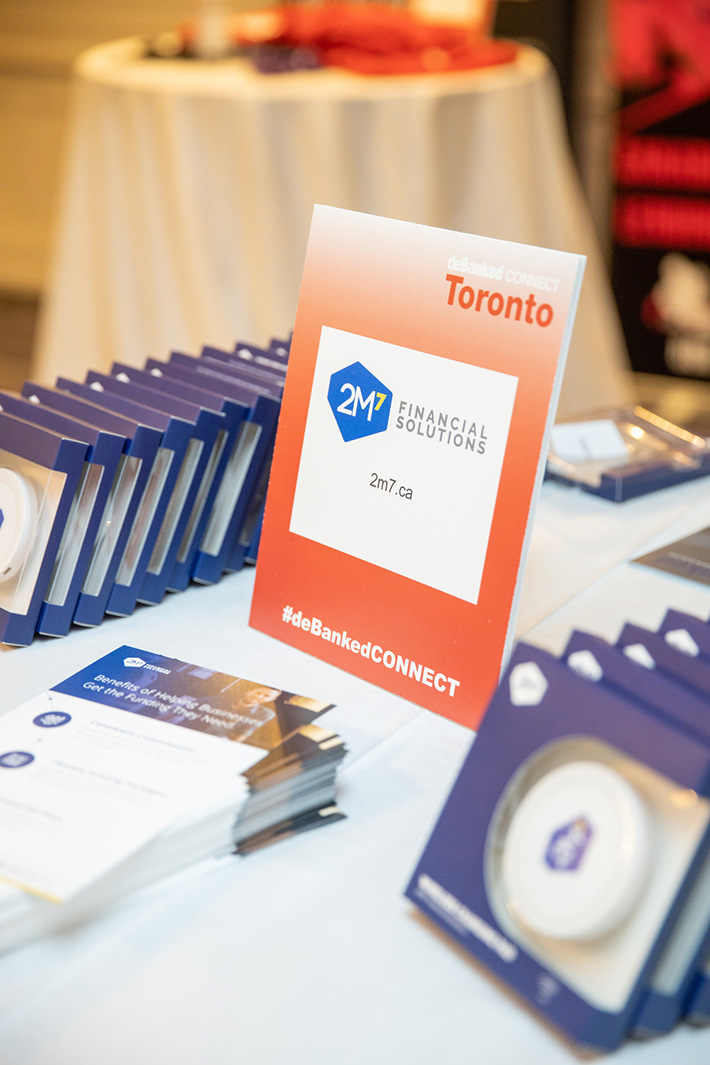 For 2M7, the Toronto-based alternative funding company, the concept of a global economic shutdown was far-fetched. January and February of 2020 had been some of their best months in business yet. But, like every company, 2M7 was forced to reckon with the unreckonable and feel the effects of an economic lockdown.
“In terms of client onboarding and funding volume, in terms of collecting volume, and in terms of any metric you would look at, [January and February] were two very strong months,” CEO Avi Bernstein explained in a call. “And then in March, I don’t want to say we slammed on the brakes, but in the first or second week of March we basically just said, ‘you know what, we just need to really change the focus of what we’re doing.”
Saying that they were a week or two ahead of the curve, Bernstein notes that in the leadup to the shutdown their customers had already been asking for deferred or reduced payments. And with anxiety and concern in the air, 2M7 changed course and moved from focusing on bringing in new customers and increasing collections, they “hunkered down” and worked exclusively on the needs of existing clients.
“We funded throughout very minimally … and really our main effort was to get in touch with all our existing merchants and see how they were being affected, if they needed a payment plan, or if they needed a little bit more capital to tide them over. And we adjusted each one on an ongoing basis as we kind of floated through the panic of the lockdown to the waiting time to when we really started to reopen. … And you know, the ones that were still operating in the kind of environment that they were operating, if they had any additional expenses, they had additional requirements for capital.”
This approach lasted up until mid-June, around the time that the Canadian economy began to reopen. Lasting all of three months, this halting was not without victims as 2M7 had to furlough a number of staff members, many of whom were on the sales team that had reduced responsibilities during this time. Since then though, these employees have been brought back in, new customers have been brought on, and 2M7 has returned to its offices.
“As the Canadian economy started reopening and wrapping up even a little bit earlier than we were, we worked with provinces that were already more advanced in the opening stages. Saskatchewan, Nova Scotia, New Brunswick, Newfoundland, they were doing better in terms of reopening and they were ahead of us. … We were able to work with them in terms of ramping up. Now as the economy’s kicking into gear, we’re seeing more and more demand from businesses and we’ve started feeling our how much of their client base is still in existence, how much of their market is still in existence; whether it be manufacturing or transportation, or whatever it is.”
Looking ahead, Bernstein is cautiously optimistic, believing the worst is behind them but that there is still a ways to go for the Canadian market that has shown resilience in that last four months. Explaining that he think the shutdown won’t lead to any great reset of the Canadian market, the CEO thinks that it will instead act as a catalyst for events that were already in motion: debt-laden companies will struggle and possibly perish.
But beyond that, Bernstein is feeling positive about the future, saying that “people are starting to come out of their caves, and slowly but surely businesses are starting to reopen and invest. A lot of businesses are hiring back their employees. So that’s good news for Canada and good news for small businesses in the Canadian marketplace. … I feel like we’re going to come out okay.”
If You Do MCA, You’re Not a Lender (Part Two)
June 16, 2020 A three-year-old AltFinanceDaily blog post turned out to be a bit prophetic.
Titled If You Don’t Make Loans, You’re Not a Lender (And definitely not a ‘direct lender’) and posted on January 19, 2017, I hypothesized that the misuse of financial language on the phone or in an e-mail, particularly if one conflated merchant cash advances with lending, could one day result in a subpoena for a deposition to explain it.
In the People of the State of New York, by Office of the New York State Attorney General v. Richmond Capital Group LLC et al, that very scenario played out. Several people were subpoenaed last year and were required to give testimony to lawyers for the New York State Attorney General to explain why internal company communications allegedly referred to MCAs as loans or why a purported MCA company website made use of lending terminology.
The answers, which are public record, were not great. At least two individuals answered that line of questioning by pleading the fifth to potentially avoid self-incrimination.
While there are a lot of colorful details to consider in this case, the AG’s lawsuit dives into the various ways in which the defendants allegedly conflated financial products, including that a defendant company allegedly advertised itself as a “lender” when it actually was not.
While the allegations in the AG’s complaint are probably somewhat unique, there are claims and arguments within them that may be worth further legal review and analysis. Contact an industry-knowledgeable attorney if you have questions.
CFG Merchant Solutions Enhances Partnership with Arena Investors and its Affiliates to Serve SMEs
May 29, 2020NEW YORK, New York., May 29, 2020 — CFG Merchant Solutions (“CFGMS”), a leading financier of small and medium-sized enterprises (“SMEs”), announced today that the company is building upon its partnership with Arena Investors, LP (“Arena”), in conjunction with Ceteris Portfolio Services (“Ceteris), an Arena servicing affiliate, in servicing and providing liquidity to Platinum Rapid Funding’s (“PRF”) merchant portfolio. CFGMS has been a leading capital provider to SMEs and an originator of advances to growing merchants, providing in excess of $400 million merchant cash advances since 2015. Arena has been CFGMS’s primary capital partner since 2016.
CFGMS and Arena are determined to prioritize the needs of PRF’s existing customers in the wake of the COVID-19 crises and its resulting impact on small businesses across the country.
“Arena is pleased to continue its partnership with CFGMS and its senior management team consisting of CEO, Andrew Coon, Chief Legal Officer and General Counsel, Robert Martini, and President, William Gallagher. Together, we remain deeply committed to serving the needs of PRF’s existing customers, particularly for ongoing financing and liquidity needs in an environment when even much larger businesses struggle to attract capital,” said Victor Dupont, who leads Arena’s investments in the financing of the SME sector. “We welcome further involvement with PRF’s customers and their affiliated ISOs and are committed to working collaboratively with all throughout the COVID-19 crises and beyond”.
“Arena and its affiliates have built a reputation as a group that combines uniquely flexible capital with broad-based expertise in servicing, resolutions, and SME finance,” said Coon. “So, while we excel at sourcing, originations, and underwriting, we felt that they brought a critical level of IP and know-how that is uniquely suited to benefit all parties in today’s environment. Combining forces to offer a broader set of servicing solutions to the MCA market segment made complete sense.”
Jonathan Pike, CEO of Ceteris, added: “Ceteris is excited to work with CFGMS and Arena by offering best-in-class servicing strategies and assisting merchants in a difficult economic environment.”
The Small Business Association (“SBA”) estimates that traditional banks still reject approximately 90 percent of SME loan applications. Since 2015, CFGMS has emerged as a proven platform that leverages sales partner relationships, analytics, and proprietary underwriting to provide SMEs with a straightforward and streamlined access to critical funding. The company addresses the fundamental capital needs of SME owners across a broad credit spectrum and through every stage of a business’s life cycle.
SMEs across a wide variety of industries that include restaurants, retail stores, salons, spas, dry cleaners, auto body shops, and professional offices. All of these businesses, and more, rely on CFGMS to secure the necessary capital they need to grow.
For questions or funding solutions, please contact:
– William Gallagher
– (646) 880-3817
– WGallagher@CFGMS.com
– Ryan Banda
– (856) 545-8322
– rbanda@ceterisassetsolutions.com
About CFGMS
Headquartered in New York, NY, CFGMS specializes in providing financing to support the growth and development of underserved small-to-medium sized businesses that lack access to traditional bank funding. Founded in 2010, CFGMS’s affiliated company, CapFlow Funding Group, provides factoring, purchase order finance, and asset-based lending solutions. CFGMS and CapFlow have together provided over $1 billion in liquidity solutions to their SME clients. For more information please visit www.cfgmerchantsolutions.com
About Arena Investors, LP
Arena Investors is a privately held, SEC-registered, global alternative investment firm which combines mandate flexibility, proprietary sourcing and systems-plus-servicing to enable solutions for those seeking capital. The firm was founded in 2015 and is headquartered in NewYork with additional offices in Jacksonville, London, and San Francisco. For more information, please visit www.arenaco.com.
About Ceteris Portfolio Services
Ceteris is a nationally licensed servicing company providing debt recovery solutions and other related services for consumers and commercial businesses across a broad range of financial assets. Ceteris provides first- and third-party revenue cycle management, business process outsourcing and portfolio backup servicing to heavily regulated, high volume industries including banking, automotive finance, credit card, equipment leasing, medical, telecommunications, utilities, retail and other industries. For more information please visit www.ceterisholdco.com.
Ireland’s Alternative Finance Industry and the Coronavirus
May 18, 2020 As the effects of the coronavirus continue to slow down the American economy, around the world, many countries remain in lockdown, with their businesses having been halted. Be it to the north, south, east, or west, of the United States, the results are the same: money has stopped flowing. As such, we took the opportunity to follow up with some of the businesses that featured in our coverage of alternative finance in Ireland last Fall, hoping to see what differed and what was the same in their responses to the pandemic.
Despite differing in size and range of variety when compared to their North American counterparts, the Irish alternative finance and fintech industries have largely felt the same impacts from covid-19. Certain funders have stopped operations, others have become very cautious, and just like here, some businesses have turned to the government for help.
LEO, or Local Enterprise Offices, is an advisory network for small and medium-sized businesses, which provide guidance as well as offer capital. The Irish government has pointed to these as the point of contact for small businesses owners, with LEO providing microfinance loans of up €50,000. This figure being upped from the pre-coronavirus maximum of €25,000.
Rupert Hogan, the Managing Director of brokering company BusinessLoans.ie, explained that some businesses would be better going with LEO over banks and even some non-banks. Noting that non-bank lenders can’t compete with the rates offered by LEO and, just like in the US, banks can’t act with the speed that these business owners need.
 Hogan, who describes the current situation as “The Great Lockdown,” said that banks “aren’t too helpful, even in the good times,” due to the high rejection rates that SMEs experience when looking for loans. In regards to merchant cash advances, he’s expecting, when the MCA companies reopen, that they’ll be funding at reduced rates, some doing as much as 50% less than their pre-coronavirus amounts.
Jaime Heaslip, Head of Brand Marketing at the MCA company Flender, explained that before the virus, the company was experiencing a period of productivity, with lending activity and amounts deposited being up from previous years. And despite the virus disrupting commerce, the former international rugby player noted that business owners are still coming to Flender for funds.
“We provide flexibility for people, there’s a lot of people coming to us to get contingency funds together,” he said over a phone call, commenting that as well as this, many businesses are looking for financing to move their operations online. “We’re trying to help SMEs get through this and provide as much help as possible.”
Beyond merchant cash advances, business continues to run, says Spark Crowdfunding’s Chris Burge. Being an investment platform, Spark is still active with businesses looking to get off the ground.
“We’ve actually found that we’ve still got a large amount of inquiries coming through,” the CEO and Co-Founder said. “Our pipeline of companies wanting to go onto the platform is very strong, and we’ve been engaging with them all and they’re very keen. They all need money, which, of course, hasn’t changed from before there was a crisis. And they still are needing money, they need that to expand as opposed to survive.”
When asked about changes made because of covid-19, Burge explained that their investor evenings have been disrupted. Previously an opportunity for the investors and investees on the digital platform to meet up personally and pitch each other, these 100-person gatherings are no longer an option. Instead, virtual webinars and assemblies are what Spark has started using to keep up communication between parties.
And on the subject of fundraising, Trezeo’s Garrett Cassidy said that it has become a nightmare under the pandemic. Disrupted communication channels and the inability to pitch to someone in the same room as you have been hurdles, but besides that, Cassidy assured me that Trezeo is still going strong.
 Offering payment structures and benefit bundles to freelancers and the self-employed, Trezeo has seen some of its customer base drop off as unemployment sky-rocketed in the UK, its prime market. Despite this, as more and more people are beginning to go back to work, Cassidy says numbers are rising.
“Now we’re starting to see earnings pick back up again, some of them were the ones who were off work who are now coming back to work. So it’s been interesting watching that but the reality is that they’re also scared. They’re out working every day delivering parcels or food, depending on which, and just working really hard. It’s the most important ones who are paid the least and that have the least protection.”
Looking ahead, Trezeo has been working with the UK’s Labour Exchange to establish a new program that would see the creation of channels to help pre-qualify workers for certain positions. These workers would be pooled, and employers would be able to choose from them, streamlining the hiring process for both sides.
“They need money in their pockets, somehow, quickly,” Cassidy said of workers, whether that be by returning to work safely, or through some government assistance program, the CEO is adamant that people need to stay solvent.
Altogether, Ireland’s alternative finance industry, like others the world over, has been hit hard by the coronavirus’s economic effects. With the country’s phased lifting of the lockdown being plotted out over the course of the summer, the island nation may not see as quick a return to commerce as certain American states, but its fintechs and non-banks hope to stick around, by hook or by crook, as the Irish say, by any means possible.
Can The SBA Handle The Stimulus On Their Own?
March 27, 2020 As the market cheers the upcoming passage of a $2 Trillion stimulus bill that is intended to provide much needed support to small businesses, industry insiders are beginning to raise concerns about the SBA’s infrastructural ability to process applications in a timely manner.
In a webinar hosted by LendIt Fintech yesterday, Opportunity Fund CEO Luz Urrutia estimated that conservatively, it could take the SBA up to two months to even begin disbursing loans offered by the bill. Kabbage President Kathryn Petralia offered the most optimistic estimate of 10 days, while Lendio CEO Brock Blake thinks that perhaps it could take around 3 weeks.
Blake followed up the webinar by sharing a post on LinkedIn that said that small businesses were reporting that the SBA’s website was so slow, so riddled with crashes, that the SBA had to temporarily take their site offline.
Most skeptics raising alarms are not referring to the SBA’s staff as being unprepared, but rather the systems the SBA has in place.
A March 25th tweet by the SBA reported that the site was undergoing “scheduled” improvements and maintenance.
The website is currently undergoing continued scheduled improvements and maintenance. For more info on SBA #COVID19 resources, visit https://t.co/yG2N17KF63
— SBA (@SBAgov) March 25, 2020
This all while the demand for capital is surging. Blake reported in the webinar that loan applications had just recently increased by 5x at the same time that around 50% of non-bank lenders they work with have suspended lending.
Some informal surveying by AltFinanceDaily of non-bank small business finance companies is finding that among many that still claim to be operating, origination volumes have dropped by more than 80% in recent weeks, mainly driven by stay-at-home and essential-business-only orders issued by state governments.
It’s a circular loop that puts further pressure on the SBA to come through, none of which is made easier by the manual application process they’re advising eager borrowers to take on. The SBA’s website asks that borrowers seeking Economic Injury Disaster Loan Assistance download an application to fill out by hand, upload that into their system and then await further instructions from an SBA officer about additional documentation they should physically mail in.
Perhaps there’s another way, according to letters sent to members of Congress by online lenders. 22 Fintech companies recently made the case that they are equipped to advance the capital provided for in the stimulus bill.
“We seek no gain from this crisis. Our only aim is to protect the millions of small businesses that we are proud to call our customers,” the letter states.
Members of the Small Business Finance Association made a similar appeal in a letter dated March 18th to SBA Administrator Jovita Carranza. “In this time of need, we want to leverage the experience and expertise we have with our companies to help provide efficient funding to those impacted in this tough economic climate. We want to serve as a resource to governments as they build up underwriting models to ensure emergency funding will be the most impactful.”
How fast things come together next will be key. The House is scheduled to vote on the Senate Bill today. If a plan to distribute the capital cannot be expedited and the crisis drags on, the consequences could be dire.
“Hundreds of thousands of businesses are going to be out of business,” Urrutia warned in the webinar.
2020 and Beyond – A Look Ahead
March 3, 2020 With the doors to 2019 firmly closed, alternative financing industry executives are excited about the new decade and the prospects that lie ahead. There are new products to showcase, new competitors to contend with and new customers to pursue as alternative financing continues to gain traction.
Executives reading the tea leaves are overwhelming bullish on the alternative financing industry—and for good reasons. In 2019, merchant cash advances and daily payment small business loan products alone exceeded more than $20 billion a year in originations, AltFinanceDaily’s reporting shows.
Confidence in the industry is only slightly curtailed by certain regulatory, political competitive and economic unknowns lurking in the background—adding an element of intrigue to what could be an exciting new year.
Here, then, are a few things to look out for in 2020 and beyond.
Regulatory developments
There are a number of different items that could be on the regulatory agenda this year, both on the state and federal level. Major areas to watch include:
- Broker licensing. There’s a movement afoot to crack down on rogue brokers by instituting licensing requirements. New York, for example, has proposed legislation that would cover small business lenders, merchant cash advance companies, factors, and leasing companies for transactions under $500,000. California has a licensing law in place, but it only pertains to loans, says Steve Denis, executive director of the Small Business Finance Association. Many funders are generally in favor of broader licensing requirements, citing perceived benefits to brokers, funders, customers and the industry overall. The devil, of course, will be in the details.
- Interest rate caps. Congress is weighing legislation that would set a national interest rate cap of 36%, including fees, for most personal loans, in an effort to stamp out predatory lending practices. A fair number of states already have enacted interest rate caps for consumer loans, with California recently joining the pack, but thus far there has been no national standard. While it is too early to tell the bill’s fate, proponents say it will provide needed protections against gouging, while critics, such as Lend Academy’s Peter Renton, contend it will have the “opposite impact on the consumers it seeks to protect.”
- Loan information and rate disclosures. There continues to be ample debate around exactly what firms should be required to disclose to customers and what metrics are most appropriate for consumers and businesses to use when comparing offerings. This year could be the one in which multiple states move ahead with efforts to clamp down on disclosures so borrowers can more easily compare offerings, industry watchers say. Notably, a recent Federal Reserve study on non-bank small business finance providers indicates that the likelihood of approval and speed are more important than cost in motivating borrowers, though this may not defer policymakers from moving ahead with disclosure requirements.
“THIS WILL DRIVE COMMISSION DOWN FOR THE INDUSTRY”
If these types of requirements go forward, Jared Weitz, chief executive of United Capital generally expects to see commissions take a hit. “This will drive commission down for the industry, but some companies may not be as impacted, depending on their product mix, cost per lead and cost per acquisition and overall company structure,” he says.
- Madden aftermath. The FDIC and OCC recently proposed rules to counteract the negative effects of the 2015 Madden v. Midland Funding LLC case, which wreaked havoc in the consumer and business loan markets in New York, Connecticut, and Vermont. “These proposals would clarify that the loan continues to be ‘valid’ even after it is sold to a nonbank, meaning that the nonbank can collect the rates and fees as initially contracted by the bank,” says Catherine Brennan, partner in the Hanover, Maryland office of law firm Hudson Cook. With the comments due at the end of January, “2020 is going to be a very important year for bank and nonbank partnerships,” she says.
- Possible changes to the accredited investor definition. In December 2019, the Securities and Exchange Commission voted to propose amendments to the accredited investor definition. Some industry players see expanding the definition as a positive step, but are hesitant to crack open the champagne just yet since nothing’s been finalized. “I would like to see it broadened even further than they are proposed right now,” says Brett Crosby, co-founder and chief operating officer at PeerStreet, a platform for investing in real estate-backed loans. The proposals “are a step in the right direction, but I’m not sure they go far enough,” he says.
Precisely how various regulatory initiatives will play out in 2020 remains to be seen. Some states, for example, may decide to be more aggressive with respect to policy-making, while others might take more of a wait-and-see approach.
“I think states are still piecing together exactly what they want to accomplish. There are too many missing pieces to the puzzle,” says Chad Otar, founder and chief executive at Lending Valley Inc.
As different initiatives work their way through the legislative process, funders are hoping for consistency rather than a patchwork of metrics applied unevenly by different states. The latter could have significant repercussions for firms that do business in multiple states and could eventually cause some of them to pare back operations, industry watchers say.
“While we commend the state-level activity, we hope that there will be uniformity across the country when it comes to legislation to avoid confusion and create consistency” for borrowers, says Darren Schulman, president of 6th Avenue Capital.
Election uncertainty
The outcome of this year’s presidential election could have a profound effect on the regulatory climate for alternative lenders. Alternative financing and fintech charters could move higher on the docket if there’s a shift in the top brass (which, of course, could bring a new Treasury Secretary and/or CFPB head) or if the Senate flips to Democratic control.
If a White House changing of the guard does occur, the impact could be even more profound depending on which Democratic candidate secures the top spot. It’s all speculation now, but alternative financers will likely be sticking to the election polls like glue in an attempt to gain more clarity.
Election-year uncertainty also needs to be factored into underwriting risk. Some industries and companies may be more susceptible to this risk, and funders have to plan accordingly in their projections. It’s not a reason to make wholesale underwriting changes, but it’s something to be mindful of, says Heather Francis, chief executive of Elevate Funding in Gainesville, Florida.
“Any election year is going to be a little bit volatile in terms of how you operate your business,” she says.
Competition
The competitive landscape continues to shift for alternative lenders and funders, with technology giants such as PayPal, Amazon and Square now counted among the largest small business funders in the marketplace. This is a notable shift from several years ago when their footprint had not yet made a dent.
This growth is expected to continue driving competition in 2020. Larger companies with strong technology have a competitive advantage in making loans and cash advances because they already have the customer and information about the customer, says industry attorney Paul Rianda, who heads a law firm in Irvine, Calif.
It’s also harder for merchants to default because these companies are providing them payment processing services and paying them on a daily or monthly basis. This is in contrast to an MCA provider that’s using ACH to take payments out of the merchant’s bank account, which can be blocked by the merchant at any time. “Because of that lower risk factor, they’re able to give a better deal to merchants,” Rianda says.
Increased competition has been driving rates down, especially for merchants with strong credit, which means high-quality merchants are getting especially good deals—at much less expensive rates than a business credit card could offer, says Nathan Abadi, president of Excel Capital Management. “The prime market is expanding tremendously,” he says.
Certain funders are willing to go out two years now on first positions, he says, which was never done before.
Even for non-prime clients, funders are getting more creative in how they structure deals. For instance, funders are offering longer terms—12 to 15 months—on a second position or nine to 12 months on a third position, he says. “People would think you were out of your mind to do that a year ago,” he says.
Because there’s so much money funneling into the industry, competition is more fierce, but firms still have to be smart about how they do business, Abadi says.
Meanwhile, heightened competition means it’s a brokers market, says Weitz of United Capital. A lot of lenders and funders have similar rates and terms, so it comes down to which firms have the best relationship with brokers. “Brokers are going to send the deals to whoever is treating their files the best and giving them the best pricing,” he says.
Profitability, access to capital and business-related shifts
Executives are confident that despite increased competition from deep-pocket players, there’s enough business to go around. But for firms that want to excel in 2020, there’s work to be done.
Funders in 2020 should focus on profitability and access to capital—the most important factors for firms that want to grow, says David Goldin, principal at Lender Capital Partners and president and chief executive of Capify. This year could also be one in which funders more seriously consider consolidation. There hasn’t been a lot in the industry as of yet, but Goldin predicts it’s only a matter of time.
“A lot of MCA providers could benefit from economies of scale. I think the day is coming,” he says.
He also says 2020 should be a year when firms try new things to distinguish themselves. He contends there are too many copycats in the industry. Most firms acquire leads the same way and aren’t doing enough to differentiate. To stand out, funders should start specializing and become known for certain industries, “instead of trying to be all things to all businesses,” he says.
Some alternative financing companies might consider expanding their business models to become more of a one-stop shop—following in the footsteps of Intuit, Square and others that have shown the concept to be sound.
Sam Taussig, global head of policy at Kabbage, predicts that alternative funding platforms will increasingly shift toward providing more unified services so the customer doesn’t have to leave the environment to do banking and other types of financial transactions. It’s a direction Kabbage is going by expanding into payment processing as part of its new suite of cash-flow management solutions for small businesses.
“Customers have seen and experienced how seamless and simple and easy it is to work with some of the nontraditional funders,” he says. “Small businesses want holistic solutions—they prefer to work with one provider as opposed to multiple ones,” he says.
Open banking
This year could be a “pivotal” year for open banking in the U.S., says Taussig of Kabbage. “This issue will come to the forefront, and I think we will have more clarity about how customers can permission their data, to whom and when,” he says.
Open banking refers to the use of open APIs (application program interfaces) that enable third-party developers to build applications and services around a financial institution. The U.K. was a forerunner in implementing open banking, and the movement has been making inroads in other countries as well, which is helping U.S. regulators warm up to the idea. “Open banking is going to be a lively debate in Washington in 2020. It’ll be about finding the balance between policymakers and customers and banks,” Taussig says.
The funding environment
While there has been some chatter about a looming recession and there are various regulatory and competitive headwinds facing the industry, funding and lending executives are mostly optimistic for the year ahead.
“If December 2019 is an early indicator of 2020, we’re off to a good start. I think it’s going to be a great year for our industry,” says Abadi of Excel Capital.
Income Share Agreements – Operating Under Current Regulations and Preparing for the Future
February 28, 2020The Income Share Agreement (“ISA”) market is rapidly developing with more providers offering ISA programs to students and outside money moving into the space. However, the legal environment remains uncertain, and providers entering the ISA market must prepare themselves both to operate in the current environment and for potential changes.
Background – What is an Income Share Agreement?
ISA providers have set a modest goal: disrupt the $1.6 trillion-dollar student loan market that has wreaked havoc on a generation’s finances by aligning the interests of students and providers. In an ISA transaction, the student does not owe a specific amount of money and no interest is charged on a balance. Instead, the student agrees to pay a proportion of their future income above a specified threshold for a certain number of years. The provider of an ISA has an interest in the student consistently earning a high income for the duration of the contract—because the ISA provider generally does not get paid if the student fails to earn sufficient income.
Evolving Legal Environment
The current legal environment has not yet adapted to ISAs entering the market for funding education and associated expenses. No federal statute directly addresses ISAs and only one state—Illinois—has passed legislation contemplating ISAs. Even that legislation (the Student Loan Investment Act) merely permits a state investment fund to enter into ISAs and does not impact the private ISA market.
California and Washington have both considered legislation related to ISAs, but neither passed anything into law. Indiana’s legislature exempted certain “State educational institutions” from its Uniform Consumer Credit Code, including leading ISA provider Purdue University. However, Indiana did not expressly address ISAs under the UCCC.
No federal or state courts have published cases analyzing the treatment of ISAs under state or federal credit laws. But federal regulators appear to be aware of this issue. In a December 2019 discussion paper on ISAs released by the Federal Reserve Bank of Philadelphia, the authors acknowledged the uncertainty created by the lack of authoritative statements from courts and regulators, but did not weigh in on the legal issues.
Careful Consideration Required
When considering compliance with state and federal laws in this uncertain environment, participants must first assess which laws may apply. For state laws, if an educational institution is entering an ISA with a student, the institution must consider licensing, disclosures, and other restrictions applicable under state installment sales acts. Third-party providers must consider the application of lender licenses and associated disclosures and restrictions.
In either case, providers must consider the application of the Truth in Lending Act (“TILA”), the Equal Credit Opportunity Act (“ECOA”), the Credit Practices Rule, state laws governing the assignment of wages, and generally applicable state and federal laws, such as laws governing unfair and deceptive acts and practices and certain anti-discrimination laws.
Careful analysis of each statute, implementing regulation, and associated commentary provides some initial guidance. For example, TILA’s Regulation Z commentary excludes an “investment plan” where the party extending capital to the consumer risks the loss of capital advanced from the definition of “credit” under the Truth in Lending Act. 12 CFR 1026.2(14) cmt. 1(viii). However, participants must carefully consider with their counsel whether the Regulation Z exclusion is intended to only apply to traditional equity investments because they are not debt, or if it more broadly excludes investments that do not create an absolute obligation to pay.
Additionally, the definition of “credit” under ECOA in Regulation B not only lacks a similar comment, but also includes a comment stating that Regulation B “covers a wider range of credit transactions than Regulation Z.” 12 CFR 1002.2(j) cmt. 1. Although the Regulation B comment arguably only refers to ECOA’s coverage of commercial credit and credit regardless of the number of installments or inclusion of a finance charge, this is one example of how providers must carefully consider each potentially applicable law.
Merely assuming that laws applicable to credit do not apply to an ostensibly non-credit product without conducting an appropriate analysis creates serious regulatory risks.
Potential Federal Changes
In 2017, Senators Rubio and Young introduced the Student Success Act, and in 2019, Senators Warner and Coons joined them with a more robust ISA Student Protection Act of 2019 (the “Act”). The Act proposes a number of important steps. First, it proposes substantive consumer protection rules on ISAs and defines a “qualified ISA” to include only ISAs meeting those substantive requirements. Second, the Act would expressly preempt state laws affecting the validity of a qualified ISA, in addition to state usury, ability to pay, and licensing laws for qualified ISAs. Third, the Act would clarify the treatment of ISAs under federal credit, security, and tax laws, and empower the CFPB to promulgate certain guidance and regulations.
However, that Act has not become law and it is unclear if, or how, lawmakers will address the issue in the future. For example, in response to reports that the U.S. Department of Education was exploring offering ISAs, Senator Warren questioned whether ISAs were “in the best interest of students,” stating they could be “predatory and dangerous.”
Conclusion
The market for ISAs continues to grow, and it’s easy to see why. Given the growing student lending crisis, the presence of an alternative has significant potential. However, due to the current regulatory uncertainty, market participants must carefully weigh the legal risks.

Caleb Rosenberg is an associate in the Maryland office of Hudson Cook, LLP. Caleb can be reached at 410-782-2323 or by email at crosenberg@hudco.com.