
Making it Work: CanaCap and the Case for Canada
July 5, 2019 What leads an alternative financer to establish their own business in Canada? For Evan Marmott and his partner Adam Benaroch, it was the level of opportunity that the country offered in comparison to United States, where the alternative funding industry had become bloated and saturated with funders and brokers alike by 2017, when the pair established CanaCap.
Holding over 30 years of experience in alternative finance between them, Marmott and Benaroch founded CanaCap with the intention of capitalizing off interested Canadian merchants that were much more receptive to the message of brokers and funders. Not being bombarded by constant emails and advertisements for quick loans, Marmott says, leads Canadian business owners to be more open-minded to discussing alternative funding with brokers, resulting in both a better understanding of the conditions of the financing as well as more time on the phone to make deals. And on top of this, the lack of a dominant player within the alternative funding world of Canada leads to a divided market share, allowing small and large firms alike to succeed.
Accompanying this advantage of time and space within the market is the quality of merchants found in Canada. Claiming that Canadian merchants generally perform better than American business owners when repaying debts, Marmott explains that funders operating north of the border can expect to have a “cleaner” portfolio.
And lastly, the level of product knowledge amongst potential customers appeared to be just right to Marmott and Benaroch. With the former noting how CanaCap is unique in its willingness to offer second positions to Canadian businesses, Marmott highlights how his company benefits from larger financers, such as OnDeck, who many of their customers would go to first, learn about the funding process, be denied funds, and then be picked up by CanaCap after further researching the industry.
With offices in both Montreal and New York, the latter of these being for CapCall, the American counterpart to CanaCap, Marmott is well-attuned to the differences between the two markets. And while he concedes that the downside of brokering in the Great White North is the 30% that is clipped from commissions due to currency exchange, he affirms that the savings from reduced marketing costs, providing better return on investment rates, offset this loss.
Altogether, the CEO makes a convincing case for why one should consider alternative financing in Canada. Taking the tack that the country provides a fresh slate of sorts to financers, where merchants have yet to be inundated with offers, promotions, and horror stories about the industry, Marmott and Benaroch have enjoyed success with their model of approving over 90% of their applicants and streamlining the application process as to increase turnaround times.
With plans to stay put for the foreseeable future, Marmott says that he’s “looking forward to funding small businesses” as his company continues to service the entire country and the alternative finance industry in Canada develops. A plan that doesn’t sound too bad, especially with signs pointing towards increased growth and further interest from merchants.
IOU Originates $32.8M in Loans in Q1
May 30, 2019IOU Financial funded $32.8M in loans in the first quarter of 2019, according to publicly filed financial statements. The company also continued its profitable streak and plans to grow originations by:
- Identifying, recruiting and partnering with business loan brokers;
- Forming new strategic partnerships with entities such as banks and small business suppliers and leveraging their relationships with small businesses to add new customers;
- Expanding its product offering to allow it to serve small businesses whose needs are not met by its current products;
- Investing in direct marketing and sales; and
- Continuing its expansion into Canada.
Liquid FSI Partners With Stackfolio
May 28, 2019
Liquid FSI announced today that it has entered into a joint venture with Stackfolio, an online loan marketplace, which allows small banks, hedge funds and credit unions to buy and sell loans. Liquid FSI funds mostly doctor’s offices, as a factor, and it also builds financial technology products to make it easier to fund healthcare providers.
Through this new partnership with Stackfolio, all of Liquid FSI’s applicants will now automatically be posted to Stackfolio’s marketplace. Since Liquid FSI is a funder, why send deals to the competition?
“Just like there’s a college for everyone, there’s a loan [or type of funding] for everyone,” said CEO of Liquid FSI Frank Capozza.
And for deals that come from Liquid FSI but are funded elsewhere on the Stackfolio marketplace, Liquid FSI will get an origination fee and a transaction fee.
Capozza said that their proprietary technology gives banks a far clearer picture of the finances of medical offices, which can be risky to fund because insurance companies often pay a fraction of what doctors bill.
“Now they don’t have to turn business away,” Capozza said of banks that have declined medical offices because of imprecise data which he says Liquid FSI provides.
From Stackfolio’s CEO, Pavleen Thukral, “We are excited for this new partnership with Liquid FSI. It not only aligns our view of the loan trading and origination markets moving online, but more critically for our clients, it helps fill a loan growth gap with commercial and industrial customer opportunities in the healthcare industry.”
In conjunction with this new partnership, Capozza said that he is in final talks with a 55-person, California-based brokerage that will help increase medical office applications to Stackfolio, via Liquid FSI.
“We’re the acquisition engine,” Capozza said.
He said that this brokerage, to be announced at the end of the week, will have its people on the phone and on the ground (i.e., pitching doctors in their offices). Brokers will get a percentage of the origination and residuals on monthly factoring transactions.
The Road Back to Residual Commissions
May 17, 2019
“We’re still getting resids from a company 14 years later.” That’s what Phil Dushey said about a factoring client he has at Global Financial Services, a New York-based financial brokerage firm he founded.
He was speaking at AltFinanceDaily’s “Broker Fair” to a room filled mostly with MCA brokers. Years ago, in the early stages of the merchant cash advance industry, brokers would earn residual payments from credit card processing companies when the merchants were converted from one merchant account to another to make the advance possible. Brokers also got residuals from MCA funders that would pay them over time as the merchant paid back.
Now that MCA companies rarely ever rely on credit processors and since they started to offer brokers their entire commission upfront, the concept of residual payments for MCA brokers became history. But for MCA brokers interested in broadening their product offering, residuals can resurface as a revenue stream if they embrace factoring.
Dushey later conceded that residuals from a factoring client lasting 14 years is highly unusual. What is common, though, is to get residuals that last four to five years, he said.

Ed DeAngelis, founder of Amerifi, a brokerage of 12 in Pennsylvania, said that brokers’ residual payments can be anywhere from 8% to 15% of what the factor collects from the merchant. He presented what he said was a realistic example of a merchant factoring a $100,000 invoice. The factor might typically take a 2% factoring fee, or $2,000. And the broker might take 10% of that amount, or $200, for every month that the invoice is outstanding.
“It’s a steady drip that makes a puddle,” DeAngelis said.
Of course, for a larger invoice, like for $500,000, the broker would get $1,000 a month, as long as the client keeps factoring. But DeAngelis said that most factoring companies have a one year agreement and that most clients stay with their factoring company for two to three years. And some, like Dushey’s client, stay for as many as 15 years. Since DeAngelis opened his brokerage two years ago, he said that all of his factoring clients are still in their agreements.
Eyal Lifshitz, CEO of BlueVine, one of the larger factoring companies, said that MCA brokering definitely pays more upfront, whereas factoring is more about building a book of business.
“There are factoring brokers that make quite a lot, but I would say they probably focus on larger deals,” Lifshitz said.
Lifshitz wouldn’t disclose the average size of a BlueVine factoring deal, but his estimation was that the industry average was $250,000 to $500,000.
“What we’re trying to build is a 20 to 30 year sustainable business,” DeAngelis said. “…So we’re trying to build those small residuals because five years from now, who knows? With regulations [in] cash advance, it may not be around. We’re already diversifying our portfolio with all these other traditional products so we’re not cash advance dependent.”
Not all brokers of factoring deals make residuals, according to Frank Capozza, founder of LiquidFSI, which provides factoring services to doctors offices. He said that he works with select brokers and they generally don’t get residual payments from his company. Instead, he pays them an origination fee.
Still, it seems more common for brokers of factoring deals to receive residuals. But it might not be for everyone.
For MCA brokers interested in also offering factoring, Lifshitz said: “They need to understand the product and what merchant could fit the criteria. It is more complex to understand than MCAs in my opinion.”
Small Business Finance Broker Wins Entrepreneur Of The Year
May 17, 2019
Sonia Alvelo, CEO of Newington, CT-based Latin Financial LLC, has been awarded Entrepreneur of The Year by the Latinas & Power Symposium. The event, incubated in Hartford, Connecticut in 2004, is the largest of its kind in New England and has reached upwards of 8,000+ women since its inception.
Alvelo’s company markets and brokers business loans and merchant cash advances throughout the mainland United States and Puerto Rico.
Connecticut Secretary of State Denise Merrill presented the award to Alvelo, who referenced the moment on social media by writing, “I was deeply honored to present the Entrepreneur of the Year Award to Sonia Alvelo at the 16th Annual Latinas & Power symposium today. Her small business is bolstering the Newington economy and her leadership serves as an example for women across the state.”
Alvelo has been an oft-quoted source in AltFinanceDaily on the state of the small business finance market in Puerto Rico, most recently in the May/June 2018 magazine edition.
“I’m here today because of the merchants and clients from Puerto Rico and the US,” she told AltFinanceDaily on Thursday, adding that this is just the beginning for what she and her company will accomplish.
I was deeply honored to present the Entrepreneur of the Year Award to Sonia Alvelo at the 16th Annual Latinas & Power symposium today. Her small business is bolstering the Newington economy and her leadership serves as an example for women across the state. pic.twitter.com/POwlvx0XkA
— Denise Merrill (@SOTSMerrill) May 16, 2019
How To Scale Your Broker Shop
May 15, 2019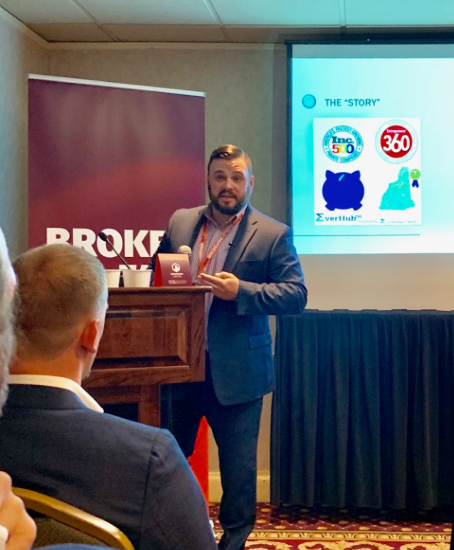
When it comes to hiring, it’s quality over quantity. That’s what the co-founders of Everlasting Capital Josh Feinberg and Will Murphy told a packed room at AltFinanceDaily’s Broker Fair last week. They presented a panel called “How to Scale Your Broker Shop,” where they shared tips on how to do just that.
“We wanted to scale so badly and throw bodies in seats,” Murphy said.
And that’s what they did until they realized that they were doing just as much volume when they had fewer people.
CEO of National Funding Dave Gilbert, who spoke on a different panel at Broker Fair, said that he’s a fan of small brokers. He later explained to AltFinanceDaily that when brokers get too big, they can get stuck with legacy staff. Instead, he said that when they stay lean and spend money on high quality salespeople, they can be much more effective with five or fewer people than with 10.
“It’s not the amount of bodies in the office, it’s the processes you have in place,” Murphy said.
Processes like hiring, training employees and organizing data, which they said should be as simple as possible. Bigger isn’t better and perfect isn’t realistic, they conveyed.
“Don’t worry about trying to create the perfect website or business card,” Feinberg said.
Instead, he said to think about five elements when trying to scale a brokerage shop:
- Focus on cash flow.
- Know that you will fail.
- Don’t quit before the miracle happens.
- Be different than your competition.
- Think bigger.
Meanwhile, Murphy presented concrete actions to take to grow a broker shop:
- Get customers.
- Build relationships.
- Be transparent.
- Find a mentor.
- Ask questions.
- Specialize in two programs (products)
- Brand yourself / your company
Everlasting Capital, which now has 19 people on staff and is based in New Hampshire, facilitates MCA funding and equipment financing.
On Diversification: Acknowledging that MCAs have an uncertain future, Feinberg said it’s important to diversify. He said that three years ago they were doing exclusively MCA deals and now they do 50% MCA and 50% equipment financing.
On social media marketing: “Be consistent. It’s not about the likes. It’s about [good] content and consistency,” Murphy said.
On broker performance: Brokers are given a six month training program at Everlasting Capital. After the six month period, they’re expected to fund four deals a month.
They also said it’s important to make friends with people in the industry.
Merchant Relationship Status: It’s Complicated
May 14, 2019
Brokers will often say that building strong relationships with their merchants is critical to their success. John Celifarco, Managing Partner at Horizon Financial Group, a five person ISO in Brooklyn, said that the advantage they have over larger competitors is the relationships they’ve developed with their merchants. Celifarco’s office is even in a streetfront store, where a number of their merchants are actually neighboring stores. Celifarco sees this as a strength.
But Michael Bernier, Vice President of 1 West Finance, a 14-person brokerage based in New York, said that things have changed as competition has increased in the space.
Customers gravitate towards companies that can provide them with not only the best pricing, but also the best user experience, which is why we believe so many new players in the space have achieved scale so quickly.
While customer relationships are important, funders in the space that are improving their speed, efficiency, and pricing are going to win the deals.
“In general, if [end users] find a better price on Amazon, 9 times out of 10 they’re going to buy that product on Amazon, regardless of the sales person on the phone” Bernier said.
Bernier suggests that rate or speed may win the customer but another more legally-binding circumstance may guide the relationship accordingly.
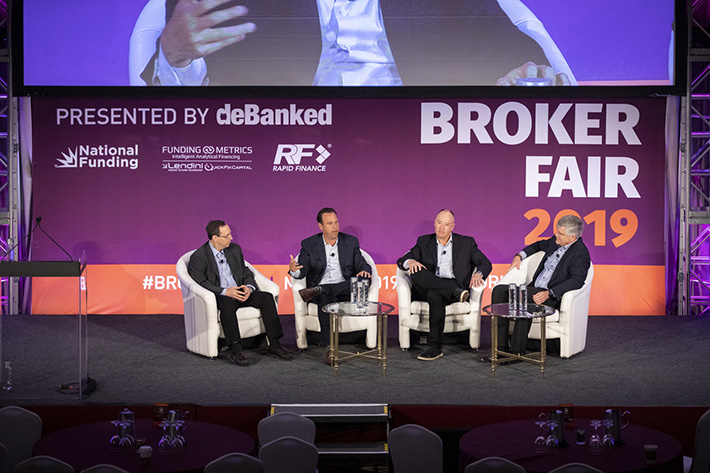
Kapitus CEO Andy Reiser served as moderator.
“Contractually, we own the customer,” said National Funding CEO Dave Gilbert on a panel at Broker Fair. “But we work in conjunction with the broker.”
Fellow panelist and Chairman of Rapid Finance, Jeremy Brown, said that he used to say what Gilbert said, but now says: “We own the loan. [And] we have the right to first renew the customer.”
Brokers seeking a very cozy relationship with their clients should therefore consider what rights and responsibilities are afforded to them under their referral contracts so that there’s no confusion with actions taken by either party with the customer down the road.
“I get close to people very quickly, it’s just who I am,” Kemp, a broker, told AltFinanceDaily in an interview last year. “And in my opinion it works to my advantage because I have merchants that renew with me multiple times a year. And I know that no matter how many calls they get [from other brokers], they’re going to turn to me. I know that they trust me.”
Likewise, Chad Otar, CEO of Excel Capital in New York, has said that building trust with merchants is very important and is what leads to renewal business. Otar introduced one of his merchants, a marketing company, to his other clients. A few of them ended up working with the marketing company, which was a win for everyone and led to even stronger word of mouth from Otar’s merchants.
“I don’t think anyone owns the customer,” said CEO of BFS Capital Mark Ruddock on the panel alongside Gilbert and Brown. “Customers are a privilege, not a right.”
Broker Fair 2019 Makes Major Splash in the Heart of Manhattan
May 10, 2019
If a tiny ray of light were created from every conversation about small business financing, then the Roosevelt Hotel in midtown Manhattan would have been tantamount to the sun on May 6th. It was the site of AltFinanceDaily’s 2nd annual Broker Fair and the grand old lobby was abuzz with brokers, funders and vendors from across the industry. And it wasn’t only the lobby. The hallways and ball rooms and bathrooms were filled with people in jackets or dresses with colorful conference badges hanging from their necks. You could not open your eyes without seeing a Broker Fair attendee.
The day kicked off with an address to the crowd by AltFinanceDaily’s founder and president Sean Murray.
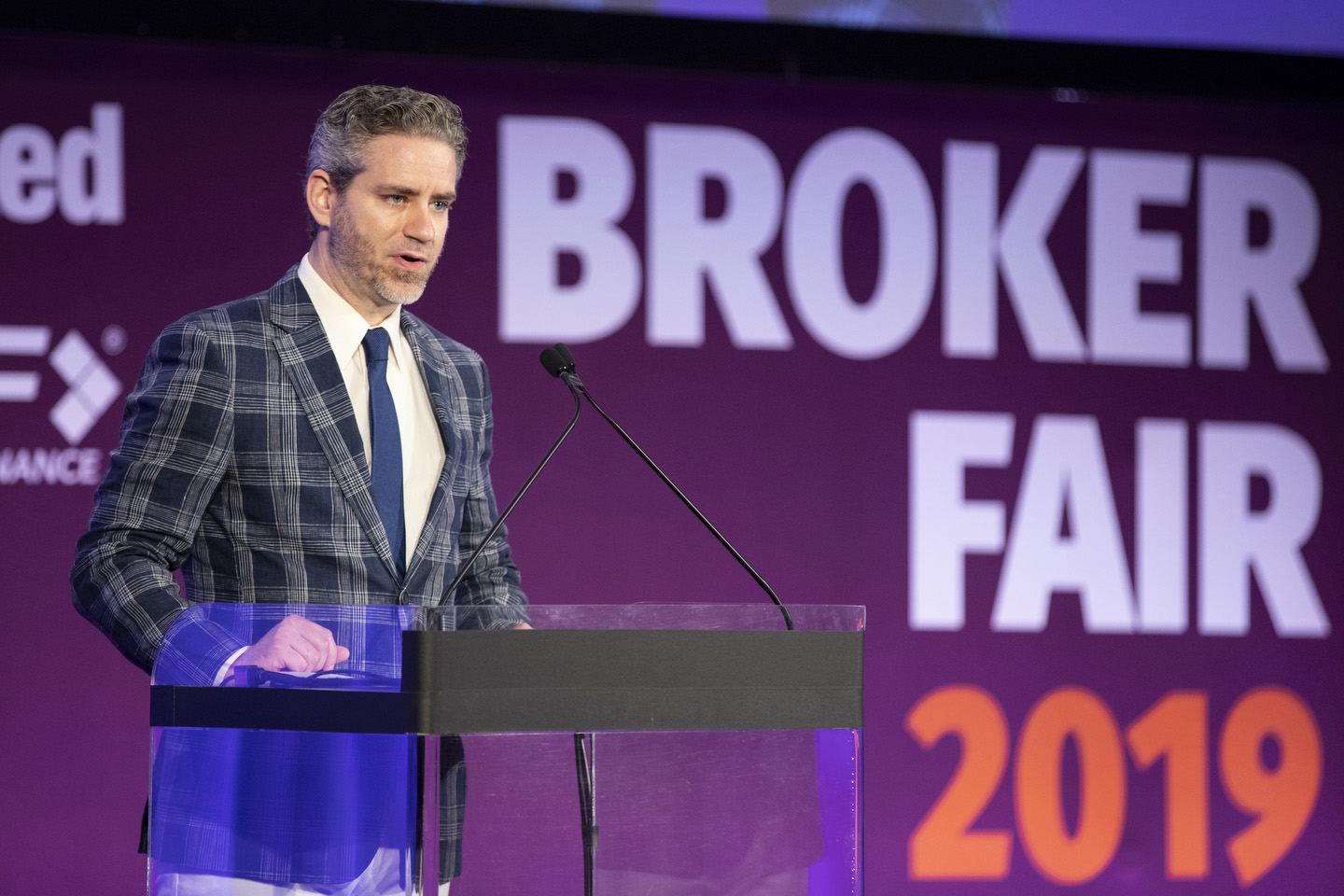 He spoke to a packed audience in one of the hotel ballrooms that was actually the site of a famous scene in the 1987 movie, “Wall Street,” starring Charlie Sheen and Michael Douglas. It was in this scene where one of the most well-known lines, “Greed is good,” was delivered in a speech by the character Gordon Gekko, a ruthless businessman played by Michael Douglas.
In Murray’s speech, he acknowledged the classic financial thriller, but gave it a twist.
“Funding small business is good,” Murray said. “It’s not greed that’s good. Aligned interests are good.”
This very room was a marriage of old and new. The 1924 room with soaring ceilings and crystal chandeliers was packed with mostly young faces in a still relatively new industry. The stage was simple, the chairs sleek, and colored strobe lights circled the ceiling in what created a fresh energy.
The first panel of the day, called “The Great Debate,” was dominated by discussion of technology among the CEOs of some of the largest companies in the small business funding industry: National Funding, Rapid Finance, BFS Capital, and Kapitus.
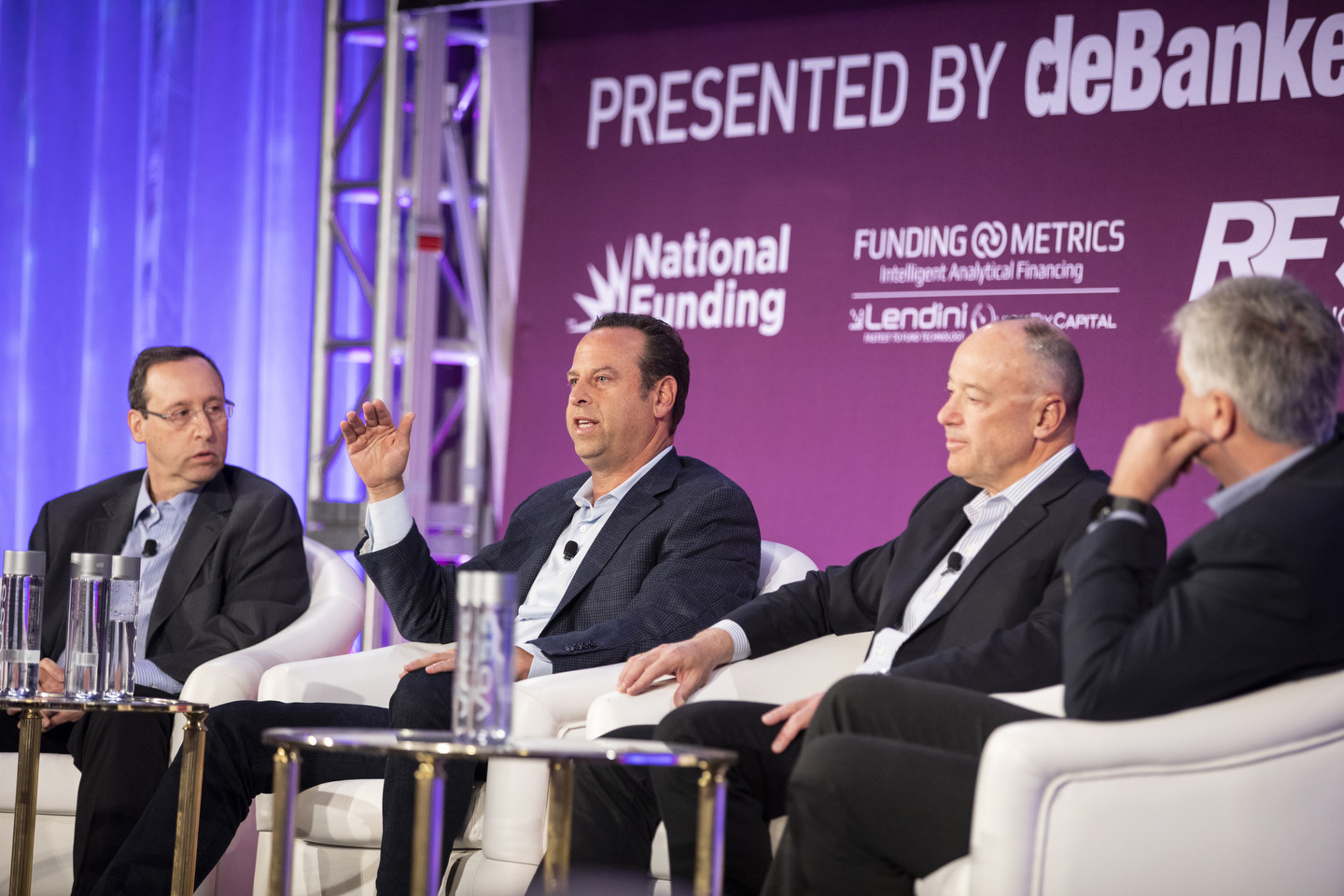
“Technology is an inevitability and a powerful way for brokers to stay relevant,” BFS CEO Mark Ruddock told AltFinanceDaily. “The question is, ‘Does that preclude the small [brokers] who don’t have the money to invest in technology?’”
He sees great opportunity for software platforms that can connect an individual broker to lenders, similar to how Shopify connects small mom and pop retailers to a wider consumer audience.
One of the other CEOs on the panel said he was bullish on digitally savvy brokers and all of them seemed to agree that brokers should offer more products.
“Having a broader set of products benefits brokers because they become the go-to person for merchants rather than simply serve a transactional function,” Chairman of RapidAdvance Jeremy Brown told AltFinanceDaily.
For brokers looking to expand their product offerings, there was a well-attended session called “Commissions with Factoring and Leasing” that was led by factoring and leasing professionals, Phil Dushey and Edward Kaye, respectively.
Meanwhile, the co-founders of the successful brokerage Everlasting Capital, led a session called “How to Scale Your Broker Shop” which included advice on everything from hiring to customer acquisition and social media marketing. One of the founders, Josh Feinberg, had his marketing person follow him around with a video camera throughout the day.
There were also sessions on regulations affecting the industry, plus a session called “Operating with Integrity: Why Ethics Matter.”
“The speakers are very relevant,” said Dexter Bataille, a broker at Pivotal Funding in Florida who attended Broker Fair. “And the panels are really good too.”
“AltFinanceDaily always finds ways to make the shows more professional,” said Senior Sales Leader at Reliant Funding Nicolas Marr, who flew in from California to attend the conference. “The details really count.”

In another hotel ballroom, Broker Fair attendees meandered around high tables where event sponsors had representatives talking about their products and handing out free t-shirts and pens. As the day wound down and Broker Fair’s “networking happy hour” approached its end at 6 p.m., the figurative sun (created by small business finance conversations) began to set at the Roosevelt Hotel. But a crowd of about 100 lingered at the hotel bar, buzzing away, eager to make just a few more connections.
The small business financing sun will rise again on July 25 at deBank’s next event, AltFinanceDaily CONNECT in Toronto. Tickets are already available.