
How Merchant Cash Advance Companies Can Avoid Problems This Tax Season
April 2, 2024David Roitblat is the founder and CEO of Better Accounting Solutions, an accounting firm based in New York City, and a leading authority in specialized accounting for merchant cash advance companies. To connect with David or schedule a call about working with Better Accounting Solutions, email david@betteraccountingsolutions.com.
 In the fast-paced and ever changing world of cash advance, tax season can often present a labyrinth of compliance and reporting challenges. These challenges are not just bureaucratic hurdles that must be overcome; they also serve as crucial tests of a company’s financial health and operational integrity. Given the intense scrutiny the cash advance industry faces from regulatory bodies, particularly in light of recent industry shaking events, alongside the unique nature of how its financial transactions can be structured, ensuring tax compliance is not just advisable—it’s essential. Let’s discuss frequent speed bumps cash advance companies encounter during tax season, and some solutions for these problems.
Misclassification of Income and Advances
One of the most significant stumbling blocks for cash advance businesses lies in the misclassification of the funds they advance to customers. This misstep can lead to serious tax implications, distorting the financial understanding of a company in the eyes of the law. A robust accounting system that accurately differentiates loans, advances, and income is not just a recommendation; it’s a necessity. Each category must be meticulously reported for tax purposes, a task that underscores the importance of seeking guidance from a tax professional well-versed in the nuances and implications of these classifications.
Misreporting Income
A common oversight among cash advance companies is the inaccurate reporting of income. Whether it’s underreporting or misclassifying earnings, the repercussions can be severe, and include the possibility of triggering an audit or incurring a severe financial penalty. The remedy? An accounting software tailored for the funding industry (such as Orgmeter, MCA-Track, OnyxIQ, Centrex, or LendSaas), capable of automating the calculation and reporting all necessary metrics and income. This ensures not only compliance but also a transparent overview of a company’s financial health that benefits you as well.
State-Specific Tax Obligations
Just over 5 years ago, Wayfair was successfully sued by South Dakota for failing to tax online sales even though they had no physical presence in the state, beginning a new era of legal understanding of state tax obligations in the internet and cross-state trade era.The complexity of tax compliance is magnified for cash advance companies operating across state lines, each with its unique tax laws and regulations. This multi-state maze can easily lead to oversight or misunderstanding, risking non-compliance. The solution is twofold: developing a comprehensive compliance checklist for each state and consulting with tax professionals who specialize in navigating these multi-state operations. Together, these strategies form a bulwark against the many possible blind spots of state-specific tax obligations.
Documentation for Audits
Not having the correct documentation and record-keeping on hand can transform a routine tax audit into a nightmare scenario, and cause businesses to be slapped with heavy penalties and fines. To counter this risk, cash advance companies need to maintain meticulous records of all transactions. Experts often recommend businesses conduct regular audits, whether internal or external, to ensure these records are both accurate and will back you up when they are needed.
Planning for Tax Liabilities
Perhaps one of the easiest mistakes to avoid is not adequately planning for surprise tax liabilities. Without planning in advance and setting aside sufficient funds to cover these obligations, companies can find themselves in a precarious cash flow situation when taxes are due. A proactive strategy to counter that involves specifically marking off a portion of income in a dedicated account for unforeseen expenditures (tax liabilities included), calculated with an estimated effective tax rate. This approach, developed with the assistance of a tax professional, can prevent the unwelcome surprise of a hefty tax bill when you’re not ready for it.
At the end of the day, tax compliance, while definitely not fun, should not be viewed (just) as a regulatory pain-in-the-butt, but as a way to ensure a cash advance business’s success and longevity. By embracing proactive tax planning and compliance, companies can not only successfully navigate the complexities of tax season but also reinforce the integrity and sustainability of their business and ensure their success and viability for years to come, free from any stress or government microscope.
Mastering Taxes for Merchant Cash Advance Businesses – Cash Basis 101
December 7, 2023David Roitblat is the founder and CEO of Better Accounting Solutions, an accounting firm based in New York City, and a leading authority in specialized accounting for merchant cash advance companies. To connect with David or schedule a call about working with Better Accounting Solutions, email david@betteraccountingsolutions.com.
 For funders in the merchant cash advance industry, navigating through various funding scenarios is a common challenge. There are many different ways to fund your MCA business–including institutional money, using your own funds, partnering with syndicators, or involving outside investors– and understanding how to recognize income for reporting to your partner, syndicators, investors and the IRS is essential to avoid tax and compliance issues down the line.
When I started Better Accounting Solutions in 2011 and began working with clients in our industry, I found the accounting world wholly unprepared for the different funding streams MCA businesses worked with, and in the years since, we’ve managed to systematize and customize the income recognition process for the entire industry, particularly in the context of accrual basis reporting, as we’ve become more and more ingrained in the space..
Let’s explain how, starting by exploring the different funding scenarios your business might find itself in:
Using Company’s Own Funds: Some funders rely solely on their own company’s money to provide advances. In this scenario, the funding is entirely self-financed, and the company does not seek external investments.
Equity Partner of the Funding Company as Syndicators: Other funders collaborate with partners who contribute money as syndicators, in addition to using the company’s funds. This means that both the company and its partners are involved in funding the deals.
Outside Syndicators and Investments: Certain companies involve outside syndicators, who are not part of the company’s core team or partners, to provide additional funding. This setup allows the company to expand its funding capacity beyond internal resources and institutional investors.
Income Recognition for Reporting and Tax Purposes
Typically, for funders using their own company’s money, there are two primary ways to recognize income— one for reporting purposes and the other for tax purposes.
Cash Basis Reporting: Cash basis reporting recognizes income and expenses when actual cash is received or paid. In this method, income is recognized when the money hits the bank account, and expenses are recognized when the money leaves the credit card or bank account.
Accrual Basis Reporting (GAAP): Accrual basis reporting, also known as Generally Accepted Accounting Principles (GAAP) reporting, is used by Certified Public Accountants (CPAs) when auditing financial statements. Unlike cash basis reporting, accrual basis recognizes income when earned, regardless of when the cash is received, and expenses are recognized when they are accrued. (More about GAAP in a future article)
Challenges in Income Recognition for Merchant Cash Advance
Recognizing income in the merchant cash advance industry can be complex, especially when dealing with cash advances rather than traditional loans. Unlike loans, where regular payments consist of interest and principal, merchant cash advances involve the purchase of future receivables.
Consider this example: A merchant cash advance provider funds a merchant with $100,000 at a commission expense of 12% and a Junk Fee income of 10%. The bank fee income and RTR/Factor Rate is.5, while the merchant will pay back $150,000, $1,500 daily assuming a 100 day duration.
Cash Advance Income Recognition Approach in Cash Basis Accounting:
Because of this unique funding structure, here’s how my team at Better Accounting Solutions recommends reporting the income (BAS will typically use Accrual Basis reporting for business owners, and note-holder investors, and cash basis for tax reporting if the company’s revenue is less than $10 million annually):
Commission Expense and Junk Fee Income: The commission expense and junk fee income are recognized immediately (in most scenarios) on the day the advance is given, deducted from the funded amount.
Factor Income: Until the full contract funded amount of $100,000 is received in the funder’s bank account (not just the amount wired), no additional income is recognized. Once the contract amount is fully received on a cash basis, any payments received after that point constitute factor income or RTR income.
What’s the benefit of reporting this way?
By reporting on a cash basis you are deferring the recognized tax income. For example, if you have a deal that was funded in November over five months, you will have been only about forty percent in the payback by the time the tax calendar year is over. Since you would have not received the contract funded amount back yet , you would not recognize any of the factor income for tax purposes until the following year, thereby deferring your tax liability. This means you have more time to spend that money and grow your actual business.
It’s important to acknowledge that accounting practices can vary, and accountants may have differing opinions on income recognition. The approach outlined here is definitely an aggressive method, but one I continue advocating using for IRS and tax purposes, for the reasons listed above.
As we’ve said, navigating income recognition in the merchant cash advance industry can be challenging due to the unique nature of cash advances. Understanding the funding scenarios, recognizing income for reporting and tax purposes, and considering different accounting methods are crucial for funders and companies in this space, and will give you a leg up come Tax Season.
It’s essential to emphasize that this article is for informational purposes only and should not be construed as accounting or financial advice. It’s strongly recommended for funders and companies to seek guidance from qualified accountants or financial professionals to ensure compliance with accounting standards and tax regulations tailored to their specific circumstances.
What’s On The Industry’s Desk?
November 3, 2023 “Just personalize your desk for others to recognize your space,” said Maria Pappas, Chief of Sales at Landfall Media Group.
On a typical day, individuals spend eight hours at their desk, another eight attending to tasks after leaving it, and the remaining eight hours asleep. Now this breakdown may vary from person-to-person, but it generally holds true. The office really is like a second home.
For Maryam Raya, an ISO Representative at JRG Funding, she’s currently awaiting the arrival of a piano fixture that she plans to place on her desk. As a professionally trained concert pianist, it will hold special value for her. But she’s got another classical way of jazzing up her workspace as well.
“I also absolutely love flowers and have brought bouquets on occasion to the office,” said Raya. “That’s definitely a personal touch.”
Meanwhile, Sharon Guiliano, COO at Triton Recovery LLC, believes it’s crucial for her to inspire and motivate a positive vision of success to foster a culture of positivity within her company. This is the reason she keeps her workspace with numerous motivational items. Among those is a succulent marble vase representing devotion, growth, loyalty, focus and prosperity. In one corner of her office, she even has a Birds of Paradise plant as a representation of maintaining a positive perspective on life.
“I have motivational items in my workspace that say, ‘Stay Positive, Work Hard, Make it Happen’ and ‘Live in the moment,’” said Guiliano.
For Pappas at Landfall Media Group, she keeps a fidget spinner nearby to divert her from distractions that ironically has turned into a distraction itself. And along with a photo of her kids, she has a lucky duck figurine gifted to her from her daughter displayed in front of her monitor.
“I also have my Nespresso machine for midafternoon to pick me up,” said Pappas. “Most importantly, pictures of my kids for motivation.”
Pappas’ male colleagues struggle to grasp the concept of having mascara readily available but Pappas takes it further by keeping various items within reach at the office, such as a toothbrush, floss, lipstick, and hair ties. Raya of JRG Funding, meanwhile, also always keeps her two essential items within sight. “I always carry lip gloss and a hairbrush,” said Raya. As for Guiliano, in addition to hand lotion and sanitizer, she also has promotional swag on her desk from events she’s attended.
“I do like to keep marketing items I’ve collected through the years from attending the AltFinanceDaily events,” said Guiliano.
What Kind of Deals are Good / Not So Good
August 27, 2023 “Industries with stable, recurring revenue models, like healthcare and essential services, often show strong repayment history due to consistent demand,” said Michelle Melo, Chief Revenue Officer at Westwood Funding. Melo, who’s been at Westwood for more than four years has seen a lot of deals come through the door and has gotten a feel for numerous industries. Over time, experiences like hers, have led to a general consensus about what business types make for good funding customers and why.
For Ken Peng, Director of Business Development & Marketing at Elevate Funding, he said of medical and healthcare related businesses that “I think the combination of being an essential service and traditionally having higher profit margins has allowed this industry to perform well from a repayment standpoint.”
Melo at Westwood said the technology industry has also performed well, while Michael Gaura, who works alongside Peng at Elevate, named an industry that’s challenging, trucking. Gaura, a Director of Financial Planning and Analysis, said that when it comes to trucking, “historically they have had challenges such as driver shortages, driver retention, and equipment maintenance making them a higher risk of repayment.”
“As of recently, [the trucking industry has] seen an increase in challenges of operational costs increases (fuel and insurance premiums), Economic & Supply Chain Issues, and increased competition, which has placed a further strain on their industry,” Gaura added.
Abe Klugmann, the COO and Head of Sales at YM Ventures, also had feelings about the state of the trucking industry, saying that it’s a “disaster.” “Construction is also very very challenging right now because of the economy,” he added. Unsurprisingly, like the others, he saw strength in the healthcare industry, saying that home healthcare businesses were among the most resilient. “It’s a pretty good industry, it works out pretty well when you find those types of companies,” he said.
Protecting Your Syndicated MCA Investments
August 24, 2023David Roitblat is the founder and CEO of Better Accounting Solutions, an accounting firm based in New York City, and a leading authority in specialized accounting for merchant cash advance companies.
To connect with David or schedule a call about working with Better Accounting Solutions, email david@betteraccountingsolutions.com.
An increasingly popular way for merchant cash advances businesses to raise capital is by offering syndicated deals. In theory, this structure is simple to understand and fulfill the terms of: in these scenarios, investors put a percentage of the funded deal and get a percentage of the returns. But, as we all know, our industry is dynamic and has inherent risks, and safeguarding one’s hard-earned investments takes on paramount importance.
We saw the pitfalls in the cases of MJ Capital Funding, LLC and 1 Global Capital, along with more recent cases earlier this year, where investors were fleeced of hundreds of millions of dollars that they invested into what they thought were legitimate MCA funding companies.
What happened there is unfortunately investors did not see or understand the importance of having a third party reporting back to the investors and syndicators about how their investment was going, and were misled until it was too late.
So how can investors protect their investments in syndicated MCA deals?
 Know Where Your Money Is Going
Let’s start with the first thing you can do.
The landscape of MCAs is marred by tales of deceitful entities posing as legitimate funding companies, leaving investors and syndicators in dire financial straits when they are left to hold the bag.
From the outset, it is essential to ensure that the funds committed find their way into the intended bank account- one that is owned by the same entity as the MCA actually funding the merchants. The need for this is underscored by the unfortunate prevalence of fraudulent actors diverting funds to different accounts under deceptive entities. This manipulation obscures the money trail, making it harder to track and detect financial malfeasance, and leave investor funds vulnerable to exploitation.
Vigilance through Allocation Monitoring
To protect your investment against malicious machinations, it is crucial to exercise stringent vigilance and monitor your funds.
If one’s investment is tied to a specific percentage of MCA deals, a diligent verification process is necessary to confirm that the funds contributed align precisely with these deals. Ensuring the MCA business has a quality and comprehensive reporting and CRM system will provide a transparent window into the balance and distribution of funds across each deal. This transparency not only empowers investors but also safeguards their interests against any misallocation.
Additionally, investors should ask about and pay attention to when their portion of the syndication was added to a deal, to make sure you haven’t been added to a bad deal only once they have already started bouncing payments.
Finally, suppose the CRM system shows an available balance on your syndication for a certain amount. In that case, you can talk to the MCA funder about ensuring they always have that amount or more available in their bank account. If the available balance in the MCA’s bank account is less than your available liquid balance then essentially the funder is borrowing (and risking) your funds to fund deals without you benefitting.
Navigating Default Deception
Another way scammers try to fleece syndicators is by telling them deals that they have invested in have defaulted. Through shrewd tactics such as rerouting default payments to alternative accounts or manipulating reporting mechanisms, deceptive entities can evade investor scrutiny and keep their money.
To counteract these tactics, a collaborative partnership with a transparent and independent accounting firm is indispensable. This partnership acts as a source of clarity for both parties: unraveling intricate payment webs and ensuring that defaults are tracked while investors receive accurate insights into their investments’ actual performance that cannot be manipulated by the unscrupulous funder.
A Solution…
The scale of risks are glaringly evident. So what can you do about it?
The message is clear: vigilance is paramount. Minor inconsistencies can snowball into severe financial pitfalls, making it imperative to maintain an unwavering, watchful eye.
But it’s difficult for syndicators to do that, both because they have limited insights as syndicators and because they have their own jobs to worry about without the added stress.
That’s why Better Accounting Solutions encourages all our clients in the merchant cash advance industry to employ this protective framework:
When we come onboard to do accounting for business or investors, we encourage both parties to obtain explicit consent from MCA entities to share all information with the syndicator. Without formal authorization, firms like Better Accounting Solutions are legally bound from sharing crucial information. Trust and transparency rests upon this explicit approval, serving as the conduit for open dialogues and proactive measures. With this permission granted, the accountants can regularly produce independent and up-to-date reports ensuring both parties are on the same page and share a mutual trust. That’s the benefit of third party oversight: nothing is happening in the dark, without anyone’s knowledge.
Encouraging and working towards an honest merchant cash advance industry is a virtue that safeguards investments, draws more investors, and bolsters the credibility of our entire industry.
How Raising The Debt Limit Affects MCA
May 22, 2023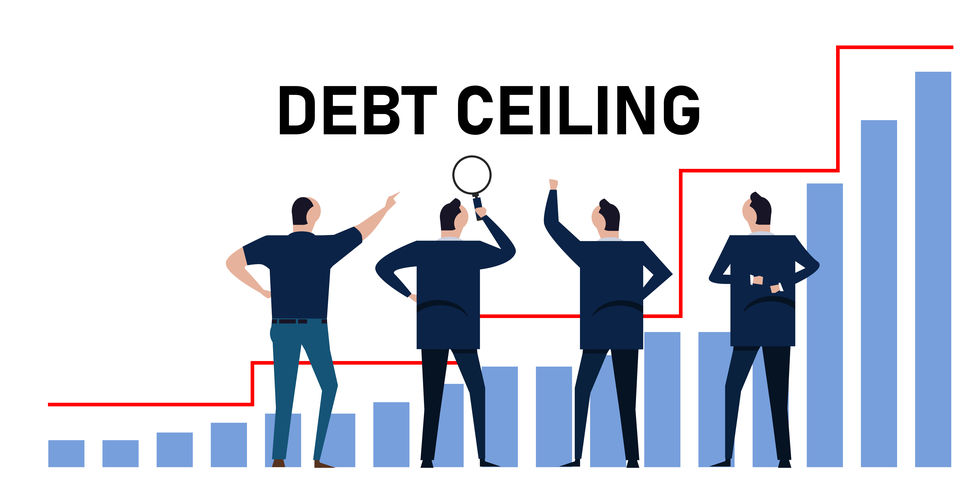 Every few years, particularly during the administration of a divided government, the threat of a default on raising the debt limit of the United States rears up in the political and economic spheres. While both sides tend to play chicken before ultimately settling on a negotiated outcome that they can sell to their bases, the current debt limit crisis feels more serious as the X date of June 1 looms with no settlement in site.
This crisis has a significant effect on various industries, and amongst them is the merchant cash advance business. MCA companies are heavily relied upon by small businesses for immediate financial needs, and understanding what this crisis means for the industry is crucial for getting through it unscathed.
Let’s compare the current landscape to running a business:
When a company opts to increase its debt limit, it essentially seeks to borrow more money, trading liability for an asset. For example, if the company’s equity is worth 100 billion dollars, borrowing doesn’t change this figure as long as the borrowed amount is an idle asset in their account.
The U.S. government should theoretically operate similarly to a regular company, borrowing only what it can pay back, but with the only growing expenses, when the government borrows money and raises the debt ceiling, it doesn’t always have enough funds for repayment.
In addressing its fiscal shortfall, the government operates distinctly from a conventional business. Unlike a company compelled to confront its financial mismanagement head-on, the government possesses the ability to print additional U.S. dollars. However, this course of action inherently devalues the currency.
For the sake of illustration, consider the worth of the dollar as a fixed entity. Suppose every thousand dollars equates to one bar of gold. If we slice this bar of gold into a thousand pieces, each piece represents $1. When the government initiates the printing of more money, it is essentially the government carving that same bar of gold into tinier segments. Meaning, if sliced in 2,000 pieces, the same bar of that once held the value of $1,000 is now $2,000. The total quantity of gold remains constant, regardless of whether it’s divided into 1,000 or 2,000 slices. However, with increased currency in circulation, each dollar—like every slice—holds less value, thereby shrinking everyone’s piece of the proverbial gold bar.
Now that we’ve explained the dangers of wantonly raising the debt limit, how does this affect MCA companies?
The debt limit crisis’s impact on MCAs is pronounced due to the time-value factor of money.
Suppose a mortgage of $100,000, repaid with interest over 30 years, amounts to $300,000. If the value of the dollar reduces significantly over this period – say by 50% – the bank, despite appearing to make a profit, loses money. That’s because the money they receive later has less purchasing power than the same amount ten years prior.
This reality can be acutely felt in periods of high inflation, such as in 2021 and 2022, where inflation neared 9%, and many felt it was closer to 20%. We all feel it during our grocery shops, the prices of experiences, and in other areas of our lives. Here, $100 can only buy what $80 could a couple of years ago, eroding the value of the interest charged.
At Better Accounting Solutions, a number of the MCA businesses we’re working with are concerned with this rapid devaluation of the money they’re funding.
The key factor to consider is the duration for which the capital will be deployed and how it will be recouped. For instance, if you advance $1 million at a 24% factor rate over 24 months and the debt ceiling is raised causing the dollar value to drop, your returns in the second year might be significantly less valuable despite the factor rate. This depreciation means that even though you’re receiving the agreed-upon returns, the funds’ purchasing power is considerably less, translating into a net loss of what would have been 13.5% over the past two years.
However, if you’re giving out (after careful consideration) riskier short-term advances with higher factor rates, daily repayments, and shorter durations, the situation would be different. Here, you’re receiving your return within, say, six months. Even if the dollar’s value decreases by 20% over a year, you’re less affected because your returns are realized in a shorter time and at higher rates, leaving you with a net gain.
Therefore, the debt limit affects MCA providers significantly, whether it’s being covered in the news or not. The devaluation of the dollar, high inflation rates, and other economic consequences of a debt limit crisis can dramatically impact the returns on cash advance businesses, especially those with longer repayment periods. As a player in the finance industry, it’s crucial to consider these elements when making advances or lending money. By factoring in these variables, providers can better protect their interests, minimize risks, and ensure the stability of their operations even during times of economic uncertainty.
New California Disclosure Rules Reduce Capital Available to Small Businesses
March 21, 2023In a poll conducted by a leading trade association, since new CA disclosure rules were implemented in December 2022, 40% of respondents were found to be “no longer lending” to prospective borrowers who fall within the regulations’ threshold of less than $500,000. The poll was conducted by The Secured Finance Network (SFNet), an 80-year-old nonprofit with members representing the $4T U.S. secured finance industry. The new law, requiring sweeping financial disclosures, introduced by CA State Senator Steven M. Glazer in 2018, faced four years of strong opposition before being rolled out in December of 2022.
According to the poll, commercial finance companies would rather not lend to small businesses than comply with what they believe are “misguided and un-compliable” requirements. Mark Hafner, president and CEO of Celtic Capital Corporation, based in Calabasas, CA, said, “Unfortunately, we must now shy away from smaller deals (under the $500k threshold) as the disclosure requirements are extremely complicated to figure out and would require getting our attorneys and CPAs involved to ensure compliance. It’s just not worth the costs involved to fund a small deal anymore. The statute is not user friendly and, frankly, not representative of the true costs as there are numerous assumptions that have to be made to calculate the APR based on the state’s requirements. I honestly don’t think it was designed to meet the stated goal of the statute.”
Robert Meyers, president of Republic Business Credit, which does business with many California-based businesses, explained, “While the fines and penalties are clear under the regulations, the state has been unwilling to confirm our compliance or anyone else’s compliance. That fear is what has stopped 40% of our non-banks from doing business in the state, thus reducing access to capital for small- and medium-sized businesses. I expect this number to increase as time goes on. If the goal of this law was to better inform, it is actually doing the opposite as APR just doesn’t apply to our products.”
SFNet reports that its member companies provide “tens of billions” of capital annually in California to small businesses for essential working capital that funds everything from inventory, to work in process to payroll.
“Forty percent of billions is a large number,” said SFNet CEO, Richard D. Gumbrecht. “In attempting to find a one-size-fits-all solution to financial transparency, the State has created a complex set of requirements that misrepresent the actual cost of borrowing. Lenders are saying it’s not worth the cost and risk of complying. If this sample of 50 lenders is indicative of what we can expect, clearly that was not the intent of the legislation. And considering the demise of Silicon Valley Bank, it’s more important than ever that capital is not restricted in California.” The trade association is working with State legislatures to revise the statute. “Other states have found a simpler and more accurate way to protect small borrowers, and given the unintended consequences we are seeing, we are hopeful California will be receptive to these alternative approaches.”
To demonstrate how vital small businesses are to the U.S. economy, and the importance of not curtailing funding, consider these statistics: According to the U.S. Small Business Association (SBA), small businesses of 500 employees or fewer make up 99.9% of all U.S. businesses and 99.7% of firms with paid employees. Of the new jobs created between 1995 and 2020, small businesses accounted for 62%—12.7 million compared to 7.9 million by large enterprises. A 2019 SBA report found that small businesses accounted for 44% of U.S. economic activity.
About Secured Finance Network
Founded in 1944, the Secured Finance Network (formerly Commercial Finance Association) is an international trade association connecting the interests of companies and professionals who deliver and enable secured financing to businesses. With more than 1,000 member organizations throughout the U.S., Europe, Canada and around the world, SFNet brings together the people, data, knowledge, tools and insights that put capital to work. For more information, please visit SFNet.com.
Media Contact:
Michele Ocejo, Director of Communications
Secured Finance Network
mocejo@sfnet.com, 551-999-5283
Think you know APR? Think Again.
February 16, 2023It has been just over two months since the California financing disclosure law was enacted. With New York on the heels of California, getting APR disclosure correct is a legal requirement, let alone a competitive one.
At Austin LLP, we developed a simple and versatile APR calculator as part of our California disclosure law guide. However, while training and using this calculator with our clients, we learned just how tricky an APR calculation could be. Having an accurate APR calculation method or software tool is just the beginning. Below we discuss one pitfall we have observed when calculating an APR for an MCA funding deal. In future articles, we will highlight other scenarios where calculations may not be as straightforward as one may think.
MCA Funding APRs Change Depending on the Day of Disbursement
When disclosing a daily (Monday-Friday) MCA financing offer in California or New York, it is essential to understand that the “APR,” which funders are required to disclose, will change depending on the day of the week the funding is disbursed. For example, the APR you calculate with a Monday disbursement will have a different APR if that same deal is funded on a Tuesday. This difference in APR is because MCA funders take payments only Monday through Friday, resulting in a different payment schedule as the week progresses, because later disbursement equals fewer payments before the weekend.
We’ve seen APRs for the exact same financing deal change as much as 8-10%, based solely on the day of the week the funding is disbursed. Therefore, funders, underwriters, and brokers must be aware of how an APR calculation changes based on the day of the week.
APRs Decrease as the Week Progresses
Using our MCA-APR calculator, we found that as the week progressed, the APR of the deal decreases. For example, the APR calculated using a Monday disbursement and a Tuesday first payment will be higher than the same deal disbursed on a Tuesday with a first payment on a Wednesday. This trend continues for the entire week, with a Friday disbursement and a Monday first payment having the lowest APR.
California and New York disclosure laws allow for the disclosure of a higher APR. Therefore, as long as the funds are disbursed in the same week as the disclosure, the actual APR will be lower than the APR that was disclosed to the merchant. However, a disclosure made on a Thursday or Friday of one week that does not disburse until the following week will have a higher actual APR than was disclosed.
Should it always be Monday?
For these reasons, no matter which APR calculator you use, ensure you input the expected disbursement day and first payment day. And for any disclosure offer made that is not disbursed by Friday, remember to re-calculate the APR and re-disclose on the following Monday.
Some of our clients are adopting an “every day is Monday” approach to avoid an accidental under-disclosure of an APR. The APR disclosure regulations are tricky and have many pitfalls. With a regulatory tolerance of less than one eighth of one percent, accuracy matters, specifically when considering the potential for regulatory oversight and downstream litigation.
This article has been provided as general guidance and should not be considered legal advice. Feel free to reach out to us at mca@austinllp.com for any specific questions you may have. We are happy to be of service.