
Broker Fair Has Completed A Historic Milestone
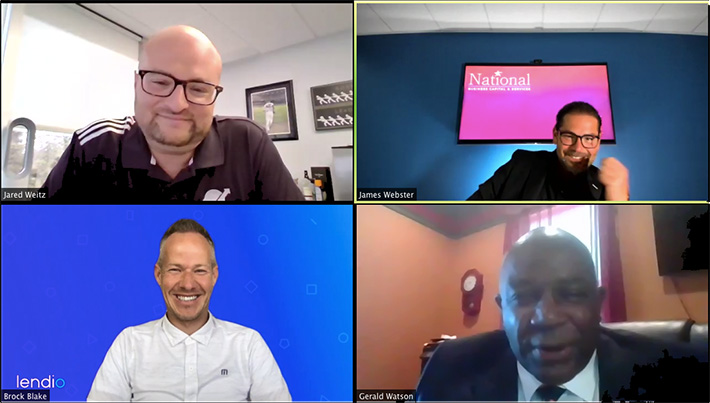
June 12, 2020Broker Fair reached a milestone yesterday by successfully completing the industry’s first-ever virtual conference. The experimental concept was a response to this year’s restrictions and precautions on large gatherings.
We hope that the hundreds of attendees found the event fun, educational, and productive! The in-person show is still happening at Convene at Brookfield Place in Lower Manhattan on March 22, 2021.
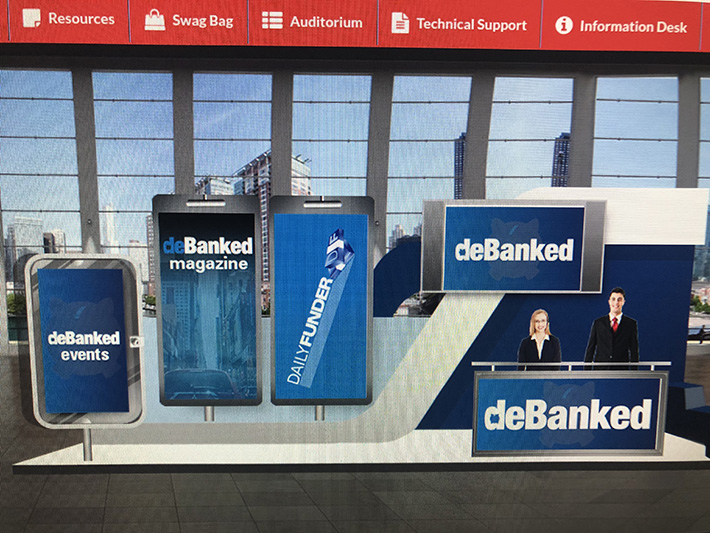
Yesterday’s show included live sessions, a networking chat, and a virtual exhibit hall. Attendees will have formal access to the recorded sessions very soon (There were a lot of them).


The Funders Are Coming Back
June 10, 2020 Nearly three months on from the beginning of the United States’ lockdown, the alternative finance industry is starting to feel a recovery. As states look to ease lockdowns, businesses seek to start back up, and offices are reopening, an element of normalcy, if it can be called that, appears to be returning. AltFinanceDaily reached out to a number of businesses in the industry to find out how they were plotting their recovery, as well as what they thought of the future for the space and the American economy.
One such company was Everest Business Funding. After experiencing a strong start to 2020 in January and February, covid-19 and the economic shutdown that accompanied it came as a shock to Everest, CEO Scott Crocket explained.
“It’s difficult to imagine an exogenous event outside of our control that could more squarely impact an industry like this,” Crockett stated. “I mean, after all, we provide capital to small and medium-sized businesses all across the United States, all 50 states, every type of small business you can imagine. And we’re cruising along, we had a record 2019, we’re off to a great start with January, February, even the beginning of March … and we really saw it come on in the third week of March, the week that started with Monday the 16th. It started as a kind of a trickle in, but by the end of the week it was more of a tidal wave in terms of the number of small businesses in our portfolio that were calling in looking for some type of relief as a result of what was happening.”
Crockett said that they paused all new funding the following week, out of concern for the company’s ability to generate business while there was a national economic shutdown in place. Since then however, Everest has been slowly getting back to what it was, with employees now returning to the office in waves and discussions being had over when exactly to start funding again, be it late June or early July.
Another firm that halted its funding operations was the New York-based PIRS Capital. Similarly, it was mid-March when the pressure was first felt, and PIRS didn’t return to funding until May 15th. PIRS COO Andrew Mallinger chalked this up to the company’s lack of reliance on automated underwriting processes, saying that although “the industry was leaning towards automatic funding and all these models and 20-second approvals, we weren’t fully invested in that yet. So it was good to see that the old-school approach is back and working again, interfacing with these brokers and really understanding their deals and what they’re bringing to the table.”
Mallinger is also confident going into the rest of 2020. Saying that while the company is maintaining a cautiously optimistic outlook, PIRS is working off the assumption that there will eventually be growth this year and that it is set to continue working from home for however long that may be, on the basis that New York may be one of the last states to return to offices.
Also looking forward is Velocity Group USA’s Trace Feinstein, who believes there will tough times ahead for many in the industry, but who also holds that there are opportunities for those who can make it through.
“Anyone who can weather this storm is going to come out 10 times better than they did going in.” The Chief Syndication Officer said in a call. “It’s an adjustment for our economy, it’s an adjustment for our country, and I think it’s an adjustment for our industry on top of that. So there’s a lot of different changes and things are going to be happening, but I think it’s going to be very good for the ones who make it out of it.”
Feinstein, who said that most of Velocity’s workers are back in its offices, noted that it approached underwriting during the pandemic with thoroughness. Daily underwriting meetings entailed going through each state, looking at what was happening there with infection rates, and discussing how various industries could be affected.
Reporting that applications following the lockdown were actually cleaner than before, with average credit scores going up to be between 650 and 750, Feinstein explained that he pushed underwriters to rely on common sense rather than overthinking their decisions and to treat these deals like they would any MCA application.
And while many funders have struggled through the lockdown period, another part of the industry, collection agencies, have been doing well after an initially tough stretch.
Shawn Smith of Minneapolis’ Dedicated Commercial Recovery has claimed to have grown the company’s portfolio by 100% in 60 days despite a particularly trying period in mid-April. Explaining that the company was two weeks away from having to bring in strict measures to keep things going, Dedicated began getting calls again just in time, with its clients mostly phoning in about MCA deals.
Looking ahead, Smith is anticipating a busy summer and fall as businesses, funders, and the courts come back, but he is worried about a second wave and the alternative finance industry not putting in the precautions needed to stave off the economic impacts this next time around.
“Anyone can lend out a lot of money or put out a lot of money on the street, but your ability to get it back is going to be very important, and you want the fire extinguisher in place before the house is on fire … what you’re seeing in the MCA industry is because it’s just not as aged as the equipment leasing and banking industries … the MCA companies just didn’t have 20-30 year veterans in collections and legal … we’re so concerned with how to write more deals and get more money out there, and not about how to get it back and not about having strong enough underwriting standards and things like that. So when it got stress tested, the pain came back real quick.”
Likewise, Kearns Brinen & Monaghan’s Mark LeFevre claimed that after having a rocky road during the earlier stages of the pandemic and switching to a “plan B” for the year, the collections company is optimistic about going forward. Having weathered what may be the worst stretch without having had to furlough or lay-off anyone, KBM now has brought most of its workers back after a reworking of the office space. A pre-return fumigation, sneeze guards, and temperature-taking upon re-entry to the office building have all been employed after KBM’s employees asked to return to the workplace.
“The industry is changing literally day to day,” explained the President and CEO. “Some of the laws that are passed by the House and by the Senate are changing quicker than I’ve ever seen. I’ve just never seen it before. But I think it’s for the better and we’re starting to see the comeback of the economy, the stock market, employment. The unemployment numbers are really good and, in my opinion, [the numbers will] continue to go down from what we’re seeing in our industry.”
Impact Of COVID-19 on The Merchant Cash Advance Market
June 8, 2020AltFinanceDaily recently caught up with Gunes Kulaligil, author of Merchant Cash Advance Valuation Dynamics.
 Gunes Kulaligil (gkulaligil@methodicalmgmt.com) is a co-founder of Methodical Management, a New York based firm providing valuations, transaction advisory and due diligence services to lenders and investors active in the specialty finance sector. www.methodicalmgmt.com
deBanked: The economic effects of the coronavirus are myriad and widespread. What are some of the specific challenges that the merchant cash advance market is currently experiencing? And what new obstacles can the industry expect further down the line as a result of the pandemic?
Gunes Kulaligil: The pandemic has redefined what “off the charts” means for unemployment claims and other leading economic indicators, but the full impact of job losses and halted economic activity has yet to be observed in the credit performance of many specialty finance assets. MCAs are unique in the sense that payments are daily or weekly and tied directly to revenues. As such, we were able to observe the preliminary impact of the lockdown on MCA cashflows earlier than for most other types of non-bank specialty finance loans.
When incomes and revenues are disrupted, consumers and businesses alike will often prioritize which debt to service first. They may be unwilling to pay certain accounts, even if able to do so, in order to preserve cash for prolonged uncertainty. However, this is not the case for MCAs as payments are remitted automatically; therefore, the cashflows are aligned with and reflect true business performance free of the impact of payment prioritization. As early as the second half of March, we observed payments from merchants drop approximately 20% to 30% depending on the type of industry. In addition, payment pace continued to decline into April and May, albeit at a slower pace, as modifications and servicing efforts picked up. Funders have a vested interest in merchants being able to stay in business and to build their revenues back up. Thus, any modification effort — whether that is a deferral, reduced percentage of sales remitted, or lower payback amounts — that incentivizes the merchant and provides some flexibility goes a long way.
At the same time, funders’ portfolios look worse as performing MCAs pay down and a lack of new origination results mechanically in the remainder of their portfolios having more tail risk – a lack of new origination would be a drag on performance even without the pandemic. For these portfolios, it is crucial to monitor portfolio performance at a granular level to identify businesses that will successfully navigate reopening and increase their revenues; so that servicing resources can be directed where they are most needed and will be most effective. Funders that have invested in technology and maintain connectivity with merchants via CRM tools and with established servicing / resolution teams and processes will have a competitive edge in doing so.
Poor performance caused by the pandemic has also led warehouse facilities to breach covenants or take-out partners to pause purchases unless platforms pledge additional skin in the game or pay higher interest rates to go forward with covenant modifications or resume purchases. They may also increase monitoring requirements and the level of oversight they apply.
deBanked: Conversely, is the pandemic creating any opportunities for funders and brokers as the situation develops?
Gunes Kulaligil: Indeed. While the near-term outlook is grim, a lot of relief and stimulus is working its way through the economy. The U.S. Government is intent on providing support as states are starting to re-open as quickly and as safely as possible. In retrospect, nobody had a pandemic playbook and programs like PPP were designed, deployed and funded on the fly with collaboration from both banks and non-bank lenders during volatile markets.
Non-bank lenders’ success in being able to reach truly small businesses, as well as the speed and efficiency in deploying the funds, has not gone unnoticed. The PPP experience also highlighted stark differences between the types of clients that large commercial banks serve versus those served by non-bank lenders. As AltFinanceDaily reported, banks focused on larger clients whereas non-bank and fintech lenders assisted much smaller businesses in comparison. Origination fees on PPP loans were not insignificant either. SBA pays PPP lenders a 1% to 5% origination fee depending on the funded amount. For example, Ready Capital reported a gross revenue of $100 million on $2.1 billion funded. Notably, Ready Capital’s average PPP loan size was approximately $70,000 compared to an average of more than $500,000 for JP Morgan Chase for approximately $15 billion the bank funded in round one of PPP.
Small business activity is not only a leading indicator of distress but also at the center of any significant economic recovery. Small businesses account for 45% of GDP with 88% of these businesses employing fewer than 20 people. There is no meaningful recovery without small businesses getting back on their feet. As businesses re-emerge, their financing needs will vary widely in timing, amount, frequency, term, etc. depending on industry and many other factors. Continued involvement from the federal government whether in the form of deploying more low-interest rate loans, forgivable loans or loans with some sort of guarantee is likely. Lenders who can continue to serve their clients either by extending a suite of bespoke private credit or by facilitating the deployment and servicing of government funds will succeed.
Views from the Small Business Finance Industry, March 27
March 27, 2020 As the coronavirus pandemic continues to disrupt the economy and affect small businesses as well as funders, AltFinanceDaily will keep up with how various figures from the alternative finance sector are managing under the stresses of covid-19. Ranging from funders, to brokers, to those figures on the periphery of the industry, this series aims to highlight a variety of voices and we encourage you to reach out to AltFinanceDaily to discuss how your business is doing.
—
One such voice this week was Shawn Smith, CEO of Dedicated Commercial Recovery. Specializing in debt recovery and legal enforcement, Smith told AltFinanceDaily that his business has already seen a jump in demand, but that he reckons, for now, most demand will be for modifications on existing deals. According to Smith, many of his clients have explained to him that merchants have been requesting changes to the terms of the financing, either by tweaking the rates or length of repayment.
“Just in two weeks we can see an uptick, but by and large, it hasn’t majorly spiked. I think it’s spiking with the funders or the creditors right now. And we’ll be next on that … a major thing I’m hearing is a dramatic increase in inbound calls to our clients for modifications.”
In Smith’s view, this back and forth between merchants and funders is a better scenario than the alternative, making clear that honest communication is necessary in a crisis like this.
“Hopefully everybody’s working together through this, which does seem to be the case right now. I honestly think we’re past the point of some people calling this a hoax, or it’s not to be taken seriously. And I’m seeing a lot of rallying around the idea of ‘we’re in this together even though we can’t stand next to each other.’ A kind of American spirit of we’re going to beat this, we’re going to get through it.”
—
For Idea Financial, the idea of working together has manifested, just as it has for many companies across the world, digitally. CEO Justin Leto and President Larry Bassuk explained to AltFinanceDaily that since their entire company is working remotely, the communication app Slack has stepped in for continual conversation between employees and Zoom is being used to check in with the team multiple times throughout the day.
“In many ways, our teams interact more now than they did when they were in the office together. We hold competitions, share personal stories, and really support one another. At Idea, the sentiment that we feel is that everyone appreciated each other more now than before, and we all look forward to seeing each other again in person soon.”
—
On Thursday, industry leaders took part in a webinar hosted by LendIt Co-Founder and Chairman Peter Renton. Various subjects relating to Covid-19 were up for discussion by Lendio’s Brock Blake, Kabbage’s Kathryn Petralia, and Luz Urrutia of Opportunity Fund, with the $2 trillion government bill being foremost among them.
Blake, who had been in touch with Senators Romney and Rubio, explained that most small businesses will be eligible for a loan out of the $350 billion fund that would be allotted to the SBA under the $2 trillion bill, saying that “a tsunami of loan applications is coming because almost all small business owners in America will qualify for this product.” The Lendio CEO also noted that business can expect to pay an interest rate of 3.75% on these loans, only a portion of each individual loan may be forgivable, and the max amount loaned out will be two and a half times the business’s monthly payroll, rent, and utilities combined.
Beyond the specifics of the 7(a) loan program, Blake expressed concern over the SBA’s bandwidth, saying that he was unsure whether or not the organization and the banks that it will partner with to deliver these loans will have the capacity to process them, a point echoed by Urrutia. “We’re talking about businesses that are going to need a ton of support,” the Opportunity Fund CEO said. “With these programs, the money doesn’t really get down to the bottom of the pyramid.”
Collectively, the group hoped that the SBA would open up their channels and allow non-bank lenders to use some of the $350 billion to fund small businesses, citing that neither government agencies nor banks have the technology nor processes to hastily deal with the amount of applications that will come. In other words, the SBA is working with “dinosaur technology,” as Blake called it.
One point of concern that continually arose during the conversation was the situation lenders will find themselves in as the pandemic continues. With Blake saying that an estimated 50% of non-bank lenders on his platform have hit the pause button on new loans, each of the other participants expressed worry about lenders being wiped off the map during and in the aftermath of this crisis.
As well as this, Petralia explained that funders can expect to encounter increased rates of fraud during this time: “In times like this, the bad guys come out in force … criminals are very creative and smart, so I promise you they’ll come up with new ways to fraud the system.” Discussing how they are dealing with this, the group mentioned that they were incorporating additional revenue and cash balance checks, as well as social media checks to see whether the business announced that it had closed due to the coronavirus.
Altogether, the conversation was one of uncertainty, but also one of hope to keep the wheels of the industry turning as more and more small business owners look for financing to keep their payroll flowing. As Renton said closing the session, “This is our time to shine, this is fintech’s time to show what it’s been working on for the last decade.”
How Small Business Funders Are Reacting to the Coronavirus
March 17, 2020 In the past week and a half it appears as if six months of panic, reaction, and preparation have taken place. With the coronavirus having transformed from a subconscious worry at the back of our minds to a global pandemic that is leading industries and nations to be reshaped, uncertainty and a lack of information may lead to further confusion and anxiety.
As such, AltFinanceDaily reached out to a number of funders within the alternative finance space to gauge how they’re feeling on the pandemic and understand what measures they are taking at this time.
One such company was BFS Capital. With its headquarters in Florida, CEO Mark Ruddock explained that he and his employees are used to preparing for crises. “It’s prime hurricane land. So we have a capability to operate without a single human head in the office. We have 100% capability for all of our team to work remotely regardless of whether they have work laptops or not.”
Communication is at the heart of this ability, with offices in Toronto, Omaha, New York, Chelmsford in the UK, and outsource partners in Guatemala, BFS relies on software like Microsoft Teams and Zoom to ensure smooth contact is maintained between its employees across the world.
And this mindset has recently been further enforced with regards to company-customer relations, Ruddock explained, noting that in that wake of the coronavirus, BFS has amped up its outreach to existing customers.
“Instead of just waiting for active inbound communication from our merchants, we actually now have an active outbound calling program. We’re trying to reach out to many of our merchants and understand how their businesses are doing, understand what sort of support and help they’re looking for. We’re trying to draw from this not only information about the specific merchant, but also information about that merchant’s geography, sector, and so on. And all of that is being fed back into a real-time dashboard internally.”
Beyond BFS, merchant outreach was a trend amongst the companies AltFinanceDaily talked to. With funders reporting that they have teams trained to discuss future funding options with businesses if their finances suffer from a decrease in customers.
At the same time, some funders have decided to focus their efforts on tightening underwriting and funding channels, applying a conservative approach to which industries and locations will be served.
Velocity Group USA shared an internal memo to its ISOs with AltFinanceDaily which detailed some instructions to brokers. Among these was the prompt for “our ISO’s to place more focus on essential businesses.” Non-essential businesses being categorized as community and recreation centers; gyms, including yoga, spin, and barre facilities; hair and nail salons and spas; casinos, concert venues, and theaters; bars and liquor stores; sports facilities and golf courses; most retail facilities, including shopping malls.
Placing a limitation upon funding like this has been a hot topic amongst the alternative finance community within recent days. A thread on the online discussion forum DailyFunder featured speculation and arguments over who is and isn’t funding anymore.
With so much of this being hearsay and rumor, AltFinanceDaily found that asking funders directly whether or not they were funding currently to be the best remedy to this uncertainty. As of the time of publication, AltFinanceDaily found that LoanMe had suspended funding until April 1 and that 1st Merchant Funding suspended further funding temporarily, with Vice President of Credit Risk Dylan Edwards saying that it would be “completely irresponsible” to continue funding.
In regards to how funders have been dealing with the coronavirus in their immediate surroundings, many, such as RDM’s CEO Reuven Mirlis, have noted that their employees have been offered the option of working from home, while others have made it a mandate to work from home. BlueVine’s CCO Brad Brodigan explained that this decision was part of their Business Continuity Plan and that prior to this they took extra measures so that their office was thoroughly disinfected and that social distancing was practiced within meetings of 5+ people.
Meanwhile Velocity Group USA has brought in Pat Gugliotta, the Commissioner of the business’s local fire department, to help establish contagion prevention protocols, based upon the screening processes practiced in JFK Airport. Explaining that this includes daily interviews with every staff member in the morning which look for trends relating to where they’ve been, who they’ve been in contact with, and how they’re feeling. As well as this, employee vitals are documented, with infrared thermometers being employed to monitor temperatures. “I’m trying to mirror our program to that program because I know the program works,” Gugliotta mentioned in a call.
While this may sound extreme, it must be remembered that this is an unprecedented crisis, meaning most strategies are untested and many funders are open to exploring novel precautions and solutions.
“This is an unprecedented event, which in its own right means you have to look at it differently,” BFS’s Ruddock explained. “I think it’s the sheer scope and speed that we have to cope with here. Scope meaning that this isn’t a hurricane which hits a region for a period of time and causes economic distress, which requires rebuilding, this is something that is international. This is not something that, like a recession, creeps at you over months and weeks and sometimes even signals orders. This is something that is happening with alarming speed. So in that way, these are unprecedented times now.”
This article will continue to be updated with funders who announce and disclose to us changes in their services, so check back to stay updated. Please do reach out if you would like to discuss the status of your company and how the coronavirus is affecting your business.
“Panic Induces Panic”: David Goldin on Small Business Funding and the Coronavirus
March 12, 2020With companies in Australia, Britain, and the United States, David Goldin has weathered storms of various sizes and seriousness over the past two decades. Whether it was the recent wildfires that saw state-sized infernos engulf the Australian countryside, the regulatory upheaval that is Brexit, or the unprecedented shockwaves sent by the 2008 financial crisis, the CEO has seen his fair share of global disruption.
So when AltFinanceDaily got in touch with Goldin about his perspective on the coronavirus pandemic, how it compares to what he’s seen before, and what funders should do to combat contagion, he was happy to discuss the insights he’s garnered from twenty years in business.
The following Q&A has been lightly edited for clarity and succinctness:
AltFinanceDaily: Generally speaking, how bad do you think the coronavirus pandemic is going to get?
 “I don’t think anyone knows the outcome. I think what you’re going to see is the industry completely change over the next few days. In the last 48 hours you went from mild cancellations to, today alone, the NBA, NHL, and MLB. And Cuomo just announced in New York that there can be no more than 500 people at events, colleges are shutting down left and right, and schools as well. Basically, we’re heading in the direction of shutting down the entire country at some point.
So I think funders have two issues. One is their existing customers, right? And how do you lend in this market? There’s the obvious and the not so obvious, because, for example, a deal that may have been great a few days ago, let’s say there’s a college bar near SUNY Albany, and they just announced this shutting down of schools, that bar may not see any business for who knows how long.
I’m not the CDC, I’m not the WHO, I’m not a medical expert, but I know in life, people are always afraid of the unknown and panic induces panic, but this is just my opinion. So I think once people start getting this virus, which is inevitable, and they recover from it, I think that’s going to offset some of the panic.
I think you’re going to have a couple of more shock factors. I would not be surprised if we learn in the next few weeks that the President of the United States has it.”
And what about our industry specifically?
“I think right now, lenders will say, ‘Well, if I [tighten up], typically what happens in our industry is if a company runs into trouble, it’s usually just that company,’ right? So if they start tightening up, they lose the business.
The entire playing field will be level by Monday or Tuesday of next week, by the latest. I think some of the playbook will be that some funders may take the position to stop funding for the next couple of weeks and look to see what happens because no one knows how bad this is going to get.”
Do you have any advice for funders?
“I think you have to price the risk because I think everyone is foolish to think that the bolts are not going to go off. So you’re either going to have to increase the pricing to the customer or raise the rates to the broker and limit the amount they could charge the customer temporarily for the increased risk your portfolio is now going to take.
I think you need to shorten the term. During the 2008 recession, the industry was at a 1.35 to a 1.37 factor rate, averaging six or seven months. There weren’t too many providers back then going past a year, there really was no such things as a second or third position.
This is a much different world we live in. So I think, unfortunately, some of the platforms that tend to be longer-term players which do one year, two years, three years, even four years, I think they’re going to be in a lot of trouble. Their ships are too far out to sea and I think they’re really going to have to focus on portfolio management and collections.
There’s going to be opportunities in the marketplace for those that don’t take a prudent approach, but I think in the short term people have to shorten their terms, potentially raise pricing for risk, and decrease the amount of capital that they’re taking out of a customer’s gross sales.”
What lessons do you think can be learned from this?
“I think as a platform you have to look at redundancy of capital, and that the time to raise money is when you don’t need it. So I think this could be a lesson for all to perhaps have more than one funding source.
I think brokers are going to really have to diversify. There’s good and bad, I think the approval rates at companies are going to fall through the floor, but I think you’ll get a lot of borrowers over the next few weeks that can typically go to a bank that won’t be able to go to a bank. But you’re going to see a lot of watching and waiting right now. And you’re going to see the industry revert back to where it was a while ago: shorter term deals, pricing in the risk, lower gross sales taken.”
How does this compare to previous crises?
“So I think this one’s a little bit different. It’s affecting everything and your playbook is going to change literally daily. This will be affecting the majority of the major cities. When you’re shutting down things like the MLB, the NBA, the NHL, shutting down colleges and universities, I don’t think this country or the world has ever experienced anything like this for this extended period of time.
Now that doesn’t mean everyone’s going to go out of business, there’ll be a redistribution. For example, if it was a restaurant in midtown Manhattan that relied a lot on people going from work, and these people are now working from home, perhaps their local restaurants or supermarket may see an uptick in business.
I think you’re going to see decisions slowing down and really digging a lot deeper into the underwriting, understanding what the business actually does, how it’s potentially affected.”
What should funders be doing to combat contagion?
“They should be testing a disaster recovery plan to work remotely.
But most importantly it’s really about everyone being healthy, helping their families and their employees. That’s first and foremost.”
2020 and Beyond – A Look Ahead
March 3, 2020 With the doors to 2019 firmly closed, alternative financing industry executives are excited about the new decade and the prospects that lie ahead. There are new products to showcase, new competitors to contend with and new customers to pursue as alternative financing continues to gain traction.
Executives reading the tea leaves are overwhelming bullish on the alternative financing industry—and for good reasons. In 2019, merchant cash advances and daily payment small business loan products alone exceeded more than $20 billion a year in originations, AltFinanceDaily’s reporting shows.
Confidence in the industry is only slightly curtailed by certain regulatory, political competitive and economic unknowns lurking in the background—adding an element of intrigue to what could be an exciting new year.
Here, then, are a few things to look out for in 2020 and beyond.
Regulatory developments
There are a number of different items that could be on the regulatory agenda this year, both on the state and federal level. Major areas to watch include:
- Broker licensing. There’s a movement afoot to crack down on rogue brokers by instituting licensing requirements. New York, for example, has proposed legislation that would cover small business lenders, merchant cash advance companies, factors, and leasing companies for transactions under $500,000. California has a licensing law in place, but it only pertains to loans, says Steve Denis, executive director of the Small Business Finance Association. Many funders are generally in favor of broader licensing requirements, citing perceived benefits to brokers, funders, customers and the industry overall. The devil, of course, will be in the details.
- Interest rate caps. Congress is weighing legislation that would set a national interest rate cap of 36%, including fees, for most personal loans, in an effort to stamp out predatory lending practices. A fair number of states already have enacted interest rate caps for consumer loans, with California recently joining the pack, but thus far there has been no national standard. While it is too early to tell the bill’s fate, proponents say it will provide needed protections against gouging, while critics, such as Lend Academy’s Peter Renton, contend it will have the “opposite impact on the consumers it seeks to protect.”
- Loan information and rate disclosures. There continues to be ample debate around exactly what firms should be required to disclose to customers and what metrics are most appropriate for consumers and businesses to use when comparing offerings. This year could be the one in which multiple states move ahead with efforts to clamp down on disclosures so borrowers can more easily compare offerings, industry watchers say. Notably, a recent Federal Reserve study on non-bank small business finance providers indicates that the likelihood of approval and speed are more important than cost in motivating borrowers, though this may not defer policymakers from moving ahead with disclosure requirements.
“THIS WILL DRIVE COMMISSION DOWN FOR THE INDUSTRY”
If these types of requirements go forward, Jared Weitz, chief executive of United Capital generally expects to see commissions take a hit. “This will drive commission down for the industry, but some companies may not be as impacted, depending on their product mix, cost per lead and cost per acquisition and overall company structure,” he says.
- Madden aftermath. The FDIC and OCC recently proposed rules to counteract the negative effects of the 2015 Madden v. Midland Funding LLC case, which wreaked havoc in the consumer and business loan markets in New York, Connecticut, and Vermont. “These proposals would clarify that the loan continues to be ‘valid’ even after it is sold to a nonbank, meaning that the nonbank can collect the rates and fees as initially contracted by the bank,” says Catherine Brennan, partner in the Hanover, Maryland office of law firm Hudson Cook. With the comments due at the end of January, “2020 is going to be a very important year for bank and nonbank partnerships,” she says.
- Possible changes to the accredited investor definition. In December 2019, the Securities and Exchange Commission voted to propose amendments to the accredited investor definition. Some industry players see expanding the definition as a positive step, but are hesitant to crack open the champagne just yet since nothing’s been finalized. “I would like to see it broadened even further than they are proposed right now,” says Brett Crosby, co-founder and chief operating officer at PeerStreet, a platform for investing in real estate-backed loans. The proposals “are a step in the right direction, but I’m not sure they go far enough,” he says.
Precisely how various regulatory initiatives will play out in 2020 remains to be seen. Some states, for example, may decide to be more aggressive with respect to policy-making, while others might take more of a wait-and-see approach.
“I think states are still piecing together exactly what they want to accomplish. There are too many missing pieces to the puzzle,” says Chad Otar, founder and chief executive at Lending Valley Inc.
As different initiatives work their way through the legislative process, funders are hoping for consistency rather than a patchwork of metrics applied unevenly by different states. The latter could have significant repercussions for firms that do business in multiple states and could eventually cause some of them to pare back operations, industry watchers say.
“While we commend the state-level activity, we hope that there will be uniformity across the country when it comes to legislation to avoid confusion and create consistency” for borrowers, says Darren Schulman, president of 6th Avenue Capital.
Election uncertainty
The outcome of this year’s presidential election could have a profound effect on the regulatory climate for alternative lenders. Alternative financing and fintech charters could move higher on the docket if there’s a shift in the top brass (which, of course, could bring a new Treasury Secretary and/or CFPB head) or if the Senate flips to Democratic control.
If a White House changing of the guard does occur, the impact could be even more profound depending on which Democratic candidate secures the top spot. It’s all speculation now, but alternative financers will likely be sticking to the election polls like glue in an attempt to gain more clarity.
Election-year uncertainty also needs to be factored into underwriting risk. Some industries and companies may be more susceptible to this risk, and funders have to plan accordingly in their projections. It’s not a reason to make wholesale underwriting changes, but it’s something to be mindful of, says Heather Francis, chief executive of Elevate Funding in Gainesville, Florida.
“Any election year is going to be a little bit volatile in terms of how you operate your business,” she says.
Competition
The competitive landscape continues to shift for alternative lenders and funders, with technology giants such as PayPal, Amazon and Square now counted among the largest small business funders in the marketplace. This is a notable shift from several years ago when their footprint had not yet made a dent.
This growth is expected to continue driving competition in 2020. Larger companies with strong technology have a competitive advantage in making loans and cash advances because they already have the customer and information about the customer, says industry attorney Paul Rianda, who heads a law firm in Irvine, Calif.
It’s also harder for merchants to default because these companies are providing them payment processing services and paying them on a daily or monthly basis. This is in contrast to an MCA provider that’s using ACH to take payments out of the merchant’s bank account, which can be blocked by the merchant at any time. “Because of that lower risk factor, they’re able to give a better deal to merchants,” Rianda says.
Increased competition has been driving rates down, especially for merchants with strong credit, which means high-quality merchants are getting especially good deals—at much less expensive rates than a business credit card could offer, says Nathan Abadi, president of Excel Capital Management. “The prime market is expanding tremendously,” he says.
Certain funders are willing to go out two years now on first positions, he says, which was never done before.
Even for non-prime clients, funders are getting more creative in how they structure deals. For instance, funders are offering longer terms—12 to 15 months—on a second position or nine to 12 months on a third position, he says. “People would think you were out of your mind to do that a year ago,” he says.
Because there’s so much money funneling into the industry, competition is more fierce, but firms still have to be smart about how they do business, Abadi says.
Meanwhile, heightened competition means it’s a brokers market, says Weitz of United Capital. A lot of lenders and funders have similar rates and terms, so it comes down to which firms have the best relationship with brokers. “Brokers are going to send the deals to whoever is treating their files the best and giving them the best pricing,” he says.
Profitability, access to capital and business-related shifts
Executives are confident that despite increased competition from deep-pocket players, there’s enough business to go around. But for firms that want to excel in 2020, there’s work to be done.
Funders in 2020 should focus on profitability and access to capital—the most important factors for firms that want to grow, says David Goldin, principal at Lender Capital Partners and president and chief executive of Capify. This year could also be one in which funders more seriously consider consolidation. There hasn’t been a lot in the industry as of yet, but Goldin predicts it’s only a matter of time.
“A lot of MCA providers could benefit from economies of scale. I think the day is coming,” he says.
He also says 2020 should be a year when firms try new things to distinguish themselves. He contends there are too many copycats in the industry. Most firms acquire leads the same way and aren’t doing enough to differentiate. To stand out, funders should start specializing and become known for certain industries, “instead of trying to be all things to all businesses,” he says.
Some alternative financing companies might consider expanding their business models to become more of a one-stop shop—following in the footsteps of Intuit, Square and others that have shown the concept to be sound.
Sam Taussig, global head of policy at Kabbage, predicts that alternative funding platforms will increasingly shift toward providing more unified services so the customer doesn’t have to leave the environment to do banking and other types of financial transactions. It’s a direction Kabbage is going by expanding into payment processing as part of its new suite of cash-flow management solutions for small businesses.
“Customers have seen and experienced how seamless and simple and easy it is to work with some of the nontraditional funders,” he says. “Small businesses want holistic solutions—they prefer to work with one provider as opposed to multiple ones,” he says.
Open banking
This year could be a “pivotal” year for open banking in the U.S., says Taussig of Kabbage. “This issue will come to the forefront, and I think we will have more clarity about how customers can permission their data, to whom and when,” he says.
Open banking refers to the use of open APIs (application program interfaces) that enable third-party developers to build applications and services around a financial institution. The U.K. was a forerunner in implementing open banking, and the movement has been making inroads in other countries as well, which is helping U.S. regulators warm up to the idea. “Open banking is going to be a lively debate in Washington in 2020. It’ll be about finding the balance between policymakers and customers and banks,” Taussig says.
The funding environment
While there has been some chatter about a looming recession and there are various regulatory and competitive headwinds facing the industry, funding and lending executives are mostly optimistic for the year ahead.
“If December 2019 is an early indicator of 2020, we’re off to a good start. I think it’s going to be a great year for our industry,” says Abadi of Excel Capital.
United Capital Source Partners with Brex to Offer Deal on Card
February 21, 2020U nited Capital Source has partnered with Brex on a deal that will see UCS customers receive bonuses upon sign-up for a Brex Corporate Card. Such rewards include 100,000 points in statement credit and waived card fees for life.
“We really wanted to start to offer business credit cards to our clientele. We believe that as we’re helping people solve their lending or funding issues, it’s also helpful to solve any problems that they face when running their day-to-day business,” UCS Founder and CEO Jared Weitz told AltFinanceDaily in a call. “The key point that we really love about Brex which we’re offering to our clients is a 60-day, no-interest float on expenses. And that’s really helpful for folks when you’re making weekly and bi-weekly payrolls, when you’re purchasing inventory, and when you have folks that pay you every 30 or 45 days.”
The news comes as companies from various backgrounds are beginning to offer debit, credit, and charge cards. Apple, BlueVine, and challenger banks such as N26 and Varo are now all offering cards of some kind to their customers.
In Weitz’s view, this is the next step for the industry. With tech becoming more and more ingrained in finance, the convergence between the two fields is inevitable and ultimately beneficial for brokers.
“They’re already doing it on the personal side. And I think that once these tech-enabled companies start to get business data on their clients’ trends in their business account, they’ll be able to offer other products to them as well. For me, as a broker, if someone says, ‘Hey, does that make you nervous?,’ honestly, I don’t believe so. Because I think it opens up the sources for me to send deals to … I’m not a lender, so I’m not competing against them. I’m someone that would send them business. So when I look at them, I say this is just a new potential partner for me, a new opportunity.”