
NJ Resurrects Small Business Finance Disclosure Bill
July 28, 2021New Jersey’s legislature has revived its small business finance disclosure bill. Having languished since last January, the Senate Commerce Committee quietly gave it a favorable report this past June.
New Jersey’s bill is similar to the law that New York is putting into effect on January 1st. As part of it, non-loan products will be required to calculate an APR even if one cannot be mathematically calculated by “estimating” one.
Brokers would be impacted too:
A broker who charges any fees or commission that would be paid by the recipient of the financing shall provide, at the time of extending a specific offer for a commercial financing transaction and in a form and manner prescribed by the commissioner, a written disclosure, in a document separate from the provider’s contract with the recipient, stating the following, if the information is not contained within the disclosure offered by the provider directly to the recipient:
(1) a list of all fees or commissions that would be paid to the broker by the recipient in connection with the commercial financing;
(2) the total dollar amount of charges listed pursuant to the bill;
and
(3) any increase to the annual percentage rate due to the charges listed above and the resulting dollar cost.
You can read the Senate Commerce Committee’s report here.
Your Merchant Might Be Eligible For More Free Money
July 27, 2021 For businesses that have held on into 2021, it’s possible that even more free money might still be available. The SBA’s Shuttered Venue Operators Grant, rolled out in April, was received by the general public with a collective meh, but eligible businesses can get a grant equal to 45% of their entire gross earned annual revenue in 2019. That’s nearly half a company’s annual revenue given to them for free.
Eligible entities include:
- Live venue operators or promoters
- Theatrical producers
- Live performing arts organization operators
- Museum operators
- Motion picture theater operators (including owners)
- Talent representatives
More than 10,000 businesses have already been funded a total of $7.5 billion through the program, despite an initial rocky rollout. Another $8.5 billion still remains available to apply for.
Lenders and brokers eager to provide value to their small business customers might want to consider sending them the application link.
“After making improvements to the Shuttered Venue Operators Grant program, the SBA is now delivering money quickly, efficiently and fairly to highly-impacted small businesses and venue operators that are critical to America’s cultural fabric and local economies,” SBA Administrator Isabel Casillas Guzman said. “When I began my tenure at the SBA, this first-of-its-kind SVOG program was not where I wanted it to be. I’m proud that, thanks to the hard work and dedication of our talented team, we have turned the ship around. America’s small businesses can rest assured that the SBA will continue to work around the clock to provide the relief that is needed to revitalize local economies and build back better from the pandemic and economic crisis.”
AltFinanceDaily TV Surpasses 400 Helpful Videos on Small Business Finance and Fintech
July 23, 2021 deBanked TV surpassed 400 total videos this week in its free library of content. More than 40 such videos contain basic tutorials and terminology definitions for folks in the SMB lending and MCA industries.
“The content is highly focused,” AltFinanceDaily President Sean Murray said. “It’s small business lending, real estate, MCA, etc. There’s content for newbies and seasoned veterans aimed at brokers, lenders, and more.”
AltFinanceDaily has produced more than a dozen original videos as part of an industry docu-series that began in 2020.
Murray also airs live on AltFinanceDaily TV every Monday and Wednesday at 12:15pm ET where he discusses industry news and offers informative advice.
The Biggest Expansion Period of Our Lifetime? The Non-Bank Finance Industry Says Full Steam Ahead
July 8, 2021 Erez Stamler, Managing Director of Fresh Funding, said that the events of the past year has been an up and down ride, from the initial shutdown shock to rushes in demand. Now that the world is back, those that survived are here to stay and need capital to grow.
“At first the system was in shock, then a phase where we saw a strong spike in submissions [where] the owners were probably looking for some sort of PPP-type solution, and that was not available by us,” Stamler said. “Going into 2022 we believe there’s a lot of demand out there. A lot of businesses have demonstrated growth during Covid and hopefully will continue that into 2022. As far as we can see right now, we’re going strong this year for sure.”
Alex Vasilakos, who tracks online interest in alt finance as the director of marketing for Finance Marketing Group, said there had been an increase in online searches for non-bank financing solutions in the past year because banks weren’t sure how the pandemic would pan out.
“We are back in the office, and we are seeing a large uptick in digital advertising since Covid, and it is continuing to increase,” Vasilakos said in an email. “I am seeing and predicting that people will be leveraging more online sources for financing than they have in the past.”
Amotz Segal, a startup co-founder of Edge Funder, said that if the Covid spikes and black swan events are over, there is no limit to demand, and the hybrid model is here to stay. Edge Funder uses lead generation and AI underwriting to make SMB deal-making easier, Segal said.
“I think nobody’s really bullish enough, I think we’re facing the beginning of the biggest expansion period of our lifetime,” Segal said. “Our team based in New York City will hopefully gradually go back to the office this fall. That being said, I don’t think that we will ever see a one-hundred percent office-space environment. I think what the pandemic did is accelerated a trend that already began of people working from home, working remotely, and not having to attend the office daily.”
Segal has grounds to be bullish: Edge was just acquired by Yes Lender after only a year of development.
 James Lee, CEO and co-founder of Julius Technologies, said that people had definitely gotten a feel for remote work, but virtual does not replace in-person communication. Julius is a startup that creates cost-effective back-end infrastructure for fintechs, building efficient data analytics for credit underwriting.
“We will see some shift. People got a taste of what it’s like to work from home; the hybrid model is a possibility in the short term,” Lee said. “In the long term we’ll see if Covid comes back in the fall with people working closely together. Hybrid works, but face-to-face time is irreplaceable and very difficult to replace in a virtual sense.”
Lee said that in-person interaction is vital for networking, mentorship, and even random, spur-of-the-moment conversations that bring a team together. Lee recently completed the Techstars incubator program fully virtually. Everything but launch day was virtual in a process that is usually hands-on.
Some firms are back in the office full time. Samuel Yakubov, director of ISO Relations at Maverick Funding, said he was already working in the office in June and had high hopes for 2022.
Tyler Deters, president and CEO of Paradigm Equipment Finance in Utah, said his business was back indoors and on track.
 “We are optimistic for the future,” Deters said. “Our staff has all returned to the office, and we are full steam ahead.”
Joe Lustberg from Upwise Capital couldn’t agree more and said his team had been working in the office through the shutdown. Lustberg is confident that the post-pandemic world will be great for business, and Upwise has been doing well servicing PPP, equipment and trucking financing, and niche cannabis industry funding. Upwise also took advantage of the dip in real estate to snag an office in Manhattan and “never looked back.”
“We made sure that everybody was vaccinated, and before the vaccination was available we were still in the office. We were getting tested monthly and my guys had the option to work from home,” Lustberg said. “To be honest, most of them want to be around the company culture, the show floor. It’s much easier for them to walk in my office and ask me a question than FaceTime. It’s good New York is coming back.”
Six or seven months ago, it might have been a market full of PPP loans, but MCA is coming back strong, Lustberg said. With government funds exhausted, he said even firms that had never taken an advance before are looking for funding.
Steven Hunter would agree the industry is back. As a consultant that works best coaching underwriting teams in person, however, the work from the home model has been a drag. He said hybrid may work for relaxed work environments, but to get ahead, in-person is the way it has always been and always will be.
“I think the fact that we have proven we can, in most situations, work remotely has made [funding shops] think: ‘well you know airfare, hotel, meals and Ubers.. you know it adds up.’ So, I think I think a lot of people are going to be cost-sensitive to travel in a way they weren’t before,” Hunter said. “But if you want to make it in this industry as a startup funder, and you want ISOs to give you deals, you cannot do that by the phone and you cannot do that via Zoom call. You have got to show respect for the good shops.”
Hunter said in the actual MCA business, you don’t win deals by calling them 100 times. You get deals from the best of the best by selling face to face.
“You get deals from [top brokers] by putting your ass on a plane and flying into LaGuardia, taking a cab to their office and camping out there for three days, and talking to them looking them in the eye and saying this is what I’m going to do for you,” Hunter said. “Sales is always going to be boots on the ground. You got to put people out there.”
The Small Business Finance Industry is BACK
June 21, 2021 The industry is back. I say this while sitting in a Miami hotel, my third such trip to Florida since becoming fully vaccinated against Covid in May.
There’s a lot of action going on. I’ve sat down in multiple broker shops in both New York and Florida and the phones are ringing off the hook.
The demographic of the average customer in the post-covid recovery seems to vary. Some say the credit quality has gotten better, others have said it’s worse. Some merchants have become used to forgiveable loans and low APR financing while others appear willing to take capital at any price just to keep up with the pace of their growth. It’s one of those things where everyone is just trying to adjust to the new normal, even if there’s little consensus as to what that is.
In New York City, the return of packed bars and overflowing restaurants stands in stark contrast to the rows of abandoned stores and For Lease signs that dot the landscapes around them. And yet if one looks past all that, the only reminder that Covid was ever even there is the requirement that one still wear a mask on the subway even if they’re vaccinated.
In Florida, it’s the opposite. I recently got yelled at by a bus driver for wearing a mask in the first place.
The broker shops I’ve visited still had office space that were filled with teams that were more than happy to be occupying them in person. But at the same time, the industry has become extremely popular with the traditional work-from-home crowd.
Leo Kanell’s 7-day marathon challenge on facebook draws in more eager industry participants than I would’ve ever thought possible, an accomplishment I know to be true because I dropped in on him unannounced late one friday night while he was live.
Similarly, Oz Konar, who I did a livestream interview with in person, has trained more than 3,000 brokers in the industry, many who work for themselves from home.
We’ve also been very busy in the last couple months and have met a lot of brand new entrants on both the funding and broker side.
All this activity is setting the stage well for Broker Fair 2021 on December 6 in New York City. It is perfectly timed to discuss the new disclosure law that goes into effect in New York on Jan 1, 2022, one that is so consequential that at least one company has relocated to New Jersey.
What a time to be in the industry!
After Funding Millions, Alt Financier Hosts Funding CEO Challenge
May 25, 2021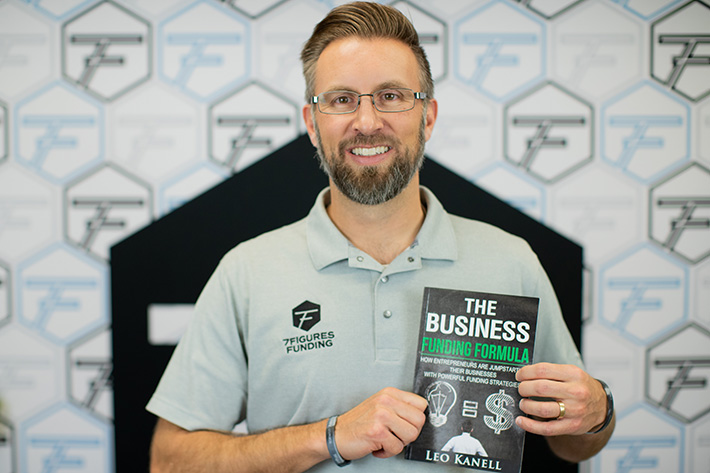 Leo Kanell, a funder from Utah, runs the 7 Day Funding CEO Challenge, a seven-day marathon video livestream of inspirational and educational funding content.
“So how [the challenge works] is basically, we’re looking for communities, and we’re building a community,” Kanell said. “Our focus is how can we help existing loan brokers, and then how can we help people who are looking for an additional stream of income that they can do from home obviously with the pandemic.”
All the action happens in a livestream on Facebook.
“Everybody kept asking ‘we need some training,’ so we built out a custom website for them so that they can build their funding empire from home,” Kanell said.
Many of the brand new market entrants are sales-minded individuals that are interested in working from home. Kanell has a sales mind and a small business funding background. He grew up in a family of nine from a small town in Utah with a population of only 3,000. He knew he would be a salesman when he turned a summer painting business internship into a $60,000 operation. After college, he tried his hand at real estate, but after 2008 he started looking for another industry.
“I started and went ‘Well, I’m gonna need money for that business,'” Kanell said. “I started looking at the different options to get financing for that next business venture, and it was very difficult, especially for a new business, especially if you’re a pre-revenue business or you don’t have a lot of sales and or collateral.”
He realized SMB funding was the business he should be getting into so he jumped in with both feet. From there he veered into a business education program alongside products like business credit cards.
He soon said that he was doing well, but he heard the funding industry calling his name. “Everything pulled me back into funding,” Kanell said and he decided to combine his education system toward loan broker training programs. He said many brokers don’t realize startups and pre-revenue bushiness can qualify for 0% for up to 15 months.
Now, Kanell hosts an industry podcast that features financial industry guests, and alongside funding, he looks forward to building a community of broker and funder education services.
“We’re going to not only get you the best funding guaranteed, but we’re going to educate you and empower you along the way,” Kanell said. “They can work as direct funders and keep 100% of the commission, and that if they want us to do the work you know, we can do splits.”
Broker Fair 2021 is BACK – December 6 in NYC
May 17, 2021 Broker Fair returns to New York City in person on December 6, 2021 at Convene at Brookfield Place!
As previously announced, tickets that were purchased for Broker Fair 2020 have simply carried over to Broker Fair 2021. That means you might already be registered! You can confirm by emailing events@debanked.com.
Broker Fair is the largest annual conference for brokers in the commercial finance industry. Business loans, merchant cash advance, factoring, leasing, SBA, real estate, and more will be incorporated into the full-day lineup. Sponsorships are almost entirely sold out.
If you’ve been following along, New York City is already roaring back. Most capacity restrictions are scheduled to be lifted this week on May 19th.
We’ll see you there!
At Least One Firm is Leaving New York before Disclosure Law Lands
April 29, 2021 New York MCA firms are in the dark. In January, the governor delayed implementation of the APR disclosure bill until 2022. But the bill leaves it to the Department of Financial Services (DFS) to finalize how it will all work and not everyone is confident the outcome will be positive for business in New York State.
For example, Greenwich Capital, a small business funding company, has decided to move from Manhattan to Hoboken, NJ in preparation for the law. They anticipate that the cost of compliance will be high enough to warrant a trip on the PATH starting now rather than when it may be too late to contemplate later.
“There’s a lot of ambiguity, and our five-year lease was up,” Rich Gipstein, General Counsel at Greenwich Capital, said. “We’ll be moving to Hoboken for the time being and see what’s going on with this law. But in the meantime, it’s a lot cheaper for us.”
Based on vague wording language like double-dipping, Gipstein said there is no clear way to tell who or what the law aims to regulate. At least for his firm, it’s better to sit this one out.
“I think there’s quite a lot left open, and it’s intended to be broad,” Gipstein said. “There won’t necessarily be much time to know what the law means until it’s effective. I think there will probably be some lead time, but likely not quite enough for most businesses in the industry to adapt.”
 For example: when does a deal become a “specific offer” and come under the purview of the law? In an industry where deals are won through cold calling, social media blitzes, and emails, when would it become necessary to disclose an APR? In a DM on LinkedIn? Rich said it is unclear what a “provider” is, whether it be funders, brokers, or ISOs. In the bill, a provider is required to make commercial financing disclosure clear and let a recipient know at the time of the “specific offer” the all-inclusive rates of a product. Without clarity, it’s hard to predict what the cost of compliance will be.
“I think, from my reading of it and from my understanding of New York’s position, it would seem that they are trying to regulate both funders and brokers under the same regulation,” Gipstein said. “I think it’s possible that the legislature intentionally left some things vague for DFS to fill in. The law basically says, ‘there’ll be regulations that will make this make sense.'”
Gipstein said it’s common for politicians to leave it to the regulators to finish the job, after all, the DFS has its nose to the grindstone in the day-to-day. But when a law affects an entire industry like this, Gipstein said it is uncommon for changes to be left until the last moment.
“It’s more than just disclosure requirements; this is not similar to what California did,” Gipstein said. “The law also dictates how to calculate the projected sales volume. You’re required to either use the historical method, in which you must always use the same number of months leading up to the deal, or you can opt-out and use your own projection. But if you use your own projection, that opens you up to disclose the results of all your deals to the government… It’s almost like an annual audit.”
The historic method doesn’t really work, Rich said when the industry comprises atypical merchants who wouldn’t be looking for funding if traditional methods could predict their sales volume. When it comes to self-declaring and letting the government poke around: Gipstein said the way a funder evaluates deals is proprietary. It’s what sets them apart; it’s the value proposition.
 Greenwich Capital isn’t alone in their assessment. The Small Business Finance Association (SBFA), a trade group comprised of similar financial companies, has also been vocal about the law’s perceived shortcomings.
“You have a group of companies that are pushing these types of disclosures, for no reason other than their own self-interest,” said Steve Denis, executive director of the SBFA, back in October. “We’re fine with disclosure, we are all for transparency, but it needs to be done in a way that we believe is meaningful to small business owners.”
Denis had further said that those firms taking credit for writing the laws are the same companies that will end up suffering under the strict tolerance of an APR rule.
“The companies pushing this, the trade associations pushing it, they like to take credit for writing the bill in California and writing the bill in New York: I don’t even think they’ve read it,” Denis said at the time. “It’s going to subject their own members to potentially millions if not hundreds of millions of dollars in potential liability [fines.]”
When the DFS finalizes the terms, it will likely make dealing with disclosure too costly to remain in New York State, Gipstein said.
Gipstein said we’ll have to wait and see if NY-based brokers will have to go through extra compliance even if their funders or merchants are out of state. The worst-fear scenario is a possibility that after New Years’ 2022, out-of-state funders will stop working with NY brokers entirely, just because they live in NY. Merchants in the state, subject to the law, may find commercial finance a barren marketplace.
“We’ve got a lot of different things to manage as we grow, and one of the things we don’t want to do is create is a large compliance department,” Gipstein said. “It’s just cheaper for us, after doing a cost-benefit analysis, to move to a different state. We’re probably not going to be a New York funder by 2022.”