
StreetShares Moves Headquarters
August 16, 2018 StreetShares announced yesterday that it has moved to another location in Reston, Virginia in order to accommodate its growing staff, according to the company’s blog. From January of this year to August, SteetShares says it has doubled the size of its workforce and the new space is 10,300 square feet, more than four times the size of the previous office.
Established in 2013 in the home basement of CEO Mark Rockefeller, StreetShares offers term loans, lines of credit and a factoring product, with a focus on funding veteran-owned small businesses. Rockefeller is a veteran himself.
According an SEC filing for StreetShares, for the six months ending December 31, 2017, the company generated $1,533,143 in revenue and spent $3,224,131, for a net loss of $2,673,466. The company also received capital at the beginning of 2018, with the completion of a $23 million series B round in January.
StreetShares’ new office has a “tech” aesthetic.
“No cubicles or offices allowed,” Rockefeller said. “Standing desks, teams working together in pods, as well as glass, metal, and exposed concrete reflect a technology startup. And vintage World War II posters and an enormous American flag remind our team of the special members we serve.”
Underwriting 101—Veteran Funders Share Tools of the Trade
August 12, 2018For brokers, funding partnerships are critical to success. But making the most of these connections can be elusive.
“Transparency, efficiency and a thorough scrubbing on the front end can help the whole process,” says William Gallagher, president of CFG Merchant Solutions, an alternative funder with offices in Rutherford, N.J. and Manhattan.

Gallagher recently moderated an “Underwriting 101” panel at Broker Fair 2018, which AltFinanceDaily hosted in May. The panel featured a handful of representatives from different funding companies discussing various hot-button items including striking the proper balance between technology and human underwriting, trade secrets of the submission process and stacking. Here are some major takeaways from that discussion and from follow-up conversations AltFinanceDaily had with panel participants.
Each funder has slightly different processes and requirements. Brokers need to understand the different nuances of each firm so they know how to properly prepare merchants and send relevant information, funders say.
Many brokers sign up with funders without delving deeper into what the different funders are really looking for, says Jordan Fein, chief executive of Greenbox Capital in Miami Gardens, Fla., that provides funding to small businesses.

For example, there are a growing number of companies that rely more heavily on advanced technology for their underwriting, while others have more human intervention. Brokers need to know from the start what the funder’s underwriting process is like—the nitty gritty of what each funder is looking for—so they can more effectively send files to the appropriate funder.
“They will look poor in front of the merchant if they don’t really know the process,” Fein says.
Certainly, it’s a different ballgame for brokers when dealing with funders that are more human based versus more automated, says Taariq Lewis, chief executive and co-founder of Aquila Services Inc., a San Francisco-based company that offers merchants bank account cash flow analysis as well as funding that ranges from 70 days to 100 business days.
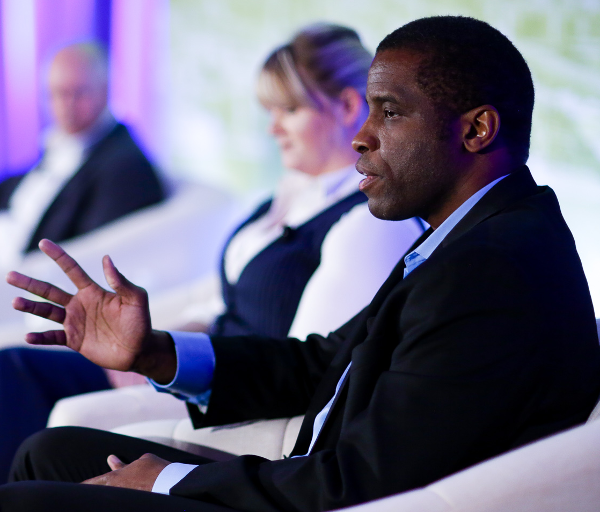
At Aquila, the process is meant to be totally automated so that brokers spend more time winning deals faster, with better data to do so. This means, however, that some of the underwriting requirements differ from some other industry players. Aquila’s most important requirement is that a merchant’s business is generally healthy and shows a positive history of sales deposits. Other funders require documents and background explanations, whereas Aquila strives to be completely data-driven, Lewis says. These types of distinctions can be important when submitting deals, funders say.
Stacking is another example of a key difference among funders that brokers need to understand. It’s a controversial practice; some funders are open to stacking, while others will only take up to a second or third position; a number of funders shy away from the practice completely. Brokers shouldn’t waste their time sending deals if there’s no chance a funder will take it; they have to do their research upfront, funders say.
Most times, brokers “don’t invest enough time to understand the process,” Fein says.
Some brokers may feel competitive pressure to sign up with as many funders as possible, but it can easily become unwieldy if the list is too long, funders say. Better, they say, to deal with only a handful of funders and truly understand what each of them is looking for.
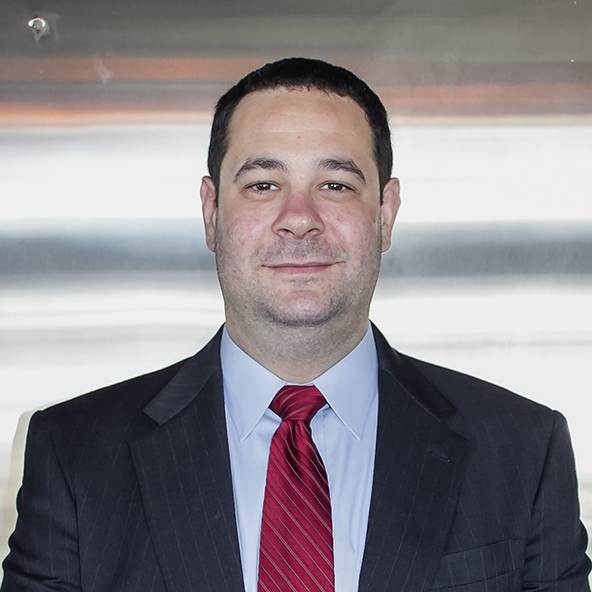
“There are brokers that deal with 20 [funders], but I don’t think it’s a good, efficient practice,” says Rory Marks, co-founder and managing partner of Central Diligence Group, a New York funder that provides working capital for small businesses.
He suggests brokers select funders that are easy to work with and responsive to their phone calls and emails. Not all funders will pick up the phone to speak with brokers who have questions, but he believes his type of service is paramount, he says. “It’s something we do all the time,” he says.
He also recommends brokers consider a funder’s speed and efficiency of funding as well as document requirements and their individual specialties. There are plenty of funders to choose from, so brokers shouldn’t feel they have to work with those that are more difficult, he says.
To prevent a broker’s list from becoming too unwieldy, Gallagher of CFG Merchant Solutions suggests brokers have two to three go-to funders in each category of paper from the highest quality down to the lowest. Having a few options in each bucket allows greater flexibility in case one funder changes its parameters for deals, he says.
Brokers “sometimes just shotgun things and throw things against the wall and hope they stick,” Gallagher says. Instead, he and other funders advocate a more precise approach –proactively deciding where to send files based on what they know about the merchant and research they’ve done on prospective funders.
It used to be that when sending files to funders, brokers would provide some background on the company in the body of the email. This was helpful because even a few sentences can help funders gain some perspective about the company and better understand their funding needs, says Fein of Greenbox Capital.
These days, however, Fein says he’s getting more emails from brokers that simply request the maximum funding offer, without providing important details about the business. The financials on ABC importing company aren’t necessarily going to tell the whole story because funders won’t know what products they import and why the business is so successful and needs money to grow. Providing these types of details could help sway the underwriting process in a merchant’s favor. Brokers don’t have to say a lot, but funders appreciate having some meaty details. “A few sentences go a long way,” Fein says.
Many brokers make the mistake of overpromising what they can get for merchants and how long the process could take, funders say. Both can cause significant angst between merchants and brokers and between brokers and funders.
If a company is doing $15k in sales volume and asking for $50k in funding, the broker should know off the bat, the merchant is not going to get what he wants, says Marks of Central Diligence Group. By managing merchant’s expectations, brokers are doing their clients—and themselves—a favor. Why waste time on deals that won’t fund because they are fighting an uphill battle? Brokers shouldn’t knowingly put themselves in the position of having to backtrack later, Marks says.
Instead, explain to the merchant ahead of time he’s likely to receive a smaller amount than he’d hoped for. To show him why, walk the merchant through a general cash flow analysis using data from the past three to four months, says Gallagher of CFG Merchant Solutions. This will help merchants understand the process better, and it can help raise a broker’s conversion rate, he says.
“It’s about setting realistic expectations,” Marks says.
Sometimes brokers take only a cursory look at a merchant’s financials, and because of this, they overlook important details that can delay, significantly alter, or sink the underwriting process, funders say.
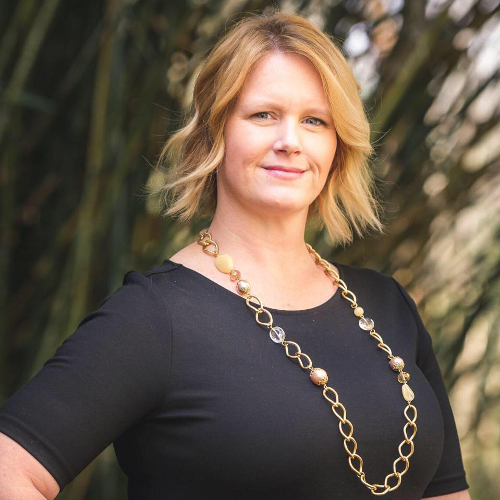
Heather Francis, founder and chief executive of Elevate Funding in Gainesville, Fla., offers the hypothetical example of a merchant who has total deposits of $80k in his bank account. On its face, it may look like a solid deal and the broker may make certain assurances to the merchant. But if it comes out during underwriting that most of the deposits are transfers from a personal savings account as opposed to sales, there can be trouble. Based on the situation, the merchant may only be eligible for $30k, but yet the owner is expecting to receive $80k based on his discussions with the broker. Now you have an unhappy merchant, a frustrated broker and a funder who may be blamed by the merchant, even though it’s really the broker who should have dug deeper in the first place and then managed the merchant’s expectations accordingly. “We see that a lot,” says Francis.
To get the most favorable deals for merchants, some brokers only present the rosiest of information in the hopes that the funder won’t discover anything’s amiss. Several panelists expressed frustration with brokers who purposely withhold information, saying it puts deals at risk and makes the process much less efficient for everyone.
Marks of Central Diligence Group offers the hypothetical example of a merchant whose sales volume dipped in two of the past six months. To push the deal through, a broker might submit only four months of data, hoping the funder doesn’t ask about the other two months. Some funders might accept only four statements, but other shops will want to see six. If a funder then asks for six, the broker’s omission creates unnecessary friction, he says.
Funders say it’s better to be upfront and disclose relevant information such as sales dips or some other type of temporary setback that weighs a merchant’s financials. Kept hidden, even small details could easily become game-changers—or deal-breakers—a losing proposition for merchants, brokers and funders alike.
“If we have the full story upfront and we’re going in eyes wide open, we can look at the file in a little bit of a different way,” says Gallagher of CFG Merchant Solutions.
Stripe Becomes a Digital Credit Card Issuer
August 8, 2018 Stripe has recently started offering a new API, or programming feature, that allows its merchants to offer physical or virtual credit cards to their employees. The product, called “Issuing,” is still being tested and is currently by invitation only, although it does appear as an offering on the company’s website. Merchants can request an invitation.
According to the website, creating a card is an easy three step process that involves providing identifying information about the cardholder, then literally creating the card (physical or virtual) and finally, activating it. Physical cards can be shipped either to the merchant or the cardholder, while virtual cards are available to use immediately.
The merchant can manage cards by creating restrictions, like maximum purchase amounts, charges can be disputed, and physical cards can have customizable designs, just like cards issued from a bank. However, Stripe is not a bank. Stripe did not respond in time for this story, but it is likely that the company has partnerships with companies that can underwrite and offer lines of credit to their customers. On the Stripe website, it indicates three of its financing partners: Funding Circle, Iwoca and Clearbanc.
Stripe is a payment platform that facilitates online payments. The company takes 2.9% plus 30 cents of every successful charge a merchant makes. Stripe customers are small business owners, but also include giant companies like Facebook and Target. Founded in 2011 by brothers John and Patrick Collison, Stripe is headquartered in San Francisco. It also has offices in Dublin, London, Paris, Singapore and Tokyo, and it employs more than 1,100 people.
Yellowstone Capital Funded $68.5M in July
August 1, 2018Yellowstone Capital originated $68.5 million in funding to small businesses in July, according an announcement the company made on social media. The figure was slightly larger than what they produced in June.
The top 3 sales reps funded a combined 553 deals for $21 million.
Notorious Tampa Bay Loan Broker Likely Headed Back to Jail
July 27, 2018 Tampa Bay loan broker Victor Clavizzao pleaded guilty this week to one count of wire fraud, which could land him in prison for up to 20 years. This would not be his first time behind bars. In 2009, a federal judge sentenced him to five years for conspiring to fraudulently obtain nearly $6 million in mortgage loans.
This time, Clavizzao, 55, cheated a church congregation out of $16,350 that they had set aside to build a new church. According to a Tampa Bay Times story, shortly after leaving prison in 2014, Clavizzao was still on probation when he created Key Business Loans. Around the same time, he met husband and wife, Sam and Minnie Wright. Minnie Wright is the pastor of the Tampa Bay-area New Testament Outreach Holiness Church #2, and she asked Clavizzao if his company would be able to make a loan to their church.
According to the Tampa Bay Times story, Clavizzao said “Absolutely.”
Clavizzao, who used the named Victor Thomas, ingratiated himself with the Wrights and other church congregants and told them that not only could he help them obtain a $650,000 loan, he could also handle the purchase of the plot of land along with other details. The church gave Clavizzao a series of initial payments – for an architect and for an environment inspection of the land – and when the Wrights started getting suspicious, Clavizzao disappeared.
Last year, suspected of defrauding the Wrights and others, Clavizzao told Tampa Bay Times in a phone interview that his business, Key Business Loans, was completely legitimate.
“Knock yourself out, I’m not doing anything wrong,” he said, acknowledging that he discloses his criminal history to prospective borrowers. “Any person who has a problem about my past can choose to do business with me or not do business.”
In July of 2014, Clavizzao presented the Wrights with a “Proposal Letter for Guaranteed Business Purchase Loan” from Key Capital Commercial Funding, a New York City-based company he said he had ties with. The proposal outlined the terms of a 15-year, $650,000 loan at 5.1 percent interest. The Wrights signed it. However, what the Wrights did not know at the time was that there was no Key Capital Commercial Funding in New York City, or anywhere else.
In part because of persistent reporting on Clavizzao from Susan Taylor Martin at Tampa Bay Times, the Wrights were able to learn more about Clavizzao’s criminal past and the FBI got involved.
After Clavizzao’s recent guilty plea, he is currently out on bond pending his sentencing. A date has not been set.
Interest in Equipment Finance M&A is Strong
July 19, 2018
Interest in mergers and acquisitions (M&As) in the equipment finance industry has been high in the first half of 2018, according to The Alta Group, a consultancy dedicated to equipment leasing and asset finance.
This follows a May 22 Reuters report announcing that global M&As reached $2 trillion in 2018, which at the time of publication, was a record for the value of deals in that period. This record was achieved in part by the $11.1 billion merger of GE’s (GE.N) transportation business with rail equipment maker Wabtec (WAB.N).
Echoing the robust global M&A climate, Cincinnati-based Verdant Commercial Capital, a large commercial equipment finance company, announced on Monday that it had acquired Intech Funding Corp., which does financing and leasing for manufacturing companies. (The Alta Group was involved in this acquisition). No financial terms were disclosed for this acquisition.
“Several of our clients had not considered selling their businesses yet,” said Bruce Kropschot, Senior Managing Director of The Alta Group, “but M&A market conditions are so favorable now they concluded they could not risk missing out on the opportunity to sell while prices were high and there were many interested acquirers.”
In a statement, Kropschot attributed this favorable climate for M&As to “the relatively high multiples reflected in the stock market and the M&A market, interest rates that are still quite low, substantial liquidity in corporations and financial institutions, and the recent tax legislation with its lower corporate income tax rates and 100% expensing on equipment purchases.”
The Alta Group has clients throughout the world and has been representing equipment leasing and finance companies since 1992. It is headquartered in Glenbrook, Nevada and employs 60 consultants worldwide.
How to Avoid Being Sued by a Professional TCPA Plaintiff
July 13, 2018
Did you know that if you receive an unwanted solicitation call on your private cell phone or residential landline, you can win between $500 and $1,500 in damages from the offending company? The company can be charged for violating a statute of the 1991 Telephone Consumer Protection Act (TCPA), which prohibits companies from calling consumers without their express permission. You might not know about this, but others know about it all too well.
Some people use this TCPA statute as a way of making money, by purchasing multiple phone numbers in the hope they will receive unsolicited phone calls that violate the TCPA statute. And if they do, they sue. AltFinanceDaily previously explored “professional plaintiffs” like this, with a focus on those who have come up against funding companies.
According to Michael O’Hare, CEO of Colorado-based Blindbid, people who manipulate the TCPA statute for profit also target lead generation companies like his. O’Hare is currently being sued by a plaintiff for several million dollars in a class action lawsuit. The claim is that Blindbid allegedly made five unsolicited calls in 2016 to the plaintiff’s plumbing company. (According to David Klein, Managing Partner at Klein Moynihan and Turco, there is a murky area in the TCPA regulation where, if a cell phone is used for both personal and business use, the phone can be considered a personal phone, protected under TCPA.) In O’Hare’s case, upon further discovery, it was determined that only one of the five alleged calls actually came from Blindbid. But O’Hare says that the number was opted in and manually dialed. Regardless, O’Hare’s plaintiff is a pro, what some might call a “professional plaintiff.”
 Over the last six years, this plaintiff participated in four major class action lawsuits that have led to combined settlements of $31 million, according to O’Hare. The plaintiff has also filed 34 cases in federal court since 2016, O’Hare said.
What is noteworthy about O’Hare’s case is that it’s part of what he says is a trend towards class action lawsuits based on TCPA violations, and often brought on by professional plaintiffs. O’Hare said it’s no coincidence that his plaintiff waited for two years to sue.
“The longer a plaintiff waits, the more members he can bring into the class. And the more members in the class, the larger settlement,” O’Hare said.
As a way to transform O’Hare’s lawsuit into a class action suit, he said that his plaintiff’s attorney has made the argument that if Blindbid violated his client’s TCPA rights to privacy with the one unsolicited call, then Blindbid likely violated others as well. So in discovery, the plaintiff’s attorney wants to compel Blindbid to turn over its phone records for the past two years to prove that Blindbid had “express written consent” from the other merchants it called. In the age of the internet, “express written consent” translates to filling out an online form where the individual consents to receive a phone call.
To satisfy the attorney’s request, Blindbid would have to match every phone number that was called with a corresponding computer IP address. This should be doable, but O’Hare says that professional plaintiffs, like his, deny that they ever filled out an online lead form, or that the IP address O’Hare has on record belongs to them.
“In the past, if there was an alleged TCPA violation, most companies could settle for a few thousand dollars to $10,000 depending on the number of violations,” O’Hare said. “Now there are these are multi-million dollar settlements.”
Unlike the fines of years past, these class action lawsuits can sink your company. While O’Hare said that there is no way to completely protect one’s company from being sued, below are some of his recommendations.
Have express written consent of all the merchants you call
Online consent is valid if the text explicitly states to the user that he is giving, in effect, express written consent to be contacted by your company by phone, text and/or email.
Register your company with Federal and State Do Not Call Registries.
Respect merchants’ requests
If they do not want to be called any longer, put their numbers on your “Do Not Call” list.
Have a written “Do Not Call” policy
Have a TCPA attorney review the policy and include a copy in your company employee guide.
Find a good TCPA scrubbing service
These are services that have many of the numbers that belong to professional plaintiffs and they monitor for newly registered phone numbers. They tell you which numbers to remove from your lists. Some good scrubbing services are TCPALitigatorList.com and DNC.com.
Don’t buy lists from overseas
These lists are full of professional litigator phone numbers you are taking a huge risks.
Never autodial / robo call
Robo calls are the most dangerous type of calls you can make unless you have a full opt-in list with express written consent from each of the merchants. Robo calls and text messaging TCPA violations are the easiest TCPA cases for plaintiffs to win and the settlements are higher. Every robocall or text is fined. The use of an autodialer is one of the elements to prove a TCPA violation. If you use an auto dialer with human intervention, like EVS 7, you can argue that your autodialer calls are manual calls. Still, use caution.
Consult with a TCPA attorney
I would advise every company that does any outbound calling to consult with a TCPA attorney about best practices. An ounce of prevention is worth a pound of cure.
DFS Releases Recommendations for Online Lending
July 12, 2018
The New York State Department of Financial Services (DFS) released a report on Wednesday on the subject of online lending in the state. The report was mandated by a bill signed by New York Governor Andrew Cuomo on June 1 of last year. According to the original bill, this report was to be researched and composed by a task force of multiple parties. But in the eleventh hour, the section regarding the task force was struck. The report is to be presented to the governor, the temporary president of the senate, the speaker of the assembly, the chair of the senate standing committee on banks, and the chair of the assembly standing committee on banks.
Wednesday’s 31-page report is based on survey responses from 35 online lenders operating in the state, lending both to businesses and to individuals. One of the revelations in the report is that, from the data obtained, “New York individuals appear to account for a higher total dollar amount of loans than New York businesses.”
The report presents three primary assertions:
Equal Application of Consumer Protection Laws.
The report establishes that New York has strong consumer protection laws and regulations that apply to financial institutions. “These protections should apply equally to all consumer lending and small business lending activities,” the report reads. The report explains that there are strong protections against payday lenders and indicates that there should be strong protections across the board, even though the financial products and the consumers may vary widely.
Usury Limits Must Apply to All Lending in New York.
The report asserts that access to credit at usurious rates has long been prohibited in New York and that online lenders should not be able to bypass this by having arrangements with banks in other states, like Utah, where the usury laws are different. In New York, the civil usury rate is 16% and the criminal usury rate is 25%. But because online lenders have arrangements with out-of-state banks, they can charge interest at rates well above 25%.
Currently, if an online lender sues a merchant for not paying, the merchant cannot use usury as a defense. In the report, DFS recommends that a business should have the right to present usury as a defense.
All Online Lenders Should be Licensed and Supervised.
The report states that New York State chartered banks, credit unions and licensed non-depositories are subject to regular examinations by the DFS and, if applicable, federal regulatory agencies.
“Many online lenders remain unlicensed in New York with no direct supervisory oversight from a safety and soundness or consumer compliance perspective,” the report reads. “Direct supervision and oversight is the only way to ensure that New York’s consumers and small business owners receive the same protections irrespective of the channel of delivery [of financing.]”
Some of these issues relate to the well-known 2015 Madden v. Midland Funding court decision, in which a credit card consumer (Madden) won a case against a debt-collection agency (Midland Funding) because the court decided that Midland, as a non-bank, was not allowed to charge interest above what was allowed in the state.