
Two Cultures Collided, Gently
March 25, 2019
Banks are heavily regulated. Factoring companies are not. The two don’t always mix. So it was interesting last July when Axiom Bank, a regional bank in Florida, acquired Allied Affiliated Funding, a factoring company based in Texas.
Fast forward nine months and the merger of the two companies has been surprisingly easy, according to Axiom CEO Daniel Davis.
“Banking and factoring are two different worlds, two different cultures,” Davis said. “[But] the challenges that we expected didn’t occur.”
Davis explained that the biggest challenge with a bank acquiring a factor is reconciling a bank’s credit risk with a factor’s, which are different because banks are more or less governed by regulatory standards while factors are not.
“Good factoring shops have guidelines too,” Davis said, “and we’re lucky to be involved with Allied which does share that high level of policies, procedures and internal controls.”
Regardless of how well a factor self-regulates, factoring companies have virtually no regulations compared to a bank, and this may give regulators a little pause to see a bank mixing with a factor.
“It is a challenge,” Davis said about merging a factoring company with a bank regarding regulations. “What the regulators want to see you do, whether you’re acquiring a factoring company or entering into a new product or service…what they’re most concerned with is that you’ve put the policies and procedures and risk management in place to actively manage and monitor that business.”
But so far, so good, according to Davis, who said that the factoring business has grown 30% in receivables since the July 2018 acquisition. Allied Affiliated Funding, which has retained its name, is now known as the factoring division of Axiom Bank. The bank has 24 branches throughout Florida, 22 of which are located inside Walmart stores. As far as marketing the relatively new factoring product, Davis said that while they do some brand marketing, the Allied factoring division gets most of its business from referrals, including attorneys and accountants.
He said that they also get referrals from banks. For instance, if a bank’s underwriting standards makes it such that it cannot keep a loan, the bank might send the loan to Axiom for it to be restructured as a factoring deal.
Undercover in the Underwriting Room
March 22, 2019 Think of the stereotype of a high energy, high testosterone sales floor of men practically shouting on the phone. And then scale it down to a level of about 2 out of 10. That was the environment I stepped into on a recent visit to a room of small business finance underwriters. They let me shadow one for a day so long as I didn’t reveal who they were.
In the glass room where almost 10 underwriters sat, some spoke on the phone, but the conversations were measured. No shouting. No arguing. Sometimes there was near silence. More than anything, there was an air of focus. After all, when you’re evaluating dozens of documents, just a single oversight can cost the company a lot of money.
“You don’t want to be the guy who loses the company money because you didn’t see a red flag,” said the underwriter.
He asked me to sit beside his desk and watch the funding decisions he was making based on what he saw in the file. He surely didn’t take the merchant’s monthly sales numbers at face value. For instance, in one file, in addition to subtracting a $2,000 transfer from the owner’s personal account into their business account, he also noticed a $4.18 refund from Walmart that was being counted as sales.
“That’s not sales,” he said, and he subtracted $4.18 from the monthly sales number. In one instance, $103,000 in reported sales became $75,000, according to the underwriter.
 While you could certainly feel the concentration in the room, it wasn’t quite a library either.
“His FICO sucks,” one of the underwriters said to the others. “His FICO went down and he’s stacked. No.”
When an underwriter is uncertain about a decision, he’ll ask for everyone’s two cents. He said they call these impromptu discussions the “underwriters’ den.”
All the deals we looked at got declined, but I’m told that one underwriter can fund as many as five deals in a day, and then go a few days without funding any.
While the underwriting criteria is taken seriously, sometimes you can be a little more aggressive and push the boundaries a bit if it’s a deal you really like. That takes considerable thought and reasoning. But when the answer is going to be no, it can come at light speed. A few of them happened in under three minutes while I was there. And that was with him slowing down to narrate for me what he was thinking.
“I give a look at [most of] the documents in the file first,” he said, “so that if there’s an obvious red flag, I don’t want to spend time on it.”
In his cursory glance, he’ll look at the business owner’s FICO score, years in business, if the company has other financing, and if so, how they’ve been able to handle those payments. He’ll also count the number of negative days (when the company owes money and has none) and note how consistently the company makes sales.
“Consistency gives me comfort,” he said. “I can give them a stronger offer when they show consistent sales.”
Of course, funding a file takes a good bit longer because you have to continue to vet the business and the business owner, almost as if you suspect there’s something wrong. Has the owner ever been convicted of fraud? Have they owned any other businesses? Did the owner ever default on a loan? It can seem hard for small businesses to pass all these background checks. But the funder has to protect itself and the underwriter’s job is to do just that.
“We’re in the business of giving out money, but within limits.”
Can a Merchant’s FICO Score Increase By the End of the Day?
March 16, 2019 Earlier this week, Alan Hayon had a challenge – to get a merchant above a 500 FICO score in order to make them eligible for small business funding. Within 30 minutes, Hayon increased the merchant’s personal FICO score by 59 points, getting them above 500. And the deal funded the following day. Hayon is the founder and CEO of The Credit Desk, a credit repair company in Long Island, and he used Experian Boost to get the merchant’s score up. It’s a brand new product from Experian that allows you to add and get credit for bills you have been paying on time, like gas, electricity, water, TV, internet and phone.
What used to take two to three weeks is now instantaneous with Experian Boost, according to Hayon. And the potential ramifications for small business funding are quite astounding. John Celifarco of Horizon Financial Group, a brokerage in New York, said that he had never heard of credit repair happening so quickly and that if it actually works, it could revolutionize the industry.
“Every deal could move up a grade,” Celifarco said. “This could have huge effects not just on the low end. You could jump someone from mid to high credit.”
Hayon conceded that it’s much harder to get a credit score up to, say 650, very quickly. That is harder and takes a little more time. Still, the new Experian Boost product means the ability to cross a FICO score minimum threshold and move a merchant from unfundable to fundable, almost immediately.
“It’s a positive domino effect,” Hayon said of Experian Boost, and what follows. “Then they can pay their credit card bills, get caught up with vendors and improve their credit further.”
This practice, often called “rapid rescoring,” has been used in the mortgage industry for years, according to Daniel Dias, owner of Small Business Lending Source, a brokerage in San Diego. Dias said that the rapid rescoring of a FICO score for someone applying for a mortgage can take as little as a day. Pretty fast. But for his clients, which are small businesses, he always tells them to wait at least 30 days to see an increase – from 20 to 60 points – in their score. By complete chance, when asked who he directs his clients to for credit repair, he said it was Hayon. Merchants pay Hayon directly, not via the broker.
In Celifarco’s experience, credit repair generally takes three to six months, which is usually too long for the merchant to wait to improve their FICO score. So he approaches credit repair a little differently. He advises his merchants to seek credit repair services after their first funding. This way, they can improve their credit and get a better rate the second time they go for funding.
Cory Petitte, who has worked both as a broker and a funder in South Florida, cautioned against inflating FICO scores in a way that misrepresents the merchant.
“I want to make sure the merchant can handle the payment,” he said.
He thinks that rapid rescoring is not a good practice and drew parallels to the 2008 mortgage crisis.
“You had mortgages that really weren’t A paper. [Instead,] they were B, C and D paper that were being represented as A paper.”
Furthermore, he said that he has spoken to underwriter who have told him they can sometimes tell when a FICO has been rapidly rescored.
Capify Secures Massive Credit Facility from Goldman Sachs
January 16, 2019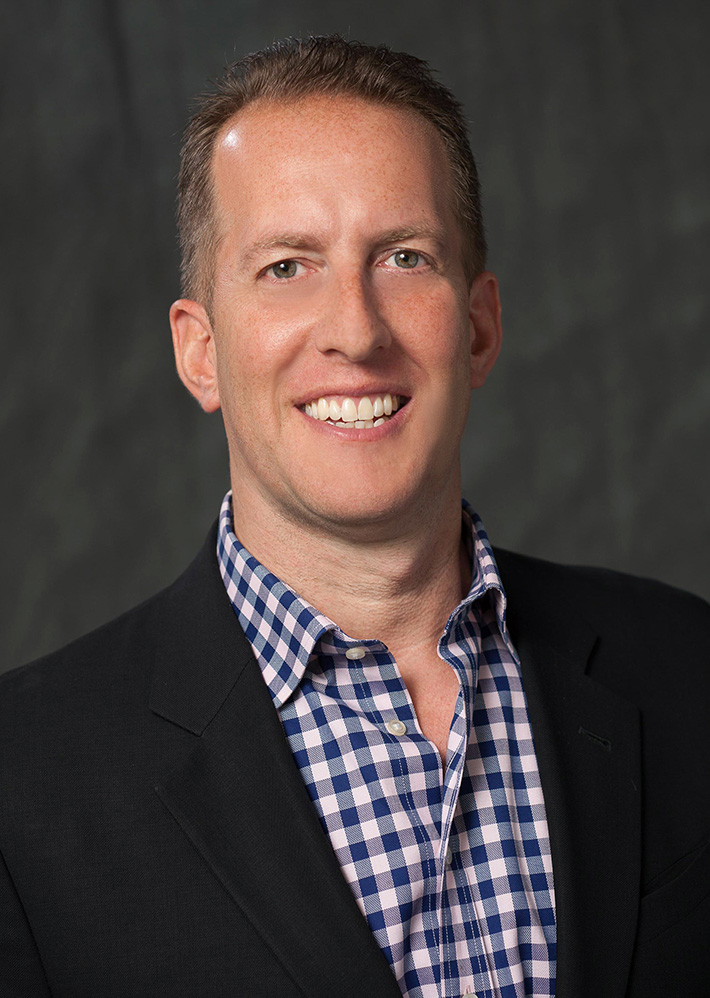 Capify, which serves the UK and Australia markets, announced this morning that it has secured a £75 million (roughly $95 million) credit facility from Goldman Sachs.
“This credit facility validates our company as a leader in the marketplace and underlines the strength of our business model to provide simple, affordable and smart financial options to UK and Australian small businesses,” Capify founder and CEO David Goldin said.
The achievement is notable for a company that is not venture capital or private equity based.
“Capify is one of the leading small business providers in the UK and Australia,” said Pankaj Soni, Executive Director at Goldman Sachs Private Capital. “We have been impressed with the management team, business model and innovative finance solutions for small businesses [and] we look forward to supporting their growth in the years ahead.”
Capify provides MCA deals and business loans to small business merchants. Goldin told AltFinanceDaily that MCA deals make up about 75% of Capify’s business in the UK, with about 25% in business loans. The ratio in Australia is the inverse, he said.
Goldin entered the UK and Australian markets in 2008 and said that they have become hyper competitive over the last three to four years. He acknowledged that both markets are still far smaller than the U.S. though.
“You don’t see these big crazy origination volumes [that you do in the U.S.]…[for us,] it’s about building a profitable, growing company.”
According to Goldin, another difference between the U.S. market and the UK and Australian markets is that the latter has embraced self-regulation much faster than the U.S. For instance, in Australia, there have been recommendations from semi-governmental organizations on how funders should perform, including the publishing of APR in contracts for business loans.
“These markets have moved quicker for self-regulation in the last two or three years than the U.S. market has moved in 10 years.”
This may be a matter of other countries learning from the experiences of the U.S., he said.
Goldin said that in addition to scaling Capify, the money from the facility will also be used to launch partner/broker programs in the UK and Australia. So far, the majority of Capify’s leads come from internal direct marketing efforts.
Capify employs more than 120 people divided between two offices, one in Manchester, England and the other in Sydney, Australia.
Goldin integrated the U.S. operations of Capify to Strategic Funding (now Kapitus) in 2017.
The Funder: From Office of One to Eighteen in Under a Year
December 13, 2018 Not even a full year in business, Velocity Capital Group announced that it has secured $15 million in financing; $5 million in a series A, plus a $10 million line of credit. The entire investment comes from a family hedge fund in California, according to Jay Avigdor, Velocity’s President and CEO. Twenty-six year old Avigdor started the company out of his home in February and now employs 18 people in an office in Cedarhurst, Long Island.
Avigdor told AltFinanceDaily that he started Velocity earlier this year with $50,000 of his savings, having spent nearly five years working for Pearl Capital. Already, he said that Velocity, which finances MCA deals, has funded over $20 million. Avigdor said he started at Pearl shortly after finishing college when he was about 19. (He said he graduated early thanks to credits he used from studying abroad and because he started college at 16). At Pearl, Avigdor said he wanted to get on the phones immediately. But with only two days of training, they wouldn’t let him.
“I thought ‘screw it,’” he recalled. “I only had $16.25 to my name and I wanted [the opportunity] to make money.”
So he said he found an old yellow pages phone book, brought it to the office with his phone charger and just started making calls from his own phone. Shortly thereafter, from his own cold calling, he said he closed a $250,000 MCA deal with an auto dealer in California.
“When I went back to the office the following day, they had two computers set up for me,” Avigdor said.
While Velocity funds a variety of businesses, Avigdor said they most commonly fund medical, technology and construction companies.
Avigdor said that while Velocity uses technology for efficiency, they also have a personal touch. For instance, he said they use an automated onboarding process for brokers, yet the actual underwriting and funding calls with merchants are done on the phone. At least that’s the way it works now.
“We crawl before we walk before we run,” Avigdor said.
He said that they give 10% of the net of proceeds on each file to a charity, which changes each month. Currently, it’s The Wounded Warriors.
Avigdor said tries to follow the advice of a rich, wise man he knows, who told him: “You won’t be remembered for how much gold you had, but for how many gold bars you’ve given away.”
Cross River Bank Raises $100 Million
December 11, 2018Cross River Bank, which provides banking services to fintech companies, announced last week the completion of a funding round of roughly $100 million. This was comprised of a $75 million equity investment from KKR, along with capital from Andreessen Horowitz, Battery Ventures, Rabbit Capital, and funding from new investors CredEase and Lion Tree. This adds to a $28 million raise a little over two years ago.
Cross River, which originated more than $5 billion in loans as of the end of August 2018, has developed partnerships with fintech leaders to build fully compliant and integrated products within the lending marketplace and payment processing spaces. They have about 15 lending platform partners, including fintech clients Affirm, Best Egg, RocketLoans, Coinbase and TransferWise.
According to the announcement, this new capital will be used to allow Cross River to continue building a complete banking platform where fintech companies can leverage best-in-class banking technology coupled with compliance.
“Cross River offers solutions to fintech companies by giving them access to a full suite of banking solutions and services in a single, fully compliant and innovative platform, making it an increasingly attractive and valuable franchise in a dynamic marketplace,” said Dan Pietrzak, Member and Co-Head of Private Credit at KKR, Cross River’s leading investor.
According to its website, Cross River was named “most innovative bank” by LendIt in 2017 and 2018. Founded in 2008, the Fort Lee, NJ, business-oriented bank has more than 180 employees.
Bankers Healthcare Group Expands Beyond Healthcare
November 20, 2018Bankers Healthcare Group (BHG), which provides financing solutions to healthcare professionals, announced at the end of last week that it is expanding into small business lending with a new license to offer SBA loans through its wholly-owned subsidiary, FundEx Solutions Group. Fundex is now one of only 14 non-bank lenders in the country that offers an SBA 7(a) Loan Guarantee Program, according to the company.
“We’re thrilled to announce that we’ve earned licensure as a non-bank SBA lender,” said Mark Schmidt, CEO of FundEx. “Not only is this a great opportunity for the BHG brand to grow, but it’s a terrific new option for customers who may require loan amounts or terms that are not available through BHG in order to accomplish their business goals.”
BHG, through FundEx, will now be able to provide SBA-backed loans to licensed professions in a variety of sectors including accounting, architecture, law, engineering, financial services and insurance. Loans will go up to $5 million, with terms of up to 25 years. And the loans may be used for a number of different purposes, including real estate acquisition, renovation or expansion, purchase of equipment, business acquisition or commercial debt consolidation.
“There’s market demand for larger loans and we’re excited to offer another innovative lending solution to help licensed professionals grow their own businesses,” said Al Crawford, the original founder, Chairman and CEO of BHC. “We built FundEx Solutions Group based on our tenured success in medical financing to be flexible and fast with excellent customer service.”
Founded in 2001, BHG, based in Syracuse, New York, has provided more than $3.5 billion in funding to to over 110,000 healthcare professionals.
Dan DeMeo is Back in Action… at Lendr
November 15, 2018 Daniel DeMeo has been hired as Chief Revenue Officer by the Chicago-based funder, Lendr.
DeMeo has been working as an independent consultant for the last two years, according to LinkedIn. Prior to that he was the CEO of CAN Capital, a company he had dedicated himself to for nearly seven years until an internal account performance issue led to several senior executives taking an immediate leave of absence.
Under DeMeo, CAN enjoyed success as one of the nation’s largest non-bank small business financiers, partially attributed to the company’s major head start in pioneering merchant cash advance products when the company was founded in 1998. DeMeo even landed on the cover of AltFinanceDaily’s November/December 2015 issue, around the time when the company was widely believed to be planning an IPO.
It never happened.
The systems issue that toppled CAN’s top execs including DeMeo, brought the company to its knees, putting all new funding on hold for six months until it was saved by a capital infusion from Varadero Capital in July 2017. CAN Capital survived while DeMeo has notably since then kept a low public profile.
Now he’s back in action at Lendr, an ambitious funding company that offers MCAs, small business loans, equipment financing, and just recently, factoring.
“Dan is a highly strategic and thoughtful leader with broad perspective of the industry that enables him to understand specific challenges we face as a growing company,” said Tim Roach, CEO of Lendr. “Dan’s experience is a perfect addition to the team as we accelerate our growth plans, raise Lendr’s brand recognition, and further increase our market share.”
“I’m thrilled to be joining such a dynamic and progressive company,” said DeMeo. “Lendr has emerged as one of the leaders in the financial solutions space and we are poised to build strategic partnerships and alliances with those who share the same zeal in helping small- and medium-sized businesses grow.”
Lendr is setting its sights high. “We’ll be north of $100 million in our first year of factoring,” Lendr co-founder and CEO Tim Roach told AltFinanceDaily in September.
The company has also been showing off its technological and fundraising prowess as of late. This past March, they closed on a $25 million credit facility that’s expandable up to $50 million. That news was followed by the announcement of a new funding option made possible through virtual and physical debit cards.
Lendr has offices in Chicago and New York and employs over 45 people.