
The OnDeck Roller Coaster of 2020
October 30, 2020 “2019 was an important year for OnDeck and we finished strong,” said OnDeck CEO Noah Breslow in the year-end earnings call that took place on February 11, 2020. “Financially, we had our second full year of profitability. And strategically, we are making significant progress positioning the company for improved performance and even greater long-term success.”
OnDeck reported net income of $28 million for 2019 and its share price closed at $4.07 the day earnings were announced, giving it a market cap of roughly $240 million. This was down significantly from its IPO value of $1.3 billion, but up from the lows it had hit in 2017 and 2019.
Over the next 30 days, however, the price fell by 50% on fears that the looming novel coronavirus could cause catastrophic disruption. The company also announced the departure of its Chief Accounting Officer.
As the industry looked on with wonder, news coming out of the company seemed strangely at odds with reality. For example, OnDeck announced a “first-ever” NASCAR sponsorship on March 10th.
 “OnDeck is proud to sponsor the JR Motorsports team and driver Daniel Hemric for races during the 2020 NASCAR Xfinity Series season,” said a senior vice president of marketing at OnDeck. “So many of our small business customers are avid motorsports fans and we look forward to joining them to cheer on Daniel and the No. 8 car decked out in OnDeck colors at the Atlanta 250 and the Chicago 300.”
On March 23, OnDeck closed at 70 cents. The market, it seemed, valued OnDeck at a paltry $41 million.
 Publicly, OnDeck kept up the optimism. The company applied to be a PPP lender as the program was just beginning to roll out. “We are excited to be one of the fintechs delivering PPP loans as a direct lender,” Breslow said. “Our team has been working around the clock getting us ready and now we wait and hope we are approved soon!”
Simultaneously, the company suspended the funding of its “Core” loans and lines of credit to new and existing customers. The company then went on to report a Q1 net loss of $59M due to covid-related damage, wiping out all of its 2019 profits and more. It also furloughed many employees while reducing the pay for those that stayed on.
That same month, OnDeck’s management “commenced a review of potential financing options to secure additional liquidity and potentially replace [its] corporate line facility and began contacting potential sources of alternative financing, including mezzanine debt.”
The response it got was grim.
 “The interest rates offered by those alternative financing sources ranged from 1-month LIBOR plus 900 basis points to 1,700 basis points (in addition to an upfront fee) and all but one required a significantly dilutive equity component,” the company later disclosed. “The one proposal that did not include an equity component was at an interest rate of 1-month LIBOR plus 1,400 basis points to 1,700 basis points.”
OnDeck engaged in negotiations with four potential sources of alternative financing, but two dropped out as the economic effects of the pandemic worsened. At the same time, it was speaking with Enova about something else entirely, a potential merger.
On the frontend, OnDeck was keeping the public abreast of its negotiations with creditors. The pandemic had put them in a technical breach of its terms with several of them but the company was experiencing some success with securing workouts and reprieves.
Regardless, the stock continued to trade below $1 as the world looked on to see what would become of their Q2.
 On July 28th, bombshell news broke. Enova, an international lending conglomerate, announced it was acquiring OnDeck for the price of approximately $90 million.
“Following an extensive review of our strategic options, we believe this is the right path forward for our customers, employees, and shareholders,” Noah Breslow said on a call with Enova executives the following day.
Some shareholders had a different opinion and thought that the deal and the terms looked a little fishy, all considered. Nine different shareholder lawsuits were filed over the next two months with the intent to delay or block the acquisition.
How could this possibly be the best deal or the right path?!
That was the underlying question being posed between the lines of the various claims asserted. OnDeck ultimately settled with all the parties by releasing supplemental information to the public about its financial situation and thought process that led up to the Enova merger. All the objections appeared to fade as shareholders approved the deal by an overwhelming majority.
On October 13th, Enova announced that it had completed the acquisition of OnDeck.
But by that time, was OnDeck merely a hollowed out shell of its former self? Not quite, according to disclosures made two weeks later. Enova announced that OnDeck’s portfolio performance was already exceeding their expectations.
 “On the small business side, the makeup of the demand is surprisingly similar to a year ago,” said David Fisher, CEO of Enova. “You would expect so many differences given what the economy has been through but there’s actually very very few. It’s pretty broad based. Credit quality look really really strong. If anything it’s stronger- I think it’s the stronger businesses that are trying to borrow at this point that are trying to lean into covid, not the ones that are just trying to survive so if anything on the demand there is a slight improvement on credit quality in small business.”
Fisher was also bullish going forward. “We believe now is a great time to be increasing our presence in
small business lending. The pandemic has devastated many small businesses across the country. Their
revenues are down and small business owners are digging into their savings to survive until the pandemic subsides and the economy reopens.”
Enova reported monster quarterly earnings of $94 million, a company record.
“Together Enova and OnDeck will be well positioned to further support small businesses and consumers in the wake of the pandemic,” Fisher said.
Greenbox Capital on Official Panel to Aid Section 1071’s Rollout
October 21, 2020 This week, Greenbox Capital, the Miami-based alternative finance company known for its MCA and SMB financing, announced they are serving as a Small Entity Representative (SER) to the Consumer Financial Protection Bureau (CFPB) as the organization proceeds with the rollout of Section 1071 of the Dodd-Frank Act.
“I am representing, and Greenbox Capital is essentially representing, the industry,” CEO Jordan Fein said. “There are some banks, there’s Funding Circle, but other than that, it’s Greenbox Capital serving in the industry.”
Fein, who founded Greenbox in 2012 and has since facilitated MCAs and business loans across America, Puerto Rico, and Canada, wrote in a press release that it was an honor to be selected to provide feedback on Section 1071.
“Over 2 million businesses across the U.S. are either women or minority-owned,” Fein wrote. “It is vital they can secure funding as easily as non-minority-owned businesses.”

Congress passed the Dodd-Frank Act in 2010 in response to the Great Recession. To further protect consumers, the CFPB was born. Section 1071, an amendment to the 1974 Equal Credit Opportunity Act, mandates financial institutions report demographic information to the CFPB. But much was left undefined about how to go about doing that and who would technically be subject to it.
Ultimately, the intent behind the law was to measure potential disparities among factors like the race and gender of applicants. Ten years later, the rollout is finally moving along.
As part of this, the CFPB created a board of firms representing the affected industry, on which Greenbox sits, to ensure the law works with the industry, not against it. The first panel was on October 15, in compliance with the 1996 Small Business Regulatory Enforcement Fairness Act (SBREFA.)
“They’re going through the SBREFA process, which is a structured process where they have a panel of industry representatives, and they share what they’re planning to do,” Fein said. “They run it by companies like us and we give our opinion and talk about how we think companies will be impacted.”
According to an invitation letter the firms received, they will have until November 9 to respond.
Fein said Greenbox would ensure any suggestions it made would positively impact the industry. Especially during a pandemic, Fein said it is essential to create regulation with firms in mind.
The Roosevelt Hotel is Closing Permanently Due to Pandemic Losses
October 13, 2020 After nearly a century of quintessential Manhatten hospitality, the Roosevelt Hotel is closing by the end of the month, sources say. A relic of classic New York that survived the Great Depression, WWII, and Broker Fair 2019, the hotel is officially shutting down for good after suffering pandemic related losses, a spokesperson said.
“Due to the current, unprecedented environment and the continued uncertain impact from COVID-19, the owners of The Roosevelt Hotel have made the difficult decision to close the hotel, and the associates were notified this week,” the Spokesperson told CNN reporters Friday. “The iconic hotel, along with most of New York City, has experienced very low demand, and as a result, the hotel will cease operations before the end of the year. There are currently no plans for the building beyond the scheduled closing.”
The hotel will be added to the growing list of staple New York City businesses that have closed as a result of COVID. The Roosevelt was named and built to honor the United States’ 26th president and it opened its doors on September 22, 1924. Constructed during Prohibition, the building began the modern trend of featuring designer store windows on the street front.
 Appearing as a backdrop for dozens of Hollywood blockbusters like Boiler Room, Malcolm X, and The Irishman, the hotel was iconic. The New Year’s Eve tradition of singing “Auld Lang Syne” was born at the Roosevelt in 1929 when Guy Lombardo and his orchestra broadcast the song live over the radio.
The building was purchased by the limited investment branch of Pakistan International Airlines (PIA) in 1999.
In July, government officials and PIA executives debated the hotel’s future, some hoping rumors that President Trump would purchase the property were true. The initial plan was to sell or renovate the city block to create office space, thought to be far more lucrative than the hotel business in 2019. Work-from-home orders threw a wrench into the cogs, and the hotel kept losing money: no one wanted the traditional New York experience during a pandemic.
 Posting a loss during this year has become expected of the hospitality industry. According to the Bureau of Labor Statistics, hospitality lost 7.5 million jobs due to shutdowns and travel restrictions in April. CNN reported that only half as many jobs had been added back. In September, NYC hotels were below 40% occupancy.
The decision to ultimately close The Roosevelt might also come from trouble in PIA’s airline business. After the crash of PIA flight 8303 that killed 97 people in Havelian, Pakistan, European and US regulators banned flights from PIA for six months. After the crash, nearly one-third of airplane licenses in Pakistan were found to be fraudulent or forged, further straining the organization’s ability to recover.
Though this may have contributed to The Roosevelt’s closure, the pandemic sealed the deal. According to a study by the American Hotel & Lodging Association, New York has 2,336 hotels statewide that have lost 43,014 jobs this year.
 Without further congressional aid, 1,565 hotels might close: the AHLA found that 74% of overall US hotels say more layoffs are coming if the industry doesn’t get additional federal assistance. But successful talks for more aid in the House and Senate are increasingly unlikely due to this election year’s heightened partisanship.
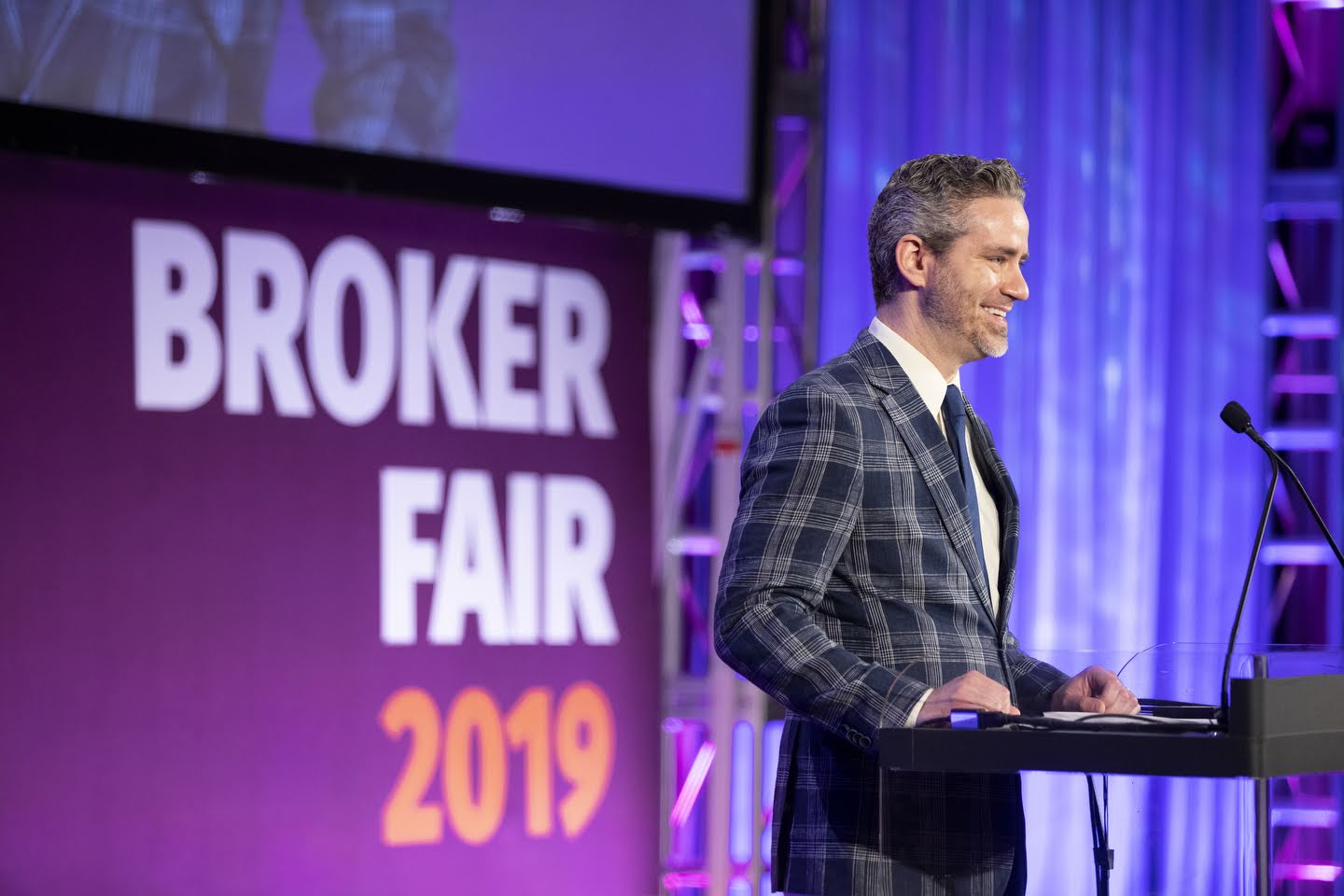
NYC is losing yet another historical business, as the way of life and all things we have come to expect from the big apple struggle to survive. As a destination venue, The Roosevelt was also dear to AltFinanceDaily. It was the home of Broker Fair 2019, where Sean Murray spoke in the same ballroom that Michel Douglas (as Gorden Gekko) made the famous “Greed is Good” speech as part of the 1987 film Wall Street. Murray made a similar speech but rewrote it to fit the industry that had gathered. “Funding small business, for lack of a better phrase, is good,” he said on stage to an audience of 700 people.
Unfortunately, it was The Roosevelt that ultimately needed funding and didn’t get it.
Capify Announces $10 Million Equity Round As Well As Continued Support From Goldman Sachs Merchant Banking Division
September 30, 2020
Access To Business Loans Especially During COVID-19 Pandemic
(Manchester, England and Sydney, Australia) – Capify (http://www.capify.co.uk, http://www.capify.com.au ), a leading fintech small business lending platform, today announced it has closed a $10 million equity round as well as continued support from Goldman Sachs Merchant Banking Division through its existing credit facilities.
“The fact that we were able to raise $10 million for an online small business lender in the midst of a global pandemic from sophisticated investors with industry experience speaks to Capify’s business model, the unprecedented opportunity ahead of us and its management team,” said David Goldin, Founder and CEO of Capify.
Continued, Mr. Goldin, “We believe demand by small businesses seeking access to unsecured capital will be at unprecedented levels because most businesses have already accessed the government backed business loan programs in the UK and Australia market but will still need additional capital – as do the many businesses that didn’t qualify for the Government guaranteed programs and are seeking much needed working capital to grow.”
In addition, Capify is actively seeking partnerships with companies with large small business customer bases to provide much needed financing to their small business customers, thus allowing them access to capital to purchase goods / services which have proven financially difficult during this challenging time. Furthermore, we are looking for opportunities where we can assist our industry peers who don’t have access to capital during this time by providing capital to their customer base.
Capify’s 12 year presence in the UK and Australia market is more relevant than ever as small businesses demand for access to capital to navigate through COVID-19 is at an all time high. According to John Rozenbroek, COO / CFO of Capify, “It is crucial at this time that small businesses are aware of alternative funding solutions to support cash flow or invest in their future. Capify is one of the few online small business lending platforms in the marketplace that can actively provide non-government backed business loans at scale to small businesses seeking working capital to grow their business. ”
About Capify
Capify is an online lender that provides flexible financing solutions to small businesses in the UK and Australia seeking working capital to sustain or grow their business. The fintech company has been operating in the UK and Australia market for over 12 years.
For more details about Capify, visit
Capify UK: http://www.capify.co.uk
Capify Australia: http://www.capify.com.au
Capify UK Media Contact:
Ian Wood, Marketing Director
iwood@capify.co.uk
+44 0161 393 9536
Capify Australia Media Contact:
Nandita Graham, Senior Marketing Manager
ngraham@capify.com.au
+61 433 511 653
Prashant Fuloria Explains Why Fundbox Has Been Successful in 2020
September 28, 2020 When Prashant Fuloria joined Fundbox as Chief Operations Officer in 2016, the San Franciscan firm was a three-year-old startup with less than eighty employees. By the time Fuloria moved into the office of CEO this July, the small business credit and invoice financing company had grown exponentially, with more than $430 million in raised capital to date and triple the number of employees.
At the height of the pandemic, many firms halted funding or shuttered their doors for good. Meanwhile Fundbox kept lending, and outperformed the market, Fuloria said.
“It’s become very clear to us that we have greatly outperformed the market,” Fuloria said. “In terms of delivering value to customers, and also in terms of our business performance.”
In the toughest weeks of the pandemic, he said that Fundbox’s loan delinquency rose to 8-9%, up from a “low single-digit number” pre-pandemic. In comparison, the industry standard according to Fuloria, was a delinquency rate of 30-40%, including from larger firms and more traditional lenders like big banks.
“I think we’ve performed extremely well during COVID; the numbers just validate the investment we’ve made, especially in data,” Fuloria said. “That puts us in a very good position because a number of folks have exited the market and the need, the demand has not gone away.”
The number one thing you can do to perform well in a recession is to have a strong business going into it, Fuloria explained. Fundbox attributes part of its strength to its data. Nearly a fourth of Fundbox’s capital goes toward data assets, Fuloria said.
“If you add it all up, we’ve invested a little over $100 million in our data asset,” Fuloria said. “It’s a big investment for anybody- particularly a big investment for a mid-sized company.”
Fuloria said this money goes toward collecting customer information, which is processed by in-house tech and a talented team of engineers who can turn data into valuable information for serving SMBs.
“Small businesses,” Fuloria said, “they have the complexity of enterprises but the scale of consumers.”
Coming from twenty years of tech and product managerial experience at firms like Google, Facebook, and Yahoo, Fuloria knows a thing or two about scale. He said he found his roots at Google, working when it was just a small team- by the time he left six and a half years later, Google had 35,000 employees.
When it came to joining Fundbox in 2016, Fuloria said he was attracted by the company’s mission, the talented team there, and how in just three years, the small firm had demonstrated how it could help SMBs.
“Fundbox as a company said ‘We are a financial services platform that is powering the small business economy with new credit and payment solutions,'” Fuloria said. “And that mission was very strong: it made sense to me, and it resonated with me.”
University of Delaware, Other Universities Going Long on Fintech
September 15, 2020The University of Delaware recently received a $9 million tax incentive to construct a new Fintech Center on its premier Science, Technology, and Advanced Research (STAR) campus, with help from a community-building company Cinnaire. Slated for completion in 2021, the building marks yet another fintech-focused resource for higher education.
Financial technology programs have long been offered at prominent business schools such as Harvard, Stanford, and Columbia, international schools such as Oxford, and research institutions like MIT since the late 2000s.
Now that fintech has become a long term value creator in the financial world, other institutions such as the University of Michigan, Fordham, and Delaware are excited to implement fintech opportunities on campus for undergraduate and graduate students alike.
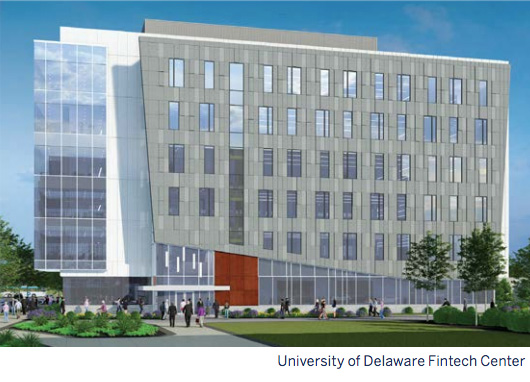 Discover Bank and Cinnaire jointly funded the building, a $39 million project. According to Delaware plans, it will create a space on the Delaware STAR campus to host a new Financial Services Incubator to encourage research and collaboration between students and industry leaders.
“The FinTech building will bring together computer science, engineering and business experts in cybersecurity, human-machine learning, data analysis, and other emerging financial technologies,” said Levi Thompson, Dean of the College of Engineering. “These collaborations will allow us to provide our students with a very unique experience that prepares them to excel in the workforce. Furthermore, our Fintech discoveries will benefit people throughout Delaware and the world.”
Cinnaire is a national nonprofit that focuses on improving communities’ financial health by creating capital solutions to revitalization projects: lending funds, managing, and building housing structures.
Funding communities is what Cinnaire does best: in this case, utilizing a New Markets Tax Credit to fund an addition to the Delaware campus.
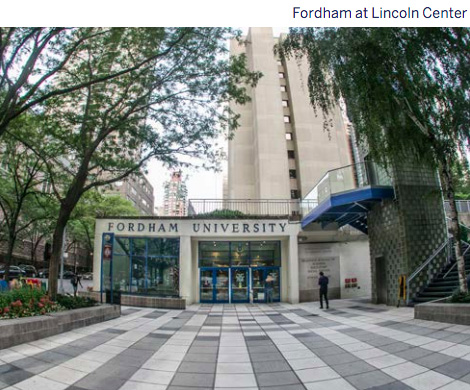 The nearby University of Fordham at Lincoln Center has also been trending toward preparing students for a fintech world. Undergrad and graduate students pursuing an MBA through the Gabelli School have the option of a fintech concentration.
The course work not only incorporates data science and machine learning skills into the worlds of credit lending and risk management but facilitates relationships between students and a wealth of industry partners.
Sudip Gupta, professor, and Director of the MS Quantitative Finance program, spoke about the courses’ popularity there. The program is ranked in the top 20 of its kind in the world by Risk Magazine.
He has seen a revolution in fintech in the past few years that has recently received a big push by pandemic forces, introducing the wholesale adoption of fintech techniques into traditional financial institutions.
“The fintech revolution in the industry- big data, machine learning techniques, storage capacity, and cloud computing has been going on for the last couple of years,” Gupta said. “The pandemic provided the big push to move toward that direction.”
Gupta has been following the development of alternative credit closely, recently publishing an award-winning paper studying machine learning to create alternative consumer credit scores using mobile phone and social media data.
“The idea of my research- let’s look at people who do not have a credit history or enough traditional credit you could get from a FICO score,” Gupta said. “Using this data, it turns out they are better predictors, and better to judge than FICO, and can reach out to more people.”
Gupta is excited for the adoption of big data techniques into alternative and traditional consumer loans because it offers a win-win for consumers and institutions alike, he said. Echoing the findings of many successful alternative finance companies, Gupta said his research showed that collected data could offer better insight for lending than “stale FICO scores.”
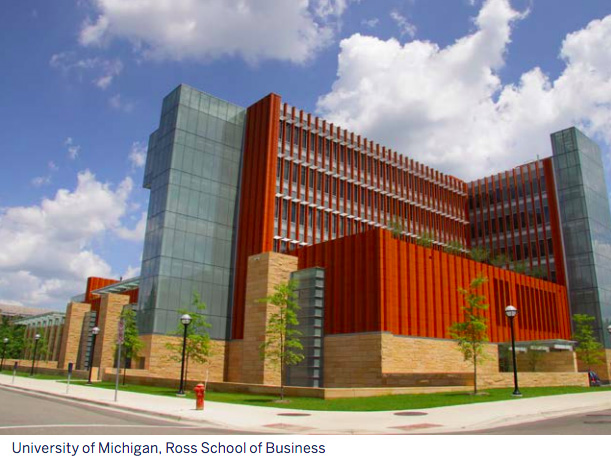 Up north at the Univerisity of Michigan, Professor Robert Dittmar at the Ross School of Business heads the Fintech Initiative. He is working on adding even more fintech classes. Recently, through a partnership with PEAK, a Chicago fintech lending company, Michigan launched a fintech initiative that incorporates undergrad and grad classes, faculty research, and a fintech entrepreneurial club that connects students to industry leaders.
Michigan Ross is adding fintech classes for a variety of reasons.
“The simplest reason: students are interested in learning more about this kind of space,” Dittmar said. “And we’re seeing more demand from the industry side for students that know more.”
For years Dittmar said tech companies and startups in silicon valley were pioneering innovations in the industry. Through talking with alumni and contacts in the industry, Michigan found that fintech has gotten to the place where there is an excellent supply of data engineers. Still, there is a demand for professionals with the financial business expertise to implement these technologies.
“What we are trying to do at Ross is fill in that gap,” Dittmar said. “what we’d like is for [students] to know enough about the technology that they can provide the insights of finance and business to the people that are doing that technical work.”
At Ross, they are organizing what will one day be like a fellowship program. The program will feature a combined learning experience: students will learn data analytic finance, apply their computing skills in credit decision making classes, and then connect with the industry in experiential learning classes.
“In the last couple of years, I have been taking students to London to work at fintech startups in the UK,” Dittmar said. “And we are hoping to expand that program so that most or all graduate students have the opportunity to participate in something like that.”
Last year Ross hosted a “Fintech Challenge” competition to design a banking service to reach customers in a “banking desert” in rural Michigan. The program is hoping to host another challenge this year, despite complications of COVID-19.
CEO Of Online Lender Arrested For PPP Fraud
August 19, 2020 Sheng-wen Cheng, aka Justin Cheng, the CEO of Celeri Network, was arrested on Tuesday by the FBI. Celeri offers business loans, merchant cash advances, SBA loans, and student loans.
Cheng applied for over $7 million in PPP funds, federal agents allege, on the basis that Celeri Network and other companies he owns had 200 employees. In reality he only had 14 employees, they say.
Cheng succeeded in obtaining $2.8M in PPP funds but rather than use them for their intended lawful purpose, he bought a $40,000 Rolex watch, paid $80,000 towards a S560X4 Mercedes-Maybach, rented a $17,000/month condo apartment, bought $50,000 worth of furniture, and spent $37,000 while shopping at Louis Vuitton, Chanel, Burberry, Gucci, Christian Louboutin, and Yves Saint Laurent.
He also withdrew $360,000 in cash and/or cashiers checks and transferred $881,000 to accounts in Taiwan, UK, South Korea, and Singapore.
This, of course, is all according to the FBI. Statements made to Law360 indicate that Cheng maintains his innocence.
A press release published by Celeri late last year said that the company had raised $2.5M in seed funding that valued the company at $11M.
“A Bad Solution in Search of a Problem”: SBFA’s Response to the New York Disclosure Bill
August 6, 2020 “It’s actually shocking to me how tone deaf those who claim to represent our industry are when it comes to policy,” is how Steve Denis, Executive Director of the Small Business Finance Association, described the Innovative Lending Platform Association’s response to and influence over the drafting of bill A10118A/S5470B. Known as New York’s APR disclosure bill, S5470B has been passed by the state legislature, and if signed by Governor Cuomo, will require small business financing contracts to disclose the annual percentage rate as well as other uniform disclosures.
Speaking to AltFinanceDaily over the phone, Denis expressed disappointment with both the bill as well as comments made by ILPA’s CEO, Scott Stewart, in a recent article.
“Small businesses in New York are struggling right now,” the Director noted. “They’re waking up every single day wondering if they should even stay open or close permanently, and companies and organizations in our space are using their resources to push a disclosure bill that nobody has asked for. There’s no widespread issue with disclosure. There’s been no outpouring of complaints to regulators. No bad reviews on Trustpilot. This is a really bad solution in search of a problem. We have real problems right now, we should be coming together as an industry to help solve them. We want to make sure that capital is available to small businesses on the other side of this pandemic, and this group of tone deaf companies are spending resources trying to push a meaningless disclosure bill that’s just going to hurt the access to capital for real small businesses who are grinding and trying to figure out how to stay open. It’s unbelievable.”
The SBFA showed AltFinanceDaily a list of issues and complaints made to the New York legislature regarding S5470B. According to the trade group, these were largely ignored and the bill was pushed through with the issues left in. Among these were problems relating to definitions and terms. No definition for the application process is included, nor is there one for a finance charge. As well as this, one senator was quoted using the term “double dipping” to refer to consumers refinancing debts that have prepayment penalties; which Denis said was “creating a whole new term that’s never been used or defined before, and applying it to commercial finance, something that’s never been done.”
Accompanying these complaints was one regarding how APR is calculated, as S5470B includes two different calculations for this, producing different results while not clearly defining when to use each.
 When asked why he believes these issues were allowed to remain in the language of the bill, Denis was baffled.
“I think that the companies and organizations that support this legislation don’t fully understand what’s actually in the bill. […] They have no problem pounding the table and taking credit for its passage, but I guess they don’t realize it will subject them and the rest of the alternative finance industry to massive liability, massive fines—upwards of billions of dollars worth of fines.”
Denis’s fear going forward is that funders in New York will tighten up their channels going forward or cease funding entirely, given the increased riskiness of funding under the terms of S5470B if Cuomo signs it into law. Before that happens though, the Director mentioned that he believes there will be legal challenges to the bill in the future, saying that its wording is just too unclear and poorly drafted. Adding to this, Denis said that he believes many members of New York’s state government are aware that this bill is imperfect and were comfortable with the thought of it being edited once passed. Looking forward, Denis wants the SBFA to be deeply involved in those edits, saying that they’re willing to work with the Governor, the state assembly, and the New York Department of Financial Services.
“We’re for disclosure, we think there should be standard disclosure. … Our message to the Governor’s office is ‘Let’s take a step back.’ The Department of Financial Services needs to look at our industry, they need to get to know our industry. They are the experts that understand the space, they understand disclosure, and they understand what they need to do to bring responsible lending to New Yorkers. And we would like to work with the NYDFS and a broader industry to put forward a bill that’s led by the Governor and the Governor’s office that brings meaningful disclosure and meaningful safeguards to this industry.”