
From Zero to $28 Million
January 12, 2023 Back in June 2022, Eddie DeAngelis was getting ready to launch QualiFi in a Philadelphia suburb. After having started in the industry as President and partner with Bizlender in 2013 and then founder and CEO of Amerifi, LLC in 2017 (later acquired by Nav Technologies Inc.), success for DeAngelis’ newest startup was bound to draw heavily on the experience he had gained throughout his career. But, times had changed a little.
“In my opinion, this is probably the hardest and most competitive over the last 10 years this business has ever been,” he told AltFinanceDaily. “Every deal shopping around, they’re working with multiple brokers…”
QualiFi connects businesses with funding sources. Real estate loans, AR financing, PO financing, equipment financing, and term loans are among their core products. It’s not a revolutionary business model in that of itself. The key is in execution, which by any measure the company seems to be accomplishing quite well so far. In August alone, QualiFi closed 33 deals for a total of $2.4M in financing and continued the streak until November when it eclipsed $11.3M in just one month split across 57 deals.
In roughly less than seven months since launch, DeAngelis said they’ve surpassed $28M in closed deals. To be sure, DeAngelis doesn’t take all the credit for the impressive start. Jason Maury, a QualiFi partner and VP of Sales, has been instrumental in executing the company’s strategy, DeAngelis said. Part of that strategy he shared.
“99% of all our traffic is from inbound leads,” DeAngelis said. The company runs a variety of marketing campaigns that includes social media but nearly half is attributable to referral partners.
“We have banks, a couple of credit unions, and CPAs that we work with that send us some of their clients that are either maxed out on their line of credit or just simply can’t get approved from the bank,” he said.
The company doesn’t take any of those relationships for granted, which means QualiFi reps need to be qualified to take on their tasks.
 “We have an approximate five week on-boarding process for all new hires,” DeAngelis explained, adding that it’s one of the most intensive sales trainings out there. New people to the business must go through it before they get on the phone with potential customers. All of that training is on-site at the company’s office, not something that is offered remotely. Doing this business in person is something QualiFi puts a high value on as the team is expected to be in the office Monday-Thursday. Fridays are allowed to be remote.
There’s a little more to it. DeAngelis said that “culture and the environment is another piece” and that leadership is about supporting everyone and keeping a team mentality.
“Even after they’re done their five week training, Jason and myself are always all over the floor,” DeAngelis said. “We’re very involved in the trenches day-to-day. We do ongoing support training once a week…”
All told, even with the current state of the economy, QualiFi anticipates an opportunity to help more business owners when they will probably need it most.
“We’re remaining pretty optimistic,” DeAngelis said. “As we’re going into an even more volatile economy in the new year, I think the banks are really going to be squeezing and not really looking to put too much money out there and take any risk at all. So I think that a lot of that business is going to come our way potentially. That’s what we’re hopeful for.”
ERC And The Broker Relationship
January 11, 2023 Like many business loan brokerage CEOs across the US, Jared Weitz is familiar with the Employee Retention Credit (ERC). His company, United Capital Source (UCS), which in 2021 surpassed $1B in small business financing volume, regularly speaks to thousands of small business owners. Weitz told AltFinanceDaily that through his own experience most business owners have become sufficiently aware of the ERC as well. That in turn raises the question of what role a company like UCS can play in the ERC process.
“We have a few different referral partners that are lending against those credits,” Weitz said. “And that’s what we’re doing.”
In that regard, UCS is doing what it is already used to doing, connecting the business owner with a compatible source of funding. While other brokers may attempt to generate fees by assisting businesses with filing for the tax credits themselves, Weitz said he prefers to avoid the headache and/or potential liability that can come along with doing that.
“We’re able to get 100% of what a client is owed right up front,” Weitz said. “They can either have an interest-only program or a no-payments program for 12 months, and then after 12 months there would be a factor rate attached to the program that would be paid back weekly.”
UCS earns a commission when a deal goes through but ERC has not by any means become a primary driver of business, according to Weitz. Rather, it’s something that could come up during a customer consultation.
“When we’re peeling back the layers and chatting with the client on why they need funds, if they say ‘well, actually I’m falling short here and I also just filed for [the ERC] and I’m still waiting for that,’ it can be one of the options that we offer them […] and we’ll just see what they qualify for and if they’re interested in it.”
 It’s the waiting part that is creating a cottage industry around ERC. Weitz says he hasn’t heard of any business getting an ERC refund in less than 7 or 8 months and he is aware of at least one business that is still waiting for it 2 years later since filing. But just because most businesses are aware of the ERC doesn’t mean they’ve all actively pursued it. On this, UCS simply offers free helpful advice.
“What I would say to them is ‘hey, heads up, you should probably look into this with your local accountant and payroll company, make sure you get your tax attorney or your accounting firm’s attorney involved just to make sure you’re doing it the right way.'”
Putting business owners on that path of pursuit, informing them of its existence and advising them to seek out qualified counsel to assist with it, generates no revenue to UCS, but Weitz thinks it’s important to help business owners in any way possible.
“I think it does build a bridge of trust a bit more between you and your clients because you’re showing them that you’re not solely looking at products that are beneficial to you, and you shouldn’t be doing that anyway,” Weitz said. “But I think when you’re dealing with someone there’s always that thought in their head, right? And so this has helped solidify that you’re not.”
The Next Frontier: Financing the ERC
January 11, 2023 “I have never sold a product that has no daily, no weekly, or no monthly payments,” said David Goldin. That is until now, he explained, because of the Employee Retention Credit from the IRS that’s sweeping the country. Goldin’s new company, Finance ERC, that he co-founded with Newtek co-founder Jeffrey Rubin, is buying the future ERC receivables of small businesses that have filed for it. A key feature? No payments.
“You basically drop off the money, they don’t pay you out of cash flow, we get paid when the checks arrive,” Goldin said. “It’s an amazing offering.”
Goldin is no stranger to the SMB finance game. He is one of the reasons that the MCA product exists today in the United States. A documentary about it was the second most watched in all of 2022, for example. And he’s still a busy guy. One of his other businesses, Capify, finances small businesses on two continents every day.
“I’m busy in the morning with the UK and I’m busy at night with Australia, but I had a lot of free time during the day,” he said about how he was able to pursue yet another venture. “I approached Jeff and we were seeing that there was a gap in the market that the checks don’t arrive.”
The ERC, a potentially generous tax credit available to eligible businesses, has recently enjoyed greater awareness since it was included in the March 2020 CARES Act. Businesses that qualify can amend previous returns to receive a refund. Folks in the small business finance industry, already in direct communication with businesses about their financial needs, have taken notice.
Finance ERC won’t do the filing itself for a business. They have to had filed already to seek out the funding, which can go up to $1 million at present. It’s the waiting game between filing and actually receiving the refund that leaves merchants in a crunch. Goldin said the wait time is “best case scenario three months, worst case scenario a year plus.” And there’s no guarantee that the claims will be paid. That’s a risk they bear.
The deals come in from a variety of sources, business loan brokers, MCA platforms, ERC filing companies and more. The funding amounts can be significantly larger than an MCA and with no payments to be made, is incredibly competitive. A number of other financial service providers are charging a fee just for helping the businesses file for the credit in the first place, which in itself can be lucrative, but Finance ERC sticks just to the funding.
“We work with the funding companies, we work with the brokers, the various ISOs, it’s a great product,” Goldin said.
But the life span of the ERC is purportedly capped. Some experts say that businesses can only amend their 2020 tax return through April 2024 and their 2021 return through April 2025 [dyor]. But then that’s supposed to be it, allegedly.
“That presumes the government is not going to offer any future tax incentives,” Goldin said. “What we’re building at Finance ERC is a platform to finance tax credits. [The ERC] is the first credit.”
The opportunity, he explained, is preparing now for what may repeat often in the future.
“We put together the right players and vendors,” Goldin said. “We’ve hired a super senior management team.” It’s a system that includes sales, marketing, operations, finance, underwriting and more, to be prepared to scale.
But even in the present, opportunity abounds.
“The best estimates I’ve read are 5-6 million ERC are still eligible,” Goldin said. “People in this industry call it America’s best kept secret.”
And thus as marketing of the ERC continues to grow all around, Finance ERC is ready to work with businesses, brokers, and filers going through the process. Businesses can even use the funding from Finance ERC to pay the fee to file in the first place.
“So now all of a sudden they put the risk to me which I’m happy to do for a file that we like, and I pay the filing company / the broker gets paid right away,” Goldin said.
AltFinanceDaily CONNECT MIAMI Has SOLD OUT
January 9, 2023The industry’s largest annual event in South Florida has once again sold out! If you have questions about your existing tickets or sponsorship to AltFinanceDaily CONNECT MIAMI, please contact events@debanked.com.
This event is being held at the Miami Beach Convention Center on January 19th. It will be AltFinanceDaily’s 5th event in Miami since 2018. It’s the ultimate networking experience for brokers, lenders, funders, fintech, collectors, lead generators, investors, software companies, law firms, and more. Thank you to Bitty Advance for being this year’s title sponsor.

Climbing Up The ROK
December 23, 2022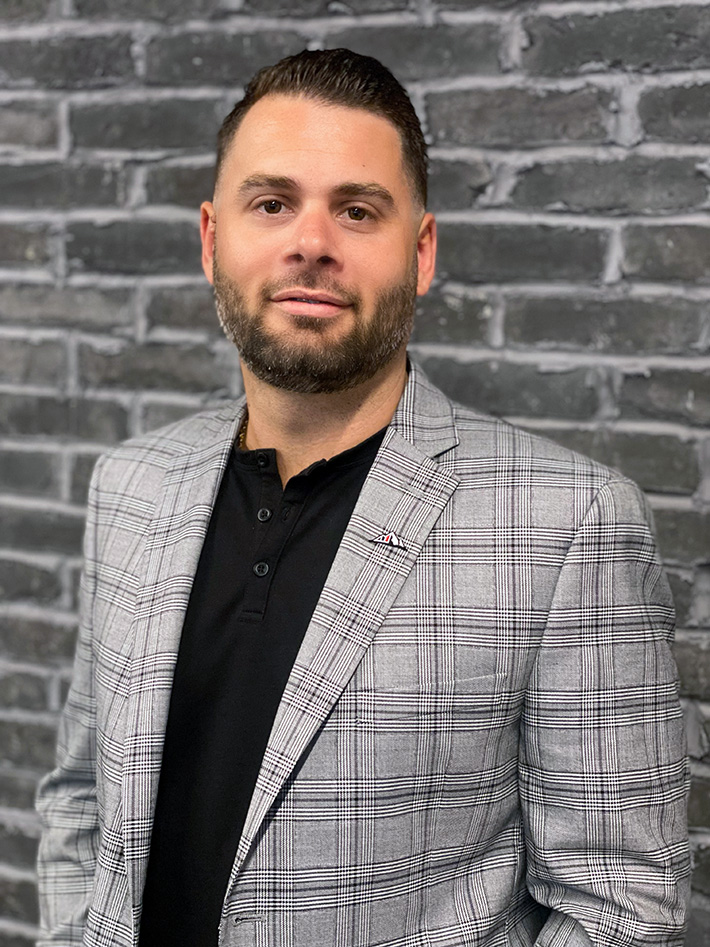
This month Patrick Manning took over as the new CEO of ROK Financial. Previously representing the company as CRO and President, Manning’s been on an upward trajectory since he first started in sales roughly eight years ago. He learned the business from founder and former ROK CEO James Webster, who will be stepping into a new role as Executive Chairman.
Manning will be overseeing the leadership team with the help of COO Shannon Treadwell and continuing to grow the organization.
“I also have a large hand in the relationships with our lenders, we are a broker, and we utilize all of the top lenders in the industry,” said Manning. “And I sit at the helm of managing and building those relationships with our lenders.”
Manning described the industry as “lacking information and education” whether this be from brokerages or business owners themselves. Taking pride in the way ROK does business, Manning went on to describe a new learning experience the company will be presenting to the industry.
“I’m going to continue to help push on the company initiative of rolling out ROK-U or ROK University. ROK-U is an education platform which encompasses ROK’s 10-15 years of broker experience to an easy-to-follow training platform geared to properly educate those that are looking to enter into the industry,” said Manning.
ROK’s goal is to improve the way brokers interact with business owners and carry out transactions. This fully remote program will be available to anybody interested in entering the industry where they’ll learn proper techniques as well as language. The company soft launched the program in May with 30 enrolled students from all over the country. Testing the program out to see what areas needed improvement, ROK-U will officially launch in January 2023. It is also free of charge and will be live on their website.
“The team has been working diligently to roll out new technologies to help with this initiative. Those that enroll in ROK-U will have access to best-in-class technologies powered by Salesforce Communities to assist in training and getting their businesses off the ground,” said Manning.
The company will also be introducing the ROK Tour, a new networking event in eight major cities throughout the U.S to help promote ROK University.
AltFinanceDaily’s Most Watched Videos of 2022
December 19, 2022deBanked TV continued its strong showing throughout 2022. For the second time ever, we’ve ranked the most watched videos for the year.
1. Equipping The Dream
AltFinanceDaily debuted a sales-based reality show called Equipping the Dream, a real inside experience of an equipment finance sales shop. Episode #1 was not only the most watched video on AltFinanceDaily for the year, it was the most viewed piece of content on AltFinanceDaily for the year period. Episodes 1-6 also managed to fall within the top 7 most watched videos for the year as well, all of them beating out every other single video except one. If you haven’t watched it, do you even work in small business finance sales?! Episode 1 | All Episodes Here
2. Merchant Cash Advance’s Big Day – The David Goldin Story
The only video to compete with episodes of Equipping the Dream was the documentary on David Goldin’s journey to winning a landmark patent lawsuit that allowed the merchant cash advance industry to grow into what it became. You can’t work in the industry and not know this amazing piece of history!
3. Banned From the MCA Industry
A discussion about an FTC settlement order banning individuals from the MCA industry was among the most watched videos of 2022.
4. Brokering Small Business Funding in 2022
AltFinanceDaily interviewed two small business finance brokers to gather their thoughts on the state of the industry.
5. Virginia Disclosure Law Discussed
On June 30, 2022, we at AltFinanceDaily discussed as much as we knew about the Virginia disclosure law one day before it went into effect. Are you complying with the law there?!
Tackling the California Disclosure Law With David J. Austin, Esq.
December 16, 2022 “I believe the law can be complied with in a technical sense based on how the statute is written,” said David J. Austin, Esq. of Austin LLP, “however, it opens up a funder to a number of attacks when they’re trying to enforce the funding.”
Austin, an attorney well-read on California’s new commercial financing disclosure law, has created a compliance guide specifically for merchant cash advance funders. Now that the law is in effect, he’s noticed a sudden urgency from small business finance companies to quickly wrap their heads around what they need to be doing.
“There’s nothing ambiguous about certain things in the statutes,” he said. “And it’s very specific, you have to use this font, you can’t use bold or italics, and I discussed that a little bit in [the guide]. It’s very specific about what you need to do.”
Austin imparted some helpful wisdom based upon the risks he sees. First, that funders need not just worry about the Department of Financial Protection and Innovation (DFPI) auditing one’s compliance, but also about what attorneys on the opposite side of the table might attempt to attack if these contracts ever end up in litigation, which they inevitably will. There should be concern, he said, about surrendering some control of the disclosure process to brokers, especially for this reason.
“In my view, the biggest liability in this statute is the broker screwing you up,” Austin said. “I can’t begin to say how important I think it is to—just for that one disclosure, take the broker out of the equation…”
Austin suggested that as far as California is concerned, funders should have direct communication with the merchant early on in the process so that when it comes time to make offers, the funder is able to send the required disclosures to the merchant themselves, and that the broker can simply be included in those communications. This workflow system might depart from one where a broker is accustomed to retaining all control of merchant communications, but Austin is looking at the risks through the lens of a funder.
“I think you just have to say, ‘look, it’s the law and we’re not going to do it any other way,'” he said.
While a much more complete scope of what’s required is all part of the guide he’s offering, he hinted that the “reasonably anticipated true-up” requirement of the disclosure was mostly centered around the knowable seasonality of a business and that he likes the Historical Method of predicting a business’s future sales versus the state’s other allowable option, the Underwriting Method. The Historical Method requires that a funding company examine at least 4 months of a business’s previous history, so if any brokers have been left wondering why a funder has recently started asking for 4 months bank statements instead of 3, this is probably the reason. Austin believes that the Underwriting method, by contrast, creates a lot of extra work, like state audits and additional litigation risk.
“The statute [on the Underwriting Method] is long,” he said. “And like I said, it requires auditing. So the first thing that’s going to happen in any litigation is you’re going to be asked to provide those auditing details.”
Any mca funder curious about compliance, including for access to the full guide, should contact David Austin directly at david.austin@austinllp.com.
Since the law has gone into effect, AltFinanceDaily has determined that some funders are complying with the law already and are continuing to operate in the state like normal while others are taking a wait-and-see approach. Any funder thinking they can fly under the radar of the DFPI and ignore the regulations should consider that a compliance failure could likely be exposed in litigation.
“We know what the defense counsel is going to do,” said Austin, speaking on merchants’ lawyers using the disclosure requirements as a weapon. “They’re gonna push, push, push, push, push.”
Missouri Reintroduces its Commercial Financing Disclosure Bill
December 7, 2022 In a preview of what’s to come in 2023, Missouri State Senator Justin Brown (R) has reintroduced a commercial financing disclosure bill. SB 187, which is significantly less stringent than the law about to go into effect in California, nonetheless would require brokers to be licensed in the state.
“The act requires registration with the Division of Finance prior to engaging in business as a commercial financial broker,” the bill states. “Specifically, the act requires filing a registration form, submitting a fee of $100, and obtaining a surety bond in the amount of $10,000. A registration renewal is required every year…”
This bill was introduced last year but failed to advance. Other states that are expected to reintroduce similar bills this year include Connecticut and Maryland.