
A Letter About Broker Fair
May 6, 2023When I started in the small business finance industry in 2006, I considered myself fortunate that the work I put in translated into real world measurable impact. We helped businesses obtain capital when potentially no other options existed. Whether that was for simple cash flow, to expand, or to keep the lights on after an unexpected hardship, I got to know the customers’ stories and see the results of their efforts. Few kids straight out of college going into a “finance job” get to experience what I did. But for those that were in it at the time, we were like a family, a core group providing a service that very few other people understood.
And for a period of about five years through both underwriting and sales, which started before and went on through the Great Recession, many members of that family discovered new and different ways in which they could play a role in serving the nation’s small businesses. Some of them became big entrepreneurs, CEOs, or hard working brokers. Others went into tech, marketing, legal, and payments.
And for me, well I saw a need for something maybe a little less glamorous, but nevertheless important, and that was to tell the stories about what everyone else was doing. That’s what led to the creation of AltFinanceDaily in 2010, a website that I hoped would inform others about what was going on, who was who, and how certain products worked.
Most people actually told me that starting AltFinanceDaily, in its early days, was a bad idea because my knowledge and experience would be wasted on storytelling when I surely stood to gain more personally by operating in the trade of the business itself. Well, in the end they were probably right but I was convinced, just like my early days, that pursuing my path would also translate into real world impact. Whether you agree with all the content we’ve produced over the course of almost 13 years now, just about any person that’s ever read something on AltFinanceDaily has walked away informed about something they didn’t know before. And as the community of the industry multiplied over time, it became clear that one major thing with AltFinanceDaily was lacking, and that was to put faces to all the names. Everyone had come to know the industry online and now they deserved to see it all for themselves in person. We started with golf in the summer of 2017 and a rooftop gathering in Miami Beach in January 2018 called AltFinanceDaily CONNECT. That led to Broker Fair that May where the core tenets of the event were education, inspiration, and opportunities to connect and grow. They’re the same tenets that we strive for today.
 At the time of the first Broker Fair I was just 34 years-old and this industry had been basically all that I had ever known in my professional life. Just like writing, event production was not high on the glamor list, but I believed that shows like Broker Fair would foster those that make a difference. Putting them on has been hard work. It is hard work. They didn’t teach me event planning on the underwriting or sales floor, but we got there somehow. And since then we have aimed to make the experiences fun while at the same time honorable and respectable. I remember what it was like to be 23 and hungry in the business and have also come to recognize the stakes on the national stage as I now turn 40. I know that the world is watching and how important it is that everyone conduct themselves like professionals.
I have spent nearly 17 years in this business and converse with participants in the industry on a daily basis. It is a great honor that the name Broker Fair is now known by so many people. I suppose there is some glamor in having accomplished that, but more importantly that Broker Fair has had an impact on so many people who serve much more important clientele, the small businesses across the country.
I’ve said that there is “only one Broker Fair,” and that’s because when you see that very specific name on an image or billboard or t-shirt, you’ll know not just who we are, but why we are.
Thank you to all of those who acknowledge that professionalism and decency are important and are respectful of the events our team puts so much effort into bringing to life. Our team literally spends all year working on them. I look forward to Broker Fair 2023 and seeing all of you.
– Sean Murray
LAST CALL FOR PRE-SHOW TICKETS TO BROKER FAIR
May 3, 2023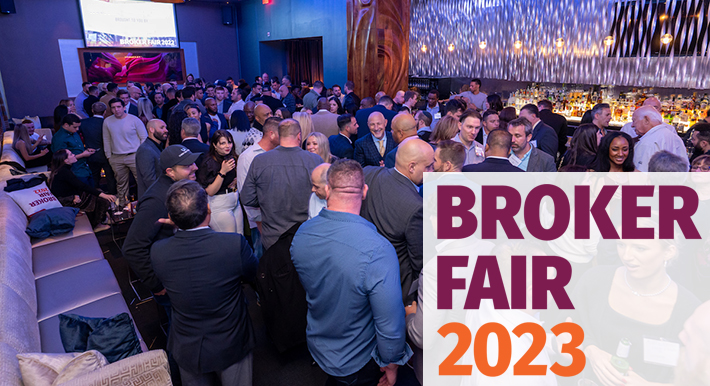 The Pre-show is no joke. Last year’s Broker Fair Pre-show was one of the most exclusive industry networking events ever. This year it’s at the more spacious Valerie at 45 West 45th Street between 5th and 6th Avenue, mere walking distance to the Hilton Midtown where Broker Fair is taking place. This is now the last call to register for the Pre-show on May 7th.
At Broker Fair, brokers from the small business lending, commercial financing, revenue-based financing, leasing, factoring, and MCA industries, will come together in the heart of New York.
For all questions and inquiries, email: events@debanked.com or call 917-722-0808.
LAST CALL for Broker Fair Tickets!
April 24, 2023For inquiries or questions, email events@debanked.com
Last call to purchase tickets for Broker Fair 2023! Taking place at the New York Hilton Midtown on May 8th, this is the biggest annual event of its kind in New York City. (REGISTER HERE).
 Sponsors hail from across the small business and commercial finance industries and include the following categories:
- brokers
- working capital lenders
- revenue based financing providers
- equipment financing providers
- real estate lenders
- factors
- technology
- accounting
- collections & recovery
- consultants
- payments
- and more…

A Side Effect of New State Laws? Registry Lookups
April 21, 2023 DailyFunder, the original funder’s forum since 2012, will include links to governmental registries on its site. Among the first two to be added are California and Virginia. The purpose is to serve as a reference point to verify a funder or lender’s claims. Additional states like Utah and New York will follow. Brokers and referral partners should use all the tools at their disposal to conduct due diligence on whomever they are considering to work with.
“‘The ‘I saw them in the courts’ or ‘I saw them in banks’ method isn’t exactly proof of legitimacy,'” a post on the forum stated.
DailyFunder also recently shared that it is experiencing a rather vibrant burst of interest. The forum logged 2.3 million page views in 2022 and this year is on pace for 3 million, it claims.
Don’t Run To The Big Banks Because of SVB!
April 6, 2023 The weekend of March 10 saw the largest and most significant banking failure in the United States since 2008 until the Federal Government announced its (don’t-call-it-a-bailout) deposit guarantee on March 13.
Silicon Valley Bank and Signature Bank were thought to be niche and regional banks whose actions wouldn’t affect the broader banking industry, but when they had to sell some of the long-term US treasury bonds that they over-invested in at a loss as their worth plummeted when interest rates ballooned, panic quickly spread and launched the first social media run on the banks. To stop this, the Government guaranteed that all accounts in both banks would be guaranteed their full sums, even if they were over the FDIC-insured amounts of $250,000.
So with the benefit of two weeks of hindsight, how did this collapse affect the cash advance industry?
While Silicon Valley Bank catered primarily to the venture capital and tech industries, Signature Bank in New York was known for its welcome embrace of crypto and alt-finance businesses, and many MCA companies had accounts there.
When Signature Bank failed, some of the MCA companies we work with at Better Accounting Solutions started considering transferring their accounts to the “Big Four” banks: JPMorgan Chase, Bank of America, Citigroup, and Wells Fargo.
Their reasoning made sense: Amid criticism of their decisions in the aftermath of this collapse, representatives of the Government and financial regulatory agencies suggested they wouldn’t follow the approach they employed this time round if another bank failed, and instead would weigh up the specific bank’s size and significance in each specific instance to decide whether or not to guarantee depositor’s accounts.
Understanding that their funds would not be protected if there was another crisis in the banks they worked with, several cash advance companies wanted to move their funds to banks that would be considered “too big to fail”, and their money would be guaranteed by the Government in the case of a calamitous collapse. They also wanted to start spreading out their funds across multiple banks to not surpass $250,000 in any of them, to ensure their money was always insured.
There are two issues with this response to these legitimate concerns:
- When a merchant cash advance company starts working and relying on the services of a big bank, they do that without understanding the rules and regulations these banks impose on their clients and how they may be affected, particularly a cash advance company.
Even if you try to hide what your business does, once the bank finds out that you’re in the MCA space-and count on them finding out sooner rather than later-, you’re business will likely be subjected to a thorough, extensive and painful review process to determine whether you’ve broken any of their rules. During this time, they may freeze your accounts (on average for 3 months) and cripple your business’s ability to operate during this time.
- Additionally, when trying to stick the FDIC-insured sum of $250,000 in each bank, you’re limiting yourself to an extremely inefficient and unsustainable way of doing business. It affects your ability to cover your operating costs, fund deals and have money available on hand when you need it.
To responsibly manage these risks while balancing your ability to do business, this is what we’ve been advising our clients:
Before beginning to work with any bank, speak to people involved in the MCA space (brokers, funders and even accountants) to get a list of which banks are friendly to the industry. Ensure that they understand the business and don’t have onerous regulations and practices that will not allow you to run your business without their constant intervention.
Once you know which banks to work with, we advise our clients to open accounts with two of these banks and split their funds equally between them. This ensures they have somewhere to send their money in case one collapses, and if they can’t get it out in time, they still have access to half of their capital while waiting to see how the Government responds. This 50/50 approach allows MCA companies to run and grow their merchant cash advance businesses efficiently during ‘times of peace’ while anticipating and preparing for the consequences of another collapse.
As the Government proved during this crisis, in the age of rapid communication a massive run of the banks can be mobilized within minutes, which forced the Government to (“not”) bail out a small bank to stop a larger collapse. I-and other experts- remain convinced that in the event of another collapse, they’ll be forced to follow this same policy and guarantee all deposits of all sizes at all banks, which is why I confidently advocate for this 50/50 approach.
An important disclaimer: This is an opinion article analyzing the specific collapse of Silicon Valley Bank and Signature Bank, and the response MCA companies should have to it broadly speaking. Every case and merchant cash advance company is different, and for specific advice and guidance, they should contact the author directly.
BEFN: A New Networking Space for Black Equipment Finance Professionals
March 30, 2023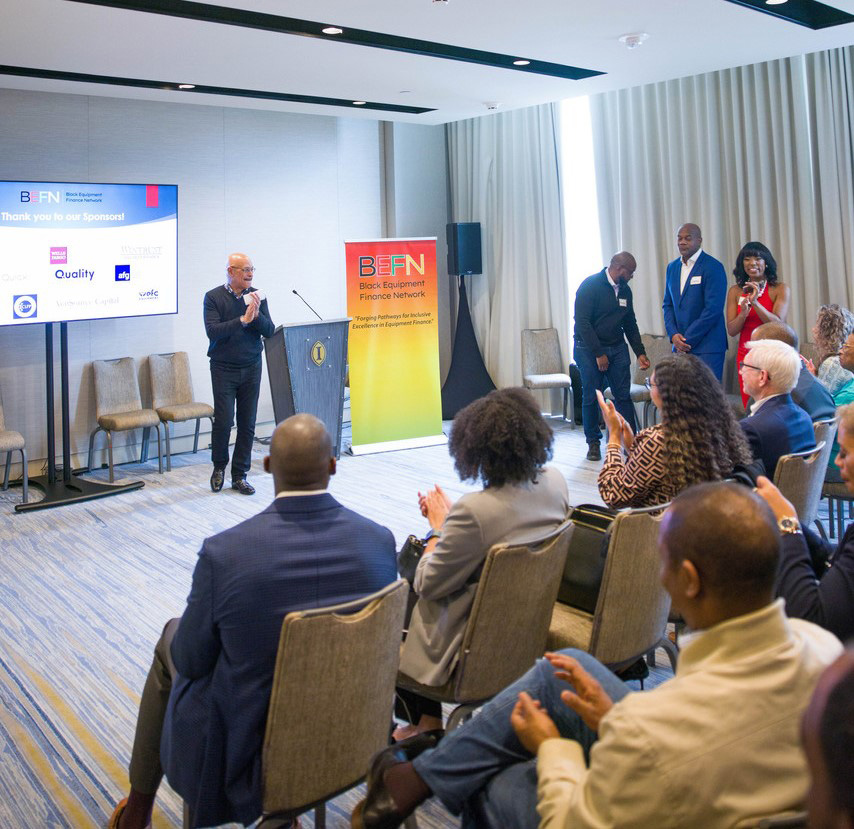 “The event’s theme, ‘forging inclusive excellence in equipment finance,’ set the tone for the group’s mission to advance diversity, equity, and inclusion (DEI) in the industry,” said George Parker, Co-CEO at VenSource Capital LLC.
Newly formed in January, the Black Equipment Finance Network (BEFN), is a non-profit organization focused on increasing the attendance of black professionals in the equipment finance industry. While providing network opportunities for people in the industry, the organization assists in promoting business collaboration, industry support and outreach, professional development, and Diversity, Equity and Inclusion (DEI) advocacy.
“I think the industry, given the mixer that we had last week in San Diego, is poised for [even more growth]. Many people showed up in support of what we’re looking to do,” said Lovern Gordon, National Sales Executive at Boston Financial & Equity Corp. “And that was a huge, huge, huge show of a vote of confidence that we’re headed in the right direction.”
The organization recently had their first inaugural mixer to kick off NEFA’s 4-day event, last week in San Diego. Filled with members and allies, the mixer dedicated a one-hour block to networking with people of color (POC).
“It was the most people that I and many others in the room have seen in terms of numbers for black people in the equipment finance industry in one space ever,” said Gordon.
For many POC, working in equipment finance can feel intimidating as the field is predominately a white-male led industry. The network is an all-around safe space for people that share in their likeness while being able to address issues of feeling left out of conversations or not feeling understood by their peers. The leadership team alongside Gordon (Secretary/Director), consists of George Park (President), Nancy Robles (Director), Kareem Jernigan (Treasurer/Director), Andre Olaofe (Director), and Eric McGriff (Director).
“This is a long overdue group of primarily black and people of color professionals in the equipment finance industry, that have just come together to form a small group within the industry to create an awareness of the black professional in the equipment finance industry,” said Andre Olaofe, President at Select Funding.
An active member of BEFN will typically attend monthly virtual meetings, have the option to be on panels, opportunity to come to regional and national events, advocate for laws and policies to improve within the industry, have access to the member directory, and mentorship.
“I’m on the steering committee,” said Cheryl Tibbs, CEO at Equipment Lease & Co. “The steering committee, we meet to set the agenda for the organization for our meetings. Just really to set the agenda for the group.”
The support from non-POC peers in the industry has been fantastic, Gordon explained. Several sponsors such as Dedicated Financial GBC, Wells Fargo Capital, North Mill Capital, and Wintrust Specialty Finance attended and donated, which contributed to pulling the mixer off. Tibbs noted the overwhelming response of non-black professionals that wanted to be involved who also saw a need for DEI within these organizations.
“The president of the National Equipment Finance Association, the board members of NEFA, the other members for funding sources, other brokers, all welcomed the group in San Diego, and came out to the mixer,” said Olaofe, “and were actively involved in at least sharing in the celebration of coming together and this inaugural mixer.”
Georgia on Verge of Passing a Commercial Financing Disclosure Law
March 27, 2023 Georgia is on pace to become the next state to pass a commercial financing disclosure law. SB 90 has sailed through both the state’s House and Senate with strong bi-partisan support and is potentially heading for the governor’s desk. The text of the bill is similar to the disclosure law recently enacted in Utah. It also explicitly states that brokers may not make or use any false or misleading representations in the course of its business.
And Now Florida Has Introduced a Commercial Financing Disclosure Bill
March 16, 2023 Florida has joined the chorus of states introducing commercial financing disclosure bills. While Florida’s bill looks more like Utah’s than it does California’s or New York’s, it seems to make a point about brokers using potentially deceptive business practices. Brokers take note, especially the last paragraph.
A broker may not:
Assess, collect, or solicit an advance fee from a business to provide services as a broker. However, this subsection does not preclude a broker from soliciting a business to pay for, or preclude a business from paying for, actual services necessary to apply for a commercial financing product, including, but not limited to, a credit check or an appraisal of security, if such payment is made by check or money order payable to a party independent of the broker;
Make or use any false or misleading representation or omit any material fact in the offer or sale of the services of a broker or engage, directly or indirectly, in any act that operates or would operate as fraud or deception upon any person in connection with the offer or sale of the services of a broker, notwithstanding the absence of reliance by the business;
Make or use any false or deceptive representation in its business dealings; or
Offer the services of a broker by making, publishing, disseminating, circulating, or placing before the public within the state an advertisement in a newspaper or other publication or an advertisement in the form of a book, notice, handbill, poster, sign, billboard, bill, circular, pamphlet, letter, photograph, or motion picture or an advertisement circulated by radio, loudspeaker, telephone, television, telegraph, or in any other way, in which the offer or advertisement does not disclose the name, business address, and telephone number of the broker. For purposes of this subsection, the broker shall disclose the actual address and telephone number of the business of the broker in addition to the address and telephone number of any forwarding service that the broker may use.
Both the State Senate and House versions of the bill were introduced by republicans.