Who Needs The Merchant Cash Advance Keyword Anyway?
May 31, 2022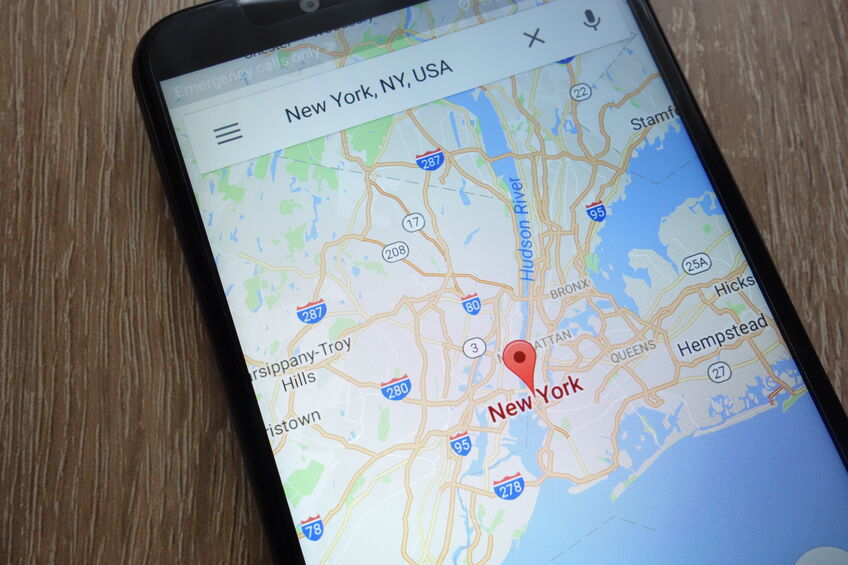 Almost five years since Google banned its search engine from displaying ads when queries contain the phrase “cash advance,” the loss of business attributed to that has probably been nil to the small business finance space.
According to Google, despite there being between 100,000 to 1 million searches for “cash advance” each month on average, only 1,000 to 10,000 searches per month are specifically for “merchant cash advance.”
People are ~10x more likely to search for business line of credit, business loan, working capital, or business credit card, according to Google’s estimates.
This is somewhat in line with findings from the Federal Reserve, whose recent study determined that 7x more business owners seek out a loan or line of credit than they do a merchant cash advance.
But putting that aside, the ban on paid advertising for all things cash advance has had an upside for some lucky companies. Without ads, Google has inadvertently (or maybe intentionally) elevated funding providers that are local to the searcher to the top of the organic results. That means listings on Google Maps that contain keywords matching the search queries are reaping the benefits of being prominently placed at the top of the page and are potentially capturing all the clicks along with it. The end result is an old-fashioned SEO war to win what few searches there are.
Compare that to a search for sba loan where paid advertising is fair game. In the era of PPP and EIDL, it’s perhaps no surprise that there are between 100,000 to 1 million searches per month for that keyword on average. Many of those searchers will probably not be eligible for an SBA loan so perhaps the next best fit would be equipment leasing or invoice factoring, two queries that are on par with merchant cash advance in average monthly searches, meaning volume is relatively low.
But how does low search volume turn into the large volume of funding originated? Well, another factor has changed since Google implemented the cash advance advertising restriction in 2017, and that is that Google is not as relevant as it used to be. Business owners are more likely to discover a potential capital source from social media or a fintech platform they already have a relationship with than ever before. According to a recent study, 25% of people claimed they had actually used either Alexa, Siri, or another voice assistant to find information about financial services, signaling a major departure from how traditional searching used to be conducted.
All of which means that the paid advertising restriction on a niche keyword on Google is unlikely to make any kind of difference in the big picture. Odds are you might not have known this restriction even existed. Bing, on the other hand, has no qualms with cash advances and allows paid advertising on it.
Ready Capital Small Loan Closings Reach New Growth with LenderAI
May 16, 2022 Last week, Ready Capital Corporation announced another company record for small 7(a) loan closings in the $10,000 to $350,000 range. Originating 55 such loans in April, the company attributed its success to the use of LenderAI by iBusiness Funding LLC, a subsidiary of Ready Capital.
LenderAI is a technology platform comprised with an easy-to-use suite of tools, according to the company. iBusiness Funding says their “approach to funding is based on automation, backed up by hyper-current and relevant data.” The LenderAI self service lending origination software includes no implementation fees, free instant setup, digital borrower application, digital documentation, all while being E-Train automated and SOC II compliant.
“Our core mission when expanding the SBA small loan program was to help the smallest businesses, making affordable lending available to support economic development and underserved communities,” said Justin Levy, President of Ready Capital Small Balance Lending. “LenderAI has enabled our 7(a) small loan products. The technology platform allows us to process loans for smaller businesses, who have fewer capital options, by digitizing their documents and inputs, giving them access to capital while allowing them to stay focused on their businesses.”
With iBusiness Funding’s LenderAI system, Ready Capital’s Small Loan Lending program funding has increased from 84 loans in 2021 to over 150 loans in the first four months of this year. iBusiness focuses on specific criteria for its borrowers including likelihood of success, engagement, and background/credit.
“We believe our LenderAI technology has drastically improved document collection and processing, streamlining both the borrower and lender experience,” stated Katy Forte Seybold, iBusiness Funding Chief of Staff and Head of Strategy, in a press release. “There’s little risk to trying it out, with bank level security, flexible core platform integrations and, for a limited time, it’s free to try with no implementation fees.”
Could More Free Money Be Coming to Restaurants?
April 11, 2022 The House passed a $55 billion bill on Thursday to provide assistance to restaurants that were not successful in receiving help from the federal Restaurant Revitalization Fund (RRF) last year. In a 223-203 House vote the measure was approved by lawmakers and was backed by only a few Republicans.
Over $40 billion in COVID-19 assistance was approved, replenishing the fund. An additional $13 billion would be provided for other businesses that remain struggling to recover.
The Restaurant Revitalization Fund was established under the American Rescue Plan, and signed into law by President Joe Biden on March 11, 2021 which issued $28.6 billion in direct relief funds. However, three weeks after launching, the funds ran out leaving only a third to receive relief funding out of 300,000 applicants.
Recipients are not required to repay the funding as long as funds are used for eligible uses no later than March 11, 2023.
If the bill passes the Senate, the 177,000 restaurants that were approved for RRF grants but did not receive funding before the portal closed are already in line as stated by legislators.
To overcome the 60-vote threshold to end a potential prolonged debate and pass the measure, it is undetermined whether Democrats in the evenly split Senate will be able to win over at least 10 Republicans.
Despite protocols of the pandemic being lifted, restaurants are still facing the negative effects with less staff and fewer customers. According to the National Restaurant Association, 9 in 10 restaurants have fewer than 50 employees and restaurant industry sales in 2021 are down by $65 billion from 2019’s pre-pandemic levels.
The main sponsor of the bill, Rep. Earl Blumenauer, D-Ore., and Rep. Dean Phillips, cited a survey from the Independent Restaurant Coalition and stated that over 80 percent of restaurants that didn’t receive grants have reported that they are on the verge of permanent closure.
IOU Financial Originated $161.5M in Loans in 2021
March 22, 2022 IOU Financial is coming off of its biggest year ever. The company has revealed total loan originations of $161.5M for 2021, up nearly 100% year-over-year. The figure puts it ahead of rival Funding Circle USA in 2021, according to origination data compiled by AltFinanceDaily.
In a public statement, IOU President and CEO Robert Gloer said, “The success of IOU’s marketplace strategy announced in 2021 is allowing us to scale up faster than previously possible. We’re proud of the team for breaking new origination records and giving us the extra latitude to further reduce corporate debt.” The latter comment was in reference to the company’s intention to repurchase approximately $1.2 million of its convertible debentures at par.
IOU’s full year 2021 financials are expected to be released next month.
Empathy in Design, Data in Development; How Specialized Fintechs are Bringing Humanity and Finance Together
March 15, 2022 Ahon Sarkar, GM of Helix
“I think the idea of being human has to exist at the core of your business. When you’re building a product, you have to start by asking ‘what’s the problem I am trying to solve and who is the person and what are they actually dealing with, and then how do I build it.’ You don’t build something and then bring it out to people. Empathy has to be the core of your product development.”
Ahon Sarkar is the GM of Helix, Q2’s BaaS arm, and a brand new homeowner. According to him, innovation happens when you define products based around problem solving, not creating products and then trying to force them on industries that desire innovation.
“I just finished buying a house, and it’s been a crazy process,” said Sarkar. “When I sent the wire to go buy my house, I went and asked my bank, ‘how will I know it’s been sent?’ Obviously I’m anxious about it,” he continued, “it’s the largest amount of money I have ever sent in my entire life.”
Sarkar said that his bank told him their system doesn’t give notifications that wire funds are indeed sent. The bank was like “‘oh, you won’t know.’ I was like what?”
“That day, I walked out and called our Product Owner for Wires and I said, ‘Kady, we have to build wire notifications.’ That’s empathy. That’s putting yourself in the shoes of the person and figuring out what is wrong with the system and making it better for a human being, as opposed to focusing on just the top line revenue.”
Helix’s whole mantra is about making finance human. By creating specifically tailored products for their clients, the company has developed both a brand and mindset internally and externally about their goals, values, and outlooks on what their work means to the greater good of both levels of consumer and B2B economics.
On top of offering employees complete flexibility on where and how they work, Helix also looks for people who are outside of the ‘cookie cutter’ software guru fintech employees are labeled as. Instead, Sarkar and Helix are looking for genuine human beings with life experiences that they can bring value to both the product and company’s culture.
“It’s hiring people that are empathetic, that are curious and are driven, because that propagates this idea into customer support, into operations and how we work with our bank partners,” said Sarkar. “It goes into marketing and how we’re talking about the overall message, so if it’s not at the core of what you do, at some point it will be pushed to the side so you can do the innovation and revenue you really want to do.”
“We have realized that you can innovate and drive revenue by being empathetic, by being human, and actually entrenching those values within the genetic fabric of the company,” Sarkar said.
When asked about the state of small business lending, Sarkar spoke about the data pools some companies are sitting on that would allow them to approve individuals for financial products. However it’s regulations according to him that are holding companies like Uber back from offering financial products to their employees.
Sarkar pitched the scenario of Uber lending a driver money at a cheaper rate because the information they have on their own employee may be able to prove their creditworthiness more than the information that is accessible to a bank.
“Let’s say you have an Uber driver, who has been on the job for four years. Five star driver, five thousand rides, Uber trusts this person. When that person walks into a bank, what does the bank see? Someone they never met before who makes $35K-$45K a year and comes with a bucket of risk. So that bank is going to run it through traditional underwriting, and that person may be challenged to get a loan because they have non-traditional income.”
According to Sarkar’s analogy, it’s Uber who should be funding this driver. “Uber trusts this person, Uber has been paying them for years. They know who this person is and they’re willing to extend more credit because they don’t think they are taking as much risk,” Sarkar said.
“So if you could take that idea and give Uber the ways to conform to a [financial] product that is based on what they already know about their drivers, those people might actually qualify for funds.”
Sarkar stressed that underwriters cannot even attempt to develop these products without the government giving these companies clearance to go out and provide these types of products for employees. “Whether it be gig economy workers or solopreneurs, or medium-sized business owners, it doesn’t matter,” he continued. “At the end of the day, if regulation doesn’t allow the underwriting for these products, no company is going to put them into practice.”
Whether it’s culture, product design or staffing a team, it seems that this idea of humanity is sticking to the fundamentals of Helix’s brand. “If you take the financial products and loans being written and just make them more practical and more human, I think we would be able to solve a lot of problems.” said Sarkar.
Can a Merchant Fund Themselves with Their 401k or IRA? Sort of
March 3, 2022 “There is a way to use a 401k to fund a business, and it’s possible without triggering a taxable event within the retirement account.”
Daniel Blue, Owner of a merchant and consumer learning program about utilizing retirement funds called Quest Educations, believes that merchants are overlooking untapped funds that they have already paid into when searching for capital to fund their businesses. According to him, not only does the IRS actually allow individuals to tap into their retirement plans if they fulfill certain qualifications, but banks and Wall Street have a vested interest in keeping this information under wraps.
“A Traditional IRA or a 401k from an old job can convert into a Solo 401k,” said Blue. “Since most IRAs and 401ks from previous employers don’t allow you to access the money inside the account penalty- and tax-free, the ‘Solo’ 401k is the solution to that problem.”
A ‘Solo’ 401k is an IRS-approved retirement account for an entrepreneur who doesn’t have any W-2 employees on their payroll. If a merchant works with an entire staff of freelancers or solo, they can convert their nest egg into this type of 401k.
Blue explained in detail about how this particular type of funding is done. By tapping into what the IRS calls a ‘loan feature’ on the Solo 401k, merchants can actually go in and get cash.
“Per the IRS, the loan feature allows you to take fifty-percent or $50k (whichever number is less) out of the Solo 401k penalty and tax-free,” said Blue. “The money taken out must be paid back to the Solo 401k within five years to avoid a taxable event.”
“There is an interest rate on this loan,” he continued. “Once locked in, the interest rate is fixed and returned to the Solo 401k. The interest rate is prime plus one or two percent. The money taken out of the Solo 401k via the loan feature can be used to fund a business.”
This type of loan isn’t as risky as it sounds. Blue says that the merchant isn’t risking their retirement accounts should they default.
“The IRS requires that quarterly payments get made back to their Solo 401k, and the loan must be paid in full within five years to avoid a taxable event,” he said. “If the loan gets into a default status, the remaining loan balance becomes taxable income. [The merchant] doesn’t lose their retirement account or their business if their Solo 401k loan gets into default status.”
Blue referred to the process as a merchant ‘becoming their own bank’. In a time where finding different avenues of funding is the name of the game in small business lending, harnessing a niche customer to provide them a personalized, low risk financial product seems like a no-brainer if the qualifications of funding are met.
Inflation is Impacting Merchants, and Capital Providers are Noticing
February 10, 2022 As the Department of Labor survey reported sky high inflation this week, the 7.5 percent rate is starting to impact the small business financing industry. With things like gas, food, electric, and oil leading the way in rising costs, merchants are requesting more capital, or none at all — as inflation continues to rise.
“I read that 45% of small businesses say they have dealt with inflation by taking out a loan over the past year,” said Ronald Curiel, Business Development Manager at Advantage Capital Funding. “Small businesses are the backbone of the U.S economy and a lot of businesses are relying more and more on small business financing to get them through times of high inflation.”
Small businesses have been forced to raise prices in many areas. Delis are adding surcharges to bacon, lunch deals are disappearing from pizza parlors, and delivery minimums are being raised. According to Curiel, the need for financing has gone hand-in-hand with the rise in inflation.
With payroll costs at a two-decade high and prices of goods going up seemingly exponentially, capital providers might be able to leverage this to fund merchants who haven’t raised their prices or expanded in order to keep up. The challenge is that if inflation keeps rising, businesses will certainly need to put those funds to good use.
Inflation has even hit the equipment financing sector too, with merchants holding whatever cash they have left in hopes of prices of machinery coming down. “We have seen an increase in clients putting off Equipment purchases until the prices of equipment come back down to realistic prices,” said Josh Feinberg, CEO of Everlasting Capital.
“[Merchants] are saying they have seen the prices increase between 20 and 40 percent, which impacts our ability to help business owners scale.”
PPP Fraud Case Reports Collusion Between Loan Broker and IRS Supervisor
February 2, 2022 In a PPP scheme that saw twenty-two people get brought up on charges like conspiracy and wire fraud, a federal indictment also alleges collusion between a Supervisory Individual Tax Advisory Specialist with the IRS named Melissa Myrick, and an Atlanta business loan broker named Mark Mason, who was president of Atlanta Business Capital.
According to the DOJ, Mason and Myrick worked together to falsify PPP applications by leaving sections like average monthly payroll and number of employees blank. Between May 12 and May 26 of 2020, Myrick signed off on over $280,000 in altered loan applications while also being an active employee with the IRS.
The indictment also says that merchants who received the funding were in on the scam. “Purported business owners communicated with Mason about the fraudulent PPP loan applications, as well as the amounts to include on the Forms 941 and purported payroll spreadsheets submitted with the applications.”
Mason pleaded guilty on January 4 to one count of wire fraud and one count of money laundering in connection with his involvement with the PPP fraud mentioned in the indictment.
The report claims that on top of altering documents to get the government-backed funds, Mason charged ‘success fees’ to the merchants he was working with. While pleading guilty, Mason admitted to funneling fraudulent deals totaling between $3.5M and $9.5M
Mason seemed to attract clients with notoriety onto his scam. Public figures mentioned in the indictment include actress Ion Overman who appeared in Desperate Housewives, music producer Carlos “Clos” Stephens who has worked with hip-hop guru Master P, and actor Dale Godboldo who appeared in The People v. O.J. Simpson.