Ho Ho… Hold Up. NY Governor Signs Industry-Altering Small Business Lending Law
December 24, 2020 Merrrrry Christmas. New York Governor Andrew Cuomo reportedly signed SB 5470 into law late last night, a bill that forever changes and complicates nearly all forms of small business financing in the state.
The law gives regulatory enforcement authority to New York’s Department of Financial Services, requires APR disclosures on contracts where one can’t be mathematically calculated, and mandates that customers be told if there is any “double dipping” going on. And that’s just the beginning of what it contains.
A coalition of small business capital providers fiercely opposed the language of the bill. Steve Denis, executive director of the Small Business Finance Association, wrote in an op-ed that “the lack of cogency and lazy approach to this legislation is a disservice to the hard-working entrepreneurs who continue to open their businesses while facing daily economic uncertainty.”
The bill was also opposed by fintech lenders like PayPal.
Proponents of the bill celebrated the news on social media in the early morning hours of Christmas Eve.
Ryan Metcalf at Funding Circle, a company not even based in New York that moved all of its tech jobs out of the US to the UK this summer, wrote on LinkedIn that the bill will “save New York #smallbiz between $369 million and $1.75 billion annually.” Funding Circle, as a member of the Responsible Business Lending Coalition (RBLC), was heavily engaged in the advocacy process.
Several of RBLC’s members have already ceased small business lending in the US, some permanently.
Unique circumstances also exist at an ally of the RBLC, the Innovative Lending Platform Association (ILPA), which Funding Circle is also a member of. Two out of the 11 members were acquired before the bill could even be signed, Kabbage and OnDeck.
NY State Assemblyman Ken Zebrowski and State Senator Kevin Thomas, who sponsored the bill, cheered the signing of it.
“Thanks to Governor Cuomo for signing our Small Business Truth in Lending Act,” Zebrowski tweeted. “Extremely proud to have worked with many to establish the most comprehensive small business disclosure law in the nation. With the pandemic surging on, small biz owners need these critical protections now.”
“The signing of the New York State Small Business Truth in Lending Act is a victory for New York’s small business owners,” Thomas wrote on twitter. “Thank you for signing New York’s first-ever small business lending transparency bill into law.”
“I think that the companies and organizations that support this legislation don’t fully understand what’s actually in the bill,” SBFA’s Steve Denis said to AltFinanceDaily in August. “[…] They have no problem pounding the table and taking credit for its passage, but I guess they don’t realize it will subject them and the rest of the alternative finance industry to massive liability, massive fines—upwards of billions of dollars worth of fines.”
And yet Senator Thomas tweeted, “This will help a lot of small businesses trying to get back on their feet during this pandemic.”
It is unclear, of course, who they expect to provide such capital now to do this.
Steve Denis Talks About SBFA Study: APR is a Bad Metric For SMB Loan Transparency
October 19, 2020 In response to regulatory bills in California and New York that will enforce APR disclosures on small business capital providers, the Small Business Finance Association (SBFA) funded a study by Kingsley-Kleimann to find out if APR is a good metric to use for business loans.
Steve Denis, the Executive director of the SBFA, said his group supported the study because the states should test concepts with actual small business owners before passing regulation. In the NY disclosure bill awaiting signature, Denis said there was no concept testing. Some of the companies that support the bill might not have even read what it stipulates.
“You have a group of companies that are pushing these types of disclosures, for no reason other than their own self-interest,” Denis said. “We’re fine with disclosure, we are all for transparency, but it needs to be done in a way that we believe is meaningful to small business owners.”
In qualitative testing of 24 small business owners and executives who have experience taking commercial loans, the study concluded participants did not understand what APR was. The study found that the total cost of financing model was a better way to understand and compare options for their use.
“As one participant, when asked to define APR, answered: ‘I feel like you are asking a kid, why is the sky blue?’ (Participant 3, NY).” The study concluded, “In other words, [APR] is ever-present yet also inscrutable.”
Kingsley-Kleimann is a research-based organization that studies communication and disclosure for government agencies like the FTC and private or public business. Participants were selected from Califonia and NY.
Denis said that the findings show what SMB lending companies have already known- Anual Percentage Rate is not a useful metric for short term loans. Many do not know that APR represents the annualized cost of funds for the loan term, with the fees and additional costs included.
“People don’t know what APR is; it confuses them,” Denis said. “They know it’s a metric they should use, but they don’t know why. The APR is such a marketing tool now, it’s not a valuable tool.”
The study showed most respondents thought APR was the same as an interest rate. It’s not.
 Denis said using an annualized rate for shorter-term loans or SMB loans that have no ending date worsens the problems. In those cases, firms estimate an APR, and it is inaccurate.
“When you have a merchant cash advance, there’s no term,” Denis said. “So you have to estimate a term, and I mean that is just a recipe for fraud.”
Denis said that the firms supporting California SB1235 and the New York S 5470/A 10118-A disclosure bill and taking credit for writing the laws are the same companies that will suffer under the strict tolerance of an APR rule.
“The companies pushing this, the trade associations pushing it, they like to take credit for writing the bill in California and writing the bill in New York: I don’t even think they’ve read it,” Denis said. “It’s going to subject their own members to potentially millions if not hundreds of millions of dollars in potential liability [fines.]”
The SBFA is not against disclosure by any means, Denis said, but supported other avenues. The trade group believes knowing the total cost of a loan and the cost and timeline of payments will help protect and inform borrowers better than APR. Firms that support the disclosure bill are banking off the positive press, hoping to be seen as pro-consumer protections but forcing APR will make it harder to compare the actual value of loans, Denis said.
Denis is still optimistic that regulators will work with businesses affected by the incoming legislation. He said the NY legislature and governor’s office, as well as the California Department of Business Oversight, understand the problems of using APR.
“They’re receptive to these arguments, and they know what they’re doing,” Denis said. “The last thing they want to do is pass a bill that’s going to further confuse businesses, especially during a pandemic when businesses are relying on this capital to stay afloat.”
Fintech Equality Coalition: meet disparity in minority PPP funding
September 9, 2020 Last month, a group of fintech companies christened the Fintech Equality Coalition. Dedicated to ensuring racial equality is a right extended to everyone, the group pledges to focus on enhancing access to financial services for the underrepresented- particularly within the black community.
The coalition comes at a pivotal time for fintech, currently facing the challenges created by the 2020 pandemic.
In August, the Federal Reserve Bank of New York released a study into the distribution of PPP and how the funds affected black communities. The institution found that the number of small business owners fell by 22% from February to April- the largest drop on record. But the closure of businesses was not felt equally.
“Black businesses experienced the most acute decline, with a 41 percent drop,” The study said. “Latinx business owners fell by 32 percent, and Asian business owners dropped by 26 percent. In contrast, the number of white business owners fell by 17 percent.”
The study also showed that forty percent of Black-owned businesses are concentrated in 30 counties across the country. 19 out of 30 of these counties were the hardest hit by COVID 19 in the nation.
Unfortunately, other studies have shown that the PPP did not accurately get funds to areas hit by the virus. The National Bureau of Economic Research (NBER) published in July, found that companies more negatively affected by COVID were less likely to be approved.
This may explain why the Small Business Majority study into PPP found that while 63% of Black and Latino small business owners applied, less than two-thirds received funding.
The Fintech Equality Coaltion’s pledge is overall a promise to do more for minority communities, stating:
- Because the Black community is underserved by financial services
- Because there are Black voices and issues in our industry that should be but are not currently amplified
- Because Black employees and Black-owned businesses are underrepresented in the tech community, including at many of our companies
- Because the Black community is underrepresented in leadership roles, including at many of our companies
- Because these promises are meaningless without accountability
The coalition is a pledge to host and sponsor events like forums that feature black speakers. The pledge is also a recognition that the black community has been underserved by financial services in the past, and the signers aim to incorporate more black-owned businesses than before.
Who’s signed

Betterment | Jon Stein, CEO

Blend | Nima Ghamsari, CEO

Carver Edison | Aaron Shapiro, CEO

Cadre | Ryan Williams, CEO

Commerce Ventures | Matt Nichols, CEO

Credit Karma | Ken Lin, CEO

Commonbond | David Klein, CEO

Divvy Homes | Adena Hefets, CEO

Dosh | Ryan Wurech, CEO

Earnest | Susan Ehrlich, CEO

Fabric | Adam Erlebacher, CEO

Freedom Financial Network | Brad Stroh & Andrew Housser, co-CEOs

Guidefi | Charlene Fadirepo, CEO

Halo | Taylor Simpson, CEO

Harness Wealth | David Snider, CEO

Jetty | Luke Cohler, President & Michael Rudoy, CEO

Kard | Ben Mackinnon, CEO

Kindur | Rhian Horgan, CEO

Manifest | Anuraag Tripathi, CEO

Marqeta | Jason Gardner, CEO

Mass Challenge | Siobhan Dullea, CEO

MoneyLion | Dee Choubey, CEO

Monzo | TS Anil, CEO

Nova Credit | Misha Esipov, CEO

Oneblinc | Fabio Torelli, CEO

Oportun | Raul Vazquez, CEO

Petal | Jason Gross, CEO

Renaissance Payments | Joseph Akintolayo, CEO

Rhino | Paraag Sarva, CEO

Scratch | Sameh Elamawy, CEO

Spruce | Patrick Burns, CEO

SoFi | Anthony Noto, CEO

Stash | Brandon Krieg, CEO


Varo | Colin Walsh, CEO

Zest AI | Mike de Vere, CEO
“A Bad Solution in Search of a Problem”: SBFA’s Response to the New York Disclosure Bill
August 6, 2020 “It’s actually shocking to me how tone deaf those who claim to represent our industry are when it comes to policy,” is how Steve Denis, Executive Director of the Small Business Finance Association, described the Innovative Lending Platform Association’s response to and influence over the drafting of bill A10118A/S5470B. Known as New York’s APR disclosure bill, S5470B has been passed by the state legislature, and if signed by Governor Cuomo, will require small business financing contracts to disclose the annual percentage rate as well as other uniform disclosures.
Speaking to AltFinanceDaily over the phone, Denis expressed disappointment with both the bill as well as comments made by ILPA’s CEO, Scott Stewart, in a recent article.
“Small businesses in New York are struggling right now,” the Director noted. “They’re waking up every single day wondering if they should even stay open or close permanently, and companies and organizations in our space are using their resources to push a disclosure bill that nobody has asked for. There’s no widespread issue with disclosure. There’s been no outpouring of complaints to regulators. No bad reviews on Trustpilot. This is a really bad solution in search of a problem. We have real problems right now, we should be coming together as an industry to help solve them. We want to make sure that capital is available to small businesses on the other side of this pandemic, and this group of tone deaf companies are spending resources trying to push a meaningless disclosure bill that’s just going to hurt the access to capital for real small businesses who are grinding and trying to figure out how to stay open. It’s unbelievable.”
The SBFA showed AltFinanceDaily a list of issues and complaints made to the New York legislature regarding S5470B. According to the trade group, these were largely ignored and the bill was pushed through with the issues left in. Among these were problems relating to definitions and terms. No definition for the application process is included, nor is there one for a finance charge. As well as this, one senator was quoted using the term “double dipping” to refer to consumers refinancing debts that have prepayment penalties; which Denis said was “creating a whole new term that’s never been used or defined before, and applying it to commercial finance, something that’s never been done.”
Accompanying these complaints was one regarding how APR is calculated, as S5470B includes two different calculations for this, producing different results while not clearly defining when to use each.
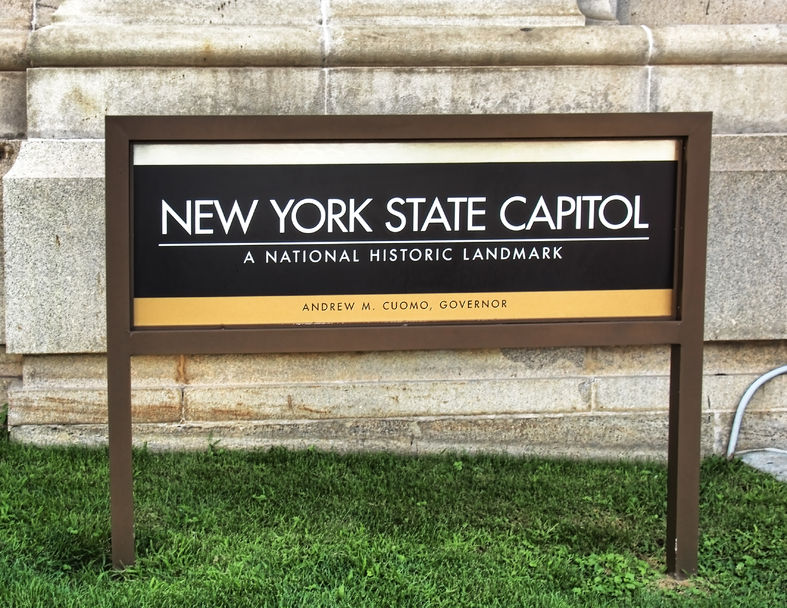 When asked why he believes these issues were allowed to remain in the language of the bill, Denis was baffled.
“I think that the companies and organizations that support this legislation don’t fully understand what’s actually in the bill. […] They have no problem pounding the table and taking credit for its passage, but I guess they don’t realize it will subject them and the rest of the alternative finance industry to massive liability, massive fines—upwards of billions of dollars worth of fines.”
Denis’s fear going forward is that funders in New York will tighten up their channels going forward or cease funding entirely, given the increased riskiness of funding under the terms of S5470B if Cuomo signs it into law. Before that happens though, the Director mentioned that he believes there will be legal challenges to the bill in the future, saying that its wording is just too unclear and poorly drafted. Adding to this, Denis said that he believes many members of New York’s state government are aware that this bill is imperfect and were comfortable with the thought of it being edited once passed. Looking forward, Denis wants the SBFA to be deeply involved in those edits, saying that they’re willing to work with the Governor, the state assembly, and the New York Department of Financial Services.
“We’re for disclosure, we think there should be standard disclosure. … Our message to the Governor’s office is ‘Let’s take a step back.’ The Department of Financial Services needs to look at our industry, they need to get to know our industry. They are the experts that understand the space, they understand disclosure, and they understand what they need to do to bring responsible lending to New Yorkers. And we would like to work with the NYDFS and a broader industry to put forward a bill that’s led by the Governor and the Governor’s office that brings meaningful disclosure and meaningful safeguards to this industry.”
“Our Model Disclosure Legislation”: ILPA’s CEO on New York’s APR disclosure bill
July 28, 2020 Late last week the New York State legislature voted to pass A10118A/S5470B, a bill that might lead to greater clarity and consumer knowledge according to Scott Stewart, CEO of the Innovative Lending Platform Association, a trade association of small business lenders.
Referring to it as “our model disclosure legislation,” Stewart explained in a phone call the work that the ILPA put in to help the bill through as well as what sort of impacts can be expected from S5470B.
“The implications are that small businesses, certainly in New York to begin with, but we think throughout the country, will have the opportunity to really see, understand, and compare various different sources and products for financing their small businesses in terms of their expansion and success. That’s something we’re very proud of and I think that’s something the small business borrower really deserves to see. They deserve to see and understand exactly what they’re doing and when they’re taking out financing products for their businesses.”
What exactly these business owners will understand better relates to the details of the bill, which requires small business financing contracts to disclose the annual percentage rate as well as other uniform disclosures. If signed by New York Governor Cuomo, the bill could have ramifications on small business lenders, MCA, and factoring providers.
ILPA, founded in 2016 and comprised by the likes of Kabbage, OnDeck, and BlueVine; worked alongside legislators to help with the drafting of the bill, assisting with the wording so that it reflects their own SMART Box initiative. This being a form offered by ILPA which lists a number of metrics worth considering when seeking small business financing.
“In January 2019, our team came together and decided that it made sense in the wake of 1235 in California to take a proactive approach to codify SMART Box as legislation in a state, and we selected New York because we felt we had a favorable legislature there,” Stewart said. “I think it’s an incredible achievement. You see the big margins that it passed by in both the Assembly and the Senate and we’re very, very proud of that. I think it really speaks to our cooperative approach to building legislation. And now, as we move toward the implementation phase, we’re going to be in a place where, hopefully in the next six months or so, small businesses will begin receiving really clear disclosures on the capital and credit that they’re trying to take out.”
As noted though, the bill must be signed by Governor Cuomo before becoming law, and then it will affect New York only. Beyond the Empire State though, Stewart is hopeful that ILPA will be able to implement the terms of S5470B in other states.
“Now that we have hopefully harmonized the legislative landscape between California, with 1235, and New York; hopefully we’ll be able to export that to other states. We don’t have any accurate plans at this time to do that, but we feel like if two of the larger states in the nation have very similar disclosure regimes then we’re on the track toward seeing this nationwide.”
New York State Legislators Resume Push of Commercial Finance Disclosure Bill
July 17, 2020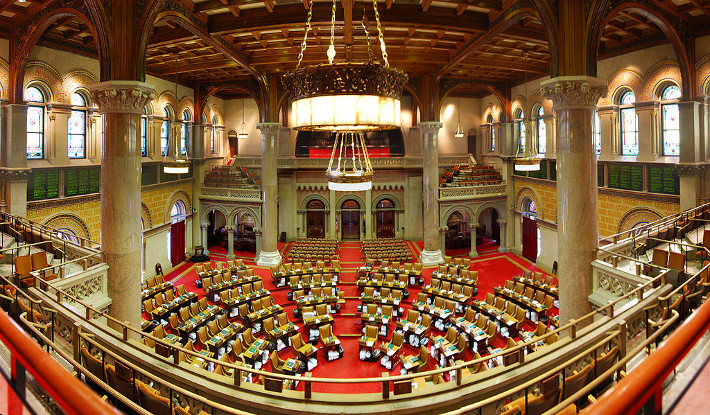 A bill (A10118A / S5470B) intended to create uniform disclosures for comparison purposes while also placing control of the commercial finance industry under the purview of the superintendent of the New York Department of Financial Services, is moving forward.
The March 2020 initiative was picked back up this week by members of the Assembly where it passed the banking committee and codes committee on a unanimous and bipartisan basis.
“When enacted, this bill will become the strongest commercial lending disclosure law in the country that covers all commercial financing products,” wrote Ryan Metcalf, Head of US Regulatory Affairs and Social Impact at Funding Circle, on LinkedIn. “It includes strong provisions that ensures enforcement and eliminates loopholes that will prevent gaming & abuse, & requires APR to be disclosed for all products.”
Metcalf further wrote that they and the Responsible Business Lending Coalition (RBLC) have been working diligently with NY state legislators for the last year or so to craft this bill. Among RBLC’s membership is Fundera, Nav, Lendistry, LendingClub and about 4 dozen other companies.
With New York in a State of Emergency, Its Legislators Rush to Regulate Disclosures in the Commercial Finance Industry
March 16, 2020 On March 7th, Governor Cuomo declared a disaster emergency for New York State. Four and 6 days later respectively, legislators in the state Assembly and Senate introduced commercial financing disclosure bills that would regulate all business-to-business financing transactions including secured loans, factoring, and merchant cash advances. The bills intend to create uniform disclosures for comparison purposes while also placing control of the commercial finance industry under the purview of the superintendent of the New York Department of Financial Services (DFS).
The bills also state that merchant cash advance companies may be required to prepare funding reports on all of their deals for the DFS to inspect so that the superintendent can analyze the difference between the estimated anticipated APR and the actual retrospective APR that resulted after the merchants delivered all of the receivables to the funder on each deal.
The bills are said to have been in the works for some time, but the timing of their introduction is awkward given the sudden economic situation that is unfolding in the state.
The bills are actually quite lengthy so you can read them yourselves in full here:
Assembly Bill A10118 – Introduced by Kenneth Zebrowski
Senate Bill S05470A – Introduced by Kevin Thomas
“Predatory Lenders” Slammed as Bill to Ban Confessions of Judgment Nationwide Advances
November 14, 2019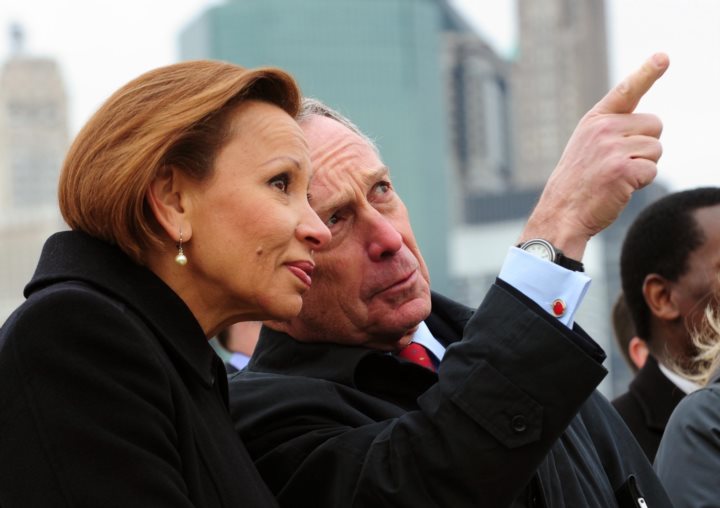
(Bloomberg is majority owner of Bloomberg News parent Bloomberg LP)
Rep. Nydia Velázquez (D) celebrated the advancement of a bill on Thursday that aims to outlaw confessions of judgment (COJs) in commercial finance transactions nationwide. HR 3490, dubbed the Small Business Lending Fairness Act, made its way through the House Financial Services Committee on a vote of 31-23. The next step will be a floor vote.
Velázquez made direct references to a Bloomberg News story series published last year about “predatory lending” and a NY Times article about Taxi medallion loans as her basis for supporting it. Velázquez said that New York had become a breeding ground for “con artists” that relied on COJs to prey on mom-and-pop businesses. The congresswoman singled out New York because of recent taxi medallion loan outrage and the state’s alleged reputation as a “clearing house” for obtaining fast easy judgments against debtors nationwide. New York took a major step to change that practice earlier this year through a new law that only allows COJs to be filed in the state against New York residents. HR 3490 seeks to prevent them from being filed in every state, including New York.
 Ironically then, the bill is at odds with the new New York law in that Velázquez’s bill, if it became federal law, would go so far as to prevent New York’s own courts from entering a COJ against New York’s own residents, if it resulted from a commercial finance transaction.
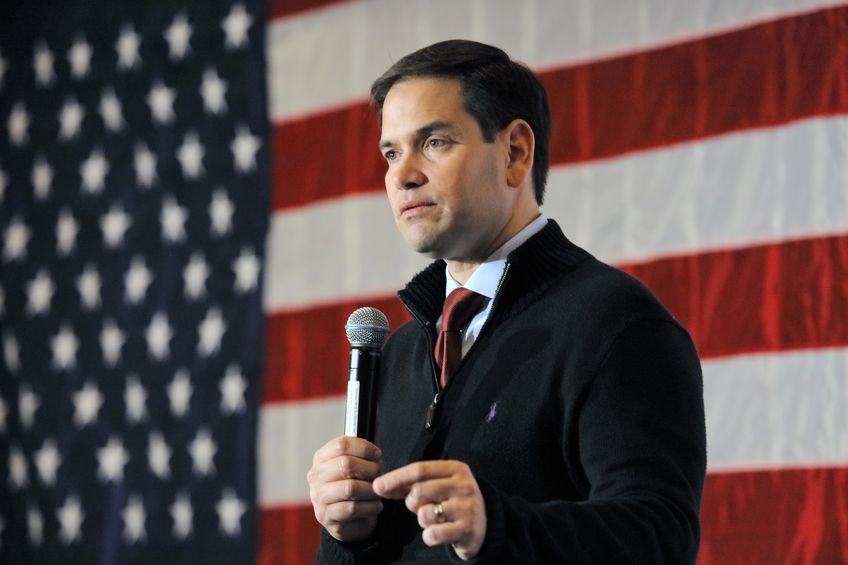
While momentum in the House could be perceived as a partisan initiative unlikely to survive the Senate, the bill has in fact garnered a degree of Republican support, recently through Rep. Roger W. Marshall, a co-sponsor of the bill, and originally by Senator Marco Rubio who initially sparked the call to action in the Senate last year.
The Financial Svcs Committee approved my bill to end "Confessions of Judgment", contracts that allow for unfair, predatory small business loans & that have been linked to #taximedallion crisis in NYC.
On to the House floor!
Read More: https://t.co/xHaYnLKme4@NYTW @FSCDems
— Rep. Nydia Velazquez (@NydiaVelazquez) November 14, 2019
A co-author of the COJ-centric Bloomberg News stories was quick to take the credit for the advancement of Velázquez’s bill.
the bill was drafted in response to our series Sign Here to Lose Everythinghttps://t.co/lrfIW3P0yi
— Zeke Faux (@ZekeFaux) November 14, 2019