California to Hold Hearings on Commercial Finance Broker Licensing
January 8, 2024Members of the California state legislature are apparently not done with the commercial finance space. This time they want to expand the scope of the California Financing Law (CFL) to include “commercial financing providers” and “commercial financing brokers” for the purpose of licensure, regulation, and enforcement. In Senate Bill 869, commercial financing is defined as an “accounts receivable purchase transaction, including factoring, asset-based lending transaction, commercial loan, or lease financing, intended by the recipient for use primarily for a purpose other than a personal, family, or household purpose.”
While the bill was technically introduced last year, its progress stalled. Now it’s not only back but it will also be the subject of back-to-back committee hearings on January 10 and January 11. To the extent these hearings are publicly accessible, AltFinanceDaily will livestream them.
Broker Prediction for 2024
January 2, 2024For many brokers the day revolves around going from call to call, email to email, deal to deal. Close one, go to the next, keep going, leave late, and continue to respond to merchants up until it’s time to go to sleep. Funders have come and gone, underwriting requirements have changed, and technology has made the business more efficient, but the broker role has remained. Merchants, time has proven, still just want to talk to someone.
Indeed, every time a new regulation or technology comes out that portends danger for brokers, life pretty much goes on like normal. Yes, it’s a competitive business and a changing business but here we are now in the mid-2020s and numerous brokers are just so bogged down with merchant calls and emails that they hardly have time to consider that anything is different other than so and so just changed their underwriting guidelines.
What’s my prediction for brokers in 2024? That brokers will keep brokering!
Surprising Stats of 2023
December 27, 2023Remember when interest rates soared, banks collapsed, and experts began to prepare for the worst? Well, appearances can be deceiving.
Business loan origination volume at Square, Enova, Shopify, and Funding Circle are all on track to surpass 2022’s numbers. When it came to bad debt, PayPal was the only large tech lender to announce that it had become a problem this year. PayPal’s origination numbers are consequently also down year-over-year.
The S&P 500 was at 3,839.50 one year ago and closed at 4,774.75 yesterday, a gain of more than 24%.
Unemployment was 3.5% last December and had only modestly increased to 3.7% this November.
Inflation was 7.1% last November and only 3.1% this November.
Bitcoin is up by 150% year-over-year!
Anecdotal reports at smaller non-public small business funders, however, have hinted at bad debt increases all year and underwriting has generally become more conservative. Despite this, brokers are still brokering deals and funders are still funding. The predicted mass AI-induced layoffs have also not yet materialized. In the grand scheme of things, the argument could be made that 2023 was actually a pretty good year.
But 2024 could be dicey.
- The FCC closed the lead generator loophole.
- The first wave of small business finance companies will have to begin complying with new CFPB regulations.
- It will be a presidential election year like none ever experienced before.
- Americans are overleveraged. Forty percent of student loan borrowers failed to make a payment after the covid-era pause ended.
- General economic, societal, and political unease.
So what will happen? I guess we’ll find out. It could be terrible or awesome or anything in between.
AltFinanceDaily’s Top Five Stories of 2023
December 13, 2023 deBanked’s most read stories of 2023 are in. Here’s what the industry read about most this year!
EIDL & ERC Updates
Readers tuned in to learn about EIDL loans going bad and the roller coaster surrounding the ERC program.
See:
As IRS Announces Pause of ERC Payouts, Businesses May Resume Pursuit of Upfront Alternatives
Whoa, That’s a Lot of Bad EIDL Loans
Reliant Funding
There was a lot of talk about Reliant Funding this year, which first made waves in February and then later in September.
See:
Reliant Funding Shifts Gears
The LCF Group Acquires Key Strategic Assets from Reliant Funding and Sets Course for a Record-Breaking Year
GFE
The company is called Global Funding Experts. After they raised a debt facility of $100 million, everyone wanted to know more!
See: Experts: How GFE Went Big
Bluevine Cutting off ISOs
The news just broke, but seeing a big name change their business strategy like this has got many people talking.
See: Bluevine Partner Email Circulates
Florida Commercial Financing Disclosure Rule
Guess what’s about to go into effect? A unique disclosure rule like nowhere else. Brokers, I hope you’ve read this one!
See: Pending Florida Law Draws From DailyFunder’s Rulebook
Top stories of 2022
Top stories of 2021
Top stories of 2020
Top stories of 2019
Top stories of 2018
Top stories of 2016
Legal Risks: Penalties for Non-Compliance in Revenue-Based Financing
December 11, 2023Jeffrey S. Paige is the General Counsel of CFG Merchant Solutions. Visit: https://cfgmerchantsolutions.com
Staying compliant with disclosure legislation and regulations is paramount for revenue-based financing funders and brokers alike. In states such as California, Virginia, Utah, New York, Georgia, Connecticut, and Florida, there are specific requirements to which commercial financing funders must adhere. Funders and brokers who fail to comply with these requirements could face significant legal and/or financial penalties. Funders and brokers are encouraged to consult their legal counsel to ensure full compliance with all laws and regulations of every state in which they transact business.
California Code of Regulations Title 10, Chapter 3 – California Financing Disclosure Law (Effective December 9, 2022):
Starting on December 9, 2022, commercial financing funders in California are required to provide clients with certain disclosures, including the controversial APR calculation. This became mandatory following the issuance of final regulations by the California Department of Financial Protection and Innovation (DFPI) on June 15th to implement the California Code of Regulations Title 10, Chapter 3. Violations of these disclosure requirements in California can lead to significant penalties, reaching up to $10,000 for willful violations, along with the possibility of imprisonment for licensees who commit violations. To maintain compliance and avoid penalties, consult with your counsel to ensure your disclosures are timely and set forth all required information, including but not limited to:
- Total amount of funds provided
- Total dollar cost of the financing
- Term or estimated term
- Payment details
- Prepayment policies
- Total cost of financing expressed as an annualized rate
Virginia HB1027 – Virginia Financing Disclosure Law (Effective July 1, 2022):
Virginia enacted HB1027, introducing disclosure and registration requirements for sales-based financing funders. Funders conducting business in Virginia are obligated to conform to these regulations, which include but are not limited to:
- Registration: Funders and brokers in revenue-based financing must register with the State Corporation Commission and subsequently renew annually.
- Disclosures: Disclosures for specific financing offers are mandatory, covering total financing amount, finance charges, total repayment amount, estimated payments, payment amounts, and applicable fees.
- Virginia’s Distinction: Unlike California and New York, Virginia does not mandate the disclosure of an annual percentage rate (APR), focusing on the disclosure of the total cost of capital.
Non-compliance with Virginia HB1027, the Virginia Financing Disclosure Law, exposes businesses to substantial penalties. The law empowers the Virginia Attorney General to seek injunctions for violations, in addition to restitution payments, damages, and attorney’s fees for violations.
Utah SB183 – Utah Financing Disclosure Law (Effective January 1, 2023):
Engaging in a commercial financing transaction as a provider in Utah or with a Utah resident has become unlawful unless one is registered with the Utah Department of Financial Institutions (DFI). This registration, akin to California’s process, must be renewed annually through the Nationwide Multistate Licensing System (NMLS). Utah’s unique framework explicitly states that non-compliance does not affect the enforceability of transactions, nor do violations give rise to a private cause of action against the funder. However, civil penalties are not to be underestimated. Violators can face penalties of $500 per violation, not exceeding $20,000 for all violations. For repeat offenders, especially those who receive written notice of prior violations, penalties can escalate to $1,000 per violation, capped at $50,000. To ensure compliance with Utah SB 183 and avoid legal trouble, ensure proper and timely registration and annual renewal. Also, consult with counsel to prepare the required disclosures, which feature (but are not limited to) the total amount of funds provided, the total cost of financing, and any other pertinent material terms and associated costs as required by the regulations.
New York Commercial Financing Disclosure Law (August 1, 2023):
The New York Commercial Financing Disclosure Law (CFDL) mandates standardized disclosures for unregulated financial institutions engaged in commercial financing transactions. Funders failing to comply may face civil penalties, with fines reaching up to $2,000 per violation or $10,000 for intentional violations. In addition, for knowing violations, the Superintendent of the Department of Financial Services can impose restitution payments and/or injunctive relief. Disclosures include, but are not limited to:
- The total amount of funds provided
- The total cost of financing (expressed as an annualized rate)
- A description of the financing product
- Other material terms and fees
- The name and contact information of the funder
- A statement that the borrower has the right to cancel the deal within three business days of receiving the disclosures
- Timing: The disclosure must be given to the borrower when a specific commercial financing offer is made.
- Any portion of the amount financed used to pay unpaid finance charges or fees (referred to in the legislation as “double dipping.”)
Funders should proactively integrate these disclosures to align with New York’s regulatory standards and foster a culture of accuracy and responsibility in commercial financing practices.
Georgia Commercial Financing Disclosure Law (Effective January 1, 2024):
Effective January 1, 2023, Georgia’s Commercial Financing Disclosure Law mandates clear and detailed disclosures for commercial financing funders. The law amends Georgia’s Fair Business Practices Act, applying specifically to providers of commercial loans and accounts receivable purchase transactions under $500,000. Transactions are defined as purchases of accounts receivable or payment intangibles, strategically avoiding loan classification, and notably, no licensing or registration requirements are imposed on funders. Funders failing to comply with these disclosure requirements face potential civil penalties, ranging from $500 to $20,000, with additional penalties for continued non-compliance after notice. Importantly, these penalties do not compromise the enforceability of the transactions, and it is noteworthy that the law does not grant a private right of action.
Disclosure Requirements:
- Providers must disclose key terms: total funding amount, net funds disbursed, total payable, financing cost, payment schedule, and prepayment penalties.
- Unlike California and New York, Georgia’s law does not mandate APR calculation.
- The definition of “Providers” is consistent with Utah’s Commercial Financing Registration and Disclosure Act.
- Covers those engaging in more than five commercial financing transactions in Georgia annually, including online platforms partnering with depository institutions.
Florida Commercial Financing Disclosure Law (Effective July 1, 2023):
Effective from July 1, 2023, commercial financing funders in Florida are mandated to comply with the requirements of the Florida Commercial Financing Disclosure Law.
Florida Law Disclosure Requirements:
Non-compliance with these regulations can result in fines ranging from $500 per incident to an aggregate of $20,000, with possible aggregate penalties up to $50,000 for continued violations after receipt of notice. As with other states, transparency in financial dealings is paramount, and funders should stay updated on regulatory changes to ensure continuous compliance.
Connecticut Financing Disclosure Law (Effective July 1, 2024):
Connecticut sets a clear deadline for funders and brokers to register with the state banking commissioner by October 1, 2024. Additionally, the Connecticut Financing Disclosure law requires funders to disclose:
These regulations apply to entities providing commercial financing, and failure to comply can result in severe civil penalties of up to $100,000. The commissioner additionally holds the authority to enjoin those violating the statute. Understanding and fully complying with these requirements is crucial for funders and brokers that transact business in this state.
The Imperative of Adhering to Evolving Commercial Financing Disclosure Laws
The regulatory frameworks in California, Virginia, Utah, Georgia, New York, Florida, and Connecticut, coupled with impending regulations in other states, underscore a growing regulatory focus on transparency, customer protection, disclosure and equitable financial practices. With revenue-based financing facing heightened scrutiny, the strict compliance with these laws cannot be emphasized enough. Ensuring adherence is not just a best practice but a crucial necessity to avoid potential legal penalties and foster a financial ecosystem built on trust, integrity, and responsible funding practices.
Missouri Resurrects its Commercial Financing Disclosure Bill
December 10, 2023For the third time, a commercial financing disclosure bill has been introduced in Missouri. Senate Bill 753, introduced this month, is nearly identical to SB 187 which failed to gain traction this year.
A staple of the bill is its broker licensing requirement, which would require an annual renewal. Brokers would not be able to broker any deals for Missouri merchants until they were registered.
AltFinanceDaily Thanksgiving Memes 2023
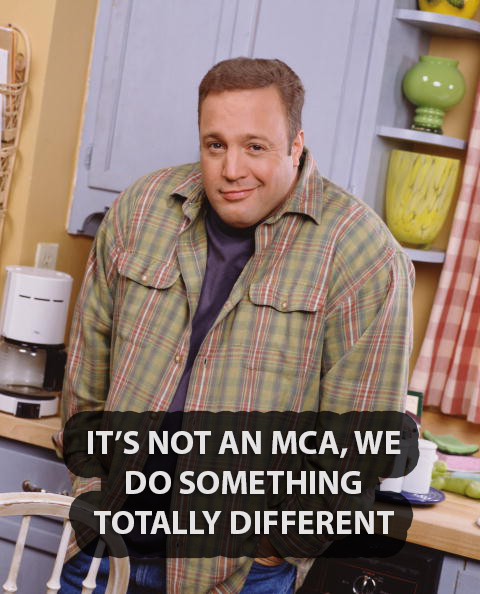
November 21, 2023It’s Thanksgiving again so you know what that means? Memes! This tradition (which we’ve kept up with as often as possible) started on AltFinanceDaily in 2012. We hope you have a wonderful holiday and strong end-of-year.
And now, the memes:










See previous year memes:
2022 Thanksgiving Day Memes
2021 Thanksgiving Day Memes
2020 Thanksgiving Day Memes
2019 Thanksgiving Day Memes
2018
2017
2016
2012
Plus, don’t forget to register for AltFinanceDaily CONNECT MIAMI taking place on January 11 in Miami Beach. This year’s event will feature the first ever Broker Battle!



Attend AltFinanceDaily CONNECT MIAMI for Broker Brilliance
November 20, 2023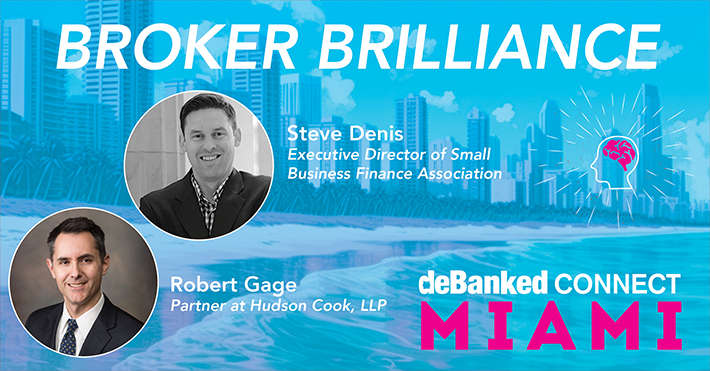
Before the Broker Battle at AltFinanceDaily CONNECT MIAMI, come join the Broker Brilliance session!
- Enjoy a preview of the official SBFA broker certification led by the Executive Director of the SBFA and a Partner of top law firm Hudson Cook, LLP.
- Learn about pending legislation and regulations that could impact your career forever.
- Find out what licenses are required for brokers and broker shops so that you stay compliant.
- Hear about the extraordinary opportunity that comes with joining the official Broker Council.
- Don’t just sell for today, make sure you’re set up for longevity!
BUT, in order to experience all of it you MUST be registered for AltFinanceDaily CONNECT MIAMI. Join the industry on January 11th!