Fundbox Launches Fuse, A Funding Express Lane Designed to Increase SaaS ‘Stickiness’
January 22, 2018Fundbox announced the launch of Fuse, a new credit-integration service, on Monday morning. Via Fuse, SaaS business providers can now access Fundbox from within their workflows with just three lines of code.
“For small business owners, the process of applying for financing continues to be an arduous and demotivating journey that for many, does not end well,” the company stated in a release. “Since 2008 when the economic bubble burst, most banks made their small business underwriting processes more stringent in an attempt to mitigate potential risks from defaults.”
According to the Biz2Credit Small Business Lending Index, in December 2017 only 25.3% of small business loan applicants are being approved for funding, leaving the other 74.4% struggling to find alternative avenues through which to pay vendors and stay afloat.
Thus, not only are small business owners hampered, but SaaS providers that cater to these budding enterprises take a blow as well.
Citing a 2016 survey developed by the SaaS growth marketing agency, Cobloom, the average SaaS provider serving small businesses faces between 5-7% customer churn on an annual basis. A significant factor for this volatility is strains on customer’s cash flow.
Fundbox believes that they can alleviate this situation by offering easy access to its lending products via the SaaS services themselves.
“For our SaaS partners, we intentionally created a solution that was easy to integrate, increases service value and customer stickiness with just a few lines of code,” said Sebastian Rymarz, chief business officer at Fundbox via statement. “And for small business owners, we’ve ‘democratized’ access to credit and the underwriting process right from within your favorite business app or platform.”
“We’re excited to partner with Fundbox and to add Fuse to our service,” said Ryan Jackson, founder and CEO of Paid, via release. “Anyone who works closely with small business owners knows that time and cash flow are their two most important assets. With Fundbox Fuse, our customers get the convenience of accessing credit without having to leave our workflow and we get the additional service value and retention stickiness.”
Trial in Murder of Universal Merchant Funding Execs to Begin Feb 5th
January 7, 2018Nearly one year ago, Michael Genovese, the owner of Universal Merchant Funding, and Carl Clark, an employee, were found dead inside the businesses’s office in Staten Island. Former employee Ricky Dennis was arrested soon after for the double-murder. His trial is slated to begin on February 5th, according to SI Live.
Dennis had previously served time in prison for using a gun during a violent crime.
Genovese was a known operator in the small business finance community. Clark was a regular on the Daily Funder forum, and for a time was one of its most active users.
Business Loan Broker Shamed on TV by Investigative Reporter
January 5, 2018A business loan broker found himself on the wrong end of Television fame this week when award-winning investigative reporter Arnold Diaz showed up at his office to question him about fees charged to merchants for loans he did not procure. The exchange, which was captured on camera and broadcast on WPIX-11 in New York, shows Bridgehampton Funding managing director Anthony Kline of Long Island, initially running away when confronted about the allegations.
Kline and Bridgehampton are accused of charging merchants upfront fees to get them loans, failing to get the loans, and then keeping the fees. Bridgehampton also allegedly used LOIs of a real commercial lender’s letterhead to lure merchants into believing that a loan would be forthcoming. But the LOIs are forged, according to one commercial lender that has filed a lawsuit for fraud against Kline and his firm, swearing that they have no business relationship. Trevor Cole Commercial Co of CT, the plaintiff, is seeking more than $1 million in damages.
The alleged scheme is similar to other forged LOI scams that have been reported to AltFinanceDaily by lenders hesitant to go on the record with the names of the offending brokers.
Bridgehampton Funding’s website claims they offer everything from merchant cash advances to SBA loans to equipment leasing.
View From The C-Suite: Alternative Funding Execs Talk Shop, The Landscape, And The Future
October 30, 2017 Alternative funders have had a roller coaster 2017 with highs and lows that will likely be remembered as a high-stakes time for the industry, one in which the rubber met the road for many and the market landscape shifted for everyone from funders, to merchants to brokers.
Three C-Suite executives in the alternative funding space — Christine Chang, CEO of 6th Avenue Capital, Heather Francis, CEO of Elevate Funding and Torrie Inouye, National Funding president — spoke with AltFinanceDaily, offering their take on some of the industry shakeups, direction of the alt lending space and upcoming developments at their respective companies.
All three execs are embracing what appears to be shaping up as a bigger and better 2018 with plans on the horizon for new products, relationships and deals but also where there could be further shakeout as the shift in the industry landscape takes hold.
Industry Landscape
6th Avenue Capital, provides short-term funding to merchants that Chang describes as “high touch, high tech and fast.” The company is building an SEC RIA compliant infrastructure as Chang believes that MCA regulation will take place over the next several years. Chang said she is sympathetic to the banks and the onerous rules that they must follow, and whatever form the industry regulation eventually takes on, the company will be ready for.

A recent story in The Wall Street Journal points to community banks comprised of those with less than $10 billion in assets historically funding local merchants in what’s dubbed character-based lending. As the name suggests, the underwriting standard for the loans was tied to the character of the business owner, which the lender knew based on personal relationships in their own communities.
The financial crisis gave rise to greater regulation, driving a spike in that model and the rest is history. Small banks were forced to direct their resources toward risk management and compliance instead of adding more personnel to service loans. The WSJ quotes a small business lender that bears repeating: “When they created too big to fail, they also created too small to succeed.”
When that door closed, however, another one opened, creating the opportunity for alt lenders to service a niche that was getting left out in the cold.
“The alternative funding industry is here to stay. That’s good news for MCA and fintech in general. There’s a need for fast funding and there will continue to be a trend toward that,” said Chang.
Banks, meanwhile, have started coming to the fintech table to compete for deals. “We’re in the process of speaking to a number of banks, some quite large and some regional, that have expressed an interest. We think this is a great opportunity for them. The idea is that we’d help them to serve a population of clients that they would not otherwise be able to serve,” said Chang.
6th Avenue has had discussions about white labeling and customizing the platform for institutions. “We would run everything for them,” said Chang.
In addition to possible new banking relationships, 6th Avenue Capital, backed by a private family and institutional investors, will expand the business model to include more investors on its platform. “We are in discussions with a number of significant international investors. It’s in the works. We’re building an institutional infrastructure, so it was always contemplated,” she said.
Elevate Funding, whose is 100% referral-based and whose product suite is comprised of a trio of MCA solutions, is coming up on its three-year anniversary in December.
“When I created Elevate, I did it with the purpose of providing a product to high-risk merchants. That’s who we deal with. We’re not dealing with credit scores. There is a level of risk to who we work with. Elevate was created to provide a product that is going to fit their needs and also provide a product that doesn’t treat them like they’re high risk. That’s who we are,” said Francis.
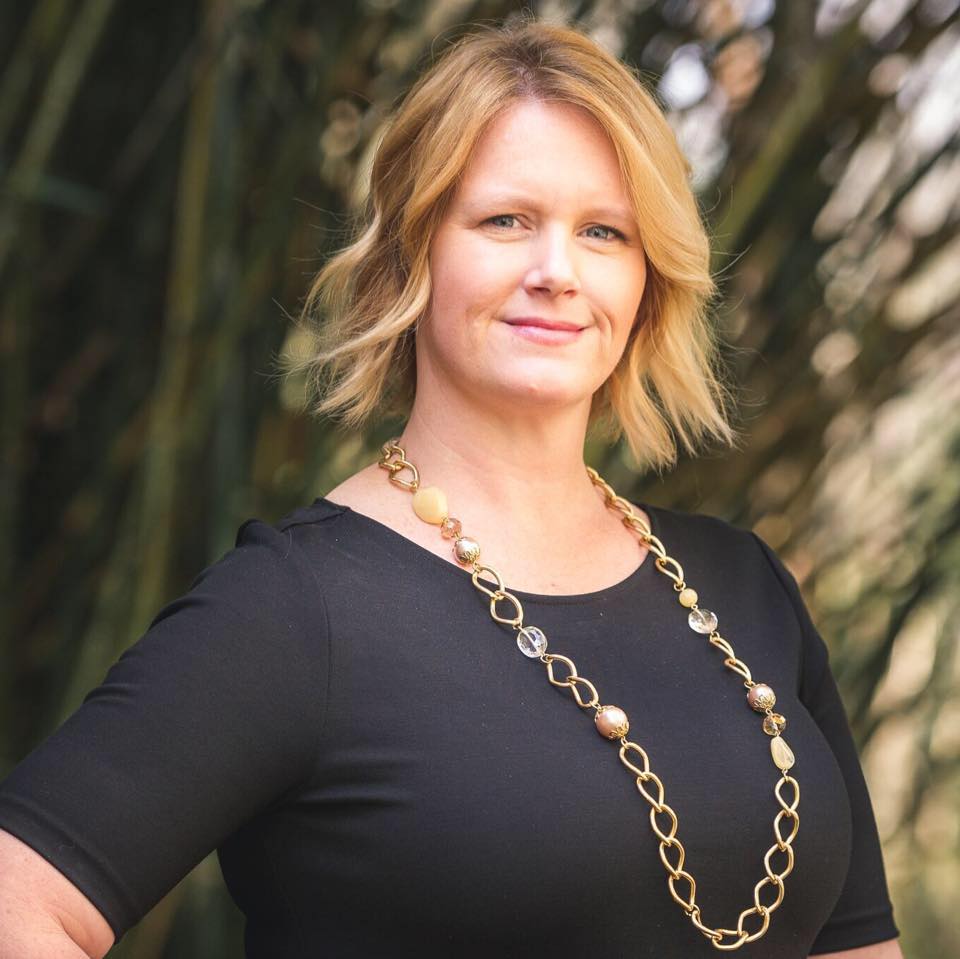
Gainesville, FL-based Elevate recently hired Michael Gaura to spearhead a new MCA product that the company is rolling out in 2018. Francis held the details of the new funding product close to the vest, but she did offer her views on the direction of the MCA and alternative lending space.
“I see difficulty in the coming years, especially in 2018, for qualified lead flow. You have a lot of big banks that are getting into this industry. And that’s a lot of marketing dollars that you’re competing against.”
She points to JPMorgan Chase, American Express, Square and PayPal, saying they are “huge marketing dollar companies” with tremendous access to customers on their respective platforms.
“There’s going to be a shakeout of what can you reach, who can you reach, can you get them the first time? How do you engage them to where they only want to work with you and they’re not submitting 20 applications for every website they come across?”, Francis said.
San Diego, Calif.-based National Funding is a balance sheet lender whose primary product is loans, not MCAs. The broker factor has changed significantly for the lender in a very positive way this year. “We’re really seeing sizeable growth in our broker channel in 2017 and have designed a strong and consistent process for our broker clients” Inouye said. The leads have been driven by a variety of factors, not the least of which comes down to CAN Capital and Bizfi’s loss being National Funding’s gain.

“That’s a factor we can’t ignore. The broker community has rewarded us for being consistent and building those relationships and being a partner to them,” Inouye said. “We definitely saw an uptick in business when they left the space. I can say we’ve continually experienced sizeable growth in our broker channel year over year but 2017 was beyond what we had expected. It surpassed other years.”
Incidentally, National Funding was one of the earliest alt funders on the scene along with CAN Capital in the 1990s. CAN’s fate started unraveling about this time a year ago.
“It’s not positive when you see that happen in the industry. However, we are really focused on what we’re doing and the decisions we’re making internally. I think that’s why we’ve consistently had profitable growth over the years. We’ve stayed true to our underwriting principles and the market seems to have rewarded us. We were consistent and not erratic. Brokers know they can rely on us and feel confident that we would quickly fund their deal once we issued an approval,” said Inouye.
The Broker Effect
Elevate, a balance sheet funder, relies on outside brokers and referrals for deals. “I don’t find it a disadvantage for us not having an internal sales team. A lot of companies in this space have the ability for a chief marketing officer who focuses entirely on leads. Elevate isn’t there yet. Will we be there in five years? Maybe. Marketing can change by that time,” Francis said.
6th Avenue Capital welcomes relationships with brokers as well. “We have an in-house business development team that works with brokers. 6th Avenue Capital is also considering direct sales in niche strategies in its future,” said Chang.
6th Avenue Capital has a starter program in which there are no guarantees but considers businesses that have been in existence for less than a year and businesses with credit scores of 500 or more. Plus, they’re willing to do consolidations up to two advances.
In addition, 6th Avenue Capital is open to offering financing to brokers. “It’s really good in that there is an alignment of interests and allows brokers to participate in the deals they put forth. If they think the merchant is credit worthy and a terrific opportunity, they participate. Everyone has skin in the game and interests are aligned,” Chang said.
Technology
While technology is at the core of fintech, all three of the companies take a hybrid approach when it comes to credit underwriting comprised of a tech platform and the human touch, which perhaps keeps character-based lending alive in some form.
With respect to fintech, “6th Avenue Capital’s philosophy is that technology is a tool to supplement human underwriting. We use technology to detect fraud, manage workload processes and manage risk. We do not use technology to make our final decisions,” said Chang.
Specifically, 6th Avenue Capital benefits from research, artificial intelligence and predictive technology of its sister company Nexlend Capital. 6th Avenue Capital has customized Nexlend’s consumer lending algorithmic intellectual property, which uses machine learning and credit analysis with high speed execution to make better and faster decisions.
Elevate also takes a dual-approach to its underwriting process. “I believe in a hybrid method. You have to have someone looking at it, to have eyes on the paper at some point in the process. This doesn’t mean a computer system can’t help to weed out what might not meet the criteria, but I do believe there needs to be a person reviewing the files,” Francis said.
National Funding was started as an equipment leasing company. “We apply some principles we learned as a leasing company and take into account all of the attributes that go into that business in addition to FICO and cash flow,” Inouye said.
Automation is an area of technology that they continue to look to for innovation and process efficiencies. “We do serve our customers online, but we also provide a human contact as well. We deliver a loan experience that builds trust and confidence with customers. We try to deliver on what our customers want in the most efficient way,” said National Funding’s Inouye.
National Funding continues to look at construction deals and accepts them as a niche in their portfolio, which Inouye said differentiates the company. “It allows us to be more flexible and comfortable with certain industries that other lenders might stay away from.”
Corporate Culture
2017 has been a roller coaster year for fintech including alt funders. While there have been plenty of bright spots, there was also some fallout that left veteran players scrambling to salvage either their reputation, status as a funder or both.
SoFi has been at the center of controversies that resulted in the Mike Cagney leaving his chairman post with plans to step down as CEO. Most recently, the lender has removed its application for a bank charter, according to reports.
We asked Elevate’s Francis about it. “SoFi is a very big company. They’re to the level where the CEO has people to answer to. They have a checks and balances system they need to go through,” said Francis. “It worked, and they removed him.”
Francis maintains an open-door policy with her employees, and she says all you can do is focus on your house and keep your house in order. “My door is always open. That’s our office policy. They use that quite frequently; it’s a catch 22,” she said with a laugh.
Fintech and Diversity
Something else that all three executives have in common is that they are all women in top roles in fintech, an industry that isn’t known for its diversity.
6th Avenue’s Chang’s career includes working at a large institutional bank for six years. Out of 200 professionals, only four of them in her group were women. “At the end of the day, performance is the best differentiator. If you perform well, it presents unique opportunities. At 6th Avenue Capital, diversity is embraced. Our underlying merchants aren’t just one gender or color. Diversity helps us understand the needs of small businesses better, so we can provide fast and customized funding quickly,” she said.
The Voice of Main Street – Small Businesses Share Their Experience With Non-bank Finance
October 18, 2017
If she hadn’t scored the $250,000 loan through Breakout Capital in 2015, Jackie Luo says, the commercial-software firm she heads in Baltimore could not have made the “strategic hires” and purchased the new server to support additional customers and maintain the company’s 30% growth rate.
“Without that infusion of capital” from the McLean (Va.)-based lender, says Luo, chief executive at E-ISG Asset Intelligence, the software solutions provider would have been hard-pressed to deploy the “bandwidth and capacity” necessary to meet burgeoning demand.
And demand there is. Luo says billing for her company’s services helping more than 100 businesses and government agencies improve operational efficiency by keeping tabs on multiple assets — human, financial and equipment — topped $1.5 million last year, up from $1 million in 2015. This year, moreover, E-ISG is on track to collect nearly $2 million.
Meantime, she says, the $250,000, 10-year note at 6% interest she obtained with the help of Breakout was both a good deal and convenient: she reports securing the financing in three weeks, compared with the six months that a commercial bank would likely have taken. In addition, she’s been able to forge a better relationship with Breakout than with a faceless financial institution.
“We are a small business,” she says, “and we’d be just one in a million at a big bank like Wells Fargo. They wouldn’t give us much attention.” With Breakout, Luo adds: “I have the freedom to make decisions about infrastructure investments without worrying about the short-term. And I don’t have to deal with people second-guessing me.”
Had she not gotten the financing, moreover, “I would not be able to pay myself,” she says. “I’d have to use my salary as working capital.”
Luo is not alone. Her company’s story of finding much-needed capital from a nonbank financial company is increasingly common. It has always been challenging for small businesses to obtain credit from a big bank — roughly a financial institution larger than $10 billion in assets. But the small and community banks that have been the lifeblood for small businesses have also been winding down their small-business lending as well, according to a March, 2016, working paper published by the Federal Reserve Bank of Philadelphia.
“As recently as 1997, small banks, with less than $10 billion in assets, accounted for 77% of the small business lending market share issued by commercial banks,” co-authors Julapa Jagtiani and Catharine Lemieux write in “Small Business Lending: Challenges and Opportunities for Community Banks.” However, the market share dropped to 43% in 2015 for small business loans with origination amounts less than $1 million held by depository institutions.
“The decline is even more severe for small business loans of less than $100,000,” they add, “where the market share for small banks under $10 billion declined from 82% in 1997 to only 29% in 2015.”
 The Philadelphia Fed study notes that alternative nonbank lenders are filling a widening gap. “By using technology and unconventional underwriting techniques, many alternative lenders are competing for borrowers with offers of faster processing times, automatic applications, minimal demands for financial documents, and funding as soon as the same day.” And the Fed study finds that it’s likely that nonbank lenders, which are growing rapidly, are having a positive effect by “increasing the availability of credit, particularly to newer businesses that do not have the credit history required by traditional lenders.”
Meantime, the Small Business Administration reports that small businesses remain essential to the health of the U.S. economy. Businesses with fewer than 500 employees account for 55% of overall employment in the U.S., according to the agency, and are responsible for creating two out of every three net new jobs. Which means that alternative funding sources — which do not, it is worth noting, depend on depositors’ money, as banks do — are playing an increasingly important and largely unrecognized role in the country’s economic fortunes, notes Cornelius Hurley, a law professor at Boston University and executive director of the Online Lending Policy Institute. “They’re still a small percentage of the overall lending picture,” he says of nonbank financial companies, “but they’re an emerging force and a lot of small businesspeople certainly depend on them. If they disappeared tomorrow,” he adds, “a lot of businesses would be wiped out too.”
To find out what is happening in the real world, AltFinanceDaily interviewed small business owners around the country: among others, a Houston sports medicine provider, a Connecticut restaurateur, a Midwestern truck hauler, and a Maryland hardware-store owner. Some recounted being shunned by banks because of poor credit while others registered unhappiness with traditional financial institutions as inconvenient and impersonal. While some who turned to alternative lenders admitted they would have preferred not to be paying dearly for borrowing or for cash advances, most said the tradeoff was worth it.
The existence of alternative lenders has made it possible for these businesspeople to meet payrolls, pay contractors and suppliers even when business was slow or billings stalled. Customers with alternative funders – in addition to Breakout’s customers, AltFinanceDaily spoke to clients of Pearl Capital Business Funding and Merchants Advance Network– also reported that they were able to purchase or replace equipment and maintain inventory, hire additional employees and accept new customers, pay for upkeep and upgrades of their business’s physical plant, and make other expenditures necessary to keep operations up-and-running.
Jason, for example, who heads a family business in Louisiana manufacturing and selling pesticides (and who asked to be identified only by his first name), reports that his suppliers began demanding that he pay in advance for chemical feedstock after he took a “financial hit following a nasty divorce.”
The roughly $1 million (annual sales) business — which was started by his parents back in 1960 — furnishes chemicals mainly to cotton farmers and homeowners in Louisiana and Texas, most of whom purchase the company’s products through feed and hardware stores. Jason says he spends a substantial amount of time on the road handling sales and distribution.
 His suppliers not only require him to pay for the chemicals upfront but, following his divorce, they now insist upon larger purchases as well. Following the departure of a previous lender, he says, Breakout stepped in with an $80,000, 12-month loan in March, 2016, which he was able to repay within six months. This was followed by a $60,000 borrowing in March, 2017, which he again paid down early – in 90 days, Jason says – and the account manager at Breakout “went to bat for me and gave me an additional discount for early payment.”
Had Breakout not provided external funding, Jason says, he would have been “wiped out.” He adds with feeling: “It would have meant the end of me.” And sinking the fortunes of the company would also have spelled job losses for five employees, including both his son, who works part-time, and his sister, the business’s co-manager. “Now I’m out of the hole,” he says.
In Houston, Anna, co-owner of a physical therapy and sports medicine concern, was interviewed in August just before Hurricane Harvey loomed on the horizon. “We’d been around for four years and growing rapidly,” she says, asking to be identified only by her first name, and “we couldn’t keep up with the growth.”
Anna recalls that a few years ago (she is vague about the exact dates) the company needed $50,000 to $60,000 to add equipment and staff to meet the growing demand. Because of some “ups and downs” in her business and credit history, however, a bank loan was out of the question. “My credit wasn’t the best,” Anna says, “and we had not been in business the five-to-seven years that most banks want.” She began casting about for financing and quickly saw that factoring would not be a suitable choice for a business like hers, which depends heavily on third-party payments from health insurance providers. “Companies using factoring are taking money based on credit card payments,” she says, “and we’re not a restaurant or a bar. So we can’t pay a percentage of every transaction.” Typically, she notes, getting paid by an insurance company involves a “90-day turnaround.”
 Anna went online, did some research, and talked to three or four nonbank lenders searching for the “right kind of company.” That led her to Breakout. “What I really liked about them is that they did a lot of due diligence on our field,” she says. “They did their homework, asking us: ‘What are your collections and payroll? How much outstanding debt do you have?’ They also asked to see our actual bank statements.”
Despite the high level of due diligence that Breakout performed, Anna says, it only took “maybe three or four days” for the loan to be approved and for the money to land in her bank account. Before long, she was off to the races. With the added capital, she hired three more employees – bringing the employee headcount to 18 — purchased more gym equipment, made payroll, and paid off miscellaneous expenses.
The added capacity and fortified staff, meanwhile, enabled the company to “almost triple its volume,” the entrepreneur says. And not only did the financing “put me in a good financial place,” Anna adds, but after repayment, Breakout made it possible for her to effect a merger with a competitor by approving a second loan for about $30,000. “The best thing about Breakout,” she says, “has been the communication. One time I did need to make a payment two or three days late. But I just called (the account manager). I was very surprised because these kinds of companies are seen as a last resort. But it was like they were investing in us.”

John Speelman, who owns Poolesville Hardware in Poolesville, Md., can boast a raft of five-star Yelp reviews online. “Extremely helpful and friendly service, surprisingly good selection (and) the complete opposite of a big box hardware chain,” raves one customer. “It is so rare to find a well-stocked store that has helpful personnel—makes this store a real gem!” says another fan.
For his part, Speelman attributes much of his hardware store’s popularity to the financing arrangement that he’s been able to work out over the past eight years with Merchants Advance Network, a Fort Lauderdale (Fla.)-based alternative funder. “It takes money to make money,” is one of his pet aphorisms.
Located roughly 35 miles west of the White House, the hardware store boasts a clientele who tend to arrive in BMW’s rather than the pickup trucks that predominated a decade or so ago in this exurban community of some 5,000 denizens. Whatever their class background, though, they’re looking for items that are not a good match for an online purchase. “People don’t buy a toilet plunger, a can of paint or picture-hanging stuff online,” Speelman says. “Because they want to do that today,” he says, “they won’t order with Amazon.”
“One industry that has not been impacted” by online merchandisers, he adds, “is the garden center. They’ll buy a garden hose, weed killer and seeding,” he explains of his regular customers. “And light bulbs” while they’re there, he adds. “We’re like the 7-Eleven — a convenience store.”
To guarantee that convenience, Speelman pays cash-in-advance for most of his inventory, and banks have not been helpful. He contrasts the relationship he has with Michael Scalise, the chief executive at Merchants Advance, with loan officers at commercial banks. “It’s hard to get a loan for anything in retail,” he says. Never mind that he maintains “a high credit rating and I never bounce a check,” he went on. “There are no more local banks. At M&T Bank, all the managers I knew are gone and there’s always a new teller. The banking industry is a revolving door.” So he opts for capital from Merchants Advance “when I need 30-40-50 grand in a day, I use Mike’s money” even though the cost can be as steep as 25%, he says. If he doesn’t have something in stock – specialty items like ammo boxes, a Sugarplum tent, as many as 32 packs of size D batteries, metric measuring tapes – he can put in a special order with suppliers. But he prides himself on the full panoply of wares on his shelves. “You can’t sell from an empty cart,” is another of his favorite sayings.
Lori Hitchcock, who also draws capital from Merchants Advance, is manifestly displeased with the banking industry. She’s an owner with her husband of Hitchcock Trucking, the couple’s 60-year-old family business, which is located on a ten-acre tract in Webberville, Mich., situated between Detroit and Lansing, the state capital.
Of her experience with banks, Hitchcock says: “At the time we went with (Merchants Advance), banks weren’t lending. And they’re still not lending. We’re considered high-maintenance and high-risk. Banks don’t want a bunch of trucks” should they foreclose on a loan, she observes. “If you’re a farmer, they can take all your land. Great! In this crazy world you live in, it’s hard to get the banks interested.”
 The Hitchcock family’s fleet of ten Peterbilt semis hitch up to more than 20 trailers and truck bodies – flatbeds, dump trucks, vans, and refrigerated trucks or “reefers” – and haul grain, sweet corn, onions, celery, fertilizer, and soft drinks across the Midwest. Most recently, she says, the family business took out $80,000 from Merchants Advance to expand its fleet and buy another reefer trailer and a backhoe. “Out here in the country, you always need a backhoe,” she says.
To satisfy her lender, the company makes daily ACH payments. “I’m not going to lie and say that things aren’t tight,” she says. “It is a burden. You just have to have constant cash-flow – which we do have. And it’s important to have good relationships…I can usually tell three weeks in advance if (making payments) is going to be challenging. So it all comes down to being loyal to people.”
Whatever the struggle to keep up with debt payments, it beats using her own money. “My husband and I are raising a family,” Hitchcock says, “and it’s nice having the cash so you’re not putting your personal earnings into the company.”
In Manchester, Conn., a stone’s throw east of Hartford, Corey Wry says that he wouldn’t be able to operate his two, highly rated restaurants just off Interstate 84 – Corey’s Catsup & Mustard and Pastrami on Wry – if he didn’t have funding from Pearl Capital, a New York (N.Y.)-based alternative funding company. A graduate of Johnson & Wales University in Providence, a restaurant-and hotel school, Wry describes himself as “a culinary guy” whose first love is serving food that’s both innovatively prepared and delicious. He candidly admits that his credit hit “rock bottom” after a confluence of untoward events.

Last year, a third restaurant in town, Chops & Catch, that he and some partners had “bootstrapped” had to shut down after six years of operation. Despite generally favorable reviews for such creative fare as the “lobsterburger,” the surf-and-turf themed restaurant was a money-loser. He was also struggling to pay off credit cards. And he’d been late more than once on car payments.
At the same time, Wry was in the process of moving Pastrami & Wry — a deli whose moniker is wordplay on his last name – to a new location. Both the general contractor and electrician were “over-budget” on that project, he says. Meanwhile, Catsup and Mustard, a hamburger spot, needed to be spruced up. Says he: “It was getting busier and the original seats were worn. I had a hole in a booth big enough to swallow someone.”
He approached a few banks for a loan and “it did not seem like it was going to happen,” he says. “Then I got a cold call from one of these financiers. Some of them had super-high rates. When you have bad credit but need to make capital improvements you do what you have to do.”
He’s accessed more than $100,000 from several alternative funding sources, including Pearl – from which he reports getting merchant cash advances for $30,000. But hard as it is to meet the obligations, which typically require a daily ACH payment, the financing has made renovating the burger place possible. Moreover, he’d still be on the hook with plumbers and other contractors – all of whom are local tradesmen and would likely be paying him personal visits until they were repaid — for the relocation of Pastrami & Wry.
“Business is good,” says Wry, who at 40 is single, often works 15-hour days, and says that he doesn’t have time for a girlfriend, much less a wife and family. “I’ve still got $3,200 on the books with the electrician,” he adds, “which means that I won’t be able to purchase a deli slicer. I have to plan these things out…”

James McGehee, a partner at the boutique accounting and tax-preparation firm McGehee, Davis & Associates, which is located in the Denver suburb of White Ridge, reports that the firm took a merchant cash advance from Pearl Capital, among other financiers, to bridge the gap between tax season and the rest of the year when billings invariably diminish. “Our overhead is pretty high,” he explains. “We’ve added two employees. We’ve been expanding on what we were doing, adding tax and accounting clients.”
A very conservative, sober-sounding man, McGehee explained that his credit was nonetheless “trashed” after he suffered from health problems five years ago. “Major stuff,” he says, “it was open-heart surgery.” The medical ordeal meant that he could not work for a time and had trouble paying his bills. “Some family members helped me through the mortgage and utilities payments and I ended up in arrears and in credit card debt,” he says.
All of which made an alternative source of financing his firm’s only option. “I’m not sure how we heard about Pearl,” he says. “I think they just happened to call. We took out [$11,000]. It was not a huge amount. We also borrowed $9,000 from another entity. We paid it all back during tax season. The terms were pretty steep,” McGehee adds.
“But when you need the money for cash-flow,” he explains, “you just absorb it. You grin and bear it. When you need the money, you need the money.”
Bizfi Survives, Thanks to World Business Lenders Asset Purchase Deal
September 22, 2017 The Bizfi marketplace is slated to live on, according to Stephen Sheinbaum who joined World Business Lenders (WBL) as a managing director in July. On Wednesday, WBL purchased several assets from Bizfi including the brand, the marketplace, the Next Level Funding renewal book, and other related pieces of the company, he says. Sheinbaum founded Bizfi (then Merchant Cash and Capital) in 2005.
WBL, a Jersey City-headquartered small business lender will also be a lender on the platform.
Other key Bizfi personnel have joined WBL including former Managing Director of Renewals John BellaVia, VP of Sales Michael Caronna, and Sales Manager Ryan Bressler.
The asset purchase does not affect the deal forged with Credibly to service the $250 million portfolio, Sheinbaum explains, which is separate.
While lesser known among the mainstream fintech media, WBL has been a stalwart player in the non-bank lending industry for years. Their ambitions and size became more apparent when AltFinanceDaily attended their invite-only annual shareholder meeting at the Waldorf Astoria in NYC in 2015. The company went on to open a massive office in Jersey City in July 2016 that was attended by Jersey City Deputy Mayor Marcos Vigil, Councilwoman Candice Osborne, Archbishop David Billings and Mitchell Rudin, the CEO of Mack-Cali. At the ceremonial ribbon cutting, WBL CEO Doug Naidus said that he wanted to build a company that lasts, one that he can look back on and be proud of.
Now with the Bizfi brand and marketplace in tow, the company is uniquely positioned.
“[It’s a] game changer here,” Sheinbaum said. “2.0 here we come!”
Yellowstone Capital Originated $45M in Funding in July
August 1, 2017NJ-based Yellowstone Capital originated $45 million in funding for small businesses last month, according to a company email obtained by AltFinanceDaily. Two sales reps alone funded 170 deals and 139 deals respectively for a combined $7.45 million.
The monthly volume was only $2 million shy of the $47 million originated in June.
Tips From the Source: Small Businesses Told AltFinanceDaily How They Wanted Loans to be Marketed to Them
July 31, 2017
Small business owner Jim Moseley is inundated with calls from online funders—and he hates it. They frequently use unscrupulous tactics to try and get his attention. More than one has claimed to be a close friend so his assistant transfers their call. Then they try to reel him in with stories they’ve concocted about past personal connections. The unprofessional-sounding calls also irk him—where a salesman insists he’s local, but his voice sounds muffled and distant. In these instances, Moseley usually hangs up within a few seconds.
“The layer of sleaze is as thick as lard in the calls that I get,” he says.
Like many small business owners, Moseley, the chief executive of TransGuardian Inc., a shipping solutions company based in Petersham, Massachusetts, finds these types of calls extremely off-putting. In fact, it’s what made him hesitant to do online funding to begin with—until it became absolutely necessary since he couldn’t get a bank loan.
He’s not alone. As online financing proliferates, several small business owners say they are increasingly being bombarded with stacks of snail mail, multiple cold calls a day and numerous unsolicited emails offers—many of which they don’t understand and therefore won’t accept. Rather, small business owners say they prefer to work with companies that are forthcoming, provide sound advice and have taken steps to prove their credibility. They offer several tips on how funders can win more of their business.
Tip No. 1: Can the cold-calls
Several small business owners say they don’t mind when lenders follow up with them after a legitimate interaction. But they could do without the boiler-room tactics.
“It feels like a loan shark situation,” says Sean Riley, co-founder of DUDE Wipes, a Chicago-based company that makes flushable wipes for men. Riley, who has several good experience obtaining loans through Kabbage, finds the constant phone calls from firms he doesn’t know particularly vexing. He suggests lenders drop the high-pressure routines and find more effective ways to promote their services to small businesses. “These companies could be very credible. I don’t know. But I don’t perceive them as credible—and perception is reality,” he says.
Tip No. 2: Step up legitimate marketing efforts
Donna Cravotta chief executive and founder of Social Pivot PR, a Bedford, New York social media and marketing communications firm, says online funders should seek out simple, cost-effective ways to get their name in front of small businesses. For relatively little money they can sponsor local small business events. She also suggests that online lenders volunteer to speak at small business events and teach small businesses how to leverage online lending opportunities. They could also appear as guests on financial podcasts or broadcast Webinars to the small business community, says Cravotta, who has taken a few loans to fund her business, two of which were with Lending Club.
R.T. Custer, co-founder and chief executive of Vortic Watch Company in Fort Collins, Colorado, offers some additional advice: Customers don’t believe when you self-publish your testimonials. When he sees a review on a website, he wants to know how much a company has paid for that review. Instead, he relies on third party confirmations of a company’s worth. “When it’s clearly something that is not paid for, that is the best kind of advertising,” says Custer, an OnDeck customer whose business turns antique pocket watchers into wrist watches.
Tip No. 3: Deliver personal attention
As much as they hate aggressive salespeople, small businesses love personal attention from their lenders. Dana Donofree, founder and chief executive of AnaOno Intimates, a Philadelphia-based company that designs and sells apparel for breast cancer survivors, appreciates the stellar customer service she gets with OnDeck. The sales rep follows up appropriately to make sure everything is going well, but doesn’t bombard her constantly. She gets an occasional email asking if she needs more funds—but the communications aren’t overly aggressive. “Some institutions can really be sales pushy and call you several times a day. I’ve blocked more numbers than I would like to admit,” she says.
Tip No. 4: Be a resource for small business owners
Online lenders can also gain traction by helping customers better understand the financing process; many small business owners often don’t know much about financing and would appreciate getting sound advice from lenders, according to Sandy Lieberman, who co-owns Artemis Defense Institute in Lake Forest, California.
She and her husband started the business a few years ago to offer reality-based training to law enforcement, military personnel and civilians. When the business needed cash, Lieberman began searching online for a bank loan, but wound up taking a merchant cash advance instead. After a few rounds, she started getting bombarded with solicitations. “I think the stacks of mailings from companies must have been four-inches thick,” she recalls.
After additional research, she reached out to Lendio to broker an $85,000 term loan; she later took another loan for $204,000 through Lendio. While these funds have brought her business to a better place—and she has learned a lot in the process—she feels online lenders are missing out on a prime teaching opportunity.
“Some lenders think business owners know more than they already do. Some really don’t know a lot and could use more hand-holding,” she says.
In hindsight, Lieberman—who nearly destroyed her personal credit while trying to run her business—wishes a funding company had offered her a short class on financing; she would have attended, even for a small cost. Access to a finance coach—someone at the lending company who could help business owners plan proactively without ruining their personal credit—would also be a boon, she says.
“Small business owners are wearing many hats—customer service, payroll, financing, strategic planning. In the midst of all that they don’t know necessarily know how to make wise funding decisions,” she says.
Tip No. 5: Advertise
There are plenty of small businesses that need funds, but many simply don’t know where to turn. Consider a TD Bank survey of 553 small business owners in late March that found 21 percent have or will seek a loan or line of credit in the next 12 months. While the majority of these businesses plan to try their bank first, a sizeable number—11 percent—don’t know how to seek credit when they are ready. While many small businesses have found lending partners by Googling for information, others simply feel stymied by the process.
Take the case of Scott Deuty, who is having trouble obtains funds for Coolbular Inc. in Cheyenne, Wyoming, which serves as an umbrella for his kiddie ride business and his writing and publishing services. He wants to raise funds but has bad credit and doesn’t meet the revenue requirements for certain lenders. There are so many lenders; he doesn’t know how to find the right one—or one that might be willing to take a chance on him. “It’s very difficult,” he says.
Deuty’s case is an example of the paralysis that can happen when small businesses don’t know where to turn. It’s an opportunity for alternative funders to gain a leg up by marketing more appropriately to small businesses that may not know they exist—or how to find them.
Custer, of Vortic Watch, reached out to OnDeck for a bridge loan after seeing a television ad that ran during an episode of Shark Tank. He also suggests funders use online advertising to gain broader exposure. “If a business owner is trying to find a loan, they are going to Google, ‘I need a loan,’” he says.
 Tip No. 6: Ramp up business referrals
Another way small businesses hear about lending opportunities is through business referrals. Azhar Mirza, founder of SomaStream Interactive, an e-learning solutions provider in Berkeley, California, says funders should actively seek out more referral partnerships. In 2015, his company couldn’t afford its online marketing costs. Then a lifeline came its way. Mirza received an offer from Google telling him his company was eligible for a loan to help finance the online advertising it was doing through the Google AdWords program. The offer was part of a new pilot program between Google and Lending Club to extend credit to smaller companies that use Google’s business services. SomaStream got access to the funds it needed, but in lieu of cash, the company received advertising credits with Google.
The pilot program between Google and Lending Club ended in the first quarter of 2016, but Mirza believes similar partnerships would be a great tool for online lenders. Certainly for Mirza, the timing was precipitous, he says.
Push notifications from trusted business partners can also be an effective marketing tool, when used in moderation. When Yvonne Denman-Johnson, co-founder of HootBooth Photo Booth, a Lago Vista, Texas, manufacturer of photo booth kiosks, needed money, she happened to receive a notice from Shopify, the company’s e-commerce software and hosting provider, talking about its merchant cash advance services. She has one outstanding advance through Shopify, which she is working to pay off.
Tip No. 7: Be transparent
Denman-Johnson got the funds she needed, but she feels MCA providers need to be more transparent about the effective interest rate—at the advertising stage, not at the approval stage—so small businesses can make more informed decisions without having to do all the calculations themselves. Otherwise, some small businesses might decide not to pursue this form of funding because of the unknowns. Her company almost walked away, but decided to go through the full application process. At this point, Shopify provided the effective interest rate, which was in the 12 percent range. Other funders she researched were in the 30 percent range—which she describes as “outrageously” expensive.
 Indeed, small business owners want to work with funders that outline the terms clearly and offer comparisons. Lisa Ayotte, founder of Soul’y Raw, a specialty pet food provider in San Marcos, California, has had good experiences with Kabbage, On Deck and Fundbox.
She wishes, however, that all online lenders offer more detailed information about the loan programs they offer on their website—so small businesses can weigh their options before they go through the actual application process. Small businesses want to know, for instance, whether a lender offers debt consolidation. They also want funds to spell out clearly on their websites the various types of loans offered and the underwriting criteria. Ayotte also suggests lenders provide links to online loan calculators so small businesses can understand what the terms mean to them.
Small business owners want to be told like it is. That’s one major appeal of online lending—if you’re going to be turned down, you typically know right away says Ricardo Picon, the co-owner of The Sandwich Shop, a restaurant and catering business in Williamsburg, New York.
He took an $88,000 loan in February issued by Excelsior Growth Fund, a U.S. Treasury-certified Community Development Financial Institution, but in the future, he says he would consider using a different type of online lender. It would depend on the rates, the economic times, monthly payments and closing fees, among other things. “I want transparency. I want to know if they are going to give me the money or not so I can move on. This way there are no false hopes,” he says.
Tip No. 8: Make the process as easy as possible
Small business owners also prefer to work with online lenders that make the process seamless. AJ Saleem, founder of Suprex Learning, a Houston-based private tutoring and test prep company, was proactive about searching for online lending options. He chose a loan with Lending Club in part because the process was so easy. Some applications he started, but never finished because the process was too onerous. With Lending Club, the process was quick, there were fewer questions asked and the funder asked for less documentation than some competitors, Saleem says.
To be sure, rates are really important to small businesses, but they also want to work with funders they feel are on the up-and-up. “We want a square deal,” says Moseley, the chief executive of TransGuardian. “Tell us what the deal is in an honest and professional way and if we like it we’ll do business.”