OnDeck Small Business Online Lending Tops $10 Billion
September 12, 2018OnDeck is the world’s largest non-bank online small business lending platform.
Federal Reserve says small businesses are turning to online lenders in record numbers
NEW YORK, N.Y., September 12, 2018 – – OnDeck® (NYSE: ONDK), today announced it has achieved a milestone in the Financial Technology (FinTech) industry, becoming the first non-bank online lender to surpass $10 billion in total loans originated to small businesses. OnDeck, with operations in the United States, Canada and Australia, is now the world’s largest non-bank online lender to small business by total loan volume.
The achievement by OnDeck, a pioneer of the FinTech lending industry, is the latest indication that small businesses increasingly prefer to seek financing online. According to the recent Small Business Credit Survey from the Federal Reserve, small business owners are turning to online lenders in record numbers. In 2017, 24 percent of small businesses seeking credit applied online, up from 21 percent the previous year. Not only did the total number of loan applications to online lenders increase in 2017, but satisfaction rates of small businesses soared almost 50 percent year-over-year.1
OnDeck provided its first small business loan online in 2007, taking just 11 years to pass $10 billion in total loan volume in a digital lending market it helped create. The majority of OnDeck’s lending occurred in the last few years as it gained scale, with the company originating $2.1 billion in loans in 2017 alone.
“If reaching $10 billion dollars in total loan volume online tells us anything, it’s that the days of old-fashioned lending to small businesses are numbered,” said Noah Breslow, Chairman and Chief Executive Officer, OnDeck. “We created OnDeck because we believed the Internet could revolutionize and speed up the way underserved small businesses access capital. Today, we are helping to fill a credit gap across hundreds of industries by providing fast, secure and transparent loans that enable small businesses to grow, generate economic activity and create jobs. We look forward to providing billions more in financing and powering the small business lending migration to the online model via our OnDeck-as-a-Service platform.”
Small businesses are the economic backbone of America, accounting for more than 99% of all U.S. companies1 and employing over half of all private sector workers2. However, they still face a growing credit gap. According to the Federal Reserve survey, 54% of small businesses report credit shortfalls3 and lower-income communities are disproportionately impacted. Traditional large banks deny 44% of all small business loan applications3 and many are steadily exiting the small business credit market. Since 2008, small business lending from traditional sources has fallen over 20%4.
Identifying the developing credit gap over a decade ago, OnDeck transformed the means by which small businesses access capital, using proprietary technology and a small business credit scoring system, the OnDeck Score®, to more efficiently evaluate a business’ creditworthiness and make lending decisions in real time. OnDeck provides term loans and lines of credit to small businesses and can supply customers with funding in as little as one business day. The economic impact of this online lending activity is substantial. Immediate infusions of capital enable small businesses to purchase inventory, cover operational costs, or expand without delay, which can stimulate economic growth and help create jobs in their communities.
OnDeck and the Impact of Online Lending on the Economy
An Analysis Group report commissioned by OnDeck in 2015 analyzed the economic impact from the first $3 billion OnDeck lent to small businesses. The report estimates that those loans powered $11 billion in business activity and created 74,000 jobs nationwide. In 2018, OnDeck announced it had provided small businesses more than $10 billion in capital.
In May of 2018, a report on small business online lending in the United States revealed that OnDeck and four other small business lending platforms funded nearly $10 billion in online loans from 2015 to 2017, generating $37.7 billion in gross output and creating 358,911 jobs and $12.6 billion in wages in U.S. communities. The upsurge in online lending is filling a critical financing gap for small businesses across industries, according to NDP Analytics, a Washington, D.C.-based economic research firm. See the NDP Report here: http://www.ndpanalytics.com/online-lending/
OnDeck Company Timeline
Download here: https://www.ondeck.com/wp-content/uploads/2018/09/10-year-timeline-02.pdf
Crowdfunding Legal Limit Too Low for Intended Beneficiaries
July 25, 2018 Regulation Crowdfunding (Reg CF), a regulation that grew out of the Jumpstart Our Business Startups (JOBS) Act of 2012, was designed to allow non-accredited investors to invest relatively small amounts in startups. But the regulation seems not to be serving its purpose, according to people in the fintech investment community.
Why is this? Because the maximum amount that can be raised in a single year under Reg CF is limited to $1,070,000.
“I’ve had clients consider [using] Reg CF, but when they see that they can only raise $1 million, they say it’s not worth the trouble,” said James P. Dowd, CEO of North Capital, a Salt Lake City-based broker-dealer that helps private companies raise money.
“I’m not anti-regulation at all, but if the reward is not there, people won’t go through the trouble,” Dowd said. “Let’s have regulations that are appropriate for the need.”
Dowd said that a small startup seeking funding for a series A round is typically looking to raise around $10 million. The $1.07 million cap for Reg CF is therefore inadequate. A startup’s other options for raising money under the JOBS Act include regulations D, S and A+. Dowd said that Reg D is the most common. It involves very little paperwork and is less expensive compared to other options. Reg S applies only to offshore investors and Reg A+ makes sense only if the startup is looking to raise $20 million or more because this option is costly to file.
All of these options require that investors be accredited, which translates to investors being wealthy. (Accredited investors must have a net worth of at least $1,000,000, excluding the value of one’s primary residence). On the other hand, if an entrepreneur opts to raise money through a Reg CF, investors need not be accredited, although there are still restrictions on how much they can invest, given their income.
Reg CF allows entrepreneurs to access a wider pool of investors. And Dowd, along with others in the investment community, believe that the current $1.07 million annual cap should be raised to as high as $20 million to satisfy the need of entrepreneurs who are looking to raise more money.
“The infrastructure for the crowdfunding industry has been tested and is ready to expand,” said Douglas S. Ellenoff, partner at Ellenoff Grossman & Schole who is an expert on crowdfunding.
Ellenoff said that there was much fear among regulators following the 2012 JOBS Act that crowdfunding would be ripe for fraud. But the fraud didn’t happen. He believes in raising the Reg CF cap to allow the crowdfunding industry to mature. And he believes that once the cap is raised, more substantial companies will start to use crowdfunding which further legitimate it as a valid way of raising money.
North Capital was founded by Dowd in 2008 and provides an array of financial advisory services to its clients. In addition to its Salt Lake City headquarters, it also has offices in Benicia, California and McAllen, Texas.
Access to Growth Capital Expands for Small Businesses in Western New York
July 12, 2018Rochester, New York – July 12, 2018 – Lendio, the nation’s leading marketplace for small business loans, today announced an expansion of the Lendio franchise in Rochester, New York. Lendio Rochester will provide financing solutions to businesses from Syracuse to Buffalo and Niagara Falls to the Canadian border. Lendio franchise owner RJ Muto hopes to ease the financial hurdles for local business owners by helping them apply for loans, review their options and secure funding through Lendio’s network of over 75 lenders.
An online service that helps business owners find the working capital they need to grow their businesses, Lendio’s funding options include SBA loans, startup loans, equipment loans, commercial real estate loans and more. Through franchisees that understand the needs of local business owners, the Lendio franchise program reduces the legwork of looking for a small business loan while bridging the gap between online lenders and the small business community.
Since 2008, accessing financial capital has been difficult for small business owners in upstate New York. In addition to feeling the burden of high taxes in the state, business owners view themselves as outvoted and misrepresented in state government by the massive population of New York City, according to Muto. While residents migrated away from Rochester and Buffalo in record numbers as jobs became scarce, the area is mounting a steady comeback, says Muto, and he hopes to play a role in its rebirth.
“We take a consultant approach to each business we fund,” said Muto. “The goal is to figure out how we can help the business owner thrive and grow. We’ve seen a fantastic response in Rochester. There is a lot of opportunity for small business in this area, and I’m excited to be a part of it.”
“RJ and Lendio did a great job for me and my business. He assessed our needs and found several good matches for us—having multiple options speaks volumes,” said Eric Schladebeck, owner of Spencerport Family Apothecary in Spencerport, New York. “We had our funds in such an expedited time frame that I felt as though I was his top priority.”
Between 2015 and 2017, online lenders, including Lendio, funded over $758 million to 11,490 small businesses in the state of New York. These online loans directly generated $1.8 billion in sales for small businesses in New York State and created 20,154 jobs and $795 million in wages. Nearly one-third of these loans went to small businesses in lower-income communities (those below the national median income).
For more information on how to join the Lendio franchise program, visit: https://www.lendio.com/franchise.
About Lendio
Lendio is a free online service that helps business owners find the right small business loans within minutes. With a network of over 75 lenders offering multiple loan products, Lendio’s marketplace is the center of small business lending. Bringing all options together in one place, from short-term specialty financing to long-term, low-interest traditional loans, our technology makes small business lending simple and decreases the amount of time and effort it takes to secure funding. For every loan facilitated on Lendio’s marketplace platform, Lendio Gives, an employee contribution and employer matching program, donates a percentage of funds to low-income entrepreneurs around the world through Kiva.org. More information about Lendio is available at www.lendio.com. Information about Lendio franchising opportunities can be found at www.lendiofranchise.com.
Contact:
Melanie King
Lendio
801.748.4782
melanie.king@lendio.com
It’s Back to Business For Alternative Funding in Puerto Rico
June 15, 2018
Last year, alternative funding in Puerto Rico ground to a halt after the island was ravaged by two devastating hurricanes in close proximity. Now, however, the alternative funding business in Puerto Rico is getting its second wind, after a several-month hiatus.
Puerto Rico got lashed by high winds and rain from Hurricane Irma in early September 2017, causing large-scale power outages and damage. Then, about two weeks later, Hurricane Maria hit the island square on, causing even more catastrophic destruction. Millions were without power for months (thousands still are), homes were destroyed, multiple lives were lost, businesses were decimated and the island’s already shaky economy teetered on the brink of disaster.
More than half a year later, residents are still trying to pick up the pieces of the epic humanitarian crisis. Hurricane Maria caused an estimated $90 billion in damage, according to the National Hurricane Center, making it the costliest hurricane on record to strike Puerto Rico and the U.S. Virgin Islands. The hurricane knocked out 80 percent of Puerto Rico’s power lines and destroyed its generators. Even months later, the lives of many residents are still in disarray as they wait desperately for insurance payments to materialize and get back to a semblance of their former lives. The island faces additional challenge—and uncertainty— with another hurricane season just around the corner.
In the midst of this turmoil, however, there’s a glimmer of hope for the budding alternative funding sector. Some businesses are once again seeking funds to rebuild or expand, and alternative funders are once again dipping their toes into the Puerto Rican market—albeit somewhat slowly. While some funders have exited the Puerto Rican alternative lending market, other new entrants are starting to stake a claim, citing an expected uptick in economic development that tends to follow natural disasters. Some funders also see Puerto Rico as a sweet spot because the market isn’t as mature as the U.S. and competition from other alternative funders is scant. Banks on the island aren’t always willing to provide businesses there with much- needed funds, so opportunities for non-bank funders are considered plentiful.
Businesses struggling to rebuild from the storms need more help than ever before, says Sonia Alvelo, president of Latin Financial LLC, an ISO that has been arranging funding for business owners in Puerto Rico for three years. “There is no doubt that Puerto Rico has a long, hard road ahead,” she says. But “I can assure you the entrepreneurial spirit is alive and well,” she says.
Latin Financial and other ISOs and funders are back to business—courting merchants and trying to help them get back on their feet. In December, Latin Financial processed its first renewal since Maria; in January it funded its first new client since September. Latin Financial continues to arrange funding of between $500k and $1 million per month on average in Puerto Rico, after some hurricane-related downtime.
“The storm destroyed a lot, but it didn’t set the small business drive back. They’re still pushing hard and really trying to maintain and grow business,” says Brendan P. Lynch, business partner and fiancé to Latin Financial’s Alvelo.
 Greenbox Capital in Miami Gardens, Fla., an early entrant to the Puerto Rican alternative funding market, has also returned to funding small businesses on the island after a few-month hiatus. The company put off new deals right before Maria hit, and as a goodwill measure suspended the payments of existing customers for 90 days. Given the extension, almost all customers were able to stay on track and the firm suffered very few losses, says Jordan Fein, the company’s chief executive. Greenbox began funding again in January, he says.
To be sure, it’s not exactly business as usual, since many businesses in Puerto Rico are still struggling, Fein says. While the situation should continue to improve, it will take time for the economy and businesses to fully recover, he says.
“They’ve come a long way since September, but they still aren’t fully back. We’re not seeing the same type of submissions that we saw before,” Fein says. Nonetheless, Fein remains positive about the market’s long-term prospects. “I think they are going to come back stronger, I really do,” he says.
To be sure, not all funders are interested the Puerto Rican market. Ripe with political uncertainty and economic instability, Puerto Rico already posed challenges that made many funders hesitant to do business there. The devastation wrought by Irma and Maria complicated matters further, and some funders pulled out of the market completely.
For others, however, the market’s still an opportune one, albeit not as stable as the U.S. market. Certainly, there are reasons for alternative funders to be optimistic. Despite its recent troubles, Puerto Rico is still considered a growth market. What’s more, with new businesses popping up in the wake of the storms, new infrastructure being instituted and businesses anxious to bounce back even bigger and better than before, some funders are striking while the iron is hot.
“This is the right time, as the island is growing,” says Paul Boxer, chief marketing officer and vice president of business development at Quicksilver Capital, a New York-based small business funder. Quicksilver funded its first deal in Puerto Rico in late April.
The company had been mulling over the possibility of doing business in Puerto Rico when an actual funding prospect arose. The company decided to give it a shot, sensing a potentially viable business opportunity. Existing businesses are rebuilding after the hurricane, there’s plenty of new business development and there’s a pressing need for new infrastructure as Puerto Rico continues to recover from the devastation, Boxer says.
Accordingly, Boxer says his company is in the process of vetting additional funding opportunities in Puerto Rico and hopes to continue growing this business in what he says is a largely untapped market. “I see it as a positive addition to what we offer, and I see a lot more opportunity in the future,” Boxer predicts.
Settling Up: Debt Settlement Companies Paid Yellowstone Capital and Everest Business Funding a Half Million Dollars to End Lawsuit
June 12, 2018 A group of debt settlement companies and ISOs have entered into a settlement they’re unlikely to forget. A lawsuit that accused Corporate Bailout, Protection Legal Group, Mark Mancino, Michael Hamill and others of tortious interference with merchant cash advance contracts has led to a settlement in which the defendants agreed to pay Yellowstone Capital and Everest Business Funding $500,000. They also agreed not to offer any services to Yellowstone or Everest merchants in the future, AltFinanceDaily has learned.
The original complaint alleged that ISOs had partnered with companies that purport to offer debt relief services to merchants with MCAs. In practice, the complaint said, debt relief was a code word for deceiving merchants to breach their existing agreements so that they could pay fees instead to the debt relief companies.
When asked to comment, Yellowstone Capital CEO Isaac Stern said that there were companies that offer this kind of service the right way but that was not the case here. “The way they’re going about it is really wrong,” he said.
Of note is that the bound parties were not just debt settlement companies but also ISOs and a law firm (Mark D. Guidubaldi & Associates, LLC dba Protection Legal Group).
Additional companies not named in the original complaint but nonetheless bound to the settlement are Mainstream Marketing Group and Corporate Client Services LLC. Websites for both companies say that they offer small business debt relief services.
Coast to Coast Funding LLC, who the defendants represented they had no control of, did not participate in the deal.
The settled matter is not the first of its kind. Everest and Yellowstone have been hammering debt settlement companies with lawsuits this year, according to court records examined by AltFinanceDaily. In January, Everest sued MCA Helpline and Todd Fisch for tortious interference, and just last month Yellowstone filed a Petition to recover funds that were allegedly fraudulently transferred by Settle My Cash Advance.
In the latter case with Settle My Cash Advance, the defendants are alleged to have actively coached a merchant to hide his money in new bank accounts and hide the paper trail rather than pay the money owed to Yellowstone.
Speaking about no case in particular, Stern said “Imagine getting a commission on a deal [where you help a small business get funding] and then sending it to a debt settlement company. If there are ISOs that are doing that, we’re going to come after you hard.”
US Business Funding Will Retain Name & Special Sauce in Wake of Fora Deal
June 8, 2018Fora Financial’s announcement yesterday that it acquired a sizable stake in US Business Funding (USBF) will create one of the “largest, broadest reaching direct sales organizations in the small business alternative lending space,” the company said in a statement.
USBF is a direct sales and marketing company of about 40 to 50 people. Fora Financial founder and CEO told AltFinanceDaily that his company started working with USBF to obtain leads two years ago and that this acquisition has been in the works for between 12 to 18 months.
 Jared Feldman, CEO, Fora Financial
“We were looking for a team that does direct sales and marketing that complements what we do,” Feldman said. “And they’re one of the best at [direct marketing] in the business.”
USBF is based in Santa Ana, CA, and has connected customers to financing since 2008, with an emphasis originally on equipment financing. In 2012, they started facilitating working capital deals and that now makes up 85 percent of the company’s business, according to its CEO Peter Ribeiro.
They provide financing solutions ranging from $10,000 to $10 million. Fora Financial, also established in 2008, is a New York-based funding company that funds MCA deals and provides small business loans up to $500,000.
Consistent with yesterday’s announcement, Feldman said that with Fora Financial and USBF combined, they will likely originate $400 million year. Feldman told AltFinanceDaily today that, of this amount, about $300 million should come from direct sales.
“We’re more heavily weighted towards direct sales,” Feldman said.
Formerly a company of 100, the new entity will now include about 150 employees and will share resources like capital, technology and access to help with compliance, Feldman said. USBF will retain its name, location and all of its employees.
“We wouldn’t have done this deal unless Peter [USBF founder and CEO] and his team agreed to stay on,” Feldman said. “They have a fantastic brand and we want to avoid getting in their way. We just want to help them to continue doing what they do.”
Feldman said that while USBF will retain its name, “we’re now a combined entity with an east and west coast operation.”
Fora Financial acquired USBF because it did something unique, and Feldman said that Fora is looking for opportunities to acquire other companies that do uniques things in the financing space.
Why Small Businesses Sought Financing in 2017, and Why They Were Denied
May 24, 2018 Nearly 60 percent of small businesses applied for financing in 2017 because they wanted to expand their business or pursue new opportunities, according to the latest report by the Federal Reserve. Forty-three percent of small businesses sought financing for operating expenses while 26 percent sought capital for refinancing. Nine percent had a different reason.
Of course, not all applications are funded. Forty-six percent of small businesses received all the financing they sought, 12 percent received most (more than 50 percent) of it, 20 percent received some (less than 50 percent) of the financing they desired and 23 percent were denied financing altogether.
Of the reasons why merchants were denied funding, “Having insufficient credit history” ranked number one, according to the report. A very close second was “Having insufficient collateral,” followed by “Having too much debt already.” After that, in descending order, came “Low credit score,” “Weak business performance” and “Other.”
The “Having insufficient collateral” category does not apply for MCA financing, but the other categories do. According to Nick Gregory, founding partner at Central Diligence Group, which provides MCA underwriting services, “Having too much debt already” is perhaps the main reason why merchants seeking cash advances get declined.

“A lot of times the merchants are overleveraged,” Gregory said.
He explained that if a merchant also has something like two MCA arrangements (or positions) already, that merchant likely has taken on too many contractual obligations which will often be a reason to decline the application. In Gregory’s experience, another common reason for declining an MCA financing application is “Weak business performance.”
Contradictory to the Federal Reserve report’s top reason for denying financing to a small business borrower, Gregory said that “Having insufficient credit history” is seldom a reason to deny MCA financing. This disconnect likely comes from the fact that the report includes all types of small business financing, with MCA accounting for just seven percent. The number maybe seem small, but it continues to increase while small business applications for factoring have decreased.
FinMkt Launches ISO Business
May 10, 2018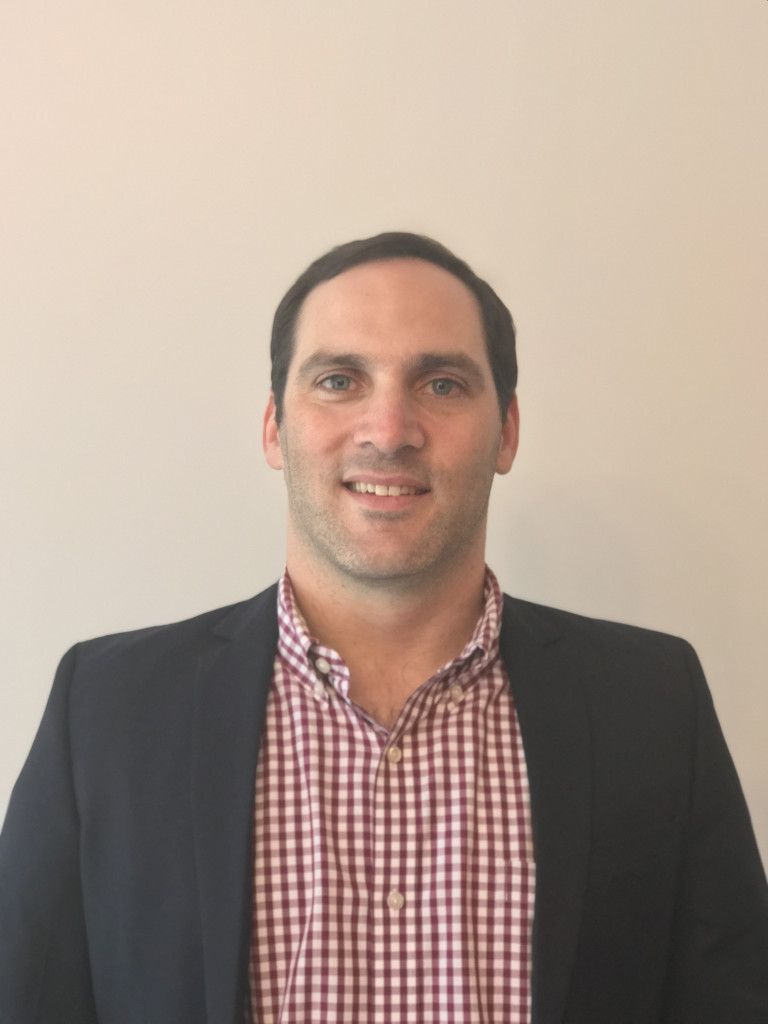
FinMkt has launched a broad ISO, working with referral partners from brokers to accountants to small business advisors. With two years of experience facilitating consumer lending, the company has just entered the small business lending market.
“We took the same engine that we used on the consumer side and we rolled it over to the small business side,” said FinMkt’s VP of Business Development who is overseeing this new division, called Bizloans.
The Bizloans brand within FinMkt started at the end of last year, but has been in stealth mode for the last three to six months, Sklar told AltFinanceDaily. So far, Bizloans has facilitated $15 million in loan application requests over the last 60 days. Of this, roughly $5 million has been funded.
The new division can present small businesses with a variety of financing, from merchant cash advance to factoring and lines of credit. In the few months that FinMkt’s Bizloans has been in operation, Sklar said that real estate asset-backed loans, equipment leasing and merchant cash advance has made up the bulk of the funding products facilitated.
For MCA products, $35,000 has been the average request and $150,000 has been the average for equipment leasing. According to Sklar, some of the funding companies that Bizloans has already worked with include OnDeck, Gibraltar, SOS Capital, 6th Avenue Capital and the San Diego-based bank holding company, BofI.
For successfully funded deals, Sklar said that they will get paid a commission and then pay the broker, depending on how involved they were in the deal.
“The commission splits vary depending on the amount of legwork and the amount of sophistication [the broker has] in the industry,” Sklar said.
For deals where the broker did most all of the work and simply used Bizloans as a platform, those brokers will generally get 80% of the commission, Sklar said. If the broker only supplied the lead, then they may only get 40%. Bizloans offers training to brokers less familiar with the industry.
Founded in 2011 by CEO Luan Cox and CTO Sri Goteti, FinMkt initially operated in the crowdfunded securities space. The company of 15 people is headquartered in New York City and has an office in Hyderabad, India.